


We may not have the course you’re looking for. If you enquire or give us a call on 01344203999 and speak to our training experts, we may still be able to help with your training requirements.
Top Creative Writing Skills
ByThe Knowledge AcademyLast updated on: 19 November 2026
Discover the top creative writing skills, from imagination and storytelling to character development, dialogue and editing. Learn how these skills help you create engaging narratives and bring your ideas to life through practical improvement techniques.

What You'll Learn
1. How imagination and creativity help turn original ideas into engaging stories.2. Why storytelling, character development and narrative structure are essential for compelling writing.3. How dialogue, research and attention to detail bring depth and authenticity to narratives.4. Ways to improve clarity, expression and overall writing quality through editing and revision.5. Practical methods to strengthen creative writing skills through reading, regular practice and feedback.
Ever wonder why you can't put a good book down?
It's not luck. It's skill.
Great writers use creative writing skills to build their stories. These skills act like threads. They weave together to form a story that pulls you in and won't let go.
Behind every unforgettable story lies a writer's ability to turn simple ideas into something extraordinary. From building compelling characters to creating unexpected twists, creative writing skills bring imagination and storytelling together to keep readers hooked.
They give characters a pulse. They stir up feelings that stay with you long after you close the book. That's the real magic behind every page-turner you've ever loved. In this blog, we are exploring the top creative writing skills and ways to develop them. Let's dive in and learn more!
Essential Creative Writing Skills
Creative writing is a realm where imagination takes flight, weaving tales that captivate hearts and minds. To become a better storyteller, you need more than a spark of creativity. You must also develop the skills that bring your ideas to life.
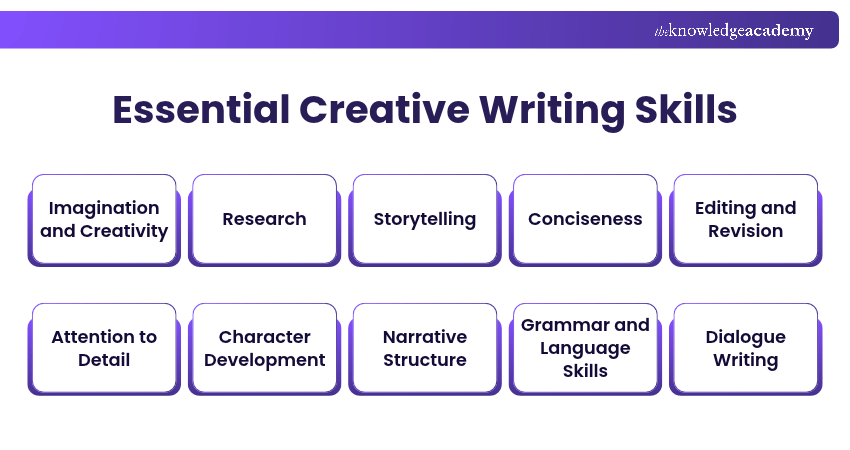
These skills help writers build compelling characters, structure engaging narratives, and create emotions that resonate with readers. Let's explore the essential creative writing skills:
1) Imagination and Creativity
Imagination is the bedrock of creative writing. It involves conjuring new worlds, characters, scenarios and ideas. Cultivating creativity enables you to think beyond the confines of reality, allowing your stories to transcend the ordinary. By exploring fresh perspectives and unexpected possibilities, you can bring originality to your writing.

2) Research
Research underpins authenticity in storytelling. Whether you're crafting historical fiction or contemporary narratives, relevant and accurate details can lend credibility to your writing. By researching settings, events and experiences, you can add depth and realism to your stories, making the worlds you create feel more believable and engaging.
3) Storytelling
At its essence, creative writing is about telling stories that resonate with readers. Storytelling involves weaving engaging plots, creating compelling characters and constructing narratives that evoke emotions. Developing this skill helps you connect events, build suspense and create meaningful experiences.
4) Conciseness
Effective expression involves choosing words that communicate your ideas clearly while creating the intended emotional impact. By eliminating unnecessary words and using language purposefully, you can strengthen your writing and maintain the reader's interest. Also, descriptive passages and deliberate pacing can be valuable when they serve the story.
5) Editing and Revision
Writing is rewriting. Editing and revision involve the process of refining your work. Revision helps you improve the story's structure, character development and narrative flow, while editing focuses on grammar, sentence clarity and word choice. Together, these skills help you create writing that is coherent, engaging and polished.
Improve accuracy and expand career options with the Proofreading Course - Join now!
6) Attention to Detail
Details enrich your writing and immerse readers in the worlds you create. Attention to detail helps you maintain consistency in characters, settings and events while selecting meaningful sensory descriptions. Incorporating sights, sounds, smells and textures can make scenes more vivid and believable, allowing readers to connect more deeply with the story.
7) Character Development
Memorable characters bring stories to life. Character development involves creating believable personalities, motivations, strengths and weaknesses that influence how individuals behave. By exploring what your characters want and the challenges they face, you can make their decisions more meaningful and give readers someone to connect with.
Pro Tip
Give your main character a clear goal and an obstacle that stands in their way. The decisions they make while overcoming that challenge can reveal their personality and drive the story forward.
8) Narrative Structure
Narrative structure helps organise your story's events into a clear and engaging progression. It involves arranging important moments, developing conflict and connecting scenes to support the overall plot. Whether you follow a traditional narrative structure or a non-linear approach, effective structure helps readers understand how the story unfolds.
9) Grammar and Language Skills
Clear communication relies on a good understanding of grammar and language. Learning sentence structure, punctuation, and vocabulary helps you express ideas effectively while maintaining the intended tone and meaning. These skills allow you to experiment with language confidently, creating writing that feels natural and suits your individual style.
10) Dialogue Writing
Dialogue brings characters together and helps reveal their personalities and emotions. Effective dialogue sounds believable while serving a purpose, whether it introduces conflict, reveals information or moves the story forward. By paying attention to word choice, tone and what characters leave unsaid, you can create conversations that feel natural.
Create unforgettable characters and stories readers can't put down with the Fiction Writing Course – Join now!
How to Improve Creative Writing Skills?
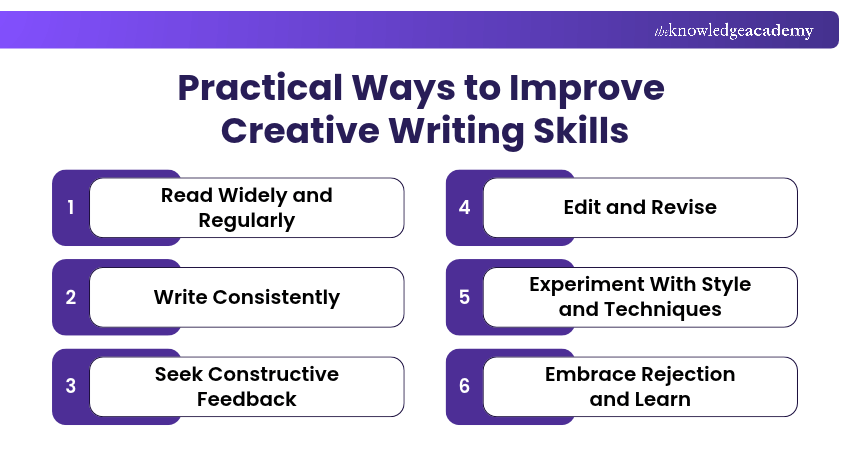
Creative writing is a journey of self-expression, exploration and growth. It takes dedication, regular practice and a willingness to experiment with techniques that strengthen storytelling, character development and narrative flow. Here's how you can build these skills:
1) Read Widely and Regularly
Delve into a diverse range of literature. Reading exposes you to diverse writing styles and perspectives, enriches your vocabulary, and deepens your understanding of storytelling techniques. Explore various genres and observe how writers develop characters, structure plots and use language to engage readers.
2) Write Consistently
Consistency is key to improvement. Set aside dedicated time, whether daily or weekly, to write. Through consistent practice, you'll hone your skills, find your unique voice and refine your ability to convey emotions and ideas effectively. Start with manageable writing goals and gradually challenge yourself with different scenes, characters or storytelling styles.
3) Seek Constructive Feedback
Sharing your work with others offers fresh perspectives and constructive criticism. Seek out fellow writers, writing groups or mentors who can provide insights into areas for improvement and help you identify strengths you might not recognise yourself. Ask specific questions about your characters, plot or writing style to receive more useful feedback.
4) Edit and Revise
Editing and revising your work allows you to refine your ideas, streamline your prose and ensure your writing is coherent and engaging. Begin by reviewing the overall story, including its structure, characters and pacing, before polishing individual sentences. Embrace the process of shaping and reshaping your words to create an impactful piece.
5) Experiment With Style and Techniques
Experiment with different writing styles and develop your own tone and voice. Try unfamiliar genres, narrative perspectives or dialogue techniques to explore new ways of expressing ideas. Be willing to step outside your comfort zone and take on creative challenges that may lead to unexpected discoveries in your writing.
Trainer's Insight: Developing Your Writing Voice
Experiment with different narrative perspectives, sentence rhythms and tones. Notice which approaches feel natural to you but remain flexible enough to adapt your voice to the story you want to tell.
6) Embrace Rejection and Learn
Rejections are part of the writing journey, even for established authors. Rather than viewing every rejection as a setback, consider what you can learn from the experience. Analyse useful feedback, recognise recurring suggestions and apply relevant insights to refine your work. Remember that publishing decisions also depend on editorial preferences and audience fit.
From manuscript to masterpiece, learn how to bring your book to life by joining the Self-Publishing Course now!

The Knowledge Academy develops accessible learning content across Project Management, IT, Cybersecurity, Data Science, Business Analysis, HR, Accounting and Finance, Leadership and Health and Safety. Its resources combine subject research with clear explanations to help professionals build practical knowledge across a wide range of disciplines.
View Detail

 If you wish to make any changes to your course, please


