


We may not have the course you’re looking for. If you enquire or give us a call on 01344203999 and speak to our training experts, we may still be able to help with your training requirements.
Top 10 Computer Science Skills to Boost Your Career
ByThe Knowledge AcademyLast updated on: 10 November 2026
Computer science skills are essential for developing software, solving technical problems and building a career in technology. From programming and algorithms to cloud computing and cybersecurity, explore 10 important skills and practical ways to develop them.
At a Glance
1. Core Computing Skills: Programming, algorithms and data structures help build a foundation for solving computational problems.2. Technical Applications: Cloud computing, software development, database management and data analysis support the creation and management of technology solutions.3. Quality and Security: Technical documentation, problem-solving, debugging, testing and cybersecurity help improve software reliability and system security.4. Skill Development: Education, workshops, coding competitions, relevant certifications and professional communities support continuous learning.
In the tech industry, staying competitive requires a strong foundation in computer science. Whether you are embarking on a new career or aiming to advance in your current role, developing essential computer science skills can help you navigate different technical challenges.
From understanding programming languages to exploring the complexities of cybersecurity, these skills form the basis of many successful careers in technology. But which computer science skills matter most, and how can you develop them? Let's explore.
Essential Computer Science Skills
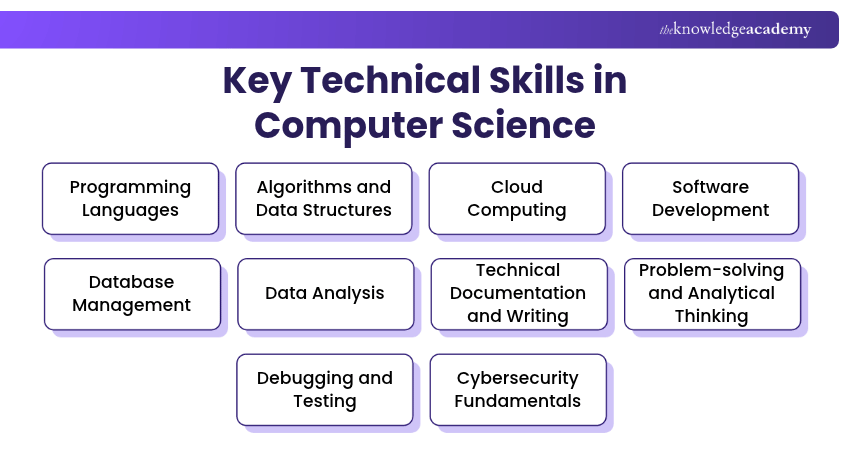
Computer science skills help solve complex problems, develop technology solutions and understand how computing systems work. Here are 10 essential skills that support learning and practical applications across different areas of computer science.
1) Programming Languages
Programming languages form the foundation of computer science. Languages such as Python, Java, C++ and JavaScript are widely used to develop software, solve computational problems and create applications. Each has distinct features and uses across web development, mobile applications, systems programming and artificial intelligence.
A strong understanding of programming concepts helps in selecting suitable languages for different tasks, supporting efficient development and software performance.

2) Algorithms and Data Structures
Algorithms and data structures are basic skills in computer science because they determine how information is organised, processed, and retrieved. Algorithms provide step-by-step methods for solving problems, while data structures such as arrays, linked lists, queues, and trees help organise data efficiently.
Understanding these concepts helps evaluate different approaches to a problem and select suitable solutions. Knowledge of algorithmic complexity, including time and space requirements, also supports the development of software that performs efficiently as data volumes increase.
3) Cloud Computing
Cloud computing has changed how businesses deploy and manage IT resources, making proficiency in this area increasingly valuable. Skills in cloud platforms such as Amazon Web Services (AWS), Microsoft Azure and Google Cloud allow professionals to design, implement and manage scalable, reliable and secure cloud-based solutions.
Knowledge of cloud services, architecture and security practices helps professionals develop applications that use cloud resources for storage, computing and large-scale data processing. Effective resource management can also support cost control and operational efficiency.
Pro Tip
Experiment with cloud pricing calculators before deploying applications. Compare storage, computing and data transfer costs to understand how technical decisions can affect operational budgets.
Develop your cloud knowledge with our Cloud Computing Training Course - Register now!
4) Software Development
Beyond basic programming, software development skills are important for creating complex, high-quality software systems. This includes understanding Agile development approaches, DevOps practices, version control systems such as Git, software architecture and design patterns.
These skills support the development of robust, maintainable and scalable software solutions. Furthermore, familiarity with continuous integration and Continuous Delivery or Deployment (CI/CD) pipelines and containerisation technologies such as Docker can help teams deliver software more consistently and reliably.
5) Database Management
Database management involves organising, storing, retrieving and maintaining data so that applications and systems can access information efficiently. Understanding database structures, relational databases, Structured Query Language (SQL) and basic data modelling principles provides a foundation for managing information effectively.
Knowledge of database design, indexing, access controls and data integrity helps professionals manage information accurately and securely. These skills are particularly useful when developing applications that rely on structured data, handling large datasets or maintaining systems that require dependable information access.
6) Data Analysis
In an era dominated by large volumes of data, the ability to analyse and interpret information is valuable. Proficiency in data analysis involves understanding statistical methods, data visualisation and tools such as pandas, a Python library, and R, a programming language used for statistical computing.
This skill set is useful for identifying trends, supporting predictions and informing business decisions. Additionally, knowledge of machine learning algorithms and frameworks supports the development of predictive models and intelligent systems.
7) Technical Documentation and Writing
Technical documentation and writing skills help communicate clear, structured information about software systems and technical processes. This includes preparing API documentation, user guides, system architecture descriptions and technical reports.
Effective documentation supports software maintenance, knowledge sharing and smoother project transitions. Professionals must organise technical information logically, maintain accuracy and update documentation as systems evolve.
8) Problem-solving and Analytical Thinking
Problem-solving and analytical thinking help break down complex technical challenges into manageable tasks. These skills involve identifying problems, analysing information and evaluating different approaches to develop effective solutions.
Strong analytical thinking also helps professionals recognise patterns, apply logical reasoning and assess the efficiency of algorithms. This supports informed decision-making when developing software, managing data and addressing computational challenges.
9) Debugging and Testing
Debugging and testing are essential for identifying errors and ensuring software functions as expected. Debugging involves locating and correcting defects in code, while testing checks whether applications meet specified requirements and behave correctly under different conditions.
Techniques such as unit testing, integration testing and debugging tools help identify issues and verify software behaviour. These practices improve software reliability, maintainability and overall quality.
10) Cybersecurity Fundamentals
Cybersecurity fundamentals involve understanding common digital threats and applying appropriate measures to protect systems, networks and data. Knowledge of security principles, such as authentication, access control and encryption, helps professionals recognise vulnerabilities and reduce security risks.
Understanding secure coding practices, software updates and basic threat assessment also helps strengthen cybersecurity knowledge. These skills support the development and maintenance of systems that protect sensitive information and reduce exposure to cyberattacks.
Improve your persuasion skills to influence and communicate effectively with our Effective Communication Skills Training – Register now!
Ways to Develop Computer Science Skills
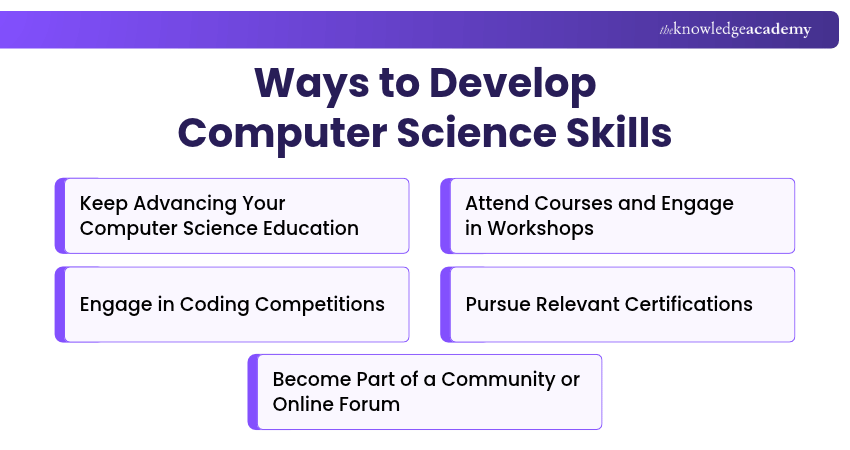
Developing computer science skills requires continuous learning and practical experience. Whether you're exploring computer science for the first time or expanding your existing knowledge, there are several effective ways to strengthen your skills and stay updated with technological advancements. Here are some practical approaches to consider:
1) Keep Advancing Your Computer Science Education
A strong educational foundation is valuable for building a successful career in computer science. Continuously enhancing your knowledge, whether by pursuing higher education or studying specialised subjects, allows you to develop an understanding of complex concepts and stay informed about emerging technologies.
For those exploring GCSE subject options, choosing computer science can provide a useful foundation for further academic study. Higher education, such as a postgraduate degree or PhD in computer science, can also support advanced research opportunities, teaching positions and specialised technical roles.
Trainer's Insight
Before focusing on a specialised technology, assess whether you understand the underlying computing principles. Strong foundations in logic, data representation, and computational efficiency make it easier to adapt when specific tools and frameworks change.
2) Attend Courses and Engage in Workshops
The tech industry is known for its rapid pace of change, with new programming languages, frameworks and technologies emerging regularly. Taking online training and attending workshops can help you stay updated with these developments.
Workshops also provide opportunities to practise technical concepts, explore specific tools and gain practical experience in areas relevant to your career interests.
3) Engage in Coding Competitions
Coding competitions and hackathons are not just platforms to showcase your coding skills but also useful opportunities for learning and innovation. Participating in these events challenges you to think creatively, work under pressure and solve complex problems efficiently.
Platforms such as HackerRank, Codeforces and LeetCode offer coding challenges and, depending on the platform, competitions for different skill levels. These activities provide opportunities to improve programming abilities and algorithmic thinking.
4) Pursue Relevant Certifications
Professional certifications can validate specialised computer science skills. Credentials such as AWS Certified Solutions Architect – Associate, Certified Information Systems Security Professional (CISSP) and Google Cloud Professional Cloud Architect demonstrate technical knowledge and support career development.
However, requirements vary by certification. CISSP requires qualifying professional experience for full certification, while advanced cloud certifications are generally better suited to professionals with relevant industry experience.
5) Become Part of a Community or Online Forum
Joining a community or online forum dedicated to computer science is a useful way to learn from peers, share knowledge and connect with like-minded individuals. Communities and platforms such as GitHub, Stack Overflow and Reddit's r/programming provide opportunities to discuss problems, explore projects and share technical knowledge.
Participating in these communities can help you stay informed about industry trends, discover new tools and technologies, and improve problem-solving skills through collaborative learning.
Computer science skills are not limited to mastering programming languages or technical tools. Building strong computing fundamentals, applying knowledge through practical projects and developing professional skills are equally important. Focus on the skills that align with your career goals and continue improving them as technologies evolve.
Understand various types of computer maintenance and troubleshooting with our Computer Hardware Troubleshooting Course – Sign up now!

The Knowledge Academy develops accessible learning content across Project Management, IT, Cybersecurity, Data Science, Business Analysis, HR, Accounting and Finance, Leadership and Health and Safety. Its resources combine subject research with clear explanations to help professionals build practical knowledge across a wide range of disciplines.
View Detail

 If you wish to make any changes to your course, please


