


We may not have the course you’re looking for. If you enquire or give us a call on 01344203999 and speak to our training experts, we may still be able to help with your training requirements.
Company Secretary Skills: 14 Key Competencies You Need
ByThe Knowledge AcademyLast updated on: 14 November 2026
Explore the essential Company Secretary skills, from corporate governance and company law to communication, risk awareness and digital literacy. Learn how these competencies support board procedures, regulatory compliance, accurate records and effective corporate administration.
Overview
1. Governance and company law knowledge support effective board and corporate procedures.2. Compliance and record management help organisations meet statutory responsibilities.3. Meeting management and minute-taking support organised discussions, accurate records and follow-up actions.4. Communication, financial literacy and risk awareness strengthen board support.5. Ethical judgement and digital literacy help Company Secretaries work responsibly and efficiently.
An important board decision can be made in minutes. Ensuring it is documented, communicated and acted upon takes much more. Missed statutory deadlines or incomplete records can have consequences across an organisation.
This is where Company Secretaries play a critical role. They support boards, manage legal and regulatory obligations, and coordinate information effectively. Their work requires sound judgement, communication and governance knowledge.
But what does it take to handle these responsibilities effectively? This blog explores 14 essential competencies, from corporate governance and compliance to stakeholder management and digital literacy, along with practical ways to develop them.
Essential Company Secretary Skills
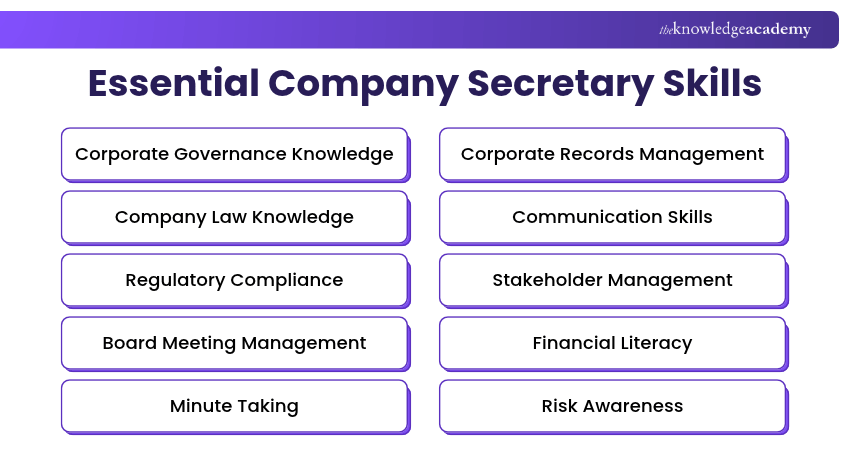
Effective governance support requires more than understanding company procedures. The following 14 competencies cover the knowledge and practical skills Company Secretaries use in their daily responsibilities.
1) Corporate Governance Knowledge
Corporate governance knowledge involves understanding the principles, structures and practices used to direct and oversee an organisation. Company Secretaries need to understand board responsibilities, committee structures, accountability and governance policies.
This knowledge helps them advise directors on governance procedures and good practice, supporting informed and transparent decision-making. For example, understanding the responsibilities of board committees helps a Company Secretary direct matters to the appropriate decision-making body.
2) Company Law Knowledge
Company law knowledge enables Company Secretaries to understand the legal framework applicable to their organisation and jurisdiction. This includes familiarity with directors' duties, company structures, constitutional documents and relevant statutory obligations.
Company Secretaries use this knowledge to interpret requirements and identify when specialist legal advice is necessary. A sound understanding of applicable legislation helps them explain legal considerations to directors and support decisions that follow established legal procedures.
3) Regulatory Compliance
Regulatory compliance involves monitoring whether an organisation meets its applicable statutory and regulatory requirements. Company Secretaries help coordinate required filings, track reporting deadlines and identify changes that affect the company's obligations.
For example, they can maintain a compliance calendar covering recurring submissions and relevant corporate events. This approach helps reduce the risk of missed deadlines, incomplete filings and avoidable compliance issues.
4) Board Meeting Management
Board meeting management focuses on coordinating meetings so directors can discuss important matters and make informed decisions.
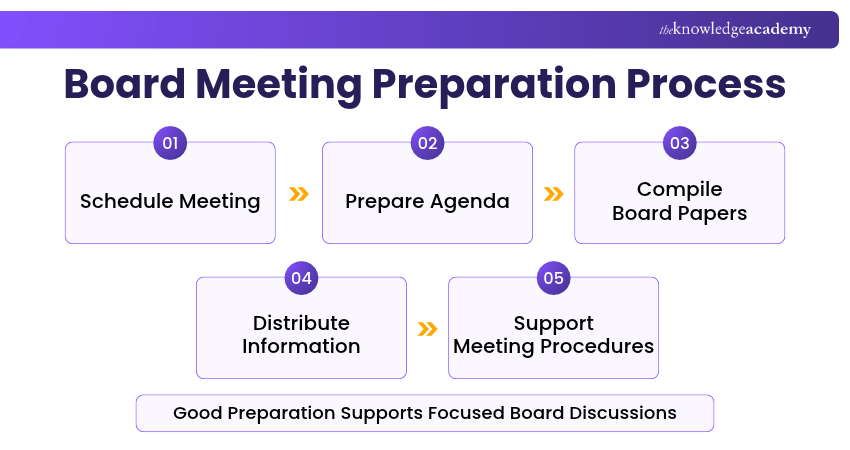
Company Secretaries help prepare meeting schedules, develop agendas, coordinate board papers and distribute relevant information in advance. They also support the proper application of meeting procedures.
Effective meeting management helps directors receive appropriate information, understand the matters requiring attention and have sufficient preparation time for meaningful discussions.
Trainer's Pro Tip
Use a pre-meeting checklist to confirm the agenda, board papers, attendance details and distribution deadlines. A consistent checklist reduces last-minute gaps and helps meeting preparation stay on track.
5) Minute Taking
Minute taking is the ability to produce an accurate and clear record of formal meeting proceedings. Company Secretaries record important decisions, resolutions and agreed actions while distinguishing essential information from unnecessary discussion.
Effective minutes should communicate what was decided and identify relevant follow-up responsibilities. They are not intended to reproduce every spoken word.
Strong minute-taking skills help maintain reliable records of board decisions and support accountability within the organisation.
Strengthen your ability to capture decisions, actions and meeting outcomes clearly with our Minute Taking Training - Sign up today!
6) Corporate Records Management
Corporate records management involves organising, maintaining and protecting important company documentation. These records can include the register of members, resolutions, governance policies and other official corporate documents.
Company Secretaries need to ensure that records remain accurate, current and accessible to authorised individuals. Proper document classification, secure storage and consistent record-keeping procedures help organisations retrieve information efficiently and demonstrate appropriate governance practices.
7) Communication Skills
Communication skills are essential for explaining governance matters clearly and accurately. Company Secretaries regularly prepare written reports, communicate procedural requirements and provide information to directors and senior management.
Strong communication involves adapting the level of detail to the audience and presenting complex information in an understandable manner.
For example, a Company Secretary might summarise an important regulatory development for board members, highlighting its practical implications without overwhelming them with technical language.
8) Stakeholder Management
Stakeholder management focuses on maintaining constructive professional relationships with individuals and groups connected to the organisation.
Company Secretaries interact with directors, shareholders, auditors, regulators and other relevant parties. They need to understand stakeholder concerns, coordinate appropriate responses and manage expectations professionally.
Effective stakeholder management helps maintain trust, supports cooperation and ensures governance-related matters reach the appropriate people without unnecessary delays.
9) Financial Literacy
Financial literacy enables Company Secretaries to understand the financial information presented to boards and committees. This includes familiarity with financial statements, budgets, financial reports and relevant accounting terminology.
Although Company Secretaries are not necessarily responsible for preparing financial accounts, financial literacy helps them understand discussions about organisational performance and financial oversight.
It also supports their ability to recognise when financial matters require board attention or specialist input.
10) Risk Awareness
Risk awareness involves recognising circumstances that could create governance, compliance or operational difficulties for an organisation.
Company Secretaries need to understand how inadequate procedures, delayed reporting, conflicts of interest or changes in regulations can create potential risks.
For example, identifying weaknesses in board reporting arrangements can prompt a review before critical information is missed. Strong risk awareness supports early escalation and better-informed governance decisions.
Quick Check
A board meeting is approaching, but a report highlighting significant compliance concerns has not been shared with directors. What should the Company Secretary do first?A) Proceed without mentioning the missing reportB) Raise the concern promptly and help ensure directors receive the relevant informationC) Remove the item from the agenda without consulting the appropriate peopleD) Wait until the next meeting to discuss the concernAnswer: B. Raise the concern promptly and help ensure directors receive the relevant information.
11) Organisational Skills
Organisational skills help Company Secretaries manage multiple responsibilities while maintaining control over important schedules and deadlines.
Their work often involves balancing statutory deadlines, board schedules, document reviews, stakeholder requests and follow-up actions.
Effective organisation requires prioritising responsibilities, allocating sufficient preparation time and maintaining structured workflows. These practices help ensure that governance activities progress efficiently, even when several tasks require attention simultaneously.
12) Digital Literacy
Digital literacy enables Company Secretaries to use technology effectively when managing governance activities and corporate information.
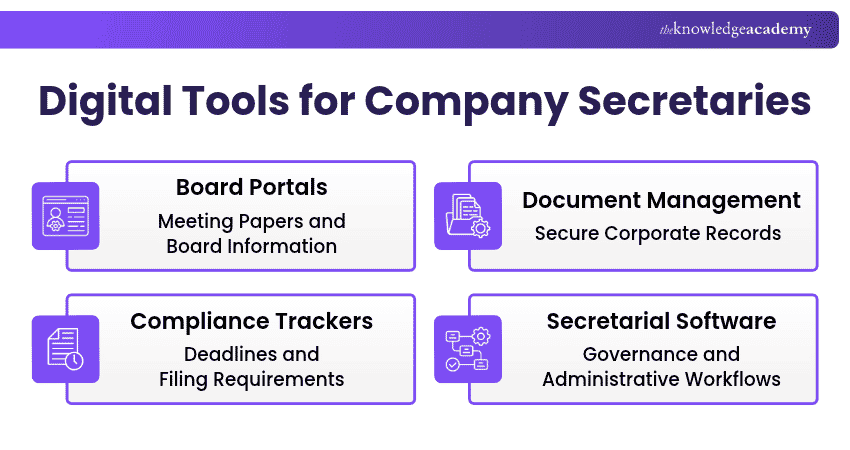
Relevant tools include electronic board portals, document management platforms, compliance trackers and company secretarial software. These systems can simplify document distribution, deadline monitoring and information retrieval.
Company Secretaries also need to understand secure information handling and evaluate digital outputs carefully, particularly when using automation or AI-assisted tools for administrative tasks.
13) Attention to Detail
Attention to detail is particularly important when working with official documents and information that must be accurate.
Company Secretaries need to check dates, names, figures, meeting records and filing details before documents are approved or submitted. Even small inaccuracies can cause confusion or require corrections.
A careful review process helps maintain document quality, supports accurate reporting and reduces the possibility of preventable administrative or compliance errors.
14) Ethical Judgement
Ethical judgement involves making responsible decisions while maintaining integrity, impartiality and professional confidentiality.
Company Secretaries frequently encounter sensitive information concerning board discussions, organisational plans and stakeholder interests. They need to exercise discretion and recognise circumstances involving potential conflicts of interest.
Sound ethical judgement also enables them to raise concerns appropriately and provide balanced advice, even when dealing with challenging or sensitive governance matters.
How to Develop Company Secretary Skills?
Developing Company Secretary skills requires a combination of structured learning, practical experience and continuous professional development. The following steps provide a useful starting point:
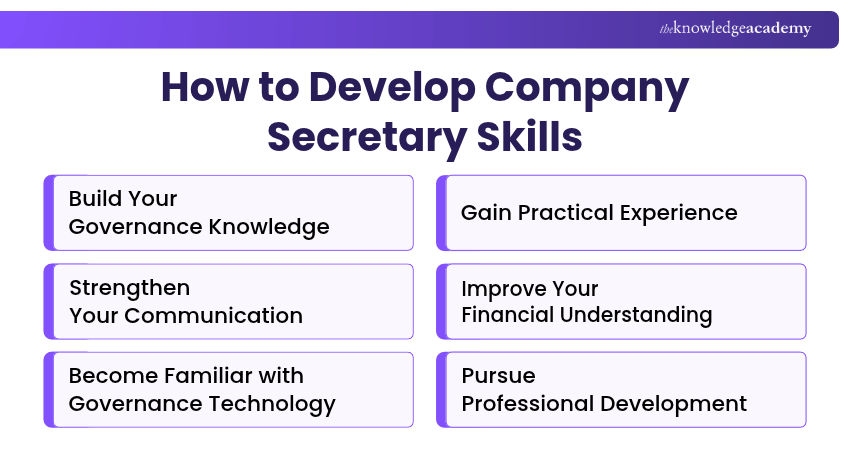
1) Build Your Governance Knowledge: Study corporate governance principles, company law and the regulatory requirements relevant to your jurisdiction. Understand how boards operate and how governance responsibilities are allocated.
2) Gain Practical Experience: Seek opportunities to support board meetings, prepare governance documents, maintain records or assist with compliance activities. Practical exposure helps connect theoretical knowledge with workplace responsibilities.
3) Strengthen Your Communication: Practise preparing concise reports, summarising complex information and presenting recommendations clearly. Develop confidence when communicating with directors and other stakeholders.
4) Improve Your Financial Understanding: Learn to interpret basic financial statements and understand common financial terminology. This supports more informed participation in governance-related discussions.
5) Become Familiar with Governance Technology: Explore board management software, digital document systems and compliance tracking tools. Focus on using these resources accurately and securely.
6) Pursue Professional Development: Consider relevant governance qualifications, specialist training and continuing professional development opportunities. Regularly review changes in legislation, governance guidance and professional practices.
Remember
After major board or compliance cycles, note what worked, what caused delays and what should change next time. Reviewing these lessons helps turn experience into stronger processes and better judgement.
Strong Company Secretary skills combine governance knowledge, practical coordination and professional judgement. Developing these abilities through experience and ongoing learning helps you support boards effectively, maintain reliable corporate processes and respond confidently to changing responsibilities.
Develop broader company secretarial, meeting and administrative skills with our PA and Secretarial Training - Join today!

The Knowledge Academy develops accessible learning content across Project Management, IT, Cybersecurity, Data Science, Business Analysis, HR, Accounting and Finance, Leadership and Health and Safety. Its resources combine subject research with clear explanations to help professionals build practical knowledge across a wide range of disciplines.
View Detail

 If you wish to make any changes to your course, please


