


We may not have the course you’re looking for. If you enquire or give us a call on 01344203999 and speak to our training experts, we may still be able to help with your training requirements.
Robotic Process Automation (RPA) Developer Salary: An Overview
ByRichard HarrisLast updated on: 17 September 2026
RPA Developer Salary can vary by location, skills, experience and the complexity of automation work. This blog explores salary ranges across key countries, the role of an RPA Developer and the skills that can support career growth.
Imagine a colleague mentions they're considering a move into automation. They turn to you and ask: "RPA Developers build bots that save businesses time, but what could I realistically earn in this role?"
It's not a question with one fixed answer. An RPA Developer's salary can differ by country, experience, platform skills, and the complexity of the automations being built. A developer maintaining simple desktop bots and one architecting automation across a whole department may share a job title, but rarely a paycheck.
With the global RPA market forecast to grow past £9.52 billion by 2030, this isn't a niche question either. Demand for skilled developers is only heading in one direction, which makes understanding what actually drives the salary worth getting right.
Who is an RPA Developer?
A Robotic Process Automation (RPA) Developer designs, builds, tests and maintains software automations, known as bots. These bots perform repeatable, rules-based tasks across digital systems, helping organisations reduce manual effort and improve process consistency.
RPA Developers review business requirements, document processes, build automation workflows, manage exceptions and resolve issues after deployment. They work with Business Analysts, process owners and IT teams to ensure automations are useful, secure and maintainable.

What Does an RPA Developer Do?
An RPA Developer creates and maintains software bots that automate repetitive, rules-based tasks across digital systems. Their main responsibilities include:
a) Analyse Processes: Work with business teams to identify repetitive tasks that may be suitable for automation.
b) Design and Build Bots: Create automation workflows using RPA platforms, visual tools or code where required.
c) Test Automations: Check that bots perform expected tasks accurately and handle common exceptions appropriately.
d) Deploy and Monitor Bots: Support the release of automations and monitor their performance in live systems.
RPA Developer Salary by Country
RPA Developer salaries change regularly and vary by city, employer, technical skills and experience. Let's look at their salary level and ranges in the mentioned countries below:
1) RPA Developer Salary in the UK
RPA Developer Salary in the UK can vary based on experience, location, employer and technical skills. Salaries tend to run higher in London and other major tech hubs such as Manchester and Edinburgh, where demand for automation talent is strongest. The following figures provide an indicative overview of the salary ranges:
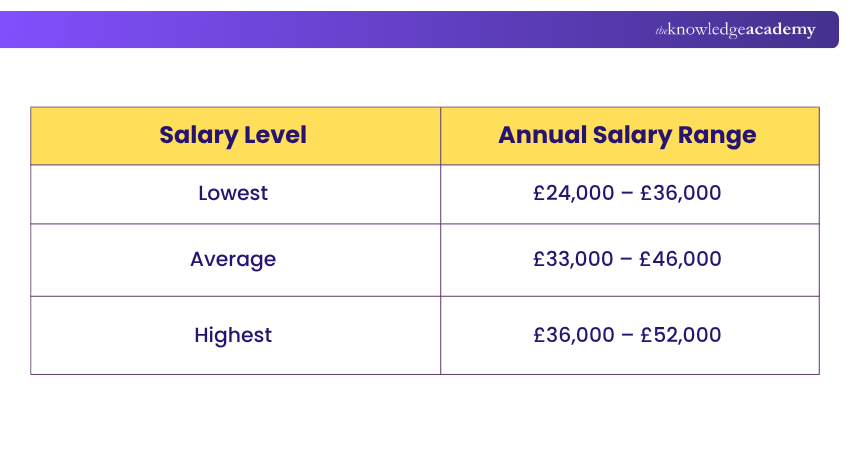
Source: Glassdoor
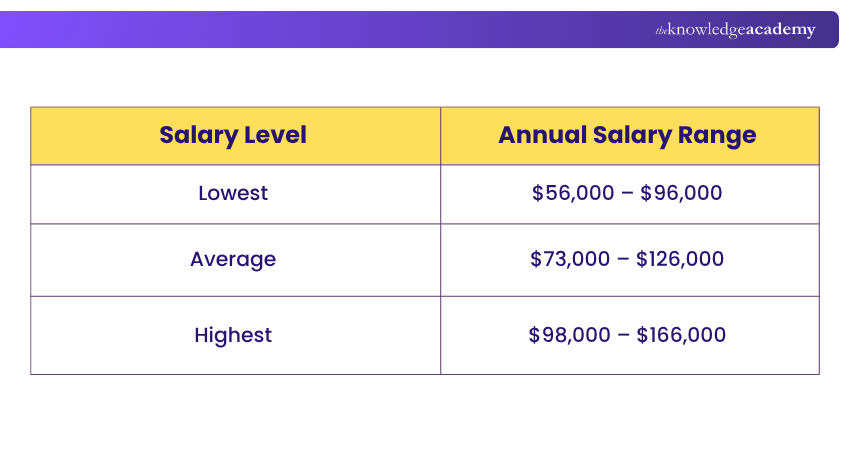
2) RPA Developer Salary in the USA
RPA Developer Salary in the USA can vary by state, employer, industry, and level of experience. Cities with a strong tech and enterprise presence, such as San Francisco, New York and Seattle, often offer noticeably higher pay than the national average. The following figures provide an indicative overview of the salary ranges:
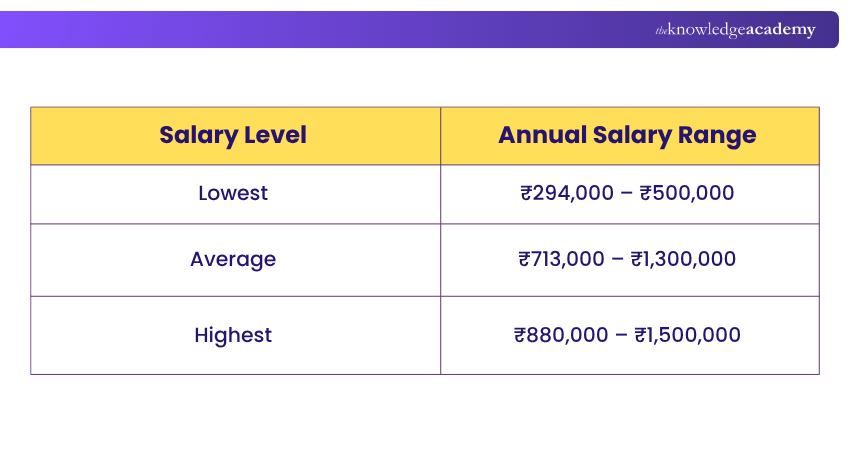
3) RPA Developer Salary in India
RPA Developer Salary in India can vary based on location, employer, technical skills and experience. Bangalore, Hyderabad and Pune are among the country's leading automation hubs, and developers based there tend to command higher salaries than the national figures suggest. The following figures provide an indicative overview of the salary ranges:
Pro Tip
When comparing RPA Developer roles, look beyond the salary figure. Consider the full package, including bonuses, pension contributions, insurance, remote-working arrangements, training support and opportunities to work on more complex automation projects.
Skills Required for RPA Developers
RPA Developers need a mix of technical and business-focused skills. They must understand a process clearly before designing an automation that is reliable, secure and useful. Their core skills include:
a) Process Analysis and Documentation: Understanding workflows, identifying automation opportunities and documenting requirements clearly.
b) RPA Platform and Workflow Development: Building automation workflows using an RPA platform, including logic, variables, conditions and queues.
c) Testing, Debugging and Exception Handling: Testing bots, identifying errors and designing ways for automations to respond to unexpected situations.
d) Data Handling and System Integration: Working with data, applications, databases and APIs to allow automations to move information between systems.
e) Stakeholder Communication: Working with Business Analysts, process owners and IT teams to gather requirements, explain solutions and improve workflows.
f) RPA Platform and Tool Proficiency: Practical knowledge of widely used platforms such as UiPath, Automation Anywhere or Microsoft Power Automate, since each has its own logic, interface and best practices.
g) Security and Compliance Awareness: Understanding how automations handle sensitive data, credentials and access permissions, and building bots that align with an organisation's security and regulatory requirements.
h) Continuous Improvement Mindset: Reviewing deployed automations for performance issues, identifying opportunities to refine or scale existing workflows, and staying current as platforms and best practices evolve.
Ensure you automate testing with confidence and clarity by joining the Robot Framework Training now!
Career Path for RPA Developers
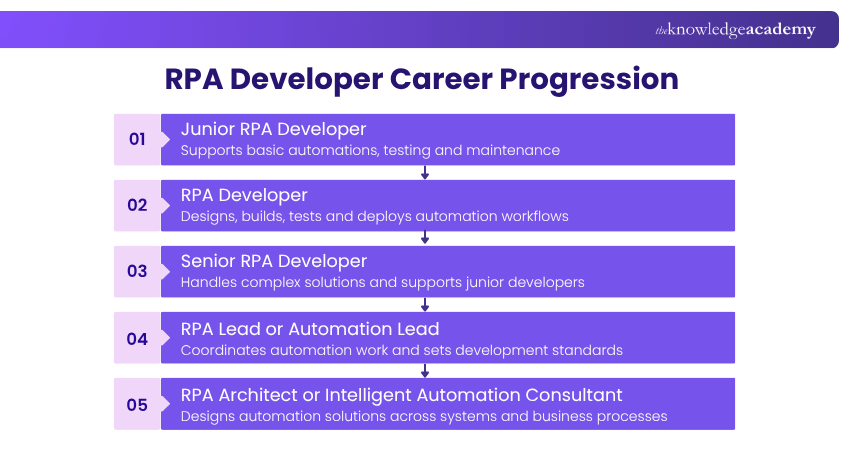
There is no single route into RPA development work. Some professionals begin in Software Development, IT support, business analysis, testing or operations before moving into automation-focused roles. A typical RPA career path may include:
a) Junior RPA Developer: Supports the development, testing and maintenance of basic automation workflows under guidance.
b) RPA Developer: Designs, builds, tests and deploys automations for business processes.
c) Senior RPA Developer: Leads more complex automation work, reviews solutions and supports junior developers.
d) RPA Lead or Automation Lead: Coordinates automation projects, sets development standards and works closely with stakeholders.
e) RPA Architect or Intelligent Automation Consultant: Designs automation solutions across systems, platforms and business functions.
f) RPA Business Analyst: Shifts focus from building automations to identifying and scoping which business processes are worth automating in the first place.
g) RPA Trainer or Consultant: Moves into teaching or advising other organisations on implementing and scaling their automation programmes.
Learn how to turn repetitive tasks into intelligent automation with the Robotic Process Automation Using UiPath Training – Sign up today!

Richard Harris creates technically detailed yet accessible content on full-stack development, software architecture and modern development frameworks. His knowledge of frontend and backend technologies helps developers understand how scalable, efficient and high-performing applications are designed and built.
View Detail

 If you wish to make any changes to your course, please


