


 Top Rated Course

We may not have the course you’re looking for. If you enquire or give us a call on 01344203999 and speak to our training experts, we may still be able to help with your training requirements.
Artificial Intelligence Engineer Salary: A Complete Guide for 2026
Scarlett Adams 29 August 2026Artificial Intelligence Engineer Salary varies by experience, location, technical expertise and industry. This blog explores salary trends across countries and experience levels, along with the key factors that influence earning potential.
Home
 Resources
Data, Analytics & AI
Artificial Intelligence Engineer Salary: A Complete Guide for 2026
Resources
Data, Analytics & AI
Artificial Intelligence Engineer Salary: A Complete Guide for 2026
Resources
Data, Analytics & AI
Artificial Intelligence Engineer Salary: A Complete Guide for 2026

Training Outcomes Within Your Budget!
We ensure quality, budget-alignment, and timely delivery by our expert instructors.
Table of Contents
Key Takeaways
1. AI Engineer salaries vary by location, experience, specialisation, industry and employer.2. Skills in Machine Learning, Generative AI, NLP and Computer Vision can support stronger career opportunities.3. AI Engineer salaries generally increase as professionals gain experience and take on more complex technical responsibilities.4. Practical experience and demonstrated project work can strengthen career and salary opportunities.5. Comparing base salary, bonuses, equity and benefits gives a more complete view of an AI Engineer’s compensation.
You search “Artificial Intelligence Engineer Salary” expecting one simple number.
A quick search should answer it, right?
£60k.
Sounds good.
Then you scroll.
$150k.
Scroll again.
A completely different range.
Suddenly, that simple question isn't so simple.
That's because “AI Engineer” is only the job title. Your location, experience, specialisation and employer can all influence what appears on your payslip.
So, instead of chasing one average figure, let's explore what AI Engineers can earn across different countries and career stages – and what can influence their earning potential.
What is an AI Engineer?
An AI Engineer designs, develops and maintains systems that use Artificial Intelligence. Their work may involve Machine Learning, Generative AI, Natural Language Processing (NLP), Computer Vision, data pipelines and AI-powered applications.
Depending on the role, they may build, integrate and evaluate AI models, deploy AI solutions and maintain production systems.
As responsibilities and technical requirements differ across organisations, AI Engineer salaries can also vary considerably by location and experience.

AI Engineer Salary Based on Country
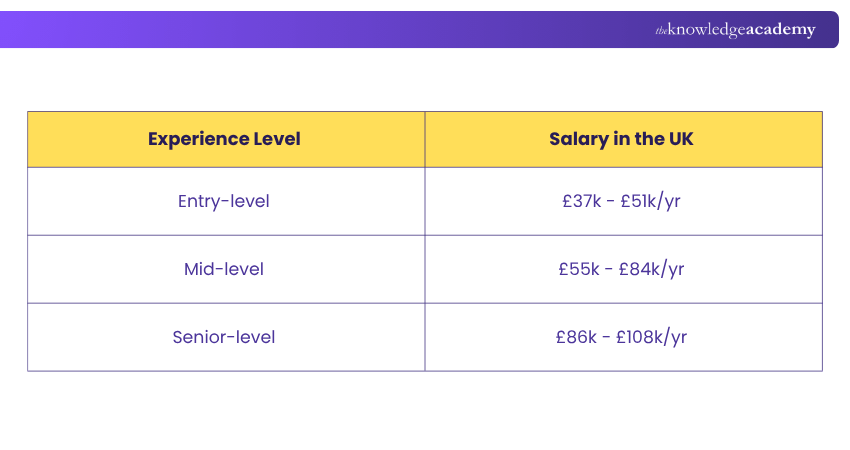
AI Engineer salaries vary across countries due to differences in demand for AI professionals, labour markets, cost of living and employer compensation practices. Here is an overview of typical salary ranges in major markets:
Source: Glassdoor
1) AI Engineer Salary in the United Kingdom
In the United Kingdom, AI Engineers typically earn around £37,000 to £77,000 per year. Salaries can vary based on experience, location, technical expertise and the type of organisation.
2) AI Engineer Salary in the United States
In the United States, AI Engineer salaries generally range from $65,000 to $207,000 per year. Professionals with advanced AI skills, specialised expertise and greater experience may earn towards the higher end of this range.
3) AI Engineer Salary in India
In India, AI Engineers typically earn between ₹581,000 and ₹5 million per year. Compensation varies considerably depending on experience, skills, employer, location and the complexity of the AI role.
Salary Comparison Tip
Compare the complete compensation package rather than salary alone. Benefits, bonuses, equity, taxation and living costs can influence the overall value of an opportunity.
AI Engineer Salary by Experience Level
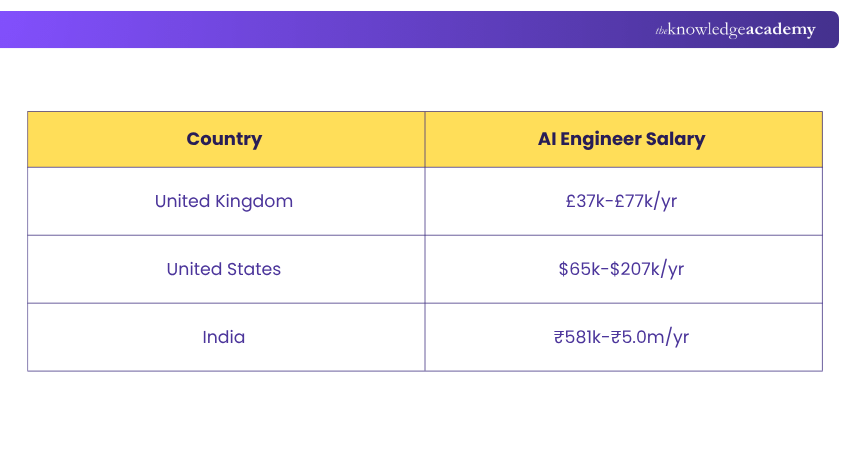
AI Engineer salaries generally increase as professionals gain experience and take on more complex technical responsibilities. To illustrate how pay can vary with career progression, the table below shows indicative salary ranges in the UK.
Trainer’s Insight
Years of experience are only one indicator of career level. The complexity of the AI systems you build, your level of technical ownership and your experience deploying and maintaining production AI solutions can also influence the roles and salary opportunities available to you.
Factors Affecting AI Engineer Salary
AI Engineers with similar job titles can earn different salaries depending on their expertise, responsibilities and employment circumstances. Understanding these factors can help you interpret salary benchmarks more accurately.
1) Experience Level
As AI Engineers gain experience, they may take responsibility for more complex systems, deployment decisions and technical projects. Greater responsibility can contribute to higher earning potential.
2) Location
Salaries vary by country and city due to differences in labour demand, cost of living and competition for AI talent. Remote and hybrid positions may also follow location-based compensation structures.
3) Technical Skills and Specialisation
Expertise in Machine Learning, Generative AI, NLP, Computer Vision, Deep Learning and AI deployment can influence career opportunities. Skills that closely match an employer's technical requirements may strengthen earning potential.
4) Industry and Employer
Compensation can vary by industry, company size and the importance of AI to an organisation. Technology, finance, healthcare, automotive and e-commerce are among the sectors employing AI professionals.
5) Education and Qualifications
Relevant education can support entry into specialised or research-focused AI roles. However, practical experience, technical ability and demonstrated project work can also influence employment and salary opportunities.
Understanding these factors can help professionals identify where they may be able to strengthen their earning potential.
Learn how Artificial Intelligence (AI) can complement Business Analysis with our Artificial Intelligence (AI) for Business Analysts Training – Join today!
How to Increase Your AI Engineer Earning Potential
Increasing earning potential usually involves a combination of technical expertise, practical experience and informed career decisions. The following steps can help you strengthen your skills, demonstrate your value and position yourself for better career opportunities:
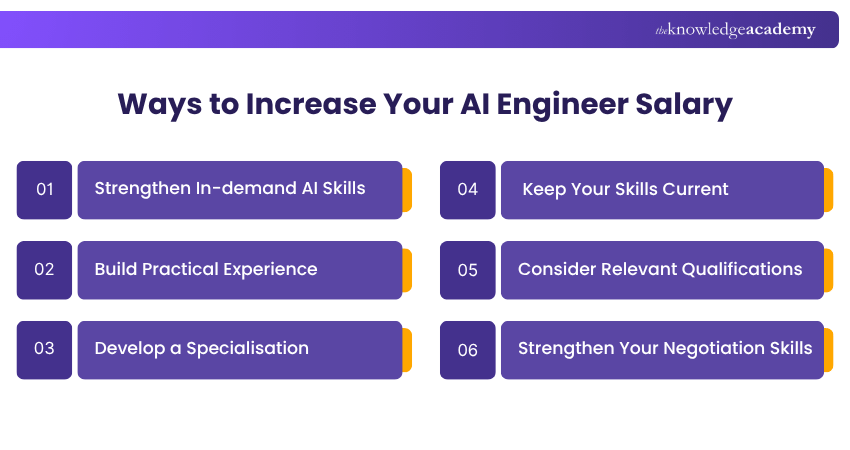
1) Strengthen In-demand AI Skills
Build strong foundations in programming, Machine Learning and data handling. Develop skills in areas relevant to your target roles, such as Generative AI, NLP or Computer Vision.
2) Build Practical Experience
Create projects that demonstrate how you can apply AI to real problems. Experience with model evaluation, integration, deployment and monitoring can strengthen your profile.
Pro Tip
When presenting an AI project, do not show only the final model. Explain the problem you addressed, your approach, how you evaluated the solution and, where relevant, how it was deployed or monitored. This gives employers a clearer picture of your practical engineering capabilities.
3) Develop a Specialisation
Build deeper expertise in an AI area that aligns with your interests and market opportunities rather than trying to master every emerging technology.
4) Keep Your Skills Current
Stay informed about relevant AI models, frameworks and development practices. Continuous learning can help you adapt as technologies and employer requirements evolve.
5) Consider Relevant Qualifications
Degrees, professional training and certifications can support learning, particularly for specialised roles. However, qualifications should complement practical skills and experience rather than replace them.
6) Strengthen Your Negotiation Skills
Research salary benchmarks for your role, location and experience level before negotiating. Consider bonuses, equity, benefits and other forms of compensation alongside base salary.
AI Engineer Offer Checklist
Before evaluating an AI Engineer job offer, look beyond the headline salary and consider:
Base salary
Performance bonuses
Equity or stock options
Pension or retirement contributions
Health and other employee benefits
Remote or hybrid working arrangements
Learning and development opportunities
Career progression potential
Local taxation and living costs
Conclusion
Artificial Intelligence Engineer Salary varies considerably by experience, location, specialisation, industry and employer. Instead of relying on one average figure, compare current market benchmarks and the complete compensation package. Building practical experience and relevant AI expertise can help professionals pursue stronger career opportunities.
Understand AI tools integration for smarter decision-making in projects with the Artificial Intelligence (AI) for Project Managers Training – Join now!
Frequently Asked Questions
Is AI Engineering a High-paying Career?

AI Engineering can offer competitive salaries, particularly for professionals with relevant technical expertise and experience. Actual earnings vary by location, employer and specialisation.
Does an AI Engineer Need a Master's Degree?
Not necessarily. Some research-intensive roles may prefer postgraduate qualifications, while many AI Engineering positions also value programming skills, AI knowledge and practical experience.
Can AI Engineers Work Remotely?
Yes. Some AI Engineering roles support remote or hybrid working, depending on the employer, security requirements and collaboration needs.
Is AI Engineering a Good Career for the Future?
AI Engineering can provide opportunities across industries as organisations continue adopting AI. Long-term prospects depend on keeping technical skills current and gaining practical experience.

 If you wish to make any changes to your course, please


