


We may not have the course you’re looking for. If you enquire or give us a call on +1 6474932992 and speak to our training experts, we may still be able to help with your training requirements.
Property Manager Job Description
ByThe Knowledge AcademyLast updated on: 28 October 2026
A Property Manager job description outlines the responsibilities, skills and qualifications needed to oversee residential, commercial and industrial properties. From managing tenants and coordinating maintenance to handling budgets, explore the key duties and professional requirements involved in property management.
The Gist
1. Property Managers oversee the daily operations of residential, commercial and industrial properties.2. Their key duties include tenant management, rent administration, maintenance and financial reporting.3. Strong communication, organisation, problem-solving and negotiation skills are essential.4. Relevant experience, industry knowledge and professional qualifications support career development.5. Property Managers help maintain property standards, support legal compliance and improve operational efficiency.
Do you think that managing a property is just about collecting rent?
Think again.
Behind every well-maintained building and effectively managed tenancy is a professional coordinating multiple responsibilities. From handling repairs and inspections to managing budgets and legal compliance, their role goes far beyond the basics.
That's the role of a Property Manager. They balance people skills with business sense, ensuring properties are maintained, operational requirements are addressed, and owners receive the information needed to make decisions. In this blog, we'll explore the Property Manager job description, including their key roles, essential skills and qualifications. Let's dive in!
Who is a Property Manager?
Property Managers are professionals responsible for overseeing the daily operations of residential, commercial or industrial properties on behalf of Property Owners or other authorised clients. They are typically hired for tenant management, rent collection, lease administration, maintenance coordination and supporting compliance with relevant legal and safety requirements.
They act as a key point of contact between Property Owners, occupiers, and service providers. Property Managers help ensure that properties remain well-maintained and operations run efficiently.

Responsibilities of a Property Manager
Property Managers coordinate several activities to maintain property operations, support occupiers and keep owners informed. Here are some of the key responsibilities of a Property Manager:
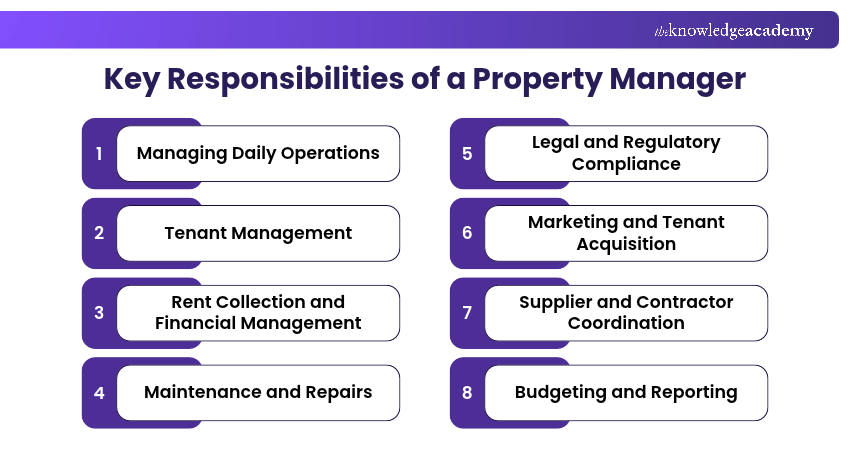
1) Managing Daily Operations
A Property Manager oversees the daily operations of a property, ensuring that essential services are maintained and operational requirements are met. This involves addressing day-to-day concerns and maintaining a suitable environment for occupants.
Depending on the property, daily operations may involve coordinating cleaning, monitoring shared facilities, reviewing service requests and maintaining operational records.
2) Tenant Management
Property Managers may handle tenant enquiries, tenancy documentation, renewals, complaints and disputes, depending on their responsibilities. Building positive relationships helps improve tenant satisfaction and retention rates.
For residential properties, managers may also coordinate tenant applications and reference checks in accordance with relevant legal requirements and organisational procedures.
3) Rent Collection and Financial Management
Property Managers may administer rent payments, follow up on overdue amounts and maintain accurate records of rental income and related transactions. They may also coordinate authorised payment arrangements and provide financial updates to Property Owners.
The specific responsibilities depend on the management agreement and property type. Rent collection and debt recovery activities must follow applicable tenancy laws and agreed procedures.
4) Maintenance and Repairs
Property Managers coordinate routine maintenance and repairs to keep buildings and facilities in suitable condition. They arrange for timely repairs, schedule regular inspections and hire qualified contractors to maintain property value and address relevant maintenance and safety requirements.
They may also develop preventive maintenance schedules, track outstanding repair requests and inspect completed work to ensure agreed standards are met.
5) Legal and Regulatory Compliance
Property Managers need to understand the legal and regulatory requirements relevant to the properties they oversee. These may involve tenancy arrangements, property safety, maintenance standards, licensing and other local requirements.
They may coordinate inspections, maintain compliance records and communicate legal obligations to Property Owners within the scope of their responsibilities.
Trainer's Insight
Property management obligations vary depending on the property's location, type and management agreement. Before arranging compliance activities, confirm which responsibilities belong to the landlord, managing agent and relevant contractors.
6) Marketing and Tenant Acquisition
When a property becomes vacant, the Property Manager may help market the available space through property listings and advertisements. They may also respond to prospective tenant enquiries, arrange property viewings and coordinate with letting teams to support occupancy.
In some organisations, these activities are handled by a separate letting or leasing team. Any tenant selection or screening process should follow applicable legal requirements and fair, consistent procedures.
7) Supplier and Contractor Coordination
Property Managers work with maintenance contractors, cleaning services, security providers and other external suppliers to support property operations.
They may obtain quotations, coordinate service schedules, monitor performance and manage supplier agreements within their authorised responsibilities. Effective supplier coordination can help reduce operational disruptions and support consistent property maintenance.
8) Budgeting and Reporting
Property Managers may prepare operational budgets, monitor expenditure and report on property income, costs and maintenance requirements. Their reports can include occupancy information, outstanding maintenance work, expenditure against budget and proposed property improvements.
These reports help owners understand operational performance and make informed decisions about expenditure and future maintenance.
From building maintenance to operational excellence, master every detail with the Facilities Management Training now!
Qualifications of a Property Manager
To become a Property Manager, you will need a suitable combination of knowledge, practical abilities and professional experience. These requirements vary depending on the employer, property type and location. Common qualifications and requirements include:
1) Educational Background
A degree is not universally required for every Property Manager role. However, qualifications in real estate, property management, business administration, building management or related subjects may be beneficial.
Some candidates enter the profession through property administration, lettings, facilities-related roles or relevant work experience. Certain activities and locations have specific regulatory requirements, so candidates should check the rules relevant to their intended position.
2) Experience in Property Management
Having prior experience managing residential, commercial or mixed-use properties helps build practical knowledge of lease administration, tenant relations, budgeting and property maintenance.
Experience may also come from related positions such as Property Administrator, Lettings Coordinator, Building Manager or Facilities Coordinator. Employers may particularly value candidates who can demonstrate experience dealing with occupiers, coordinating contractors, maintaining records and addressing operational problems.
3) Knowledge of Laws and Regulations
A good Property Manager must understand the legal and regulatory requirements relevant to their work. These can include landlord and tenant obligations, property safety, maintenance standards, data protection, contractual requirements and applicable licensing rules.
The relevant laws differ across countries. Property Managers should therefore refer to current official guidance and obtain specialist advice where necessary rather than relying on a single set of rules for every property.
Essential Skills of a Property Manager
Property Managers need a combination of interpersonal, organisational, analytical and technical skills to carry out their responsibilities effectively. Here are the important skills to develop:
a) Communication Skills: Property Managers must communicate clearly with Property Owners, tenants, contractors and vendors. Strong communication skills help them address complaints, explain maintenance schedules and provide important updates.
b) Organisational Skills: Managing multiple properties requires strong organisational and time management skills. Property Managers must coordinate maintenance, inspections, leasing activities and financial tasks while meeting important deadlines.
c) Analytical Skills: Analytical skills help Property Managers manage budgets, review expenses and assess property performance. They also support better decisions when comparing supplier costs, identifying maintenance trends and planning improvements.
d) Technical Skills: Property Managers should be familiar with property management software used for leasing, maintenance, accounting and reporting. Knowledge of digital inspection tools, building systems and document management software can also be beneficial.
e) Problem-solving Skills: Property Managers may need to address issues such as maintenance emergencies and tenant disputes. Strong problem-solving skills help them assess situations, find practical solutions and address urgent concerns effectively.
f) Negotiation Skills: Negotiation skills help Property Managers secure fair agreements with suppliers, contractors and other stakeholders. They also support cost management, professional relationships and compliance with contractual requirements.
Turn property data into smarter real estate investment decisions by joining the Real Estate Financial Modelling Training now!
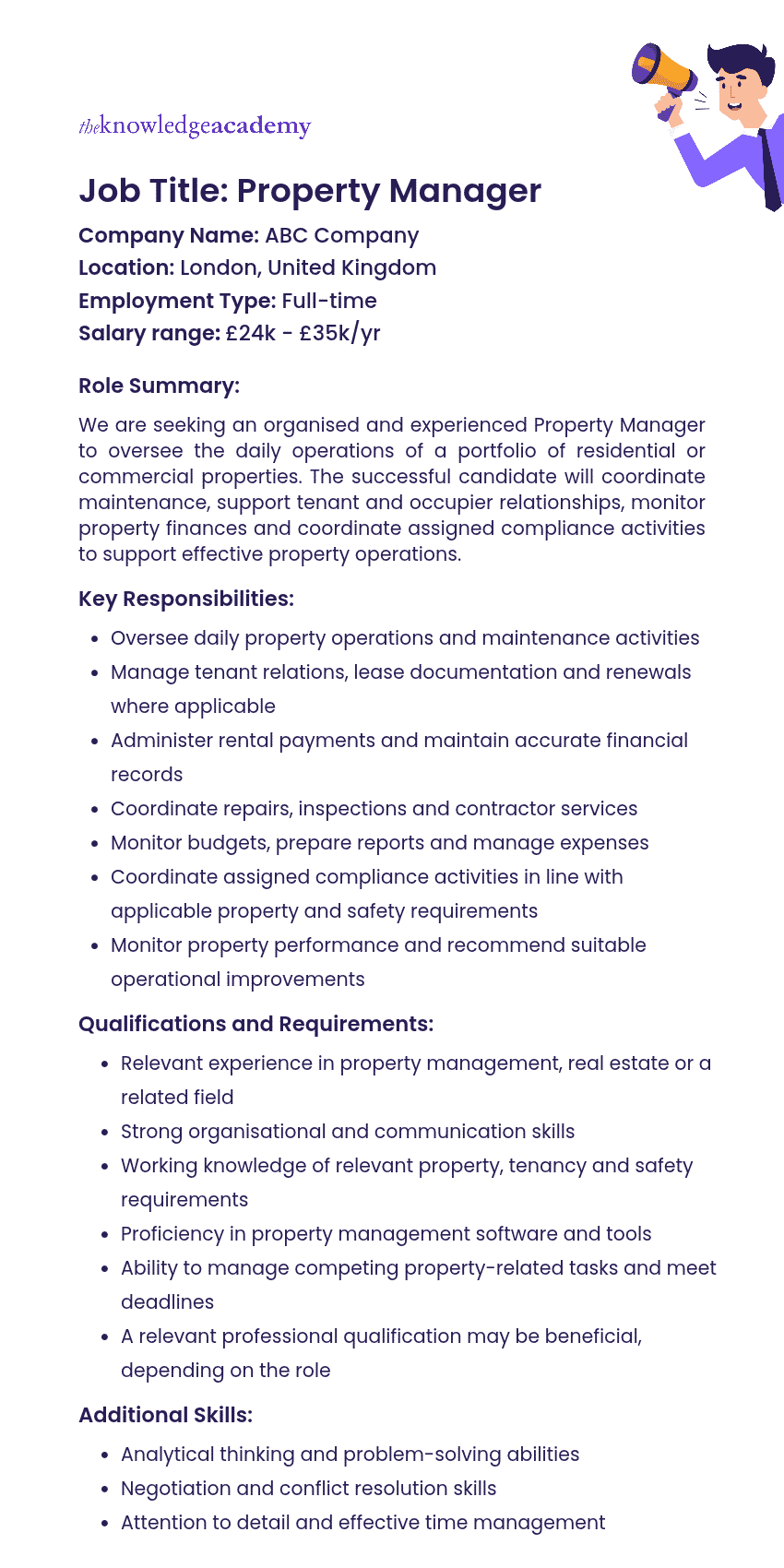
Property Manager Job Description Example
A Property Manager job description outlines the key duties and expectations of professionals responsible for maintaining and overseeing real estate properties on behalf of owners. The following example illustrates how an employer might describe the role, responsibilities and preferred qualifications:

The Knowledge Academy develops accessible learning content across Project Management, IT, Cybersecurity, Data Science, Business Analysis, HR, Accounting and Finance, Leadership and Health and Safety. Its resources combine subject research with clear explanations to help professionals build practical knowledge across a wide range of disciplines.
View Detail

 If you wish to make any changes to your course, please


