


We may not have the course you’re looking for. If you enquire or give us a call on +1 7204454674 and speak to our training experts, we may still be able to help with your training requirements.
Project Planner Job Description: Responsibilities and Salary
ByThe Knowledge AcademyLast updated on: 12 November 2026
Explore the Project Planner job description, covering key responsibilities, qualifications and salary prospects, to understand what the role involves and what employers look for in candidates.

Quick Preview
1. Role: Develops and maintains project schedules, coordinates planning activities and monitors progress against planned timelines.2. Responsibilities: Include schedule development, progress tracking, resource coordination, and reporting.3. Essential skills: Planning, organisation, communication, analytical thinking, and scheduling software proficiency.4. Requirements: Relevant education, technical knowledge, and practical experience, depending on the industry.5. Salary: Varies by country, experience, sector and project complexity.
Every successful project begins with a clear plan. But who helps ensure that tasks are scheduled in the right sequence, resource requirements are considered and deadlines remain achievable? That's where a Project Planner comes in.
From creating detailed schedules to identifying potential delays, Project Planners help turn project objectives into achievable timelines. Their work allows Project Managers to make informed decisions and keep delivery on track.
But what does a Project Planner's role involve and what does it take to succeed in this field? This blog breaks down the job description, covering day-to-day responsibilities and essential skills. Let's dive in!
Who is a Project Planner?
A Project Planner is a professional responsible for developing, maintaining and monitoring project schedules to support the timely completion of project activities. They identify key tasks, estimate durations, coordinate resource requirements and track progress to help projects stay on schedule.
Project Planners work closely with Project Managers and other team members to identify potential delays, manage scheduling dependencies and adjust plans when requirements change. Their role is to provide accurate planning information that supports effective decision-making and successful project delivery.

Key Responsibilities of a Project Planner
A Project Planner helps coordinate project activities, maintain accurate schedules and provide information that supports effective decision-making. Here are some of their key responsibilities:
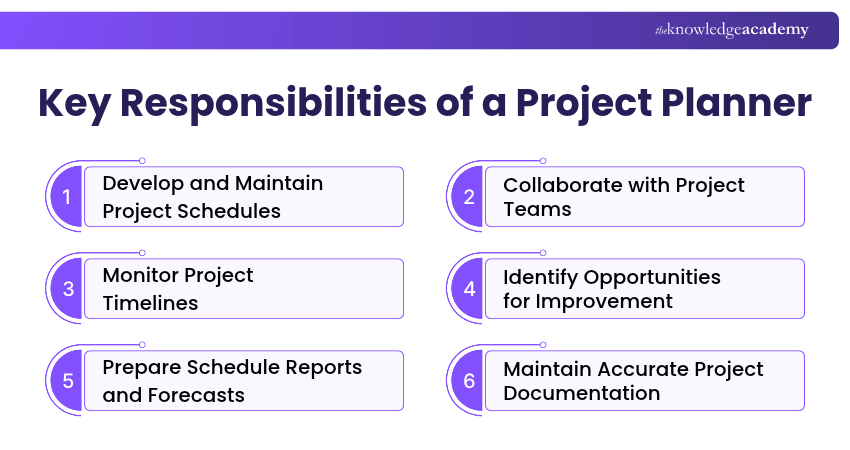
1) Develop and Maintain Project Schedules
Create comprehensive project schedules detailing activities, milestones, dependencies and deadlines. Ensure that schedules reflect the agreed scope of work and are updated when approved changes occur.
2) Collaborate with Project Teams
Work closely with Project Managers, engineers, contractors and other relevant professionals. Gather planning information from different teams to support the coordination of project activities.
3) Monitor Project Timelines
Track progress against planned milestones and identify potential delays. Review schedule deviations and recommend adjustments to support timely project completion.
4) Identify Opportunities for Improvement
Identify scheduling inefficiencies, resource constraints and potential disruptions. Recommend practical strategies to address scheduling risks, improve activity sequencing and reduce avoidable delays.
5) Prepare Schedule Reports and Forecasts
Prepare progress updates, schedule forecasts and planning reports to support Project Managers and senior stakeholders. Highlight critical activities, emerging delays and changes to expected completion dates to support timely decision-making.
6) Maintain Accurate Project Documentation
Keep detailed records of project schedules, resource requirements, approved changes, progress updates and relevant planning assumptions. Ensure planning documentation remains accurate and up to date throughout the project lifecycle.
Learn to plan, monitor and control projects with Project Planning and Control™ (PPC) Foundation Course – Register now!
Project Planner Qualifications and Requirements
The qualifications and requirements for a Project Planner can vary depending on the industry, project complexity, and level of responsibility. Employers generally look for professionals with relevant education, practical experience, and an understanding of project planning methods.
Some of the major requirements include:
1) Educational Qualifications
A bachelor's degree in engineering, business administration, project management, or a related field may be preferred. However, educational expectations differ between industries and employers.
2) Relevant Work Experience
Previous experience in project planning, scheduling, or a related technical role can be valuable. Senior positions may require several years of experience supporting complex projects and coordinating schedules across multiple teams.
3) Knowledge of Planning Techniques
Employers may expect an understanding of work breakdown structures, activity sequencing, critical path analysis, schedule baselines, and progress measurement. These techniques support realistic project scheduling and control.
4) Proficiency in Project Planning Software
Professionals may need experience with Primavera P6, Microsoft Project or other planning applications. In construction-related roles, knowledge of tools such as CCS Candy may also be advantageous.
5) Professional Certifications
Relevant certifications, such as PMP® or PRINCE2®, may strengthen a candidate's professional profile, particularly for experienced professionals pursuing broader project management responsibilities. However, these certifications are not universally mandatory for Project Planner positions.
6) Industry Knowledge
Understanding the requirements of the relevant industry helps Project Planners develop practical schedules. For example, construction projects may require knowledge of site activities, procurement timelines, and contractor coordination. Professional planning and scheduling expectations vary with experience and industry.
Pro Tip
When applying for a Project Planner role, include measurable examples of your scheduling experience. Highlight the complexity of projects handled, planning tools used and improvements achieved through your contributions.
Stay ahead of project risks and delays with the Project Planning and Control™ (PPC) Practitioner Course – Sign up now!
Project Planner Salary
Project Planners work across different industries, including construction, engineering, manufacturing, and technology. Their salaries can vary depending on professional experience, qualifications, country, industry, and project complexity.
The table below highlights how average annual salary estimates for Project Planners vary across selected countries.
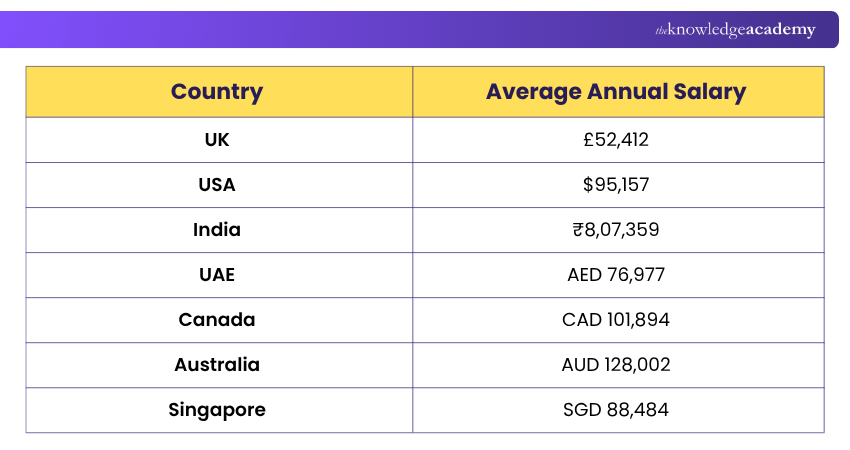
Source: Indeed
Project Planner Job Description Examples
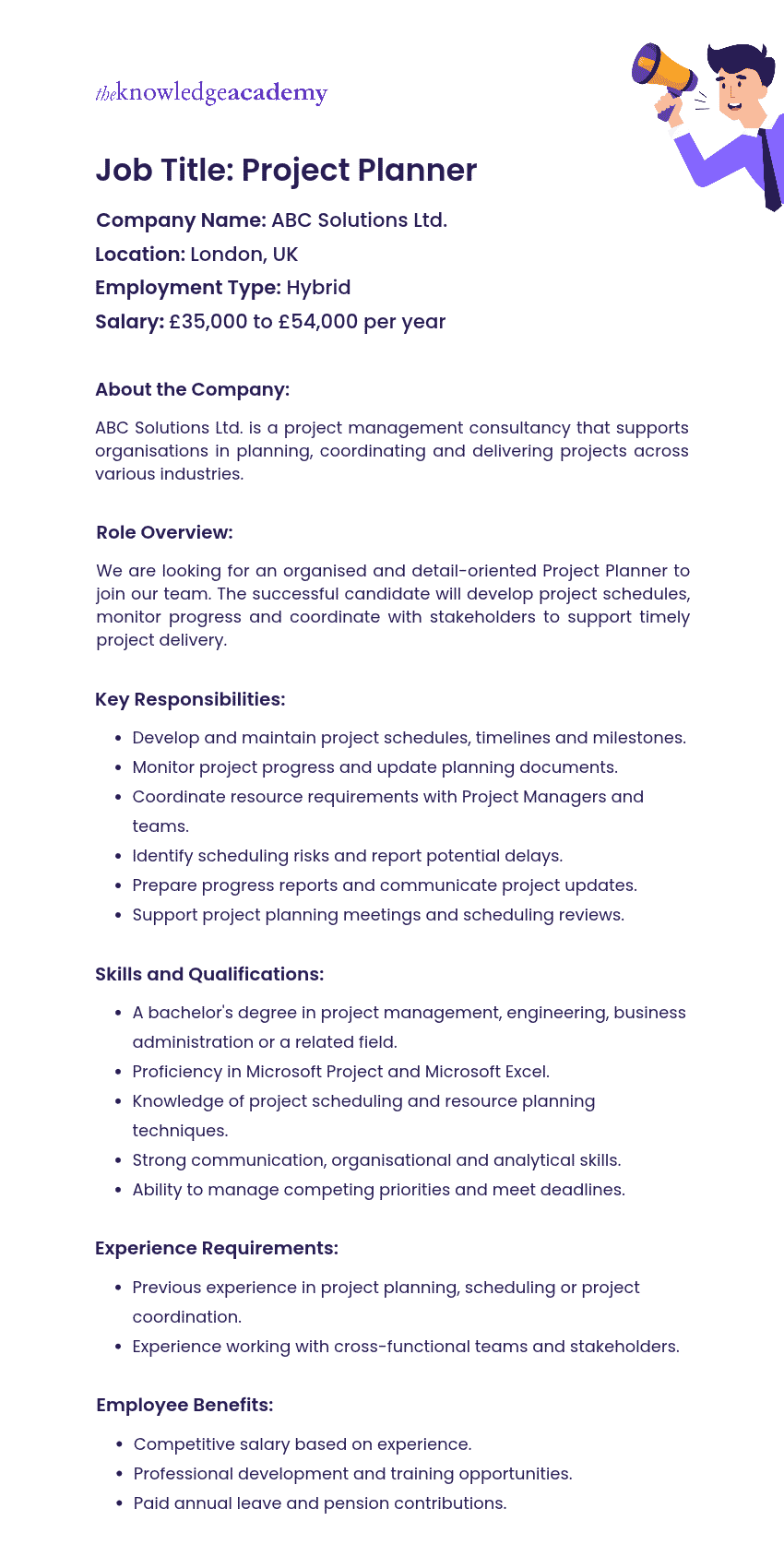
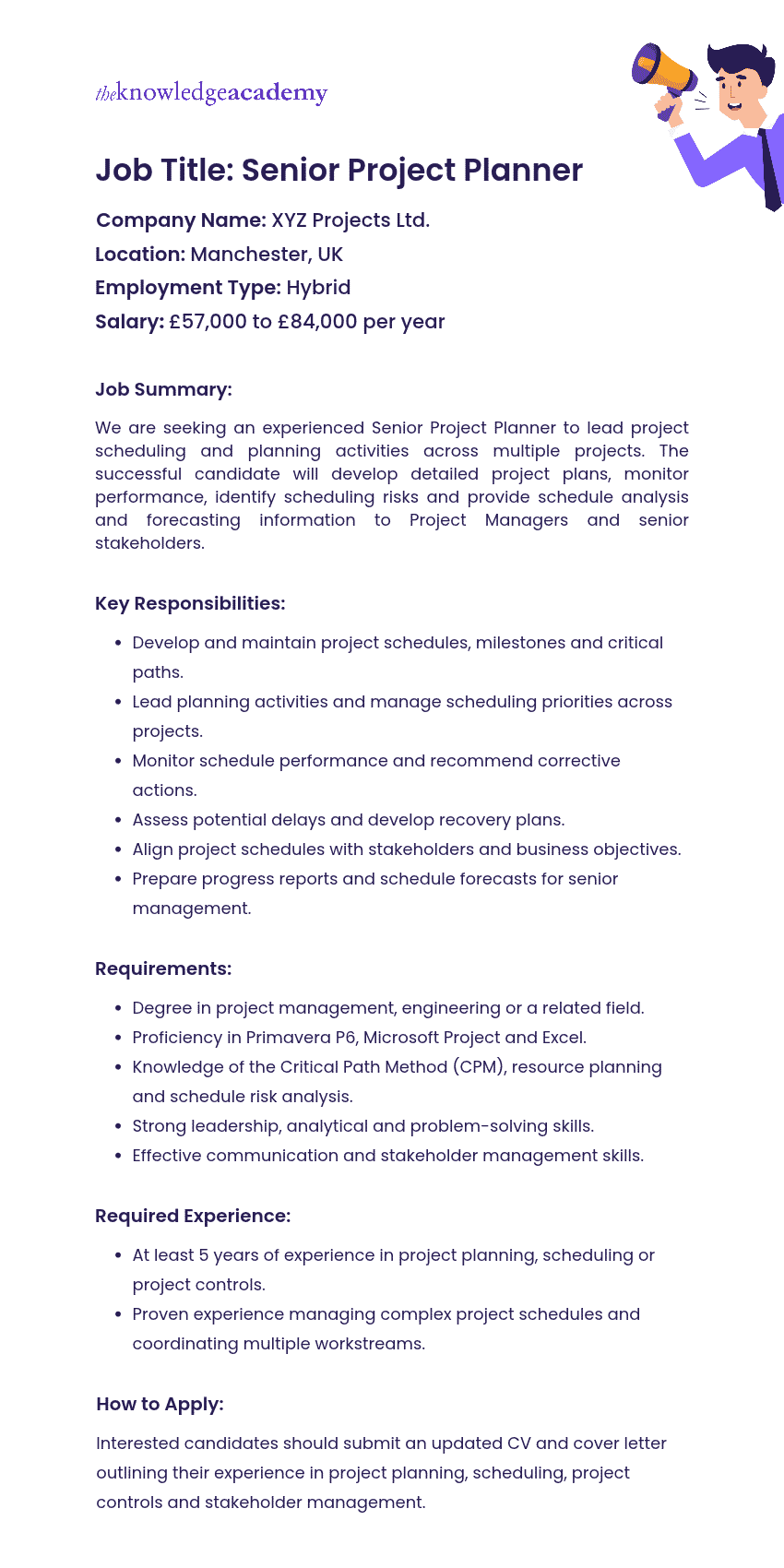
Project Planner job descriptions can vary depending on the industry, project requirements and level of experience. The following examples illustrate the typical duties, skills and qualifications employers may look for when hiring a Project Planner.
Project Planner Job Description Template
This example outlines a typical Project Planner role, focusing on project scheduling, resource coordination and progress monitoring to support timely project delivery.
Senior Project Planner Job Description Template
A Senior Project Planner takes on greater responsibility for overseeing complex project schedules, managing planning risks and supporting strategic decision-making. The following template outlines the key responsibilities, skills and qualifications typically required for this senior-level role:

The Knowledge Academy develops accessible learning content across Project Management, IT, Cybersecurity, Data Science, Business Analysis, HR, Accounting and Finance, Leadership and Health and Safety. Its resources combine subject research with clear explanations to help professionals build practical knowledge across a wide range of disciplines.
View Detail

 If you wish to make any changes to your course, please


