


We may not have the course you’re looking for. If you enquire or give us a call on +44 20 4538 6376 and speak to our training experts, we may still be able to help with your training requirements.
Product Owner Roles and Responsibilities: Key Duties Explained
ByThe Knowledge AcademyLast updated on: 04 November 2026
Learn how Product Owners guide Scrum teams towards valuable outcomes by aligning product direction, stakeholder needs and evidence-based decisions, with additional insights into the skills and salary expectations associated with the role.

Overview
1. Product Owners maximise product value and guide product decisions.2. They define the Product Goal and manage the Product Backlog.3. Prioritisation helps Scrum Teams focus on the most valuable work.4. Stakeholder collaboration and feedback support informed product decisions.5. Strategic, analytical and communication skills are important for the role.
What if a Scrum team delivers every planned feature on time, yet customers barely use the product? Everything appears to have gone according to plan, except the outcome that matters most.
This gap between delivering features and creating real value can cost businesses time, resources and opportunities. Closing it requires more than efficient development. It demands a clear understanding of customer needs, business priorities and what deserves attention next.
That's where the Product Owner comes in. But how do they turn competing demands into a product worth building?
In this blog, we'll explore the key roles and responsibilities of a Product Owner, the decisions that shape product success and the essential skills needed to excel in this role.
Who is a Product Owner?
A Product Owner is a member of the Scrum team responsible for maximising the value of the product resulting from the team's work. They connect customer needs, business objectives and product development activities to ensure the team focuses on delivering meaningful outcomes. They also collaborate with stakeholders to understand requirements, gather feedback and make informed decisions about product priorities.

Roles and Responsibilities of a Product Owner
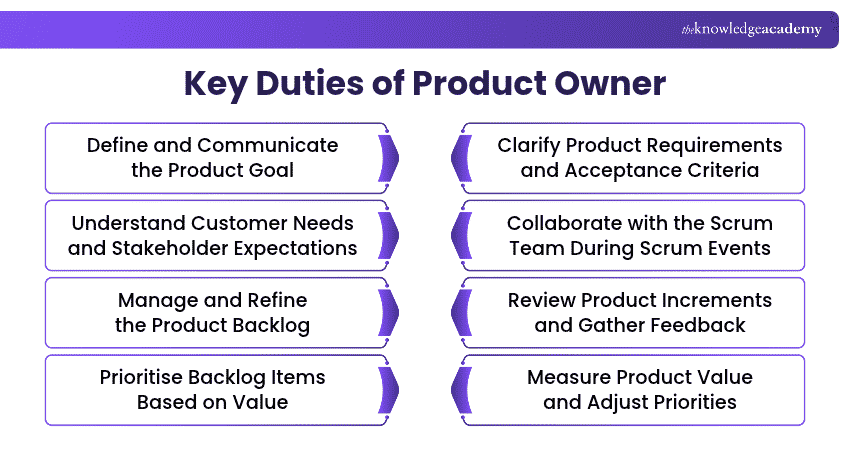
A Product Owner turns product goals, customer insights and stakeholder needs into clear priorities for the Scrum team. Their work involves managing the Product Backlog, making value-based decisions, clarifying expectations and adapting priorities as new information emerges.
The following responsibilities show how Product Owners guide product development and support valuable outcomes.
1) Define and Communicate the Product Goal
The Product Owner develops and communicates the Product Goal, which describes the desired future state of the product. This goal provides direction for the Scrum team and helps connect development activities with broader business objectives. A clear Product Goal enables everyone involved to understand what the product aims to achieve.
Example: A Product Owner sets a goal to simplify online purchasing by reducing unnecessary steps in an e-commerce checkout process.
Key Actions: Establish a clear Product Goal, explain its intended business value and maintain a shared understanding across the Scrum team.
2) Understand Customer Needs and Stakeholder Expectations
A Product Owner identifies customer problems, understands stakeholder expectations and considers how different requirements contribute to product success. This involves engaging with customers, business representatives and other relevant stakeholders to gather insights and understand their concerns.
Example: A Product Owner interviews banking customers and consults compliance teams to understand the requirements for a new mobile payment feature.
Key Actions: Conduct stakeholder discussions, identify customer pain points and balance different expectations against the product's objectives.
3) Manage and Refine the Product Backlog
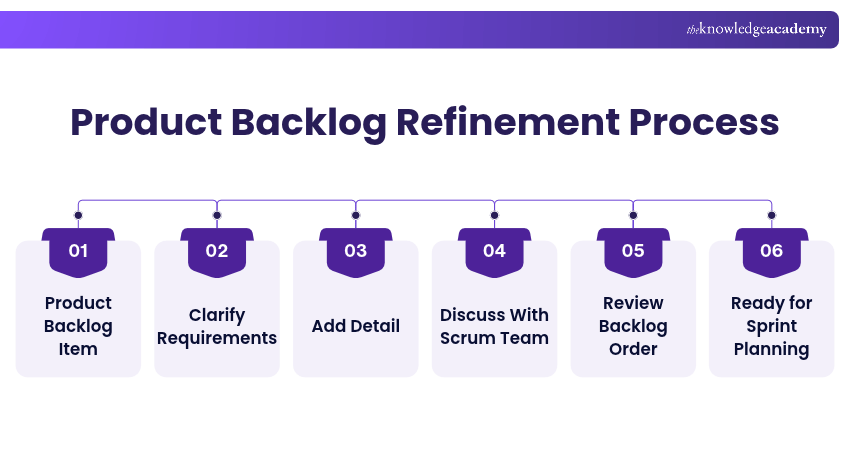
The Product Owner is accountable for effective Product Backlog management. The Product Backlog is an evolving, ordered list of what is needed to improve the product. Backlog management involves ensuring items remain visible, understandable and sufficiently detailed for productive discussions. Refinement is an ongoing collaborative activity that helps the Scrum team develop a shared understanding of upcoming work.
Example: A Product Owner updates the backlog for a healthcare application by adding new appointment-booking requirements and removing outdated requests.
Key Actions: Ensure the Product Backlog remains relevant, transparent and understood, and collaborate with developers during refinement.
4) Prioritise Backlog Items Based on Value
Not every product requirement delivers equal value. The Product Owner orders backlog items by considering customer benefits, business priorities, risks and other relevant factors. Effective prioritisation helps the Scrum team focus on work that contributes meaningfully to the Product Goal while making appropriate trade-offs between competing demands.
Example: A Product Owner prioritises fixing a payment failure over introducing a new visual feature because the issue directly affects customer transactions.
Key Actions: Evaluate the value of backlog items, make informed trade-offs and adjust their ordering when business needs change.
Trainer’s Pro Tip
Avoid prioritising backlog items based only on urgency. Consider customer value, business impact, risk and alignment with the Product Goal before deciding what should move forward.
5) Clarify Product Requirements and Acceptance Criteria
The Product Owner is accountable for ensuring that Product Backlog items are clearly communicated so the Scrum team understands their purpose and expected outcomes. This can involve explaining functional expectations, resolving uncertainties and collaborating with developers to refine requirements. User stories and acceptance criteria are useful techniques for establishing a shared understanding.
Example: A Product Owner clarifies that a password reset feature must allow users to securely recover account access through a verified email address.
Key Actions: Explain requirements clearly, resolve questions about expected behaviour and collaborate on suitable acceptance criteria.
Strengthen your ability to define clear requirements and acceptance criteria with our Agile User Stories Training – Sign up today!
6) Collaborate with the Scrum Team During Scrum Events
The Product Owner collaborates with the Scrum team during relevant Scrum events to support transparency and informed decisions. During Sprint Planning, they propose how the product could increase its value during the Sprint and help the Scrum team understand how important backlog items relate to the Product Goal. They also participate in Sprint Reviews and Sprint Retrospectives, contributing product context and supporting effective collaboration.
Example: During Sprint Planning, a Product Owner explains the business value of proposed features while developers select the Product Backlog items they believe they can complete during the Sprint.
Key Actions: Prepare for Sprint Planning, participate in Sprint Reviews and Retrospectives, and support productive collaboration throughout the Sprint.
Quick Check
Which Scrum event gives stakeholders an opportunity to inspect the Product Increment and discuss future adaptations?A. Sprint PlanningB. Daily ScrumC. Sprint ReviewD. Sprint RetrospectiveAnswer: C. Sprint Review
7) Review Product Increments and Gather Feedback
A Product Owner collaborates with the Scrum team and stakeholders to inspect completed product increments and understand how effectively they address user needs. Feedback gathered during Sprint Reviews, product demonstrations and customer interactions provides insights into functionality, usability and potential improvements.
Example: After reviewing a new mobile banking feature, a Product Owner gathers customer feedback indicating that the transaction confirmation screen needs clearer information.
Key Actions: Examine delivered functionality, collect relevant feedback and identify improvements based on stakeholder observations.
8) Measure Product Value and Adjust Priorities
The Product Owner evaluates whether product development efforts are producing meaningful outcomes. This involves examining performance indicators such as customer adoption, retention, satisfaction and business impact. These measurements provide evidence of progress towards the Product Goal and support decisions about the product's future direction.
Example: A Product Owner reviews usage data after launching a new subscription feature and discovers that customer adoption is lower than expected.
Key Actions: Monitor relevant product metrics, compare outcomes against objectives and use performance insights to guide future product decisions.
Remember
Product Owner success is measured by the value and outcomes the product creates, not simply by how many backlog items or features are completed.
Essential Skills for a Product Owner
A successful Product Owner needs a combination of analytical, interpersonal and product management skills. These abilities help professionals understand complex business needs, make informed decisions and collaborate effectively with Scrum teams and stakeholders.
The following skills are particularly valuable:
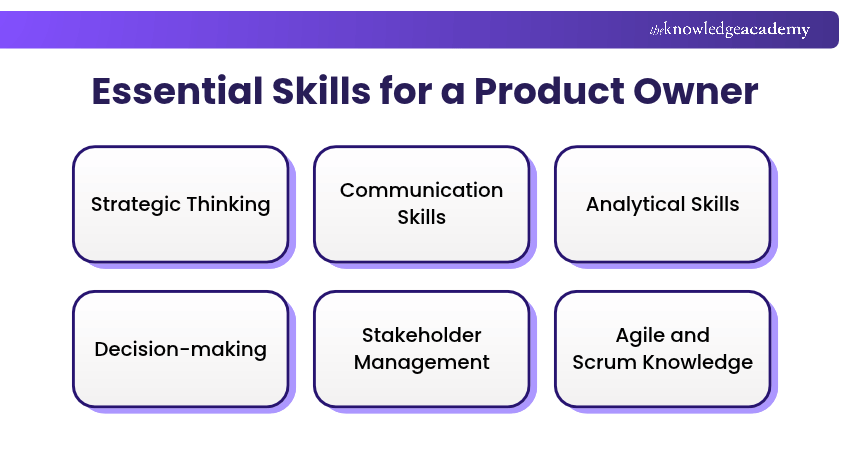
1) Strategic Thinking: Connect product decisions with long-term business objectives and customer value.
2) Communication Skills: Explain product goals, expectations and decisions clearly to different audiences.
3) Analytical Skills: Interpret customer insights, product data and business information to support decisions.
4) Decision-making: Evaluate competing demands and select appropriate approaches based on available evidence.
5) Stakeholder Management: Build productive relationships and address concerns across different business groups.
6) Agile and Scrum Knowledge: Understand Scrum principles, accountabilities and practices to support effective product development.
Developing these skills through practical experience, professional training and continuous learning helps Product Owners perform their responsibilities more effectively.
Salary of a Product Owner
Product Owner salaries vary across countries depending on experience, industry, location and organisational size. Salary levels can also differ according to industry expertise, product complexity and individual responsibilities.
The following table compares the approximate average annual salaries of Product Owners across seven different countries:

Source: Glassdoor
Effective Product Owners connect product direction with customer needs and measurable value. By strengthening decision-making, collaboration and product management skills, professionals can guide Scrum teams more effectively and support better product outcomes.
Build practical Scrum knowledge to manage priorities, collaboration and product delivery with our Managing Agile Projects with Scrum Training – Register now!

The Knowledge Academy develops accessible learning content across Project Management, IT, Cybersecurity, Data Science, Business Analysis, HR, Accounting and Finance, Leadership and Health and Safety. Its resources combine subject research with clear explanations to help professionals build practical knowledge across a wide range of disciplines.
View Detail

 If you wish to make any changes to your course, please


