


We may not have the course you’re looking for. If you enquire or give us a call on 01344203999 and speak to our training experts, we may still be able to help with your training requirements.
People Manager Job Description
ByThe Knowledge AcademyLast updated on: 06 November 2026
A People Manager guides employees, supports their development and helps teams achieve organisational goals. Explore the key responsibilities, essential skills and qualifications required for this role, along with a practical People Manager job description example.
At a Glance
Here's a quick look at the role of a People Manager:
1. Primary Role: Guide employees, coordinate team activities and support workplace performance.2. Key Responsibilities: Oversee performance, support employee development and manage workplace challenges.3. Essential Skills: Communication, emotional intelligence, problem-solving and decision-making.4. Qualifications: Relevant leadership experience is valuable, while specific educational and professional qualifications vary by role and employer.
What makes employees feel motivated, valued and confident in their work? Often, it comes down to having a manager who knows how to bring out the best in people. From handling workplace challenges to supporting career growth, a People Manager plays an important role in building a team where everyone can thrive.
But being a People Manager involves more than simply assigning tasks and overseeing performance. So, what does the role demand? It requires understanding different personalities, making thoughtful decisions and knowing when to guide, listen or step in. Let's explore what goes into making this role both challenging and rewarding.
Who is a People Manager?
A People Manager is a professional responsible for overseeing and supporting a team of employees. They play a critical role in managing day-to-day activities and encouraging employee development to achieve organisational objectives.
They help team members stay motivated, productive and engaged in their roles. Depending on the organisation, they may also work with HR professionals on recruitment, employee relations and workplace policies. Their primary responsibility is to support employees while ensuring that team activities align with organisational goals.

Responsibilities of a People Manager
People Managers carry out a range of responsibilities to support employees, maintain team performance and achieve organisational objectives. Here are some of their key responsibilities:
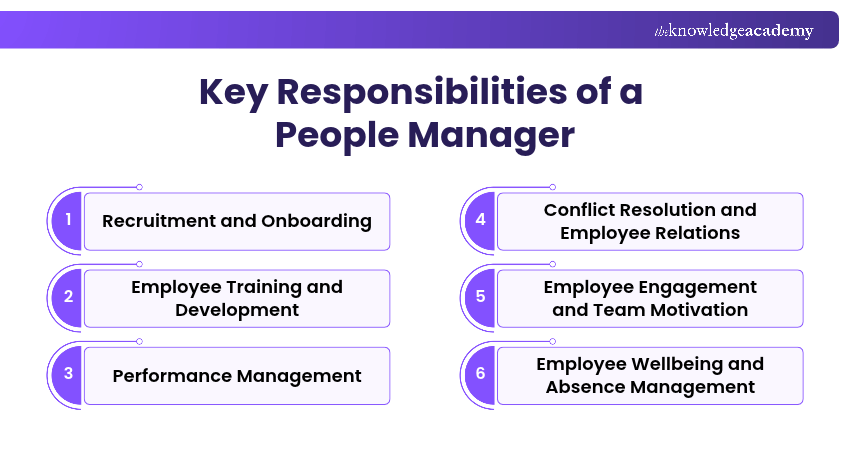
1) Recruitment and Onboarding
People Managers often contribute to recruiting and onboarding new team members. They may participate in interviews, assess candidates and work with recruitment teams to select suitable employees. They also support new employees during onboarding, helping them understand their responsibilities, team expectations and organisational culture.
2) Employee Training and Development
People Managers help their team members develop the skills and knowledge required to perform their roles effectively. They identify training needs, offer mentoring and guidance, and create opportunities for professional growth. They may also work with HR or learning and development teams to arrange suitable training programmes.
3) Performance Management
People Managers regularly review and assess their team members' performance. They set clear goals, provide constructive feedback and conduct performance reviews to help employees meet expectations. They also recognise achievements, identify areas for improvement and support employees who need additional guidance.
4) Conflict Resolution and Employee Relations
People Managers help address disagreements and workplace issues among team members, involving HR or following appropriate grievance or disciplinary procedures when necessary. They listen to employee concerns, identify the causes of conflicts and work towards fair and appropriate solutions, ensuring that formal disciplinary or grievance matters are handled in accordance with applicable workplace procedures. This helps maintain professional relationships and encourages a co-operative working environment.
5) Employee Engagement and Team Motivation
People Managers encourage employee engagement and motivation while building a supportive atmosphere at work. They recognise staff achievements, encourage collaboration and provide opportunities for employees to share their ideas and concerns. These efforts help strengthen team relationships and improve the overall employee experience.
6) Employee Wellbeing and Absence Management
People Managers support employee wellbeing by monitoring workloads, responding to workplace concerns and managing attendance or absence in line with organisational policies. They may also work with HR to arrange appropriate support and reasonable workplace adjustments when required.
Essential Skills for a People Manager
A People Manager must possess certain skills to support collaboration, resolve conflicts and guide teams towards success in diverse workplace environments. Here are some of the essential skills that help People Managers manage their responsibilities effectively:
a) Effective Communication and Active Listening: People Managers must communicate expectations clearly, provide constructive feedback and listen to employee concerns. These skills help prevent misunderstandings, build trust and encourage open discussions.
b) Emotional Intelligence: Emotional intelligence helps People Managers recognise and understand emotions, show empathy and respond calmly to workplace challenges. It also supports stronger relationships and more thoughtful responses to sensitive situations.
c) Adaptability: People Managers must adapt to changing priorities, team requirements and organisational processes. Being flexible helps them handle unexpected challenges and guide employees through change.
d) Problem-solving and Conflict Resolution: People Managers must identify workplace problems, understand their causes and work towards fair solutions. These skills help resolve disagreements and maintain a productive working environment.
e) Accountability and Decision-making: People Managers must take responsibility for their actions and make informed decisions. By demonstrating accountability, they can set a positive example for employees and encourage greater ownership of responsibilities.
f) Planning and Organisation: People Managers need to set priorities, organise tasks and manage resources effectively. These skills help them balance workloads, meet deadlines and achieve team objectives.
g) Relationship Building and Trust: People Managers build trust by treating employees fairly, respecting confidentiality and keeping commitments. These behaviours help establish reliable professional relationships and create a workplace where employees are comfortable raising concerns.
Great performance doesn't happen by accident! Set clear goals and inspire better results with the Performance Management Training today!
Qualifications Required to Become a People Manager
The qualifications required to become a People Manager depend on the organisation, industry and responsibilities involved. While some employers prefer individuals with relevant qualifications, practical experience in managing employees is often equally important.
Here are some of the qualifications and experience that can help professionals prepare for this role:
1) Educational Qualifications
A degree in human resource management, management or a related field may be beneficial for aspiring People Managers. However, a specific degree is not always necessary. Some professionals progress into people management roles through relevant work experience and internal promotions.
2) Professional Qualifications
Professional qualifications can help individuals strengthen their understanding of people management, leadership and employee development. Leadership and management qualifications may be particularly relevant to professionals responsible for supervising teams.
For HR-focused roles, qualifications such as the CIPD Level 5 Associate Diploma in People Management may be valuable. However, CIPD qualifications are not mandatory for every People Manager position.
3) Relevant Work Experience
Practical experience in team leadership, supervision or employee management is valuable for becoming a People Manager. Employers may look for candidates who have experience allocating responsibilities, supporting employee development, conducting performance discussions and resolving workplace challenges.
Trainer's Insight
You do not always need a formal management title to demonstrate leadership experience. Supporting new employees, coordinating team activities, or leading small projects can help you develop relevant skills. When applying for a People Manager position, explain how these experiences contributed to team performance.
4) Knowledge of Workplace Policies
People Managers should understand relevant workplace policies, employee rights and organisational procedures. Knowledge of areas such as equality, workplace well-being, performance management and employee relations helps them manage employees fairly.
Become a trusted people professional by joining the CIPD Level 5 Associate Diploma in People Management Course today!
People Manager Job Description Example
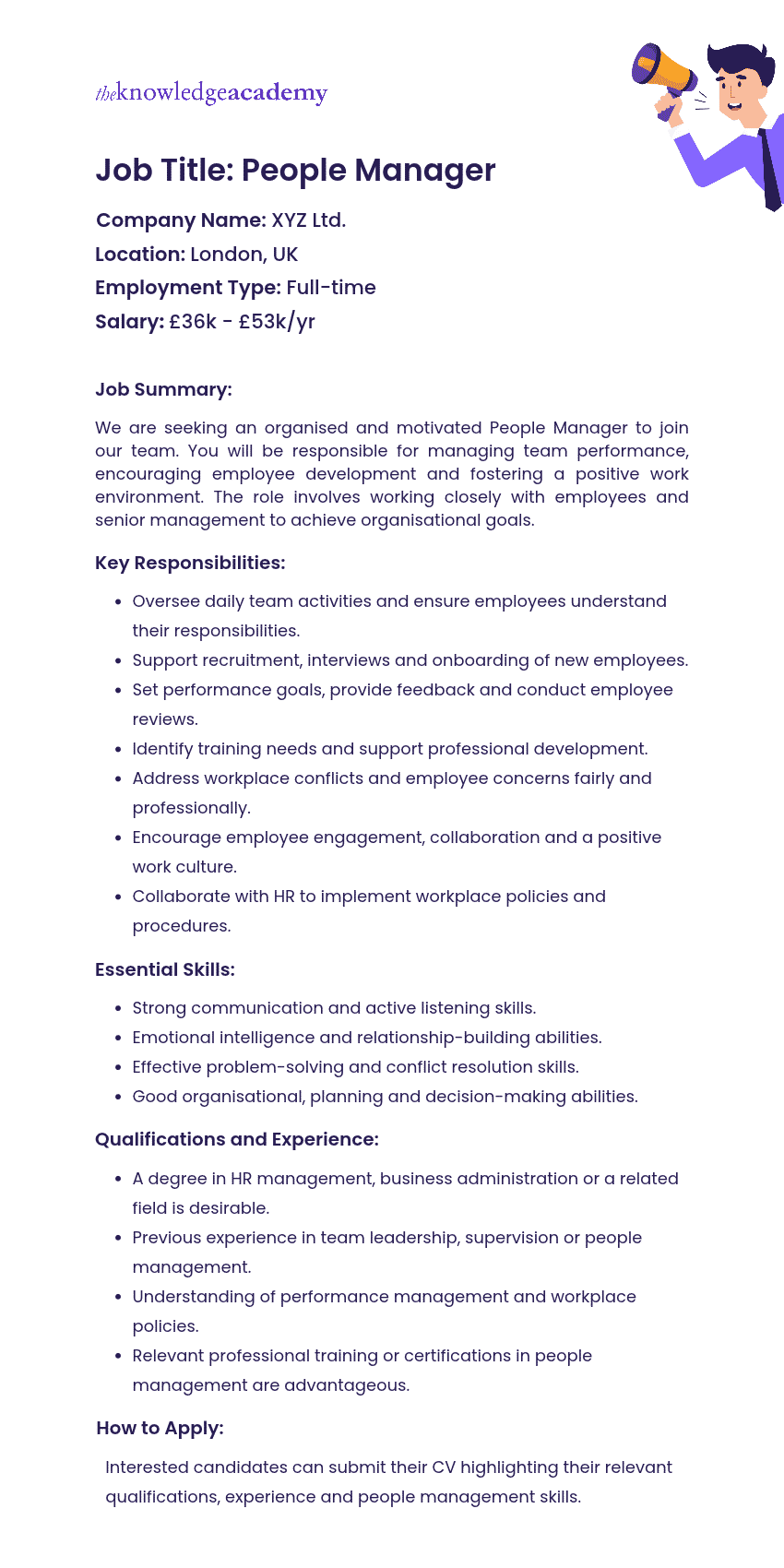
A People Manager job description outlines the main responsibilities, skills and qualifications required for the position. It helps candidates understand the role and enables employers to communicate their expectations clearly.
Let's look at an example of a People Manager job description that organisations can adapt according to their requirements:

The Knowledge Academy develops accessible learning content across Project Management, IT, Cybersecurity, Data Science, Business Analysis, HR, Accounting and Finance, Leadership and Health and Safety. Its resources combine subject research with clear explanations to help professionals build practical knowledge across a wide range of disciplines.
View Detail

 If you wish to make any changes to your course, please


