


We may not have the course you’re looking for. If you enquire or give us a call on 01344203999 and speak to our training experts, we may still be able to help with your training requirements.
How to Get a Job in Cloud Computing?
ByThe Knowledge AcademyLast updated on: 12 November 2026
Wondering how to get a job in cloud computing? Explore six practical steps to build your skills, gain hands-on experience and improve your job prospects.
What You'll Learn
1. Understand the foundational knowledge and technical skills needed to pursue a career in cloud computing.2. Explore relevant cloud certifications and ways to gain practical experience through projects and hands-on learning.3. Discover how professional networking can help you identify opportunities and connect with industry professionals.4. Learn how to create a cloud-focused CV and demonstrate your abilities to potential employers.
“I know what cloud computing is. But can I actually get paid to work with it?”
That's where curiosity turns into a career goal.
Understanding cloud technology is one thing. Knowing how to configure services, troubleshoot issues and demonstrate your abilities to employers is another. The difference? A clear plan and practical experience.
Whether you're starting from scratch or switching careers, this blog walks you through the steps to help you pursue a job in cloud computing. Read on!
How to Get a Job in Cloud Computing?
Getting a job in cloud computing requires more than understanding cloud technologies. You need relevant technical skills, practical experience and a clear approach to finding suitable opportunities. The following steps outline how to turn your interest in cloud technology into a potential career path:
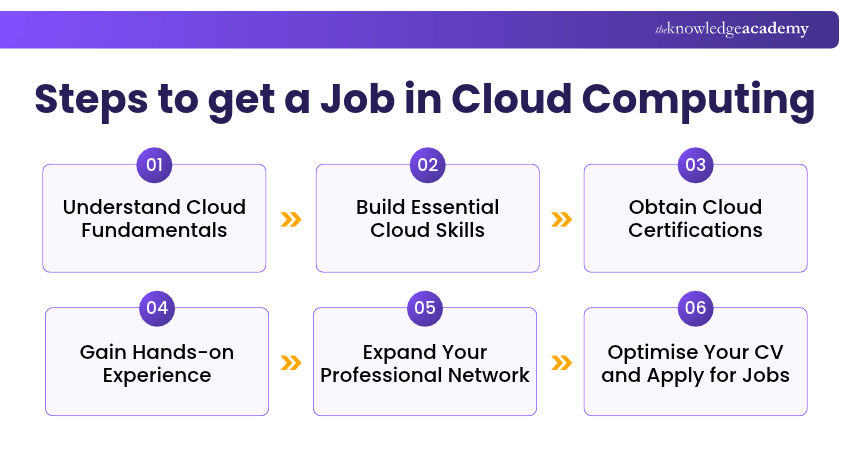
1) Build a Foundation in Cloud Computing
Before applying for cloud computing jobs, develop a clear understanding of how cloud services work. Start with basic concepts such as virtualisation, cloud storage, networking, computing resources and cloud security. You should also understand the differences between public, private and hybrid cloud environments and become familiar with common cloud service models.
A degree in computer science, information technology or any related subject can be beneficial, particularly for certain technical positions. However, not every cloud role requires a formal degree. You can also develop foundational knowledge through professional training, online learning resources, guided labs and self-study.

2) Develop Essential Cloud Computing Skills
Different cloud computing roles require different technical capabilities. For example, a Cloud Developer may focus on programming and application deployment, while a Cloud Administrator may concentrate on infrastructure management and system monitoring.
Some essential cloud computing skills include:
a) Cloud Platform Knowledge: Become familiar with major cloud platforms like Microsoft Azure, Amazon Web Services (AWS) and Google Cloud.
b) Networking: Understand TCP/IP, DNS, IP addressing, virtual networks and network security fundamentals.
c) Operating Systems: Develop knowledge of Linux and Windows environments, particularly system administration and command-line operations.
d) Programming and Scripting: Learn relevant languages such as Python, PowerShell or Bash to support automation and technical tasks.
e) Cloud Security: Understand identity and access management, authentication, encryption and the shared responsibility model.
f) Virtualisation and Containers: Learn how virtual machines and container technologies such as Docker support modern applications.
g) Infrastructure as Code (IaC): Become familiar with tools such as Terraform or platform-native deployment technologies to understand automated infrastructure provisioning.
In addition to technical expertise, employers value communication, teamwork, problem-solving and adaptability. Developing these skills can help you work effectively with technical teams and respond to changing project requirements.
3) Earn Relevant Cloud Certifications
Cloud certifications can help demonstrate your understanding of cloud technologies and specific platforms. They are particularly useful for professionals looking to build structured knowledge or move into cloud-related roles. However, choosing the right certification depends on your existing experience and career goals.
For example, AWS Cloud Practitioner introduces foundational AWS concepts, while Microsoft Azure Fundamentals AZ-900 covers cloud principles and core Azure services. Associate-level certifications generally require a deeper understanding of platform services and practical administration or implementation skills.
Discover AWS core services and unlock the power of cloud innovation with AWS Cloud Practitioner Training – Register today!
4) Gain Hands-on Experience Through Cloud Projects
Practical experience plays a substantial role in preparing for cloud computing jobs. Employers often want to understand whether candidates can use cloud technologies to complete tasks and solve technical problems. Even without professional cloud experience, you can develop these abilities through personal projects, internships, guided labs and open-source contributions.
Here are some beginner-friendly cloud computing project ideas:
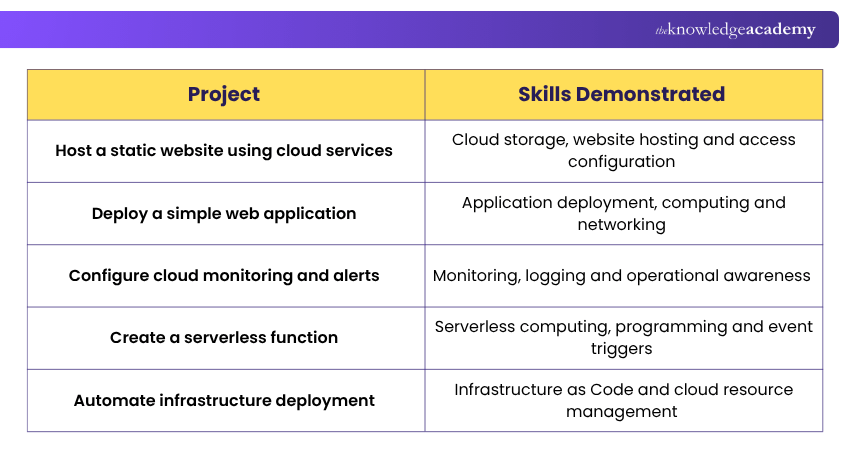
For example, you could deploy a small website using AWS, Azure or Google Cloud and document the configuration process.
Explain which services you used, the challenges you faced and how you resolved them. You can then showcase your project documentation through GitHub or a personal portfolio.
5) Build Your Professional Network
Professional networking can help you discover career opportunities, learn from experienced professionals and understand current industry requirements. If you're new to cloud computing or planning a career change, connecting with people in the industry can provide valuable guidance.
Here are some practical ways to expand your professional network:
a) Join cloud computing communities and professional groups on LinkedIn.
b) Attend webinars, industry events, workshops and technical meetups.
c) Participate in discussions about AWS, Azure, Google Cloud and related technologies.
d) Connect with experienced Cloud Engineers and other IT professionals.
e) Share your learning progress, certifications and practical projects online.
Networking can also help you discover entry-level opportunities, internships and industry developments.
6) Create a Cloud-focused CV and Apply for Jobs
Once you have developed relevant skills and completed practical projects, start preparing your job applications. Avoid using the same CV for every cloud computing position. Different employers may require different platforms, tools and technical abilities.
Your cloud-focused CV should include:
a) Technical Skills: Mention the cloud platforms, operating systems, networking concepts and tools you understand.
b) Certifications: Include relevant completed certifications and qualifications.
c) Practical Projects: Explain the projects you completed, the technologies used and the outcomes achieved.
d) Transferable Skills: Highlight problem-solving, communication, teamwork and technical experience gained from previous roles.
e) Relevant Experience: Include internships, IT support work, volunteering or other practical activities connected to the position.
For candidates with limited professional experience, a strong project portfolio can help demonstrate technical knowledge and initiative.
Trainer's Insight
When applying for cloud computing roles, don't simply list the services or tools you've learned. Explain how you used them to complete a project, solve a technical problem or improve a process. A well-documented project can help employers understand your practical abilities, especially when you have limited professional experience.
Build in-demand cloud skills and stay ahead in the tech landscape with the Cloud Computing Training now!
Common Job Roles in Cloud Computing
Cloud computing offers several career opportunities across infrastructure, development, security and architecture. The right position depends on your technical skills, interests and previous experience. Here's a quick glimpse into the common cloud computing roles:
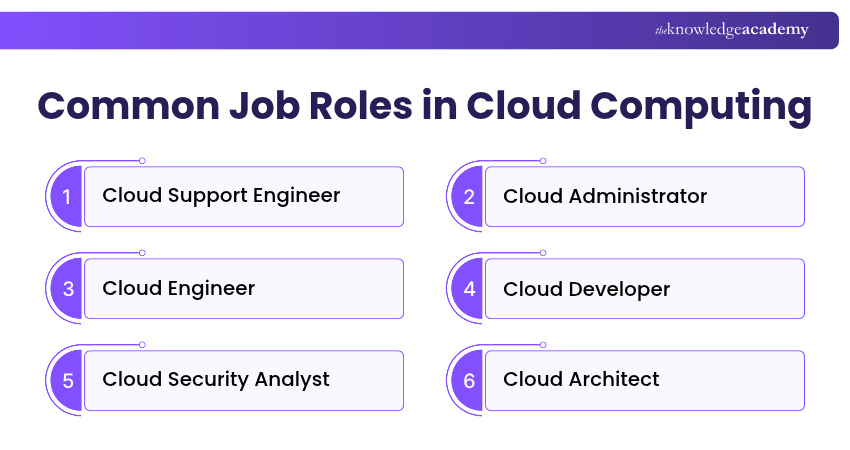
1) Cloud Support Engineer
A Cloud Support Engineer helps users and organisations resolve technical problems involving cloud services and infrastructure. Their responsibilities may include troubleshooting connectivity issues, monitoring cloud services, investigating errors and assisting customers with technical problems.
This role can be a suitable starting point for professionals with foundational cloud knowledge, networking skills and technical support experience.
2) Cloud Administrator
A Cloud Administrator manages and maintains an organisation's cloud resources and services. Their responsibilities commonly include configuring cloud environments, monitoring resources, managing user access and supporting system availability.
Cloud Administrators may also assist with security configurations, backups and resource optimisation. This role may suit professionals interested in infrastructure management, system administration and cloud operations.
3) Cloud Engineer
A Cloud Engineer designs, deploys and maintains cloud infrastructure to support business applications and services. Their responsibilities may include configuring virtual networks, managing computing resources, automating deployments and monitoring cloud environments.
Cloud Engineers often work with technologies such as AWS, Azure, Google Cloud, scripting languages and Infrastructure as Code tools. Depending on the organisation, junior opportunities may be available to candidates with suitable technical foundations and practical experience.
4) Cloud Developer
A Cloud Developer builds and maintains applications designed to run on cloud platforms. Their responsibilities may include writing application code, integrating cloud services, developing APIs and supporting application deployments.
Cloud Developers often need programming knowledge, software development experience and familiarity with cloud-native technologies. This role is ideal for individuals interested in programming, application development and building cloud-based solutions.
5) Cloud Security Analyst
A Cloud Security Analyst helps organisations identify and manage security risks within cloud environments. Their work may involve monitoring security alerts, reviewing access controls, assessing vulnerabilities and supporting security investigations.
These professionals need knowledge of networking, identity management, cloud security principles and relevant security tools. Some junior opportunities are available, although many positions require previous IT or cyber security experience.
6) Cloud Architect
A Cloud Architect designs cloud infrastructure and technical solutions based on an organisation's requirements. Their responsibilities include selecting appropriate cloud services, designing scalable architectures and considering security, reliability, performance and cost. Cloud Architects typically require substantial experience in cloud engineering, infrastructure or related technical roles.
Learn to leverage AI technologies within modern cloud environments with Certified Artificial Intelligence (AI) for Cloud Professionals Training – Join now!
Which Cloud Computing Career is Right for You?
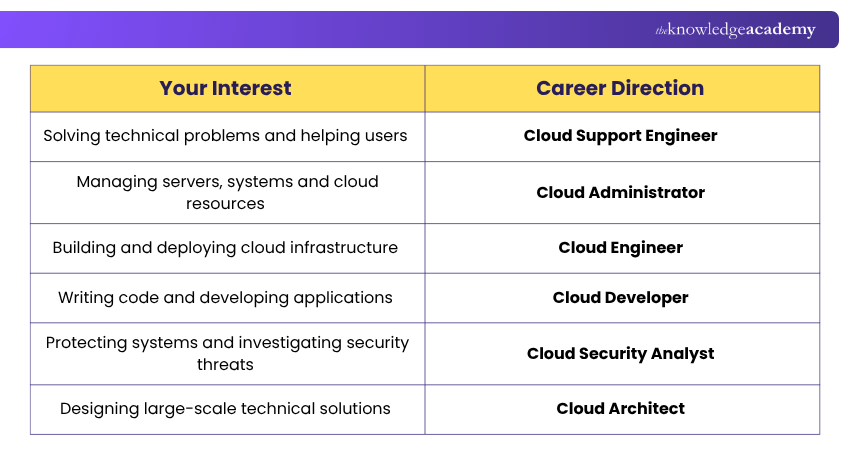
Choosing a cloud career becomes easier when you understand which technical activities interest you most. The following table can help you identify a suitable career direction based on your interests:

The Knowledge Academy develops accessible learning content across Project Management, IT, Cybersecurity, Data Science, Business Analysis, HR, Accounting and Finance, Leadership and Health and Safety. Its resources combine subject research with clear explanations to help professionals build practical knowledge across a wide range of disciplines.
View Detail

 If you wish to make any changes to your course, please


