


We may not have the course you’re looking for. If you enquire or give us a call on 01344203999 and speak to our training experts, we may still be able to help with your training requirements.
Business Development Executive Job Description
ByThe Knowledge AcademyLast updated on: 12 November 2026
This blog explains the Business Development Executive job description, including key responsibilities, essential skills, qualifications, salary considerations and a practical job description example.

Quick Preview
1. Business Development Executives identify opportunities and attract potential customers.2. Key responsibilities include market research, lead generation, client relationships, and proposals.3. Essential skills include communication, negotiation, analytical thinking, and CRM proficiency.4. Qualifications and experience requirements vary by employer and industry.5. Salaries depend on experience, location, industry, and performance incentives.
If a company has an excellent product, how does it reach new customers and turn opportunities into business growth? This is where a Business Development Executive steps in. From identifying potential clients to building professional relationships, these individuals help organisations explore new markets and generate business opportunities.
However, the role involves more than making sales calls. It requires research, strategic thinking, communication, and an understanding of customer needs. So, what does a Business Development Executive job description include? Let's find out!
Who is a Business Development Executive?
A Business Development Executive identifies potential customers, explores new business opportunities, and builds professional relationships to support organisational growth. They use market research, lead generation, communication, and sales skills to connect businesses with prospective clients.
These professionals often work closely with sales and marketing teams to understand customer needs, develop business proposals, and support revenue generation. Their responsibilities may vary depending on the organisation and industry.

Responsibilities of a Business Development Executive
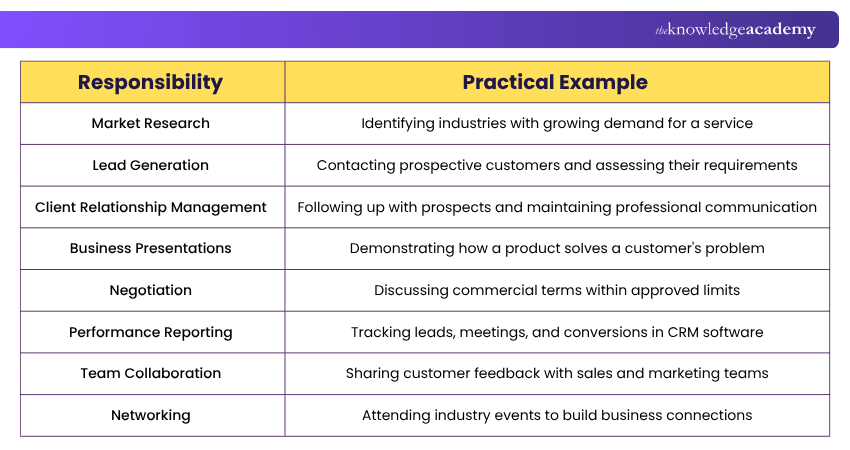
Business Development Executives perform several activities that help organisations attract customers, strengthen relationships, and pursue new revenue opportunities. Here are their key responsibilities:
1) Market Research and Opportunity Identification
Business Development Executives research customer preferences, market trends and competitor activities to pinpoint potential growth opportunities. They analyse relevant business information to understand where the organisation's products or services could meet customer needs.
2) Lead Generation and Prospecting
Identifying prospective clients is a major responsibility for a Business Development Executive. They use professional networking, referrals, outreach activities, and other appropriate channels to generate leads. They also assess whether potential customers are suitable for the organisation's products or services.
3) Client Relationship Management
Business Development Executives establish and maintain relationships with prospective and existing customers. They understand client expectations, respond to enquiries, and coordinate with internal teams to support positive customer experiences.
4) Business Presentations and Sales Pitches
Business Development Executives prepare presentations, proposals and sales pitches to explain how the organisation's offerings address customer requirements. Effective presentations should communicate the product or service's value clearly rather than simply listing its features.
5) Negotiation and Deal Coordination
Business Development Executives may participate in discussions regarding pricing, service expectations, and commercial arrangements. Depending on their authority, they may negotiate agreed terms directly or coordinate with senior colleagues and relevant departments before finalising an agreement.
6) Sales Target Monitoring and Reporting
Business Development Executives monitor their business development activities against established targets and performance indicators. They may track qualified leads, client meetings, proposals, and conversions using CRM systems and reporting tools.
7) Collaboration With Internal Teams
Business development often requires coordination between sales, marketing, product, and customer service teams. Executives share market insights and customer feedback to help improve business strategies and customer engagement.
8) Networking and Relationship Building
Attending industry events, conferences and professional networking sessions allows Business Development Executives to meet prospective clients and explore partnerships. These interactions can support business visibility and create opportunities for future collaboration.
Develop the skills to create mutually beneficial partnerships that stand the test of time. Sign up for the Building Business Relationships Training – Sign up now!
Essential Skills of a Business Development Executive
A successful Business Development Executive needs a combination of communication, analytical, and organisational skills. The following skills are particularly important:
a) Communication: Communication skills help Business Development Executives present ideas and engage with clients. Active listening helps them understand customer needs, address concerns, and suggest suitable solutions.
b) Negotiation: Negotiation skills help Business Development Executives discuss pricing, service requirements and commercial terms while balancing client needs with organisational interests to reach mutually beneficial agreements.
c) Market Research and Analytical Thinking: Market research helps them understand customer preferences, industry trends, and competitors. Analytical thinking enables them to evaluate opportunities and make informed business decisions.
d) Sales Prospecting: Sales prospecting helps them identify potential customers, assess their needs, and prioritise promising leads. This supports targeted outreach and new business opportunities.
e) CRM and Digital Skills: Customer Relationship Management (CRM) software helps to track leads, manage client records, and monitor sales activities. Spreadsheets and presentation tools support reporting and communication.
f) Time Management and Organisation: Time management helps to prioritise leads, schedule meetings, and manage follow-ups. Organisational skills support multiple business opportunities and timely completion of tasks.
Qualifications Required to Become a Business Development Executive
Qualifications for Business Development Executives vary depending on the employer, sector, and level of responsibility. Some organisations prefer candidates with a relevant degree, while others prioritise practical experience and demonstrated commercial skills. Consider the following:
1) Educational Qualifications
Employers may prefer candidates with a bachelor's degree in subjects such as:
a) Business Administration
b) Marketing
c) Business Management
d) Economics
e) Commerce or Related Disciplines
However, a degree is not universally mandatory. Relevant work experience and strong communication or sales capabilities may also support entry into the profession.
2) Relevant Experience
Experience in sales, marketing, customer service, or other customer-facing roles can help candidates develop practical business development skills. Internships and entry-level positions involving lead generation, client communication, or sales support may also provide useful experience.
3) Training and Relevant Certifications
Business Development Executives can improve their capabilities through practical training in areas such as sales techniques, communication, negotiation, and customer relationship management. Learning opportunities may include instructor-led courses, workshops, online training, mentoring, and workplace coaching.
Relevant certifications and training in sales, CRM systems, digital marketing, or business strategy can further strengthen professional capabilities, although they are generally optional.
Checklist: Are You Ready to Become a Business Development Executive?
Use this checklist to assess your readiness for this career:
□ I understand the key responsibilities of a Business Development Executive.□ I can communicate confidently with prospective clients.□ I have basic knowledge of sales, marketing and market research.□ I can identify potential customers and business opportunities.□ I understand how to build and maintain professional relationships.□ I am familiar with CRM tools and basic sales reporting.□ I can prepare presentations and explain a product or service's value.□ I have prepared a CV highlighting my relevant skills and experience.
Learn how to find an effective common ground and create winning business outcomes with the Sales Negotiation Training now!
Business Development Executive Salary
The salary of a Business Development Executive depends on factors such as experience, location, industry, employer, and individual performance. Here are the average annual salaries in key regions:
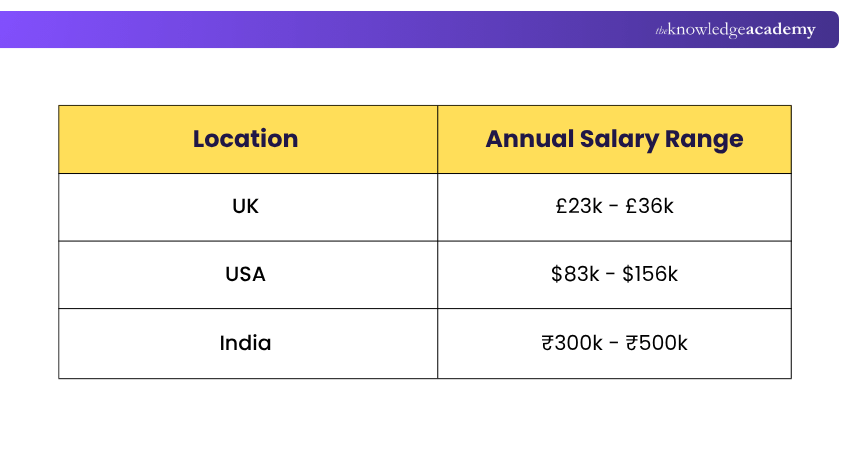
Source: Glassdoor
Business Development Executive Job Description Example
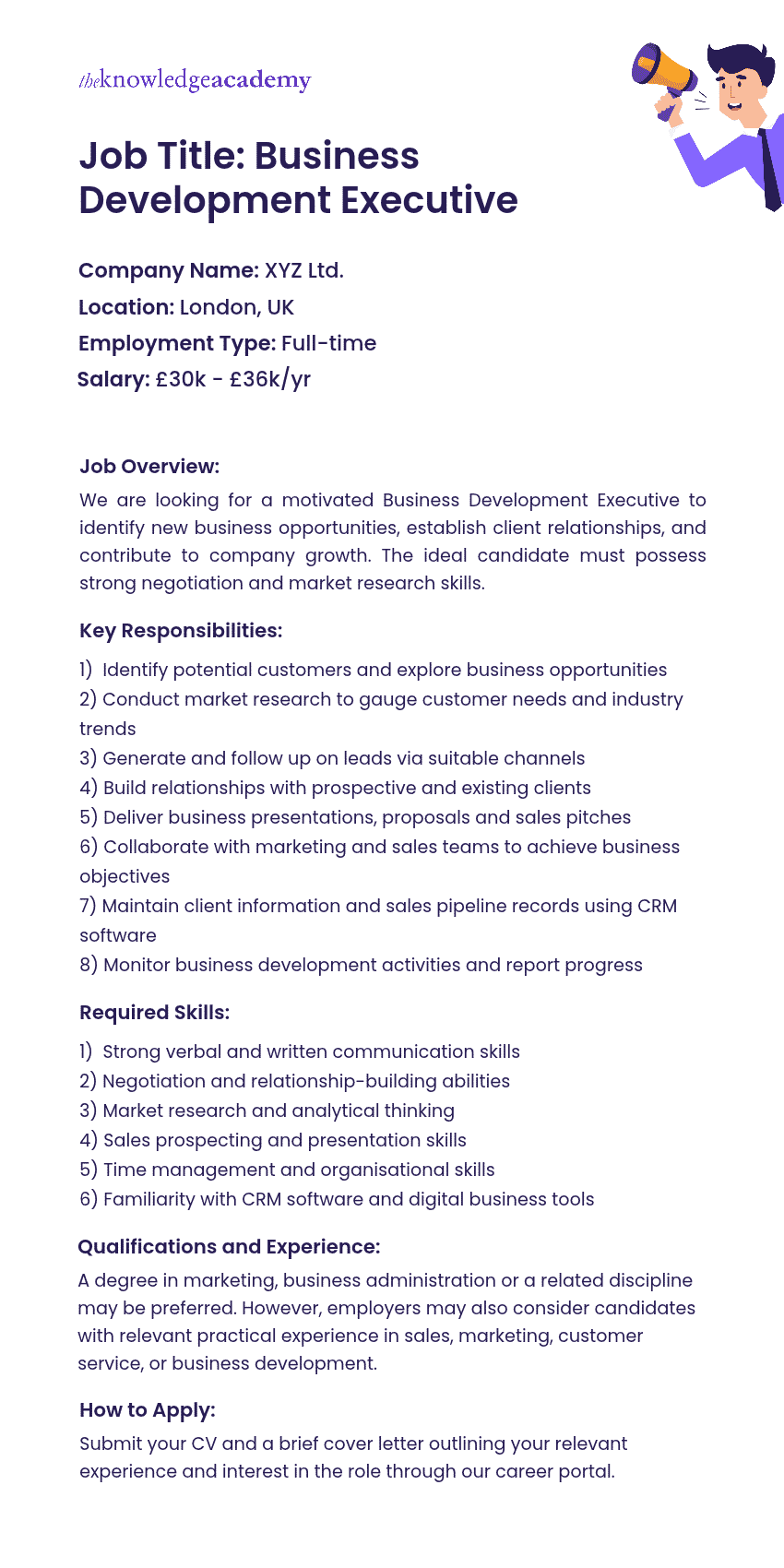
A well-structured Business Development Executive job description helps employers communicate their expectations and enables candidates to understand the skills and responsibilities associated with the position.
Below is a sample job description that organisations can customise according to their requirements. Let's look at it:

The Knowledge Academy develops accessible learning content across Project Management, IT, Cybersecurity, Data Science, Business Analysis, HR, Accounting and Finance, Leadership and Health and Safety. Its resources combine subject research with clear explanations to help professionals build practical knowledge across a wide range of disciplines.
View Detail

 If you wish to make any changes to your course, please


