




We may not have the course you’re looking for. If you enquire or give us a call on 01344203999 and speak to our training experts, we may still be able to help with your training requirements.
What is Social Media: Understanding Its Role in Today’s World
BySaurav SharmaLast updated on: 02 October 2026
Social media connects users globally, allowing interaction through text, images, and videos. Popular platforms include Facebook, Instagram, LinkedIn, YouTube and X (formerly Twitter).
At a Glance
1. Social media refers to digital platforms and applications that enable people to create and share ideas and content.2. User profiles, content sharing, messaging, algorithms and feeds are central to how Social Media platforms operate.3. Different platforms support purposes such as networking, media sharing, community discussions and reviews.4. Social media supports communication, audience engagement, information sharing and brand awareness.5. Effective Social Media use requires attention to security, responsible communication and the quality of information being shared.
Imagine waking up and checking a friend's latest update, watching a short video during your commute and joining an online discussion before your day has even properly begun. These everyday moments show just how naturally Social Media has become part of modern communication.
But Social Media is much more than posts, likes and hashtags. It brings people, communities, creators and businesses together in shared digital spaces. In this blog, we'll explore what Social Media is, how it works, its different types, key benefits and challenges, and some best practices for using it effectively.
What is Social Media?
Social Media refers to online platforms and applications that allow users to craft and share content or participate in social networking. It connects people across geographic boundaries through text, images, videos, and live interactions. From staying in touch with friends to promoting businesses, Social Media offers an open space for connection, creativity, and collaboration.
These platforms encourage two-way communication and community engagement, making them different from traditional media channels. For instance, a small bakery can post new product photos on Instagram and receive instant feedback from customers. It can also take custom orders through comments or messages, showing how Social Media empowers direct, global interaction between businesses and audiences.
How Does Social Media Work?
The mechanics of Social Media might look simple on the surface. However, there is a lot that happens behind the initial layer. These complex intricacies come together to make it look simple and easy to use.
1) User Profiles
Every Social Media journey begins with a user profile. These profiles act as digital identities, containing basic details like names, photos, locations, and interests. They allow others to recognise and interact with you. For businesses, profiles serve as brand pages that attract followers and showcase products or services.
2) Content Creation & Sharing
The core of Social Media lies in content creation and sharing. Users can post text updates, images, videos, reels, or live broadcasts to express themselves or convey messages. The more engaging the content, the more likely it is to attract likes, shares, and comments, thus helping users expand their visibility and influence.
3) Social Connections & Communities
Social Media allows users to build networks around people, organisations and shared interests. Depending on the platform, users may follow accounts, make connections or participate in interest-based communities. These networks create spaces where users can communicate, discover content and exchange ideas.
4) Direct Messaging
Most platforms offer private or group messaging features that enable real-time conversations. Direct Messaging (DM) promotes personalised interaction, whether for customer support, professional networking, or casual chats. It bridges the gap between public engagement and private communication.
5) Algorithms
Social Media algorithms determine what the users see on their feeds. They analyse behaviour, likes, comments, searches, and viewing patterns to deliver personalised content. This helps platforms retain user engagement but also raises debates about bias, echo chambers, and exposure to repetitive content.
6) Feeds and Timelines
Feeds or timelines are the constantly updated streams of content users see when they log in. They combine posts from friends, followed pages, or trending topics. Algorithms decide the order, ensuring each feed feels unique and tailored to individual interests.
KEY INSIGHT
In a recent global survey, 86% of marketers used Facebook for marketing, followed by Instagram at 82% and LinkedIn at 72%.
Optimise content and analytics for Instagram growth with the Instagram Marketing Course - Register today!
Types of Social Media Platforms
Social Media platforms come in numerous forms, each serving a unique purpose and audience. Below are the main types:
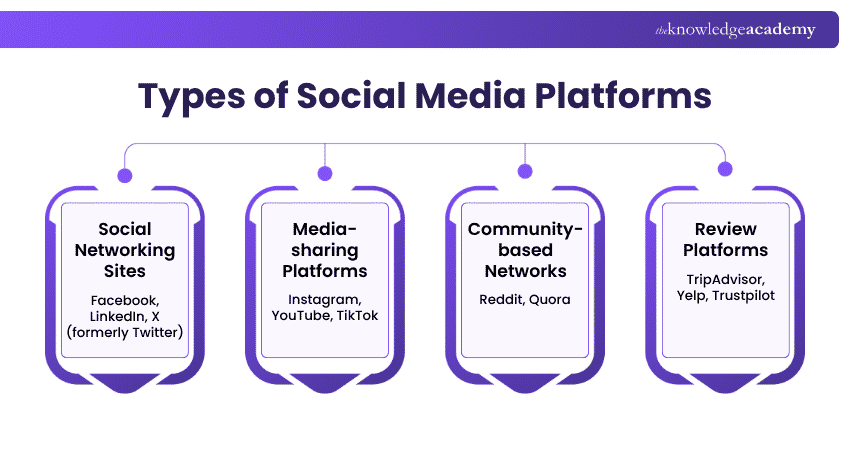
1) Social Networking Sites
Social networking platforms focus on connecting individuals and groups, helping them build relationships and share updates.
Examples: Facebook, LinkedIn, X (formerly Twitter)
Key Features:
a) Enable users to create personal or professional profiles
b) Support communication through posts, comments, and direct messages
c) Allow joining communities or interest-based groups
d) Facilitate business networking and personal interaction
2) Media-sharing Platforms
These platforms specialise in sharing visual and video-based content, making them ideal for storytelling and marketing.
Examples: Instagram, YouTube, TikTok
Key Features:
a) Encourage sharing of images, videos, reels, and live streams
b) Popular for tutorials, entertainment, and influencer content
c) Help businesses showcase products through creative campaigns
d) Foster audience engagement through visual appeal and trends
Unlock the power of X marketing and elevate your brand's voice across digital platforms by signing up for our X Marketing Course now!
3) Community-based Networks
Community-driven platforms promote discussions and idea exchange within specific topics or interests.
Examples: Reddit, Quora
Key Features:
a) Encourage user-generated content and open discussions
b) Allow users to ask questions and share expertise
c) Create a sense of belonging through topic-based communities
d) Ideal for knowledge sharing and crowd-sourced insights
Pro Tip
Do not judge success using follower numbers alone. Choose metrics that connect directly to what you are trying to achieve.
4) Review Platforms
These platforms allow users to post and read reviews about products, services, or experiences.
Examples: TripAdvisor, Yelp, Trustpilot
Key Features:
a) Influence purchasing decisions through authentic feedback
b) Build transparency between brands and consumers
c) Provide insights for business improvement
d) Strengthen customer trust and brand credibility
Benefits of Social Media
Social Media has become a cornerstone of modern marketing and personal branding. Its benefits extend beyond visibility, helping businesses connect, engage, and grow. Here are the biggest benefits:
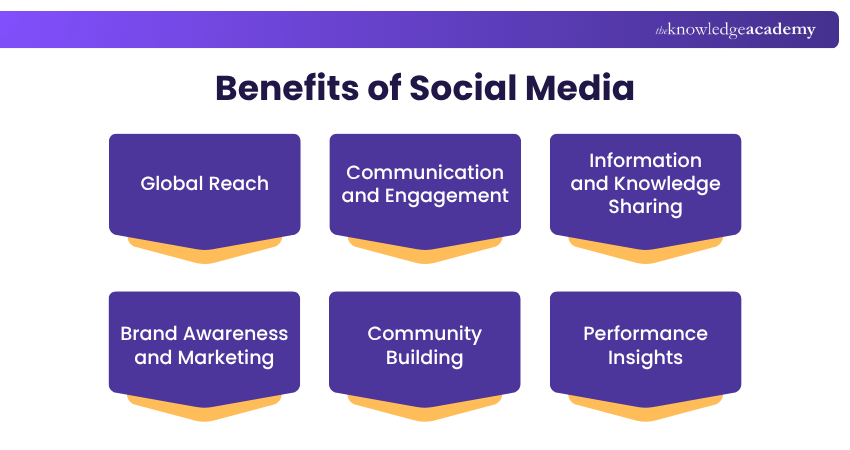
1) Global Reach
Social Media enables users to connect across geographical boundaries. People can maintain relationships and interact with individuals and communities in different locations. Businesses can also use digital networks to reach audiences beyond their immediate geographical area.
2) Communication and Engagement
Comments, messages and other interactive features allow users to communicate directly. For businesses and creators, these interactions can support closer relationships with their audiences and provide opportunities for feedback.
3) Information and Knowledge Sharing
Social Media provides spaces where users can exchange ideas, ask questions and share knowledge. Community-based networks, for example, allow users to participate in discussions around particular interests and areas of expertise.
4) Brand Awareness and Marketing
Creators and businesses can use Social Media to showcase their work, communicate with audiences and develop a recognisable online presence. Consistent posting can contribute to brand awareness, while digital campaigns can support marketing activities.
5) Community Building
Social Media can bring people together around shared interests, professions and topics. Groups and community-based platforms provide spaces where users can discuss ideas, share experiences and develop connections.
6) Performance Insights
Many Social Media platforms provide analytics covering measures such as engagement, impressions and conversions. These insights can help marketers evaluate content performance and refine their strategies.
Trainer Insight
A large audience does not automatically mean meaningful engagement. Interactions and relevant communication can provide additional context when evaluating how audiences respond to content.
Learn to measure and analyse Social Media performance for strategic insights with our Social Media Analytics Course – Register now!
What are the Challenges of Social Media?
Despite its widespread benefits, Social Media also brings challenges that affect users, organisations, and society at large.
1) Impact on Mental Health
Excessive Social Media use can result in anxiety, low self-esteem, and emotional fatigue. Constant comparison with curated online lives may distort self-perception, especially among younger audiences. Maintaining digital boundaries and mindfulness is essential for balance.
2) Growing Polarisation
Social Media can amplify divisive opinions. Algorithms often prioritise content that sparks emotion, sometimes at the cost of healthy dialogue. This can deepen social and political divides, limiting exposure to diverse perspectives.
3) Online Harassment and Harmful Content
Social Media interactions are not always positive. Users may encounter abusive communication, harassment or other harmful content. Using platform reporting and moderation features can form part of managing these experiences.
4) Spread of Disinformation
False or misleading content can spread faster than verified news. Despite ongoing improvements in moderation and fact-checking, misinformation remains a global issue. Users must critically evaluate sources before sharing or reacting to information.
Trainer Insight
Before sharing information, check its original source and supporting evidence. High engagement or popularity does not necessarily mean that information is accurate.
Understand YouTube's algorithms, analytics, and SEO strategies for enhanced visibility by registering in our YouTube Marketing Course today!
Best Practices for Using Social Media
Using Social Media effectively helps organisations enhance communication and brand loyalty. Key best practices include:
1) Develop a Clear Strategy: Align content with goals like awareness, engagement, or conversion.
2) Stay Authentic: Genuine communication builds audience trust.
3) Optimise for Each Platform: Adjust tone and visuals to suit platform behaviour.
4) Track Performance: Monitor analytics to improve content effectiveness.
5) Prioritise Security and Ethics: Safeguard data and maintain transparency in all interactions.
Quick Check: Are You Using Social Media Effectively?
Ask yourself:
□ Do you know why you are using each platform?□ Do you verify information before sharing it?□ Are your privacy and security settings appropriate?□ Do you choose platforms according to your goals?□ Do you communicate respectfully with others?□ Do you regularly review how you use Social Media?
If several answers are 'No', consider reviewing your Social Media habits, platform choices and security practices.

Saurav Sharma is a Marketing Head with 9+ years of experience in performance marketing, SEO, paid advertising and growth strategy. His data-informed approach, project oversight and strategic leadership provide practical expertise across Business Skills, Project Management, and Leadership and Management.
View Detail

 If you wish to make any changes to your course, please


