




We may not have the course you’re looking for. If you enquire or give us a call on 01344203999 and speak to our training experts, we may still be able to help with your training requirements.
What is Quality Inspection: A Comprehensive Guide
BySubiksha ArulprakashLast updated on: 22 September 2026
Quality Inspection forms the backbone of client satisfaction and business revenue. It refers to checking products or services to make sure they meet the specific standards and requirements set by the organisation. Read this blog to understand What is Quality Inspection, its types, responsibilities, and other fascinating details.
There is an abundance of challenges when manufacturing a product. What’s even more challenging is ensuring their quality. That’s where the Quality Inspector steps in! They are responsible for evaluating finished products and services to ensure they meet organisational and industry standards. By understanding What is Quality Inspection, businesses can overcome challenges and boost their quality assurance process. In this blog, you’ll dive deep into the definition of Quality Inspection, its types, methods, importance, responsibilities and much more.
Understanding What is Quality Inspection
Quality Inspection is the process of analysing and assessing the quality of finished products after they are manufactured. It ensures these products accurately meet all the quality and safety standards set by the organisation and other regulatory governing bodies. The role of a Quality Inspector is crucial, and understanding the Quality Inspector Salary is key to recognising the value this role brings.
Quality Inspection involves testing raw materials, examining dimensional accuracy, and analysing the adequate functioning of the final products. However, it's important to note that it implies to the services as well.
The primary objectives of Quality Inspection, as outlined in the ISO 17020 Guide, are to maintain customer satisfaction, reduce production costs by minimising waste and rework, and uphold regulatory compliance. Quality Inspections can be performed at various stages of the production process, which include:
1) Incoming Inspection: Examining raw materials and components upon arrival to make sure they meet the required specifications before entering the production line.
2) In-process Inspection: Monitoring and inspecting products during the manufacturing process helps detect and correct defects at an early stage. This prevents any defective products from progressing further.
3) Final Inspection: A thorough examination of finished products is performed to ensure they meet quality standards. This step is completed before the products are shipped to the warehouses and eventually to the customers.
The Importance of Quality Inspection
Ensuring the quality of products is a significant step to maintain customer satisfaction and the business reputation. It ensures that all the products accurately meet all the industrial and regulatory Quality Standards. Here are some other key reasons why Quality Inspection is so important:
1) Customer Satisfaction
Companies can boost customer satisfaction through product delivery that meet or exceed the expectations of the customers. Moreover, the application of high-quality products can result in positive reviews, repeat business, and customer loyalty.
2) Reduces Costs
Identifying and addressing early stages production defects can significantly reduce rework, returns, and warranty claims costs. It also helps to avoid the handling defective products post-production expenses.
3) Enhances Safety
Quality Inspections are crucial in the sectors involving automotive, electronics, and food production, where product safety is paramount. It ensures the safety of these products for usage and also results in legal issues’ risk reduction for the company.
4) Maintains Compliance
Following industry standards and regulatory requirements is important for ensuring legal and operational compliance. Knowing what Quality Inspections are ensures that products comply with relevant standards, thus avoiding legal penalties and market restrictions.
5) Improves Production Processes
Regular Quality Inspections can check for recurring issues and inefficiencies in production processes. This feedback helps us make necessary adjustments and improvements, leading to better production practices.
6) Protects Brand Reputation
Consistently delivering products that are of high-quality helps build and maintain a strong brand reputation. Rejecting defective products right before they are shipped for customers prevents negative publicity and protects the company’s image in the market.
7) Facilitates Continuous Improvement
Quality Inspection data provides valuable insights into production processes and product performance. This information is critical for continuous improvement initiatives, thus promoting innovation and better-quality management practices.
Become a proficient Auditor with our ISO 17020 Lead Auditor Training - join today!
Types of Quality Inspection
Quality Inspection can take many forms depending on the industry, each tailored to ensure products accurately meet the highest standards. Here are the key Quality Inspection types commonly used in various industries:

1) Incoming Quality Control (IQC)
Incoming Quality Control (IQC) involves inspecting raw materials and components when they arrive at the manufacturing facility. This initial check ensures that all incoming goods meet specified quality standards before production. In addition, by identifying defects early, IQC can help prevent issues affecting the final product's quality and performance.
2) In-Process Quality Control (IPQC)
Outgoing Quality Control (OQC) is the final inspection before products are shipped to customers. OQC ensures that the products meet all quality standards and are defects-free. This step is important for maintaining customer satisfaction and upholding the company’s reputation for delivering high-quality products.
3) Final Quality Control (FQC)
Final Quality Control (FQC) is conducted at the end of the production process. It involves thoroughly inspecting finished products to ensure they meet all the related quality standards and specifications before they are shipped to customers. Moreover, it helps identify any defects or inconsistencies to making sure that only high-quality products reach the market.
4) Outgoing Quality Control (OQC)
Outgoing Quality Control (OQC) is one final quality check after the Final Quality Control. It ensures that finished products thoroughly meet the necessary quality standards before they are shipped to customers. It aims to prevent defective products from reaching the market, thereby safeguarding customer satisfaction and maintaining the highest company's reputation.
Quality Control Methods
Quality control methods vary depending on each industry's specific needs and standards, although they all aim to ensure the right product quality and consistency. Here are some key quality control methods used across different sectors:
1) 100% Inspection
100% Inspection involves examining every single product in a batch to identify all kinds of defects. This method ensures that only quality items are proceeded to the next stage or reach the customer. Although this process is time-consuming and costly, it guarantees the highest level of quality assurance.
2) Taguchi Method
The Taguchi Method focuses on improving product quality by minimising variation through robust design and Statistical Analysis. This approach uses controlled experiments to identify the most influential factors affecting quality. Consequently, the approach enhances product performance and reduces the overall costs associated with defects.
3) Failure Testing
Failure Testing, also known as Stress Testing, involves analysing stresses in the products to identify any kind of potential points of failure. This method helps understand how products perform under different levels of extreme conditions, which allows manufacturers to improve durability and reliability before their final production approval.
4) Statistical Control
Statistical Control utilises statistical methods to monitor and control production processes. By analysing sample data, manufacturers can identify trends, variations, and deviations from all kinds of safety and quality standards. This method also maintains consistent quality and helps stakeholders to make informed decisions to enhance process efficiency.
5) Total Quality Management
Total Quality Management (TQM) is a multi-dimensional approach that involves all employees continuously working to optimise and improve processes, products, and services. It mainly focuses on customer satisfaction, process optimisation, and fostering a quality culture throughout the organisation. This leads to long-term success and a competitive advantage. This holistic approach ultimately drives long-term success and underscores the Benefits of Total Quality Management.
Upskill your Auditing practices with our ISO 17020 Lead Implementer Training - Join today!
Responsibilities of Quality Inspectors
A Quality Inspector plays a crucial role in maintaining product standards and ensuring consistent quality across production. Here are the key responsibilities of a Quality Inspector:
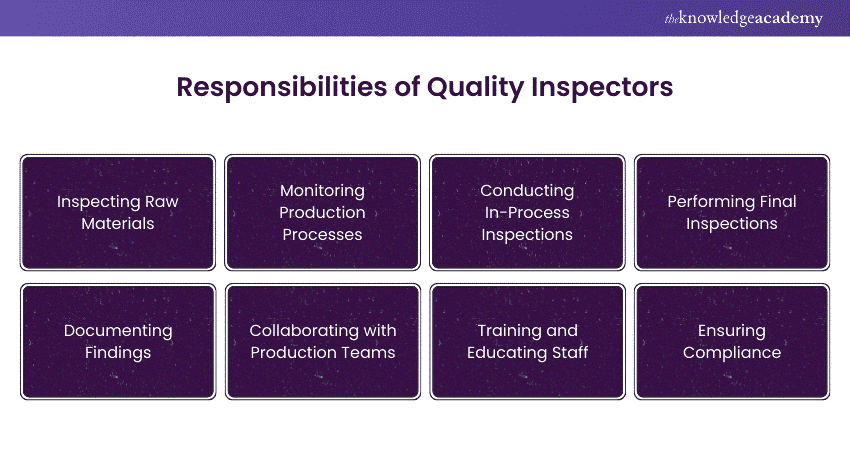
1) Inspecting Raw Materials: Quality Inspectors check raw materials and components upon arrival to ensure they meet specified standards. This initial inspection helps prevent any kind of defective materials from entering production for a high-quality start.
2) Monitoring Production Processes: They regularly monitor and inspect production processes so they are adhering to quality standards. This involves checking equipment calibration, verifying process parameters, and ensuring procedures are followed correctly to maintain consistency and quality.
3) Conducting In-process Inspections: Quality Inspectors conduct in-process inspections during any stage of production, depending on the specific requirements or quality standards set for the product. They assess for defects, deviations, and adherence to specifications to ensure that issues are identified and corrected promptly to avoid affecting the final product.
4) Performing Final Inspections: Quality Inspectors conduct final inspections of finished products at the end of the production line. They ensure that the products meet all the quality standards before they are shipped to customers. This helps prevent defective items from reaching the market.
5) Documenting Findings: Quality Inspectors meticulously document inspection results, including any kind of defects or deviations. This documentation is crucial for assessing traceability, quality reporting, and continuous improvement efforts. It provides valuable insights into quality trends and issues.
6) Collaborating with Production Teams: They work closely with Production teams to address any kind of quality issues and implement corrective actions (if necessary). This collaboration ensures that quality standards are maintained throughout the production process and all kinds of problems are resolved quickly and effectively.
7) Training and Educating Staff: Quality Inspectors may also train and educate production staff on quality standards, inspection procedures, and best practices. This helps in developing a quality-focused culture within the organisation.
8) Ensuring Compliance: They ensure that all products and processes comply with industry standards, regulations, and customer requirements. This includes staying updated with changes in standards and implementing necessary adjustments to maintain compliance.
Master fire safety protocols with our expert-led Fire Safety Training- Sign up today!

Subiksha Arulprakash is a Copywriter with 5+ years of experience in content writing, editing, content development and digital marketing. Her experience researching and writing about Business Skills, ISO standards and compliance enables her to produce clear, accessible content for different audiences.
View Detail

 If you wish to make any changes to your course, please


