




We may not have the course you’re looking for. If you enquire or give us a call on 01344203999 and speak to our training experts, we may still be able to help with your training requirements.
What is PHP | Features & Applications
ByThe Knowledge AcademyLast updated on: 22 September 2026
PHP is a powerful, open-source scripting language used for creating dynamic websites, web applications, and server-side solutions across all industries. Known for its flexibility and ease of integration, PHP enables developers to build interactive, data-driven solutions that scale, from simple blogs to enterprise-level systems.
Web Development is an essential part of modern-day organisations. One of the most popular programming languages that businesses use for Web Development is Hypertext Preprocessor (PHP). Its growth over the past few years in terms of use and popularity has prompted many people to ask the question: “What is PHP?”
According to Glassdoor, a PHP Developer in the United Kingdom earns an average salary of £46,000. With such lucrative pay on offer for professionals in the domain, many aspiring professionals often enquire about what PHP actually is. Further, read this blog to know What is PHP, its features, syntax basics, frameworks, database integration and much more.
What is PHP?
PHP, which stands for Hypertext Preprocessor, is a widely used server-side scripting language designed for Web Development. It is an open-source language that can be embedded into HTML and is known for its simplicity and versatility. With PHP, developers can create dynamic and interactive websites by embedding PHP code within HTML pages.
PHP offers a comprehensive list of services such as:
a) Standard library
b) Seamless database integration
c) Excellent cross-platform compatibility
Its low learning curve, extensive documentation, and active community make it accessible to beginners and experienced developers alike. Its popularity stems from its ease of use, platform independence, and ability to handle complex web applications with efficiency and flexibility.
PHP syntax basics
In order to get started with PHP, it is essential to understand the PHP syntax basics. PHP variables are displayed with a dollar sign followed by the variable name, and they can store various data types, such as:
a) Strings
b) Integers
c) Floats
d) Booleans
e) Arrays
Control structures like “if statements” and “loops” allow PHP Developers to implement conditional logic and repetitive tasks. PHP also supports functions and objects, enabling the creation of reusable code and modular programming.

Features of PHP
PHP is a widely used server-side scripting language known for its simplicity, versatility, and efficiency. It comes with a range of features that make it ideal for web development, from flexibility to real-time monitoring capabilities.
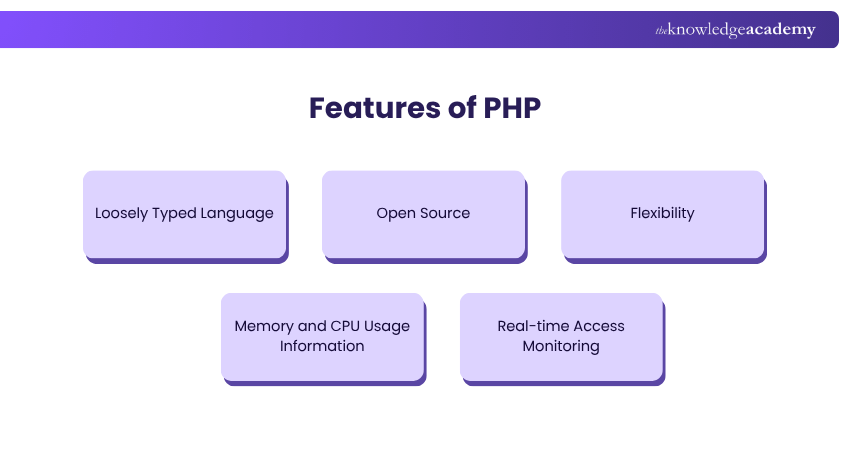
Loosely Typed Language
One of PHP’s core features is that it is a loosely typed language, meaning variables do not need to be declared with a specific data type. This makes coding faster and less rigid, as PHP automatically interprets the data type during execution. For instance, when working with a PHP array, developers can store different types of values together without explicitly defining them. This flexibility reduces the chances of syntax errors and helps streamline the development process, making it particularly useful for beginners and speeding up prototyping.
Open Source
PHP is an open-source language, freely available to everyone without licensing costs. It benefits from a large global community that actively contributes to its development, ensuring consistent updates, security patches, and performance improvements. The open-source nature also means developers have access to a vast pool of frameworks, libraries, and online resources. This fosters innovation and collaboration within the developer ecosystem.
Flexibility
PHP offers exceptional flexibility, allowing it to run seamlessly on various operating systems like Windows, Linux, and macOS, and integrate with multiple databases such as MySQL, PostgreSQL, and Oracle. It works well with different web servers, including Apache and Nginx, enabling easy deployment in diverse environments. This flexibility makes PHP a go-to language for both simple and complex web applications.
Memory and CPU Usage Information
PHP provides developers with tools to access detailed information about memory usage and CPU consumption during script execution. This feature is vital for identifying performance issues, preventing resource overuse, and ensuring efficient code. Developers can use built-in functions to track these metrics and fine-tune their applications accordingly. It helps in building scalable systems that perform well even under high traffic.
Real-time Access Monitoring
PHP supports real-time access monitoring, allowing developers to track user activity such as page visits, session behaviours, and IP addresses as they happen. This feature is particularly useful for analytics, security monitoring, and improving user engagement. It enables website owners to respond quickly to suspicious activity or performance issues. Real-time insights also help in personalising user experiences based on live interactions.
Learn all about programming in D with our course in D Programming Language Training!
How does PHP Work?
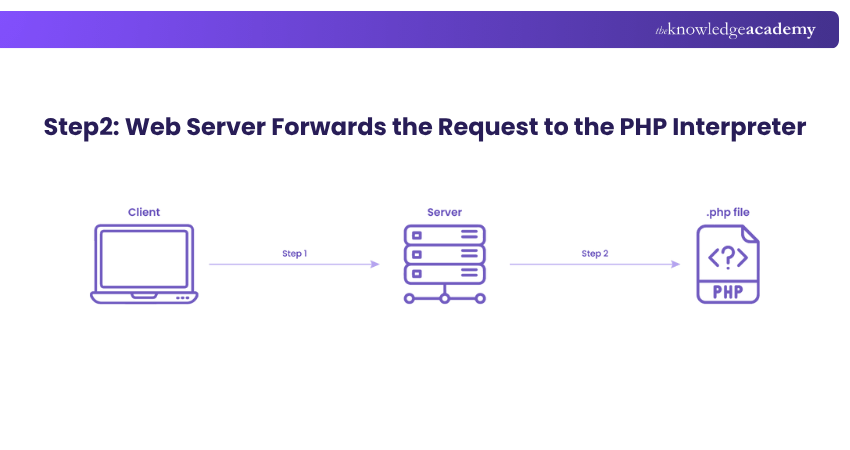
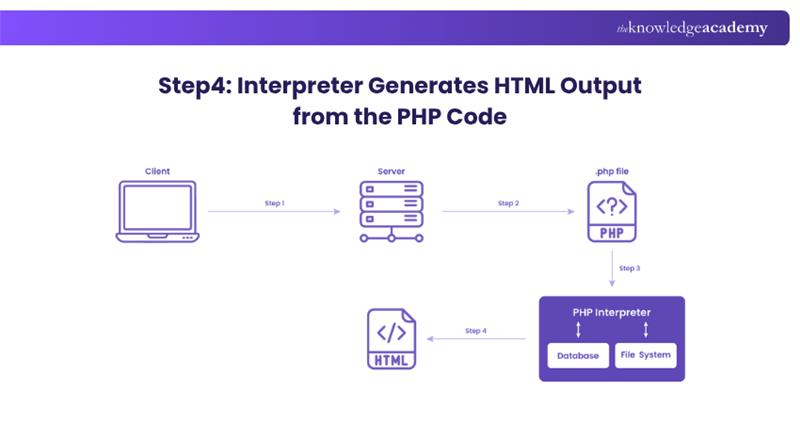
PHP works by interacting with a web server to generate dynamic content. When a user requests a webpage, the server forwards that request to the PHP interpreter. The PHP engine processes the PHP code, often connecting to a database to fetch or send data. It then returns the output as plain HTML. This HTML is sent back to the browser, which displays the final webpage to the user.
Here’s how PHP works in simple steps:
Step 1: The client sends a page request to the web server.
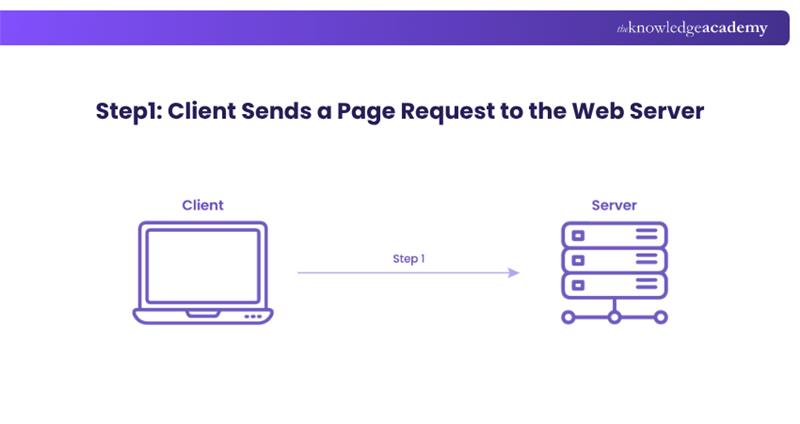
Step 2: The web server forwards the request to the PHP interpreter.
Step 3: The PHP interpreter executes the code and retrieves data from the database.

Step 4: The interpreter generates HTML output from the PHP code (since browsers can't read .php directly).
Step 5: The HTML output is sent back to the web server.
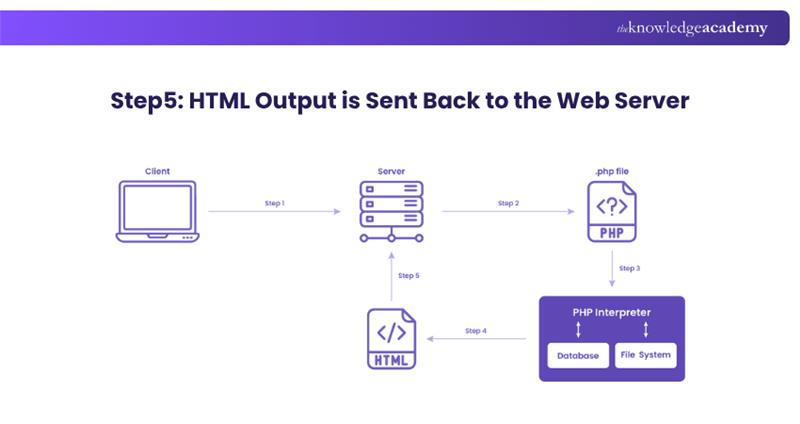
Step 6: The web server sends the final HTML page to the client’s browser for display.

Want to master PHP Programming and build dynamic websites? Join our PHP Programming Course now!
What is PHP Used for?
PHP programming is a widely used open-source scripting language that is primarily used for websites, applications, and systems. When discussing PHP vs Python, it's important to consider how PHP excels in web development, whereas Python is often preferred for its versatility in data science, machine learning, and automation. The areas which are mostly applicable in this terrain are discussed below.
a) Server-side Scripting: PHP's main strength lies in server-side scripting. If you are a beginner in programming and wish to learn server-side scripting, PHP is an excellent language to learn from. To start working with PHP for server-side scripting, you will require a PHP parser, a web server, and a web browser.
b) Command-line Scripting: Command-line scripting is suitable for creating scripts to be scheduled with tools like cron on Linux or Task Scheduler on Windows. It is also excellent for simple text processing.
c) Writing Desktop Applications: Creating desktop applications with PHP is not the most ideal choice, but for experienced web developers, it offers a wider range of possibilities compared to its competitors.
Who uses PHP?
Several well-established companies and major tech corporations utilise PHP to run their server operations and achieve remarkable results. If you're preparing to join such companies, reviewing PHP Interview Questions can help you excel. Some of the tech giants that use PHP are listed below.
a) Wikipedia: It is one of the world’s biggest sources of information on internet. It is built in PHP.
b) Facebook: Facebook uses PHP as the underlying technology for running its website. Facebook, in turn contributed to the PHP programming community by developing an adaptation called Hip Hop for PHP.
c) Content Management Systems (CMSs): WordPress, the most widely used CMS, is built using PHP. Similar systems like Drupal, Joomla, and Magento are also developed with PHP. Even Shopify, another popular platform, relies on PHP for its seamless operation, including Drupal Interview Questions.
d) Web hosting platforms: Many popular web hosting companies like BlueHost, SiteGround, and WhoGoHost use PHP to enhance their webservices.
Take your coding skills to the next level with our Python Course -join us now and tackle real-world projects!
Advantages and Disadvantages of PHP
PHP is a popular scripting language used widely for web development. Like any technology, it comes with both strengths and weaknesses depending on project needs.
Below are the main advantages and disadvantages of using PHP:
Advantages
PHP offers many benefits that make it a go-to choice for developers worldwide. From compatibility to cost-effectiveness, here’s why PHP is widely used:
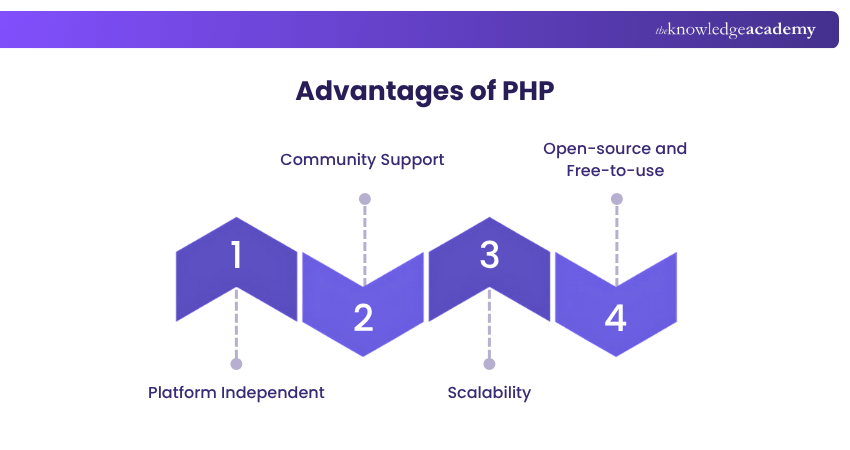
Platform Independent
PHP runs on all major operating systems like Windows, Linux, macOS, and Unix. It allows developers to write code once and deploy it anywhere without compatibility issues.
Community Support
PHP has a massive global community that actively contributes tutorials, libraries, and frameworks. This support makes it easy for beginners and professionals to solve problems and learn quickly.
Scalability
PHP applications can be easily scaled across multiple servers or platforms. Whether it's a small blog or a large e-commerce platform, PHP handles growing traffic well.
Open-source and Free-to-use
PHP is completely free to download and use. It saves licensing costs for developers and businesses, making it a cost-effective choice for building dynamic websites.
Disadvantages
Despite its popularity, PHP has certain limitations that may affect performance, security, or flexibility in some projects:

Limited Customisation
Some PHP frameworks can limit deep customisation due to their built-in structures, which might not suit all complex business requirements.
Not the Best in Terms of Security
PHP-based websites can be vulnerable if best security practices are not followed. Developers must be cautious to prevent threats like SQL injection or cross-site scripting.
Not the Best in Terms of Security
For beginners, languages like Python or JavaScript may offer simpler syntax and better beginner tools compared to PHP’s more traditional coding style.
Can Find Easier Languages
For beginners, languages like Python or JavaScript may offer simpler syntax and better beginner tools compared to PHP’s more traditional coding style.
Less Versatility
PHP is mainly focused on web development and lacks the flexibility to be used widely for non-web applications, limiting its overall use cases.
Less Debugging Options
PHP lacks powerful built-in debugging tools compared to some modern languages. Developers often rely on external tools or manual error tracking.
What is the difference between PHP and JavaScript?
PHP is a server-side scripting language used for backend development, while JavaScript runs on the client side for frontend interactions. PHP handles server logic, whereas JavaScript enhances user experience directly in the browser.
Is PHP faster than Python?
In web development, PHP is generally faster than Python for simple server-side tasks. However, Python offers better readability and flexibility. Speed depends on the use case, code optimisation, and server environment in real-world applications.
Want to gain insights about the R programming language? Try our R Programming Course!

The Knowledge Academy develops accessible learning content across Project Management, IT, Cybersecurity, Data Science, Business Analysis, HR, Accounting and Finance, Leadership and Health and Safety. Its resources combine subject research with clear explanations to help professionals build practical knowledge across a wide range of disciplines.
View Detail

 If you wish to make any changes to your course, please


