




We may not have the course you’re looking for. If you enquire or give us a call on 01344203999 and speak to our training experts, we may still be able to help with your training requirements.
What is Mock Test: A Comprehensive Guide
ByShristi RoyLast updated on: 02 October 2026
Mock tests are practice exams designed to replicate real exam conditions, allowing students to experience the format, question types, and time constraints. In addition, they help reduce anxiety and build confidence.
At a Glance
1. Mock Tests simulate the structure, question types and time limits of an actual exam.2. Taking them under realistic conditions can make exam-day conditions feel more familiar.3. Mock Test results can reveal which topics require further revision.4. Reviewing mistakes is just as important as completing the test itself.5. Repeated practice can help students refine their approach, pacing and exam strategy.
Imagine you are standing outside the exam hall, heart racing like a horse, palms sweaty like holding a wet towel, unsure of what to expect. The fear of what will happen can be intimidating, but there's a secret weapon that can help you conquer this fear: mock tests. But what is mock test? How can these practice exams be your keys to reducing anxiety, boosting confidence, and refining your skills?
In this blog, we'll explore what is mock test, its importance, how they benefit your exam preparation, and why you should make them a key part of your study routine. Let's dive in!
What Does a Mock Test/Exam Mean?
A mock test or mock exam is a practice assessment designed to resemble real examination, such as its format, structure, and time limits. It often mirrors the layout of the actual test, including sections such as Multiple-choice Questions (MCQs), short-answer tasks, essay writing, or practical assessments, depending on the exam type.
For example, if the actual exam is divided into three parts (objective questions, problem-solving, and an essay), the mock test will replicate this structure, giving learners a clear preview of what to expect. The time allocated for a mock test usually matches the duration of the real exam, providing an authentic experience of working under timed conditions.
Mock tests also include detailed instructions similar to the final exam, helping participants become familiar with the process. This realistic setup allows learners to not only practice their knowledge but also develop effective strategies for managing time and maintaining focus during the actual exam.
The Importance of Mock Tests in Exam Preparation
Mock tests play a key role in exam preparation by providing students with a realistic practice experience. They help students become familiar with the exam format and identify areas for improvement. Here are some key points highlighting the Mock Tests' importance:
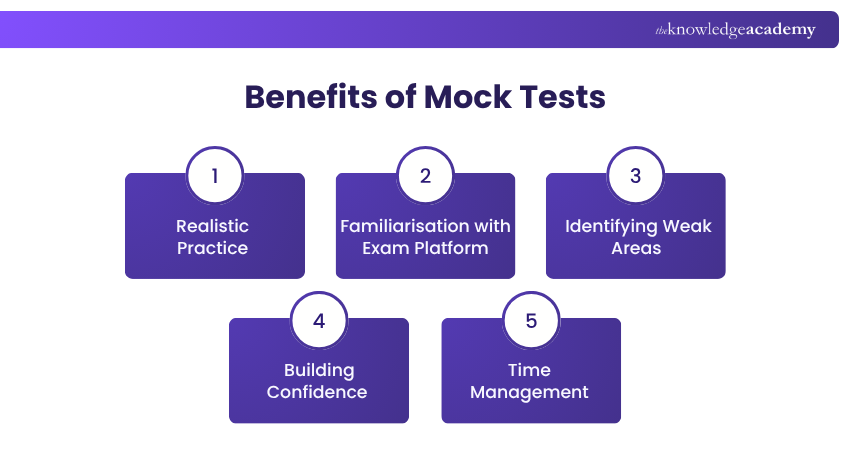
1) Realistic Practice: Mock tests simulate actual exam conditions, allowing students to practice answering questions under similar time constraints and pressure.
2) Familiarisation With Exam Platform: For online exams, mock tests help students familiarise themselves with the exam platform, reducing technical difficulties on the actual exam day.
3) Identifying Weak Areas: By taking mock tests, students can pinpoint specific topics or skills they need to improve, enabling targeted study efforts.
4) Building Confidence: Regular practice with mock tests boosts students' confidence as they become more accustomed to the exam format and question types.
5) Time Management: Mock tests teach students how to effectively practise Time Management during the exam. This ensures they can complete all questions within the allotted time.
Trainer Insight
Do not simply aim to finish faster. Track how long different sections take and identify where you consistently lose time. The goal is to develop a sustainable pace while maintaining accuracy.
Master time management skills for maximum productivity - Sign up for our Time Management Training today!
How to Prepare for a Mock Test?
Preparing properly for a mock test helps you assess your knowledge accurately and become familiar with exam conditions. Follow these steps:
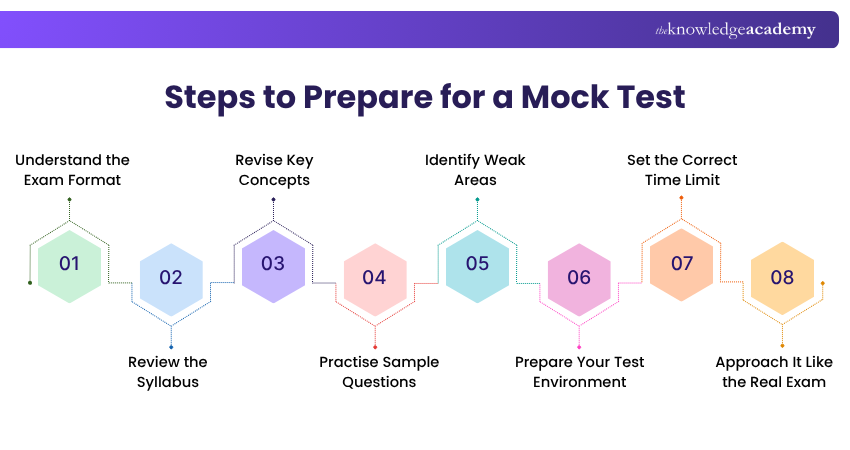
1) Understand the Exam Format
Review the question types, number of questions, marking scheme and time limit before you begin. Check whether the exam includes multiple-choice, descriptive or practical questions. Knowing the structure helps you plan how much time to spend on each section.
2) Review the Syllabus
Check the topics covered in the exam and make sure your preparation focuses on the relevant areas. Break the syllabus into smaller sections so that revision feels more manageable. Prioritise important or challenging topics while ensuring your revision still reflects the full exam syllabus or specification.
3) Revise Key Concepts
Refresh important concepts, formulas, definitions and processes rather than trying to learn everything at the last minute. Create short notes or summaries that you can review quickly. Regular revision also helps strengthen your understanding and recall.
4) Practise Sample Questions
Solve different question types to become familiar with how concepts may be tested. Practising regularly can also help you recognise common question patterns. Review your answers afterwards to understand where you need further improvement.
5) Identify Weak Areas
Focus additional revision time on topics where you regularly make mistakes or lack confidence. Keep track of recurring errors so you can identify patterns in your performance. Spend extra practice time on these areas before attempting the mock test.
6) Prepare Your Test Environment
Choose a quiet place, remove distractions and arrange everything you are permitted to use during the test. Make sure your device, internet connection and required materials are ready if the test is online. A well-prepared environment helps you stay focused throughout the test.
7) Set the Correct Time Limit
Follow the actual exam duration wherever possible so you can practise managing your time effectively. Decide roughly how much time you can spend on each section or question. Leave some time at the end to review your answers where possible.
8) Approach It Like the Real Exam
Avoid notes or other assistance unless they are permitted in the actual exam. Follow the same rules and conditions you expect to face on exam day. Taking the mock seriously gives you a more realistic picture of your current readiness.
How to Use Mock Tests Effectively?
Mock tests are most useful when you treat them as a learning and improvement tool, rather than simply checking your score. A structured approach can help you identify weak areas, improve time management and become familiar with exam conditions:
a) Take a Baseline Test: Attempt an initial mock test before intensive revision to identify your current strengths and knowledge gaps.
b)Simulate Exam Conditions: Follow the actual time limit and avoid notes, unnecessary breaks or other assistance. This helps you practise working under realistic exam pressure.
c) Review Every Answer: Check both correct and incorrect responses. Understanding why an answer is right or wrong is more valuable than simply recording the score.
d) Identify Patterns in Mistakes: Group errors into areas such as knowledge gaps, misreading questions, poor time management or careless mistakes.
e) Revise Weak Areas: Use your results to prioritise topics that need more attention instead of revising everything equally.
f) Practise With a Strategy: Work on question selection, pacing and time allocation so you do not spend too long on a single difficult question.
g) Retake Tests After Revision: Attempt another mock after targeted study to check whether your performance has improved.
h) Track Your Progress: Record scores, weak topics, common mistakes and completion times across multiple mock tests to identify trends.
After a Mock Test: Quick Checklist
Once you finish a mock test, check:
☐ Did I complete the test within the allowed time?☐ Which questions did I answer incorrectly?☐ Which topics caused the most difficulty?☐ Were errors caused by knowledge gaps or careless mistakes?☐ Which sections took longer than expected?☐ Did I misunderstand any question wording?☐ What should I revise before my next attempt?☐ Have I recorded recurring mistakes?
Cultivate a culture of excellence and lead with innovation with our Personal Development Courses - Sign up now!

Shristi Roy is a Content Writer with experience in journalism, article writing and web content development. Her experience researching and writing about Business Skills and Accounting and Finance enables her to communicate specialised information through clear, engaging narratives.
View Detail

 If you wish to make any changes to your course, please


