




We may not have the course you’re looking for. If you enquire or give us a call on 01344203999 and speak to our training experts, we may still be able to help with your training requirements.
What is Media Ethics? A Quick Guide
ByThe Knowledge AcademyLast updated on: 02 October 2026
Curious about what Media Ethics entails? Media Ethics involves the principles and standards that guide responsible journalism and media production. This blog provides a quick guide to key concepts in Media Ethics, such as truthfulness, fairness, and accountability, helping you understand their importance in today's media landscape.
Quick Overview
1. Media Ethics guides responsible content and reporting.2. Accuracy and fairness support audience trust.3. Privacy and accountability shape ethical decisions.4. Independence helps reduce external influence.5. Modern media faces AI and misinformation challenges.
In a world flooded with information, discerning fact from fiction is more crucial than ever. What is Media Ethics? It's the compass guiding journalists, broadcasters, and digital content creators through the complex landscape of truth and responsibility.
This blog talks about What is Media Ethics, its importance and the need for global ethical standards in media. From objectivity and fairness to privacy and accountability, we'll explore the ethical framework that underpins responsible journalism. Join us as we delve into the heart of Media Ethics.
What is Media Ethics?
In media, a code of ethics guides how information is communicated and broadcast. Whether you're a writer, journalist, news broadcaster, or social media content creator, understanding Media Ethics in mass communication is crucial for becoming a competent communicator. Our complete guide to Media Ethics in mass communication explores the moral principles and values essential in the content of mass media.
Media Ethics shape how we perform our roles in the mass communication industry, emphasising the importance of ethical standards. In news coverage, Media Ethics addresses issues like impartiality, objectivity, balance, bias, privacy, and the public interest.

Importance of Media Ethics
Media Ethics are vital for several reasons. All contribute to the integrity and reliability of media as a pillar of democracy and society. Here are key reasons why Media Ethics are important:
a) Trust and Credibility: Ethical practices build trust with the audience. Media outlets adhering to ethical standards are seen as credible sources of information. This is essential for maintaining a loyal audience.
b) Informed Public: Media Ethics ensure that the information disseminated is accurate and fair. This enables the public to make informed decisions about various issues, from politics to health.
c) Protection of Individuals: Ethical standards protect individuals' rights. These include their privacy and dignity. This is important in cases involving sensitive information or vulnerable populations.
d) Preventing Harm: Ethical media practices help to minimise harm by avoiding sensationalism and graphic content. Hate speech can have detrimental effects on society.
e) Professional Integrity: Adhering to ethical standards fosters a sense of professional integrity among journalists. It promotes a culture of honesty. Accountability is maintained within the industry.
Explore responsible decision-making with our Social Responsibility Course and understand ethical impacts across media practices.
Why Global Ethics?
In today's interconnected world, media content transcends national borders. This makes the establishment of global ethical standards increasingly important. Here are some reasons why a global ethics framework for media is necessary.
a) Consistency Across Borders: A global ethics framework ensures consistency in media practices. This applies regardless of the country or culture. Such consistency helps maintain high standards of journalism worldwide.
b) Combating Misinformation: The rapid spread of information through digital platforms adds complexity. Global ethical standards can help combat misinformation and fake news. This ensures that accurate and reliable information reaches audiences everywhere.
c) Protection of Human Rights: A global approach to Media Ethics emphasises protecting human rights. It universally promotes respect for privacy, dignity and freedom of expression.
d) Promoting Cross-Cultural Understanding: Ethical media practices can foster greater understanding. They support tolerance among different cultures by ensuring fair and respectful representation of diverse perspectives.
e) Supporting Democratic Values: Media plays a crucial role. It supports democratic values by providing a platform for free expression. It also fosters informed public debate.
Key Principles of Global Media Ethics
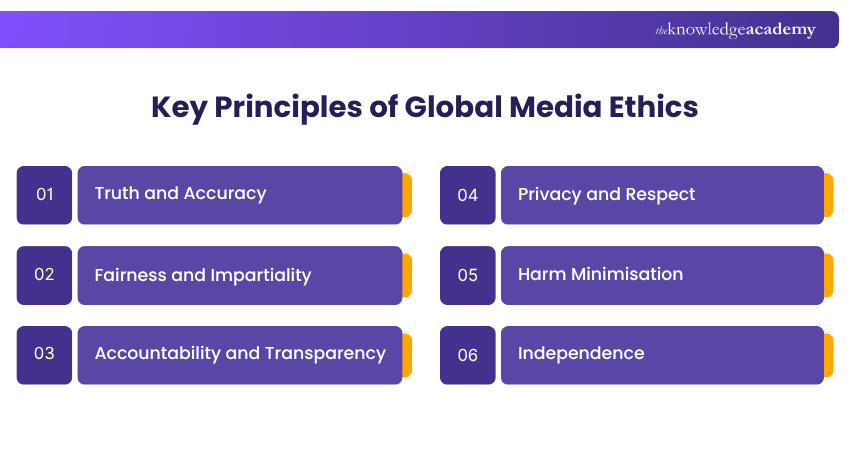
Global Media Ethics involves understanding and applying ethical standards in media practices worldwide. It includes several key components:
1) Truth and Accuracy
The cornerstone of Media Ethics is truth and accuracy. Media professionals must ensure the information they disseminate is accurate, verified, and truthful. This involves thorough fact-checking. They must cross-reference sources and avoid the spread of misinformation or false news.
2) Fairness and Impartiality
Media should strive to be fair and impartial. They should present all sides of a story without bias. This means giving voice to different perspectives while maintaining a sense of fairness. Avoid favouritism in reporting and ensure balanced coverage. Social Media Ethics also emphasize treating subjects with respect and avoiding sensationalism, ensuring that content shared aligns with ethical standards.
3) Accountability and Transparency
Media organisations and professionals must be accountable for their actions. This includes owning up to mistakes and correcting errors promptly and being transparent about their processes and sources. Transparency helps build trust and ensures credibility.
4) Privacy and Respect
Respecting privacy of individuals is a crucial aspect of Media Ethics. Media professionals must balance the public's right to know. They must also respect individuals' rights to privacy. This involves careful consideration. They must be cautious when reporting on sensitive issues. Avoiding unnecessary intrusion into people's private lives is essential.
Pro Tip: Pause before publishing sensitive content. Check whether every personal detail, image, or claim is necessary to the public-interest purpose of the story. Removing unnecessary information can reduce harm without weakening the reporting.
5) Harm Minimisation
Media should aim to minimise harm in their reporting. This means avoiding content that could cause undue distress, harm reputations unfairly, or incite violence or discrimination. Ethical media practice involves thoughtful consideration of the potential impact of their stories on individuals and communities.
6) Independence
Independence is vital for maintaining the integrity of media. Media professionals should be free from undue influence from external entities, including political, corporate, or personal interests. Independence ensures that reporting is based on facts and not influenced by external pressures.
Bias Check
Ask yourself: Would this content change if a sponsor, political interest, or personal connection were removed?If yes, editorial independence may be at risk.
Problems and Obstacles of Media Ethics
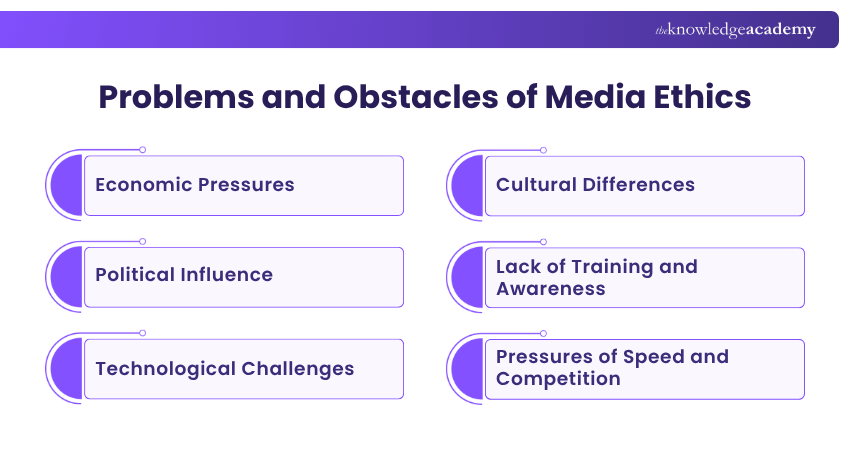
Despite the importance of Media Ethics, there are several problems and obstacles that can impede ethical media practices:
1) Economic Pressures
Media organisations often face economic pressures that can compromise ethical standards. The need for profitability can lead to sensationalism, biased reporting, and the prioritisation of entertainment over factual news. Advertising revenue, in particular, can create conflicts of interest and influence content.
2) Political Influence
In many regions, media outlets are subject to political influence and control. Governments may exert pressure on media to report favourably on certain issues or censor unfavourable content. This undermines the independence of the media and can lead to biased or misleading reporting.
3) Technological Challenges
Digital platforms, Artificial Intelligence, deepfakes, and rapidly shared user-generated content have made verification more complex. Media professionals must consider authenticity, source reliability, manipulated media, privacy, and the risks of spreading misinformation before publishing or amplifying content.
4) Cultural Differences
Global Media Ethics must navigate diverse cultural norms and values. What is considered ethical in one culture may not be viewed the same way in another. Media professionals must be aware of these differences and strive to respect cultural sensitivities while maintaining ethical standards.
5) Lack of Training and Awareness
Not all media professionals receive adequate training in Media Ethics. This can lead to unintentional ethical breaches and a lack of understanding of the importance of ethical standards. Continuous education and awareness programs are essential to uphold Media Ethics.
6) Pressures of Speed and Competition
In the fast-paced world of news, the pressure to be the first to break a story can compromise accuracy and ethical considerations. Media professionals must balance the need for speed with the responsibility to verify information and report truthfully.
Ethical Red Flag
Would publishing this still be justified if the person affected could identify themselves immediately?If not, reconsider the level of detail.
Deliver news responsibly with Effectively Delivering the News to Your Audience Training and engage audiences.

The Knowledge Academy develops accessible learning content across Project Management, IT, Cybersecurity, Data Science, Business Analysis, HR, Accounting and Finance, Leadership and Health and Safety. Its resources combine subject research with clear explanations to help professionals build practical knowledge across a wide range of disciplines.
View Detail

 If you wish to make any changes to your course, please


