


We may not have the course you’re looking for. If you enquire or give us a call on 01344203999 and speak to our training experts, we may still be able to help with your training requirements.
What is Management Accounting: A Detailed Explanation
ByNilotpal SarmahLast updated on: 05 October 2026
Management accounting provides financial and operational insights that support planning, decision-making, performance management, and business strategy. This blog explains its purpose, techniques, reports, roles, benefits, and practical applications.
The Gist
1. Management accounting supports internal planning, control, and decision-making.2. Key techniques include costing, budgeting, forecasting, variance analysis, and activity-based costing.3. Management accounting reports help managers track performance, costs, and profitability.4. It can improve resource allocation, cost control, and business performance.5. Management Accountants support budgeting, planning, cost control, and risk analysis.
Accurate financial information and strategic decision-making support effective organisational planning and control. Management accounting helps managers and executives interpret relevant information and make informed decisions aligned with organisational goals.
According to the Institute of Management Accountants (IMA), nearly 75% of financial professionals working in business are Management Accountants. These professionals can work in roles ranging from Staff Accountant and Financial Analyst to Controller and Chief Financial Officer (CFO).
This blog explains what management accounting is, the techniques and reports it uses, the role of Management Accountants, and how it supports organisational planning, control, and decision-making. So, read on!
What is Management Accounting?
Management accounting is the process of collecting, analysing and interpreting financial and operational information to support internal decision-making. It helps managers understand costs, revenues, budgets, performance and resource use so they can plan activities, control operations and make informed business decisions.
Common management accounting activities include budgeting, forecasting, costing, variance analysis, performance measurement and management reporting. These activities help organisations monitor financial and operational performance, understand costs and resource use, and identify areas that may require attention.
For instance, management accounting can help organisations analyse product or service profitability, assess the cost implications of business decisions, and identify opportunities to improve cost efficiency. Managers can use these insights to strengthen cost control, allocate resources more effectively, and evaluate growth opportunities.
Management Accounting Techniques
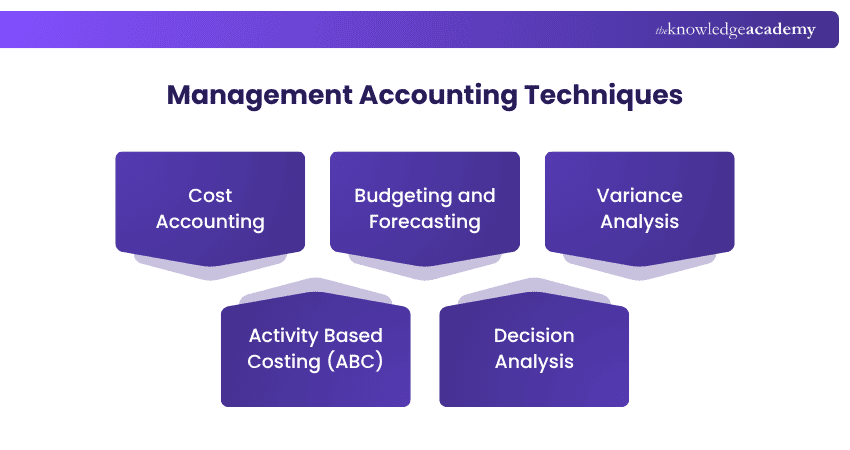
Management accounting uses various techniques to analyse financial and operational information and support decision-making. Common management accounting techniques include the following:
1) Cost Accounting
Cost accounting identifies, measures, and analyses the costs associated with producing goods or delivering services. It helps organisations understand where resources are being used and provides information for pricing, profitability analysis, budgeting, cost control, and operational decision-making.
2) Budgeting and Forecasting
Budgeting sets financial and operational expectations for a defined period and helps organisations allocate resources in line with their objectives. Forecasting uses historical results, current performance, assumptions, and expected business conditions to estimate future outcomes. Together, budgeting and forecasting support planning, resource allocation, and performance monitoring.
3) Variance Analysis
Variance analysis compares actual results with budgets, forecasts, or planned performance. It helps managers identify where results differ from expectations, investigate the causes, and determine whether corrective action is required.
4) Activity Based Costing (ABC)
Activity-Based Costing (ABC) assigns resource costs to activities and then assigns activity costs to products, services, or other cost objects using relevant cost drivers. It can provide managers with a more detailed understanding of how activities consume resources and support decisions about pricing, product mix, process improvement, and resource allocation.
5) Decision Analysis
Decision analysis uses techniques such as cost-benefit analysis, sensitivity analysis, and scenario analysis to evaluate alternative courses of action. Management Accountants can use these methods to assess the financial impact of choices such as launching products, entering markets, investing in technology, or allocating resources.
These techniques collectively empower managers and accountants to make well-informed financial decisions that optimise operational efficiency and strategic alignment.
Trainer's Pro Tip
Choose the technique that best fits the decision being made. Costing, budgeting, forecasting, variance analysis, and ABC provide different insights, so using the right combination can give managers a broader view of performance and costs.
Management Accounting Reports
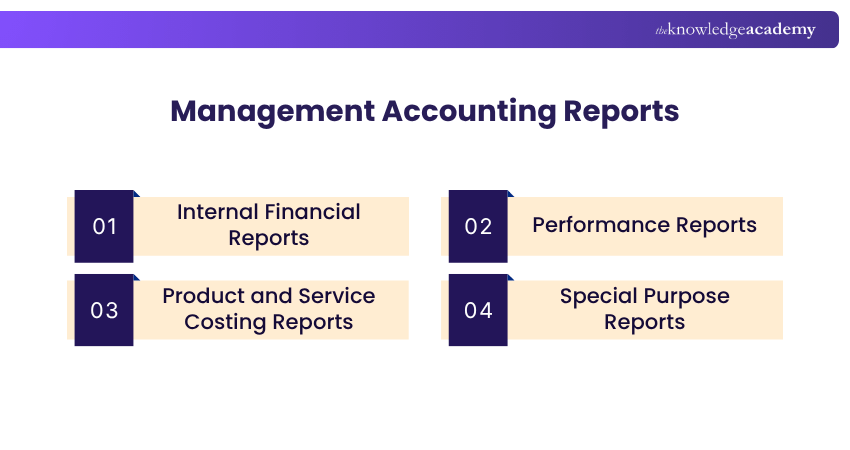
Management accounting reports provide information tailored to the needs of managers and executives. Their format, detail, and frequency can vary according to the organisation and the decisions being supported. Common types of management accounting reports include:
1) Internal Financial Reports
Management Accountants prepare internal financial reports tailored to the information needs of managers. These reports can provide detailed information about revenue, costs, cash flow, profitability, budgets, and other performance measures to support planning and control.
2) Performance Reports
Performance reports present data on Key Performance Indicators (KPIs) and other measures of operational and financial performance. They help managers track progress, identify areas requiring attention, and take appropriate corrective action.
3) Product and Service Costing Reports
Product and service costing reports break down resources and expenditure required to create products or provide services. These reports help managers evaluate the profitability of different offerings and identify opportunities for cost optimisation.
4) Special Purpose Reports
Special purpose reports are customised to address specific management needs or particular business decisions. Examples include risk assessments, capital expenditure analyses, and investment appraisal reports.
Pro Tip
Keep management reports decision-focused. Include only the measures, trends and variances that help the intended audience understand performance and take action.
Build budgeting, costing, and performance analysis skills with the Management Accounting (MA) Course – Register now!
Roles of Management Accountants
Management Accountants can act as strategic business partners by providing financial and operational insights that support decision-making. Some key roles of Management Accountants include:
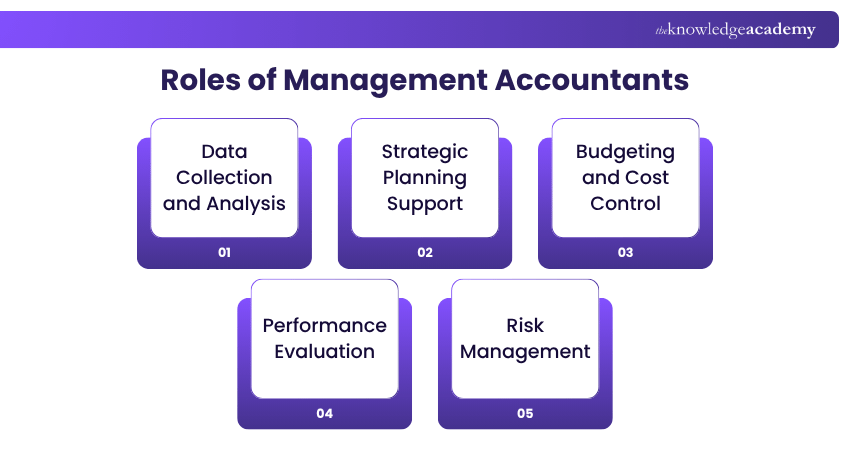
1) Data Collection and Analysis
Management Accountants often collect and analyse financial and non-financial data from various sources within the organisation. They use this data to generate meaningful reports and analyses that inform managerial decision-making.
2) Strategic Planning Support
Management Accountants collaborate with senior management to support strategic planning and set financial objectives. They contribute to budgeting and forecasting so that financial plans remain aligned with organisational goals.
3) Budgeting and Cost Control
Management Accountants play an important role in the budgeting process. They collaborate with managers to develop budgets, compare actual results with planned figures, identify overspending, and suggest appropriate ways to control costs.
4) Performance Evaluation
Management Accountants are involved in evaluating the company's performance against KPIs and benchmarks. They prepare performance reports and conduct variance analysis to identify areas of improvement and ensure the company's performance aligns with its goals.
5) Risk Management
Management Accountants help identify, assess, and analyse financial and business risks that can affect organisational performance. They provide information that supports risk evaluation, planning, controls, and management decisions.
Build advanced cost management skills with the CIMA’s CGMA® Advanced Management Accounting (P2) Course – Join today
Importance of Management Accounting
Management accounting supports strategic decision-making, resource allocation, performance evaluation, and cost management by providing managers with relevant financial and operational information. Here is why it is important:
1) Facilitating Decision-making
Management accounting helps managers make timely and well-informed decisions by presenting relevant information in a clear and practical form. This can improve the quality of decisions and reduce uncertainty when comparing different options.
2) Improving Resource Allocation
Organisations often have limited budgets, people and time. Management accounting helps managers prioritise where resources should be used, making it easier to direct them towards activities that support organisational goals.
3) Enhancing Cost Efficiency
Management accounting helps identify major cost drivers, inefficient processes and areas of unnecessary spending. This allows organisations to control costs more effectively while maintaining operational priorities.
4) Supporting Business Growth
Management accounting provides useful insights for evaluating investments, expansion plans and other growth opportunities. It helps managers assess whether proposed decisions are financially viable and aligned with long-term objectives.
Challenges in Management Accounting
Despite its significant benefits, management accounting faces several challenges. Some of the common challenges include:
1) Data Accuracy and Reliability
Management accounting relies heavily on data, and poor quality information can weaken the decisions based on it. Maintaining dependable and accurate data is therefore important for the success of management accounting practices.
2) Information Overload
The abundance of data can overwhelm Management Accountants and make it challenging to identify the most critical information for decision-making. Streamlining data collection and analysis processes can help overcome this challenge.
3) Technological Advancements
As technology evolves, Management Accountants must stay updated with new tools and techniques to effectively analyse data and generate meaningful insights.
Essential Skills for Management Accountants
Here are some essential accounting skills to enhance your success in management accounting:
1) Analytical and Data Skills
Ability to analyse financial and operational information and turn data into useful insights.
2) Business Acumen
Understanding how operations, markets, costs, strategy, and financial performance interact.
3) Technology and Analytics Skills
Ability to work with accounting systems, reporting platforms, data tools, and emerging technologies.
4) Communication and Leadership Skills
Ability to explain financial information clearly and collaborate with managers across the organisation.
5) Professional Judgement and Ethics
Ability to apply sound judgement, maintain integrity, and support responsible business decisions.
By combining accounting expertise with business knowledge, analytics, and strategic thinking, Management Accountants can support better organisational decisions.
Skills Spotlight
Strong Management Accountants combine financial expertise with business understanding. Being able to explain what the numbers mean is often just as important as producing them.
Management Accounting vs Financial Accounting
Management accounting and financial accounting both use financial information, but they serve different purposes. Let's check how they differ:
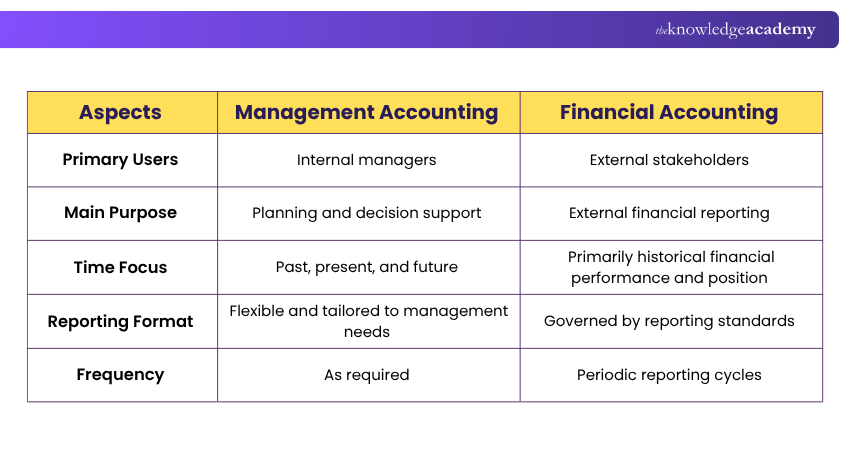
Management accounting primarily supports internal users such as managers and business leaders. It provides financial and operational information and reports can be produced as frequently and in as much detail as management requires.
On the other hand, financial accounting focuses primarily on preparing financial information for external users such as investors, lenders, regulators, and other stakeholders. It follows applicable accounting standards and reporting requirements and is generally concerned with presenting an organisation's historical financial position and performance.
Begin your path to becoming a finance professional with ACCA Foundation Training – Join now!

Nilotpal Sarmah is a Senior Content Writer with 11+ years of overall experience spanning engineering, operations and content development. His technical knowledge and extensive writing experience enable him to simplify specialised topics across IT and Tech, Business Skills, Project Management, Health and Safety, and ISO and Compliance.
View Detail

 If you wish to make any changes to your course, please


