




We may not have the course you’re looking for. If you enquire or give us a call on +65 6929 8747 and speak to our training experts, we may still be able to help with your training requirements.
What is Good Customer Service: Tips and Examples
ByThe Knowledge AcademyLast updated on: 19 August 2026
This blog explores what Good Customer Service is, practical tips to deliver it well, and how it plays out in practice, including real examples from brands like Netflix, Amazon, and The Ritz-Carlton.

KEY TAKEAWAYS
1. Good Customer Service means meeting customer needs quickly, professionally and empathetically.2. Active listening and problem-solving are essential skills.3. Personalisation helps strengthen customer relationships.4. Fast responses improve customer satisfaction.5. Consistent experiences across multiple channels build trust.
“Hi, my order hasn’t arrived yet. Can you help?”
“Of course. I’ve checked your order, found the delay and arranged delivery for tomorrow. I’ll also send you an update so you don’t have to follow up.”
That short conversation captures Good Customer Service perfectly. It is not simply about answering a question. It is about listening, understanding the problem and making the customer feel supported throughout.
So, Good Customer Service is the ability to provide helpful, timely and positive experiences at every interaction. From solving problems quickly to showing empathy and communicating clearly, great service can turn an everyday customer interaction into a reason to return.
What is Good Customer Service?
Good Customer Service is the exceptional level of care, support and assistance provided to customers by a business or organisation. It goes beyond meeting basic needs and transcends into creating positive experiences. Businesses provide Good Customer Service by understanding and empathising with their customers.
Responding quickly to customer inquiries through phone, email, or live chat, shows respect for their time. Social media customer service is also a key aspect, as it provides an additional, accessible channel for customers. This helps in solidifying customer's trust, thereby generating recurring revenue for the company.
PRO TIP
Here are some customer service phrases you must avoid:
a) “I can't help with that.”b) “You misheard me.”c) “I don't know.”d) “I don't see your account information in our database.”e) “Calm down.”f) “Uhh,” “Umm,” and the likeg) “That's just a glitch.”h) “Let me put you on hold"

How Good Customer Service Works?
Let's look at an example that illustrates how Good Customer Service can work in practice:
Scenario: A customer orders a wireless keyboard from an online electronics store. The product arrives, but one of the keys does not work.
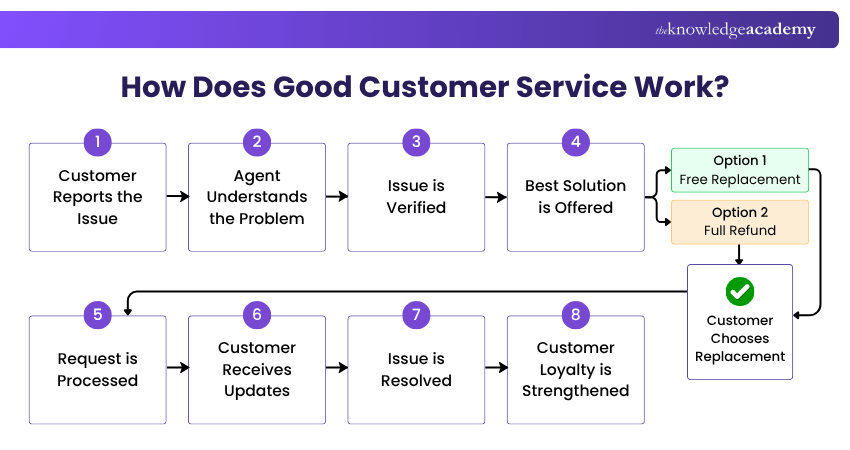
Here's what happens next:
Step 1: Customer Reports the Issue
The customer contacts the company's live chat and explains that the keyboard is faulty. They provide the order number and describe the problem.
Step 2: The Support Agent Listens and Shows Empathy
The customer service representative greets the customer, apologises for the inconvenience, and carefully listens to the issue before asking a few questions to understand the problem. Active listening and empathy help build trust from the start.
Step 3: The Issue is Verified
The representative checks the customer's order details and warranty status. They ask the customer to perform a simple troubleshooting step to confirm that the keyboard is defective rather than incorrectly configured.
Step 4: A Suitable Solution is Offered
After confirming the fault, the representative gives the customer two options:
a) Receive a free replacement keyboard, or
b) Request a full refund.
The customer chooses the replacement.
Step 5: The Request is Processed
The replacement order is created immediately. The customer receives a confirmation email with tracking details, the expected delivery date, and instructions for returning the faulty keyboard if required.
Step 6: Follow-up Communication
The company sends updates as the replacement is shipped. The customer can easily track the delivery through the company's website or mobile app.
Step 7: The Issue is Resolved
The replacement keyboard arrives within two days and works perfectly. The customer receives a follow-up email asking whether the issue has been resolved and inviting them to share feedback on their experience. Consistent communication and follow-up help ensure customer satisfaction.
Step 8: Building Long-term Loyalty
As a gesture of goodwill, the company offers the customer a 10% discount on their next purchase. The customer is satisfied with the quick resolution and decides to buy from the company again. This demonstrates how effective customer service can encourage repeat business.
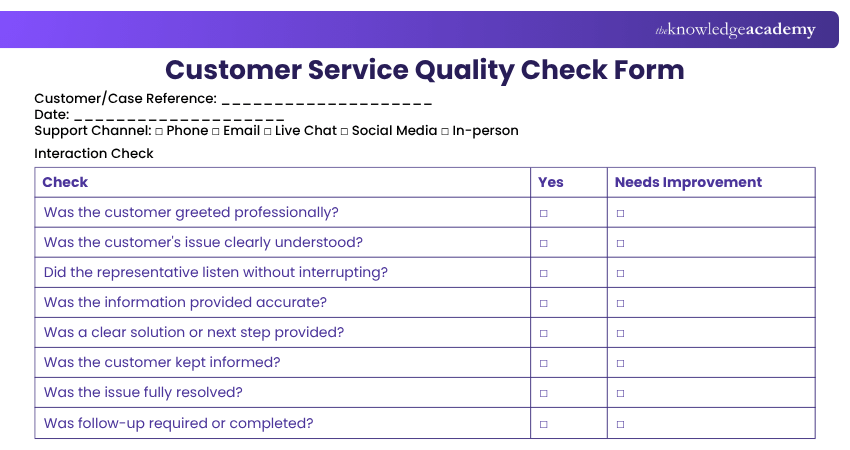
Knowing the principles is one thing. Applying them consistently is another. Use this quick customer service Quality Check after an interaction to see what went well and where there is room to improve:
Tips of Good Customer Service
Having a customer service strategy is only the first step. The real difference comes down to how well it's actually delivered. Long wait times, repeated transfers, unresolved issues, and a lack of empathy can quickly push customers toward competitors. Here are eight practical ways businesses can consistently deliver good service:
1) Personalise the Interaction
Take the time to understand individual customer preferences and reference previous interactions where relevant. Recognising returning customers and tailoring recommendations to their history creates a more genuine, less transactional experience.
2) Respond Quickly Without Sacrificing Quality
Prioritise fast response times, but never at the cost of accuracy. Aim to resolve issues correctly the first time rather than rushing to close a conversation. Offering support across multiple formats, such as images, text and video within the same thread, can also reduce friction and speed up resolution.
EXPERT INSIGHT:
Zoho Desk, Salesforce Service Cloud, SparrowDesk and Zendesk are some of the software solutions for Customer Service offering AI or Automation capabilities.
3) Build Strong Product and Service Knowledge
Invest in training that goes beyond surface-level answers. Agents should understand product nuances, common use cases and how to tailor solutions to individual situations, since a knowledgeable representative is often the deciding factor in a positive experience.
4) Offer Self-Service Options
Provide FAQs, knowledge bases, chatbots, or self-service portals so customers who prefer solving problems independently can do so easily. Keep human assistance readily available for anything more complex.
5) Lead With Emotional Intelligence
Train teams to recognise and respond to customer emotions, particularly frustration or disappointment. Encourage agents to pause, understand the customer's perspective, and respond with genuine empathy rather than reacting defensively.
Learn proven call control strategies that amplify customer satisfaction. Sign up for our Call Control Strategies for Customer Service Course now!
6) Be Proactive, Not Just Reactive
Reach out with updates, follow-ups, or helpful information before customers have to ask. Proactive communication signals commitment to the customer's satisfaction and often prevents small issues from escalating into complaints.
7) Keep Service Consistent Across Every Channel
Ensure customers receive the same standard of service whether they contact the business by phone, email, live chat, or social media. Consistency, more than any single great interaction, is what builds long-term loyalty.
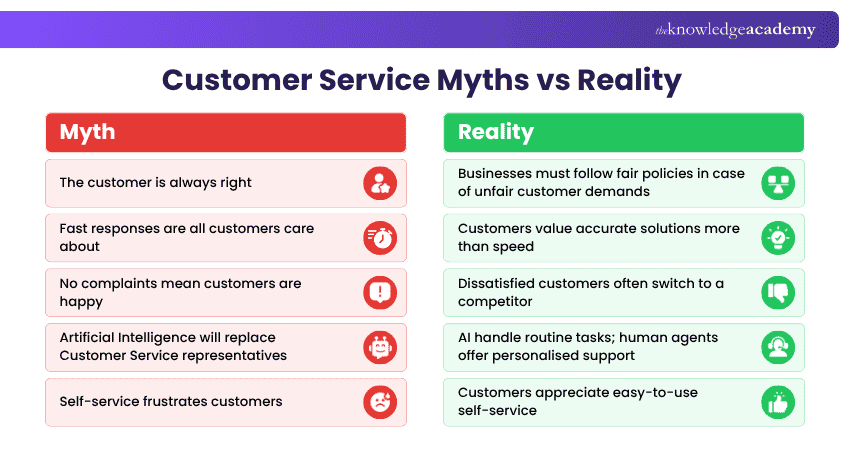
Additionally, there are some myths and facts regarding customer service that need to be considered:
Examples of Exceptional Customer Service
Some big brands have set a benchmark for great customer service. Here's a quick look at how they achieved this:
1) Netflix
Netflix has built a reputation for turning support interactions into genuinely memorable moments, rather than treating them as routine transactions to close as quickly as possible. Its customer support teams are given the freedom to engage with customers in creative, personal ways when the situation allows.
A widely cited example involved a support representative engaging with a customer in full Star Trek character while resolving a technical issue, turning a routine support request into one the customer remembered and shared.
2) Amazon
Amazon has built its reputation as much on convenience as on delivering customer experiences that feel effortless and rewarding. From customer loyalty programs and voice-powered shopping to hassle-free return policies and innovations like drone deliveries, Amazon continually raises the bar for customer service.
3) Google
While Google is best known for its search engine, it also supports millions of users across products such as Google Workspace and Google Ads. A standout example of this is Google's multilingual support system, which lets customers get help in their own language through both phone and real-time chat with product experts, regardless of where they are in the world.
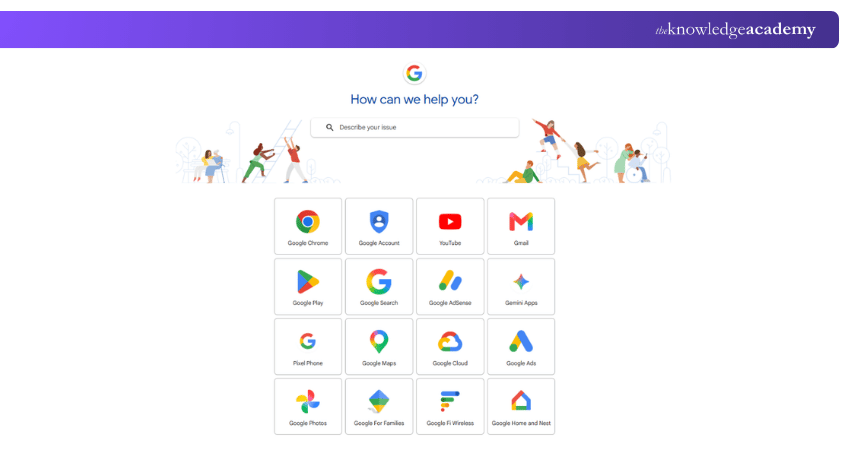
This kind of accessibility, paired with how closely Google studies customer feedback to keep refining its support strategy, is what sets its service apart.
4) The Ritz-Carlton
The renowned luxury hotels and resorts brand, The Ritz-Carlton excels in customer service with its Mystique Database. This database stores information about each guest’s preferences, including their preferred room temperature or favourite drinks and snacks.
For example, a guest who prefers a particular type of bed sheet can have it waiting for them in their room upon arrival. By using data to personalise customer interactions, The Ritz-Carlton creates a sense of anticipatory service. So, the guests feel the hotel anticipates their needs even before they ask.
Conclusion
Understanding What is Good Customer Service is vital because its the heart of every memorable customer experience. When businesses listen and consistently exceed expectations, they create relationships that extend far beyond a single transaction. Customer service excellence turns trust into loyalty and then loyalty into advocacy. In a world of 24x7 digitally catalysed interactions, exceptional service is a massive competitive advantage.
Build better customer connections with our Customer Relation Management Training. Sign up today!

The Knowledge Academy develops accessible learning content across Project Management, IT, Cybersecurity, Data Science, Business Analysis, HR, Accounting and Finance, Leadership and Health and Safety. Its resources combine subject research with clear explanations to help professionals build practical knowledge across a wide range of disciplines.
View Detail

 If you wish to make any changes to your course, please


