


We may not have the course you’re looking for. If you enquire or give us a call on 01344203999 and speak to our training experts, we may still be able to help with your training requirements.
What is a Global Management Programme: An Overview
ByThe Knowledge AcademyLast updated on: 09 October 2026
Discover the essence of global leadership with our comprehensive overview of 'what is a global management program.' Uncover the vital components and benefits of this transformative educational path, equipping you with the skills and insights needed to navigate the complexities of international business and make a mark in the global arena.
In a Nutshell
A global management programme helps learners develop the knowledge, skills, and global perspective needed to operate across international business environments. It focuses on areas such as global strategy, cross-cultural management, leadership, and international business, helping learners prepare for the challenges of working across markets and cultures.
Managing across countries can involve different markets, regulations, customer expectations and workplace cultures. This creates a need for professionals who can understand international business conditions and work effectively with people from different backgrounds.
Global management programmes are one way to develop these capabilities. This blog explains what they are, the subjects and learning experiences they may include, and the potential benefits they can offer.
What is a Global Management Program?
A global management programme is a course, qualification or professional-development programme that focuses on managing organisations, teams and business activities across international markets. Its structure varies by institution and learner level, ranging from academic programmes to executive education.
Typical subject areas include global strategy, leadership, international business, cross-cultural management, finance and decision-making. The aim is generally to help learners understand how business decisions and management practices can differ across countries, cultures and markets.

Importance of Global Management Programme
A global management programme provides learners with a broader understanding of managing in an international business environment. Its key areas of importance include:
1) Builds Cross-cultural Awareness: Helps learners understand how cultural differences can influence communication, teamwork and business practices across countries.
2) Supports International Decision-making: Develops a broader perspective for considering different markets, business conditions and stakeholder expectations.
3) Improves Global Collaboration: Helps learners work more effectively with colleagues, customers, suppliers and partners from diverse backgrounds.
4) Strengthens Adaptability: Encourages learners to adjust their communication and management approach when working across different cultural and business environments.
5) Broadens Business Perspective: Helps learners understand how international markets, organisations and business practices can differ.
6) Encourages Responsible Management: Can increase awareness of diversity, sustainability and responsible business practices in international contexts.
Trainer’s Insight
When working internationally, avoid relying on a single “best practice” for every situation. Instead, assess the local context, clarify assumptions early, and confirm how expectations, authority, and working norms are understood before taking action.
Components of a Global Management Programme
A global management programme covers essential business areas that help learners understand how organisations operate across international markets. The key components include:
1) International Business Strategy
This component focuses on developing strategies for businesses operating across different countries. It covers market entry, global competition, international expansion, and adapting business strategies to different economic and cultural environments.
2) Global Marketing Management
Global marketing management explores how organisations promote products and services across international markets. It includes global branding, market research, consumer behaviour, pricing strategies, and adapting marketing approaches to regional preferences.
3) Cross-cultural Management
This area focuses on managing teams and business relationships across different cultures. Learners develop an understanding of cultural differences, communication styles, workplace practices, and ways to collaborate effectively in diverse environments.
4) International Finance
International finance introduces financial concepts related to global business operations. It covers areas such as foreign exchange, international investment, financial risk, capital management, and financial decision-making across different markets.
5) Global Operations and Supply Chain Management
This component examines how businesses manage operations, logistics, sourcing, and supply chains across multiple countries. It also focuses on improving efficiency, managing global suppliers, addressing disruptions, and maintaining smooth international operations.
6) Leadership and Organisational Management
Leadership and organisational management develops the skills needed to lead diverse and geographically dispersed teams. It covers leadership approaches, decision-making, team management, organisational change, and effective communication in global business environments.
Strengthen your management expertise and drive better business performance. Register for our Business Management Training now.
Benefits of Global Management Programme
A global management programme equips learners with the knowledge and skills needed to operate effectively in international business environments. Some key benefits include:
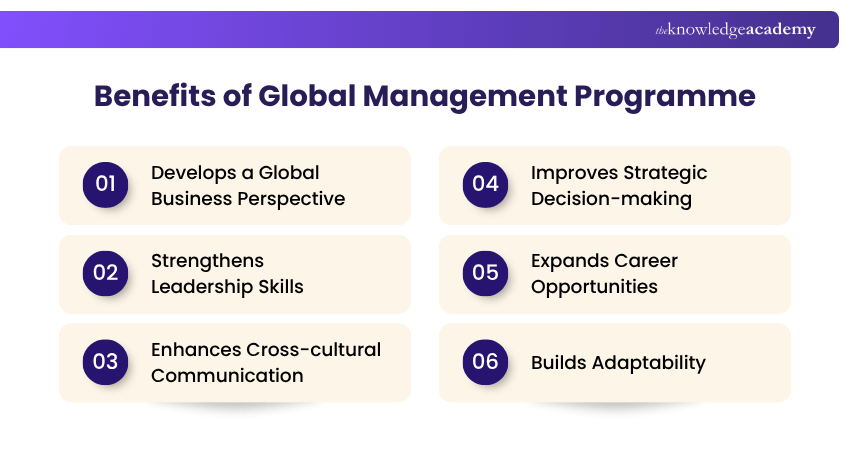
1) Develops a Global Business Perspective
Learners gain a broader understanding of international markets, business practices, economic conditions, and cultural differences, helping them approach business challenges from a global perspective.
2) Strengthens Leadership Skills
The programme develops leadership, decision-making, communication, and team management skills, enabling professionals to manage diverse teams and responsibilities effectively.
3) Enhances Cross-cultural Communication
Learners understand how cultural differences influence workplace communication and business relationships. This helps them collaborate more effectively with colleagues, clients, and stakeholders from different backgrounds.
4) Improves Strategic Decision-making
The programme strengthens the ability to analyse global business conditions, assess risks, identify opportunities, and make informed strategic decisions in complex environments.
5) Expands Career Opportunities
Global management knowledge can prepare professionals for roles across international business, consulting, marketing, finance, operations, and management, providing greater flexibility in their career paths.
6) Builds Adaptability
Exposure to different markets, cultures, and business challenges helps learners become more adaptable and confident when responding to changing global business conditions and emerging trends.
Ready to lead with greater impact? Build practical management skills for the challenges that matter with the Management Courses now.
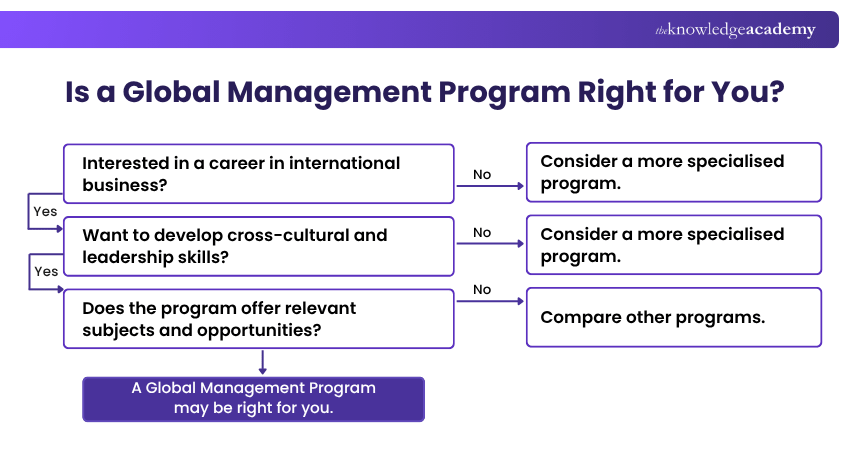
Is a Global Management Programme Right for You?

The Knowledge Academy develops accessible learning content across Project Management, IT, Cybersecurity, Data Science, Business Analysis, HR, Accounting and Finance, Leadership and Health and Safety. Its resources combine subject research with clear explanations to help professionals build practical knowledge across a wide range of disciplines.
View Detail

 If you wish to make any changes to your course, please


