




We may not have the course you’re looking for. If you enquire or give us a call on +44 1344 203 999 and speak to our training experts, we may still be able to help with your training requirements.
Home
 Resources
IT Security & Data Protection
What is Confidentiality: Definition, Importance, and Examples
Resources
IT Security & Data Protection
What is Confidentiality: Definition, Importance, and Examples
Resources
IT Security & Data Protection
What is Confidentiality: Definition, Importance, and Examples
What is Confidentiality: Definition, Importance, and Examples
ByNilotpal SarmahLast updated on: 02 October 2026
Confidentiality means protecting sensitive information from unauthorised access or disclosure and sharing it only with authorised individuals. This can include business secrets, medical records, or legal documents. It is a key principle across areas such as healthcare, education, law and business.
Keeping quiet isn’t always a bad thing. In fact, in the professional world, it can be a sign of trust, respect, and responsibility. Confidentiality is the silent shield guarding personal, financial, and business details. Whether it’s in schools, hospitals, or corporate offices, protecting sensitive information is the key to trust, ethics, and professionalism.
From guarding client data to protecting internal communications, understanding confidentiality is a core principle every employee and employer should follow. In this blog, we break down why it’s vital, and how to practice it in the workplace with real-world examples.
What is Confidentiality?
Confidentiality is the responsibility to protect sensitive, private or personal information from unauthorised access or disclosure. It involves ensuring that information shared in confidence, whether in healthcare, education, business or law, is handled appropriately and only disclosed where there is a legitimate basis to do so.
Key Areas:
1) In Healthcare: confidentiality protects a patient’s medical history and treatment
2) In Business: Involves safeguarding trade secrets, employee data, and strategic plans
3) In Education: Protects students’ academic and personal information from inappropriate or unauthorised disclosure.
Importance of Confidentiality
Confidentiality is important because it supports trust, legal and ethical responsibilities, and the protection of sensitive information. Here are some key areas where protecting confidentiality is essential:
1) Healthcare and Patient Confidentiality
In healthcare and social care, confidentiality helps patients share sensitive information with professionals without unnecessary disclosure. Medical histories, diagnoses, treatment details and other personal information should be protected and only shared where there is an appropriate basis.
Example: Discussing identifiable patient information in a public area without a valid reason could breach confidentiality.
Did You Know?
Confidentiality in healthcare is not always absolute. Information can sometimes be disclosed without consent when required by law or when there is a serious safeguarding or public-interest concern.
2) Educational Institutions
Teachers and school staff often handle sensitive information about students, such as academic performance, behavioural issues, or family background. Maintaining confidentiality can help protect students’ privacy and reduce the risk of inappropriate disclosure or unnecessary stigma.
Example: Sharing a student’s learning difficulty with others without need or consent breaches trust.
Strengthen your knowledge of UK data protection responsibilities with our Data Protection Act Training (DPA 2018) – Sign up today!
Types of Confidentiality
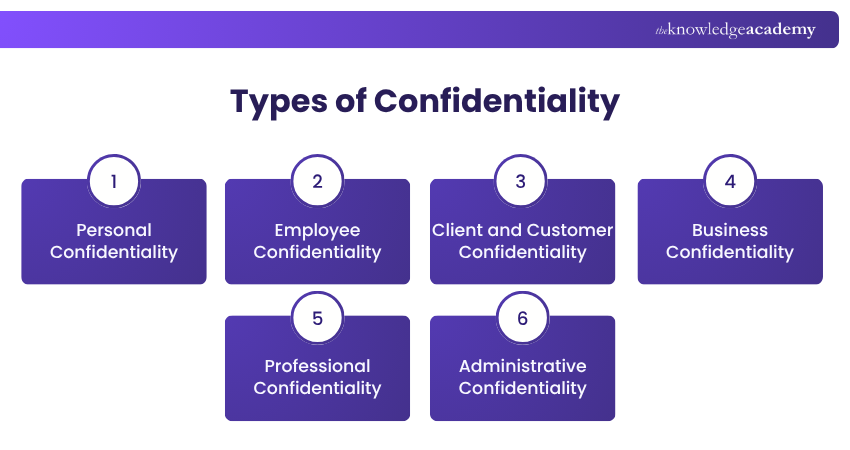
Confidentiality can apply to different kinds of sensitive information depending on the context in which it is handled. Common types include:
1) Personal Confidentiality
Personal confidentiality protects private information about an individual. This can include contact details, identification records, health information, and financial details. Access should be limited to authorised people.
2) Employee Confidentiality
Employee confidentiality covers sensitive information held about staff. This includes salary details, performance reviews, disciplinary records, and leave information. Such records should be handled carefully by authorised personnel.
3) Client and Customer Confidentiality
This type protects information shared by clients or customers. Examples include contact details, payment information, contracts, and private communications. The information should only be used for legitimate business purposes.
4) Business Confidentiality
Business confidentiality protects sensitive organisational information. This includes strategies, pricing details, financial forecasts, product plans, and trade secrets. Unauthorised disclosure can affect commercial interests.
5) Professional Confidentiality
Professional confidentiality applies to information shared within a professional relationship. This includes doctor-patient, lawyer-client, therapist-client, and accountant-client relationships. Information should only be disclosed where there is an appropriate basis.
6) Administrative Confidentiality
Administrative confidentiality covers internal operational information. Examples include meeting records, policy drafts, staff schedules, and management reports. These documents are usually restricted to people who need access for their work.
Confidentiality Checklist
Before handling sensitive information, check:
☐ Am I authorised to access or share this information?☐ Am I using an approved and secure system?☐ Am I sharing only the information that is necessary?☐ Is the recipient authorised to receive it?☐ Am I avoiding public or insecure communication channels?☐ Have I followed relevant organisational, legal and professional requirements?
Confidential Information in the Workplace
Protecting this information is not just about policy compliance. It’s essential for building trust, avoiding legal issues, and maintaining a competitive edge. Two of the most critical areas in workplace confidentiality include:
1) Protecting Personal and Sensitive Data
This involves securing employee and client information to protect confidentiality.
Information Includes:
a) Names, addresses, contact numbers
b) Identification numbers like national ID, tax ID
c) Medical records, personal leave details, or emergency contacts
d) Financial information such as salary, bank details, or benefits
How to Protect it:
a) Use password-protected systems and encrypted databases
b) Limit access only to authorised personnel
c) Securely dispose of sensitive documents when they are no longer required
d) Train employees on data handling and privacy practices
Quick Tip
Use access controls, strong passwords, secure file-sharing methods, and clear confidentiality policies to reduce the risk of sensitive information being exposed.
Why it Matters:
a) Protects individuals’ privacy rights
b) Supports compliance with UK data protection law, including the UK GDPR and Data Protection Act 2018, as amended by the Data (Use and Access) Act 2025.
c) Reduces the risk of identity theft or internal misuse
2) Safeguarding Company Trade Secrets
Trade secrets are business information that is secret, has commercial value because it is secret, and has been subject to reasonable steps to keep it secret.
Type of Information:
a) Product formulas, algorithms, or designs
b) Marketing strategies, business plans, or launch dates
c) Customer lists, pricing structures, or vendor agreements
How to Safeguard Them:
a) Implement Non-disclosure Agreements (NDAs) for employees and contractors
b) Restrict file access using role-based permissions
c) Conduct regular audits of confidential data
d) Use lawful and proportionate monitoring to detect unauthorised file sharing
Why it Matters:
a) Maintains competitive advantage in the market
b) Prevents corporate espionage or information leaks
c) Protects innovation, revenue streams, and business integrity
How Do You Maintain Confidentiality in Your Work?
Maintaining confidentiality involves consistent practices and awareness. These steps help uphold trust, comply with legal standards, and protect valuable information.
Here are some effective ways:
1) Know What’s Confidential: Understand which information needs protection, such as employee details, client records and trade secrets.
2) Follow Policies and Laws: Adhere to NDAs, company rules, and applicable data protection laws.
3) Limit Access: Share sensitive data only with authorised individuals.
4) Secure Data: Use passwords, encryption, and locked storage for both digital and physical files.
5) Be Discreet: Avoid public or casual discussions of confidential matters.
6) Use Secure Tools: Rely on trusted, encrypted communication platforms.
7) Stay Trained: Regularly update your knowledge through compliance and privacy training.
8) Report Breaches: Report suspected breaches promptly through the appropriate internal process and follow any applicable legal or regulatory reporting requirements.
Skills for Maintaining Confidentiality
To handle sensitive information responsibly, professionals must develop and demonstrate specific skills that support confidentiality. These skills ensure information is managed securely, ethically, and effectively in any work environment.
1) Professionalism
a) It involves upholding ethical standards, respecting privacy, and being trustworthy
b) Professionals should avoid inappropriate disclosure and manage conflicts of interest responsibly.
c) Handles confidential data with integrity regardless of personal opinions
Example: A manager keeping employee health concerns private, even under pressure.
2) Discretion
a) The ability to judge what information can be shared and with whom
b) Requires awareness of context and sensitivity
c) Handling private conversations and documents with appropriate care.
Example: Not discussing a client’s case in public spaces or casual chats.
3) Computer Literacy
a) Knowing how to use digital tools safely to store, access, and transmit data
b) Includes using strong passwords, understanding cybersecurity basics
c) This involves navigating software with secure settings
Example: Encrypting emails or documents that contain sensitive information.
4) Attention to Detail
a) Attention to small mistakes that can lead to big breaches
b) This skill helps ensure no sensitive data is accidentally shared or exposed
c) Involves double-checking recipients, reviewing access permissions
d) It helps the team in verifying file security
Example: Ensuring a confidential file is sent to the right recipient, not copied to the entire team.
Examples of Confidentiality
Here are real-world examples that highlight how confidentiality is maintained in different professional contexts:
1) Financial Information Confidentiality
Financial institutions like banks, accounting firms, and investment companies handle extremely sensitive data such as:
a) Bank account details
b) Credit scores
c) Investment portfolios
d) Tax records
Why it Matters:
A breach may expose clients to risks such as identity theft, fraud, financial loss or loss of privacy.
Example:
An accountant ensures a client’s tax return documents are password-protected and shared only through secure channels. Discussing client finances in open office areas or with unauthorised staff is strictly avoided.
2) HR Confidentiality Practices
Human Resources departments manage:
a) Employee personal details
b) Medical leave records
c) Salary and bonus data
d) Disciplinary actions and internal complaints
Why it Matters:
Mishandling such information can lead to legal or regulatory consequences, loss of employee trust, and reputational harm.
Example:
An HR manager keeps performance reviews and grievance reports confidential, discussing them only with relevant leadership and never over informal conversations or unsecured platforms.
3) Therapist-client Confidentiality
Therapists, counsellors, and psychologists are expected to maintain client confidentiality, subject to legal and safeguarding exceptions, regarding:
a) Client history
b) Session notes
c) Diagnoses and treatment plans
Why it Matters:
Breaching confidentiality can severely harm a client’s emotional well-being and may lead to legal consequences for the practitioner.
Example:
A therapist does not share session details unless the client consents or disclosure is legally or ethically justified.
Gain practical knowledge of data protection principles and compliance responsibilities with the GDPR Training – Register now!

Nilotpal Sarmah is a Senior Content Writer with 11+ years of overall experience spanning engineering, operations and content development. His technical knowledge and extensive writing experience enable him to simplify specialised topics across IT and Tech, Business Skills, Project Management, Health and Safety, and ISO and Compliance.
View Detail

 If you wish to make any changes to your course, please


