




We may not have the course you’re looking for. If you enquire or give us a call on 01344203999 and speak to our training experts, we may still be able to help with your training requirements.
What is Payroll Process: Briefly Explained
ByShristi RoyLast updated on: 30 September 2026
The payroll process covers the steps businesses follow to calculate employee pay, apply PAYE, National Insurance and other deductions, issue payroll documents, and report Payroll information to HMRC. A clear Payroll process helps improve accuracy, support compliance, and ensure employees are paid correctly and on time.

Read This First
1. UK Payroll operates through HMRC’s PAYE system2. FPS reports are normally due on or before payday3. Payroll deductions vary by individual circumstances4. Employers remain responsible for accurate Payroll reporting
Payroll Processing is a crucial task for all businesses. It involves managing employee compensation, calculating wages, withholding taxes, and ensuring timely payment. The Payroll Management process requires attention to detail, compliance with laws and regulations, and efficient execution to guarantee accuracy and employee satisfaction.
A well-structured Payroll management process ensures timely and accurate payments to employees while also complying with legal and regulatory requirements. In this blog, you will learn about Payroll Processing, its benefits, the key steps involved, and how to improve it.
What is Payroll Processing?
Payroll Processing is the process of calculating and managing employee pay while meeting relevant legal and reporting requirements.
It includes calculating gross and net pay, applying PAYE Income Tax, National Insurance, workplace pension contributions, and other applicable deductions. It also involves issuing Payroll documents, making employee payments, maintaining Payroll records, and reporting Payroll information to HMRC.

Benefits of Effective Payroll Processing
Effective payroll processing practices offer numerous Payrolling Benefits for businesses. Let's explore some of the key advantages:
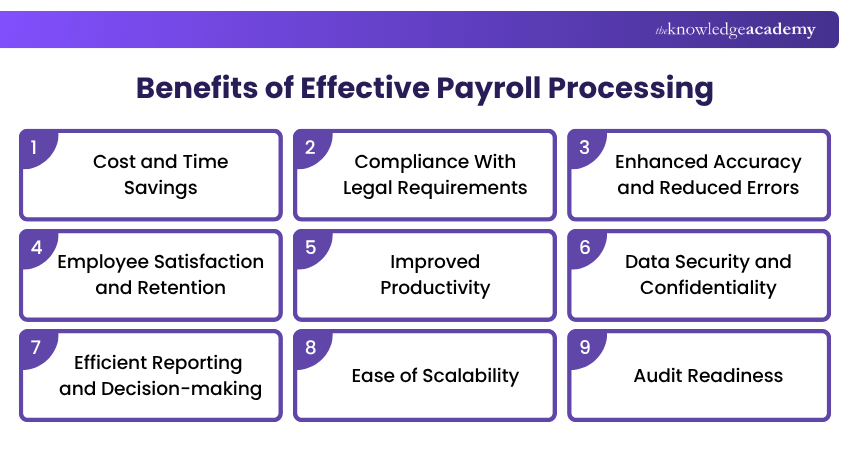
a) Cost and Time Savings: Efficient Payrolling processes save both time and money. Businesses can streamline operations and allocate resources to other critical areas by automating Payroll tasks and reducing manual efforts.
b) Compliance With Legal Requirements: Payrolling involves adherence to various tax laws, labour regulations, and reporting obligations. Effective Payrolling ensures compliance, minimising the risk of penalties, fines, and legal issues.
c) Enhanced Accuracy and Reduced Errors: Automated Payrolling systems minimise errors in calculations, data entry, and deductions. This leads to accurate and consistent Payroll Management processing, reducing the chances of payment disputes or employee dissatisfaction.
d) Employee Satisfaction and Retention: Timely and accurate salary processing contributes to employee satisfaction. When employees receive the correct pay on time and experience fewer Payroll issues, it can support trust and satisfaction. This, in turn, helps with employee retention and reduces turnover.
e) Improved Productivity: Effective Payrolling frees up valuable time for HR and finance teams, allowing them to focus on more strategic tasks. By understanding the Difference Between HR and Payroll, automating repetitive processes increases productivity, enabling employees to dedicate their efforts to more value-added activities.
f) Data Security and Confidentiality: Payroll systems should use appropriate access controls and data protection measures to safeguard sensitive employee and financial information.
g) Efficient Reporting and Decision-making: Accurate Payroll Accounting data provides valuable insights for financial reporting and analysis. Effective Payrolling allows businesses to generate comprehensive reports, track expenses, forecast budgets, and make informed decisions based on reliable data.
h) Ease of Scalability: As businesses grow, Payrolling can become more complex. Effective Payrolling practices and systems accommodate scalability, allowing businesses to manage Payroll for an expanding workforce without disruptions or complications.
i) Audit Readiness: Well-documented Payrolling processes, accurate records, and compliance with regulations ensure businesses are audit-ready. This provides peace of mind and facilitates a smooth audit process when required.
By implementing effective Payrolling practices, businesses can experience cost savings, compliance, accuracy, employee satisfaction, and improved overall operational efficiency.
Key Steps to Process Payroll
The several essential steps of the Payroll management process are critical to ensuring timely and accurate employee payment. Here are the key steps involved in this process:
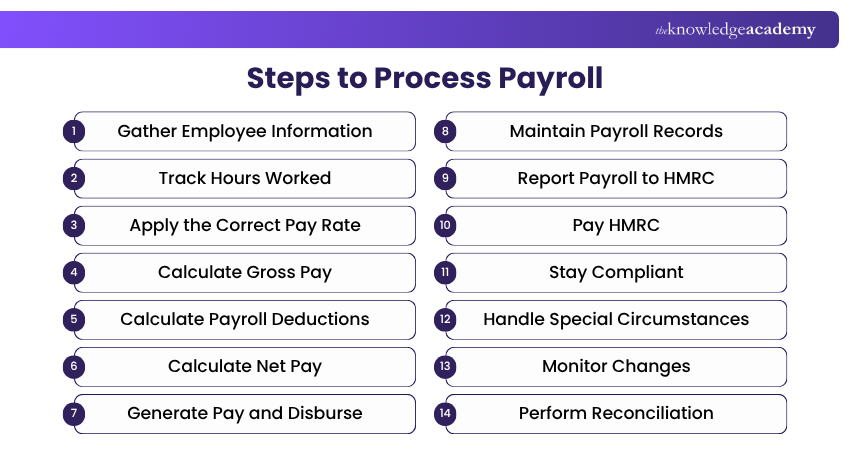
a) Gather Employee Information: Collect key details such as name, address, start date, National Insurance number, bank details, and tax information. Use the employee’s P45 where available, or the HMRC Starter Checklist if they do not have one.
b) Track Hours Worked: Record hours worked where pay depends on time worked, including regular hours, overtime, and other paid time. Accurate time records help ensure correct pay calculations for hourly-paid employees.
c) Apply the Correct Pay Rate: Use the employee’s agreed salary or hourly rate, along with any approved overtime rates, bonuses, allowances, or other contractual payments.
d) Calculate Gross Pay: Calculate each employee’s total pay before deductions, including salary or hourly wages, overtime, bonuses, commission, and other applicable payments. This ensures all taxable and pensionable earnings are included correctly before deductions are applied.
e) Calculate Payroll Deductions: Calculate applicable deductions from gross pay, including PAYE Income Tax and employee National Insurance contributions. Depending on the employee, deductions may also include workplace pension contributions, Student or Postgraduate Loan repayments, Payroll Giving, child maintenance, or other authorised deductions.
f) Calculate Net Pay: Subtract applicable deductions from gross pay to determine net pay, which is the employee’s take-home pay. Accurate net pay calculations ensure employees receive their correct take-home pay.
g) Generate Pay and Disburse: Pay employees through the agreed payment method and provide a payslip on or before payday. The payslip should show gross pay, applicable deductions, net pay, and the number of hours worked where pay varies according to time worked.
h) Maintain Payroll Records: Keep accurate records of employee pay, deductions, HMRC submissions, tax codes, payments to HMRC, and other relevant Payroll information. PAYE records must generally be kept for 3 years from the end of the tax year they relate to. Records used to demonstrate compliance with the National Minimum Wage must generally be retained for at least 6 years under the current rules.
Elevate your skills with our expert-led Xero Payroll Training – Register now!
i) Report Payroll to HMRC: Use Payroll software to send a Full Payment Submission (FPS) to HMRC on or before employees’ payday, detailing their pay and deductions. An Employer Payment Summary (EPS) may also be required in specific circumstances, such as when no employees are paid in a tax month or when claiming certain reductions or allowances.
j) Pay HMRC: Pay the PAYE amount due to HMRC, including Income Tax, National Insurance and other applicable deductions. Monthly payments are generally due by the 22nd of the following tax month when paying electronically, or by the 19th if paying by post. Some employers may qualify to pay quarterly.
k) Stay Compliant: Stay updated with tax laws, labour regulations, and reporting requirements to ensure compliance with legal obligations. Regularly review changes in regulations to adapt processes accordingly.
l) Handle Special Circumstances: Process bonuses, commissions, reimbursements, and any other special Payroll circumstances accurately. Special circumstances require attention to ensure accurate compensation and adherence to specific rules or policies.
m) Monitor Changes: Regularly update employee details, tax codes, pay rates, pension information, and other Payroll records when changes occur. Keeping information current helps prevent Payroll errors.
n) Perform Reconciliation: Reconcile Payroll records with bank statements and other financial reports to ensure accuracy and detect any discrepancies. Reconciliation helps identify and resolve any inconsistencies or errors in this process.
Trainer’s Tip: Reconcile Payroll before submitting the FPS. Check employee changes, deductions, and totals against source records to catch errors before payday.
By following these key steps, businesses can effectively manage their Payroll Process, ensuring accurate and timely payment to employees while maintaining compliance with legal requirements.
Payroll Check
Before finalising Payroll, check:
Employee details updated?Pay and deductions correct?Payslips ready?FPS ready for HMRC?Payroll totals reconciled?
How to Improve Payroll Process
Improving your Payroll Process can increase efficiency, accuracy, and employee satisfaction. Here are some strategies to enhance your Payroll operations:
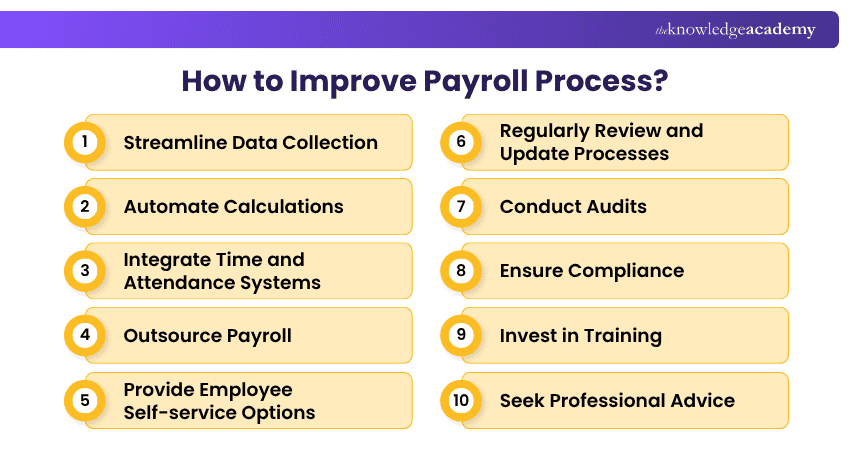
a) Streamline Data Collection: Implement efficient methods for collecting employee information, such as online forms or integrated HR systems. This reduces manual data entry and improves data accuracy.
b) Automate Calculations: Utilise Payroll Software that automates wage calculations, deductions, and tax withholdings. This minimises errors and ensures accurate payments.
c) Integrate Time and Attendance Systems: Integrating time and attendance systems with your Payroll software streamlines calculating hours worked, overtime, and paid time off. It eliminates manual data entry and improves accuracy.
d) Outsource Payroll: Consider using a specialist Payroll provider to manage complex Payroll tasks and support accuracy and compliance. However, the employer remains responsible for meeting PAYE obligations, even when Payroll is outsourced.
e) Provide Employee Self-service Options: Implement self-service portals where employees can access their Payroll documents, update personal information, and view tax documents. This reduces administrative tasks and empowers employees to manage their Payroll-related needs.
f) Regularly Review and Update Processes: Continuously review your Payroll Management methods to identify areas for improvement. Stay current with tax laws and regulations changes, and ensure your procedures align with best practices.
g) Conduct Audits: Perform periodic audits of your Payroll Management methods to identify any discrepancies or errors. This helps maintain accuracy, detect fraud or compliance issues, and ensure Payroll data integrity.
h) Ensure Compliance: Stay informed about labour laws, tax regulations, and reporting requirements. Regularly review your Payroll procedures to ensure compliance and avoid penalties.
i) Invest in Training: Train your Payroll team on the latest Payroll practices, software updates, and regulatory changes. This ensures they have the necessary knowledge and skills to perform their roles effectively.
j) Seek Professional Advice: Consult with Payroll experts or seek advice from Payroll service providers to optimise your processes. They can offer insights, guidance, and solutions tailored to your specific business needs.
Applying these strategies can improve your Payroll Management's efficiency, accuracy, and effectiveness. Remember to regularly evaluate and update your procedures to adapt to evolving requirements and industry best practices.
Simplify Payroll calculations and reporting with our Sage Payroll Course - Join now!

Shristi Roy is a Content Writer with experience in journalism, article writing and web content development. Her experience researching and writing about Business Skills and Accounting and Finance enables her to communicate specialised information through clear, engaging narratives.
View Detail

 If you wish to make any changes to your course, please


