


We may not have the course you’re looking for. If you enquire or give us a call on 01344203999 and speak to our training experts, we may still be able to help with your training requirements.
Payroll Manager Job Description: An Ultimate Guide
ByOlivia TaylorLast updated on: 10 October 2026
A Payroll Manager oversees payroll operations to help ensure employees are paid accurately and on time while payroll records and relevant statutory requirements are managed correctly. This blog explains the role, responsibilities, skills, qualifications and common career pathways for Payroll Managers.
At a Glance
1. Payroll management involves coordinating people, processes and technology to maintain efficient operations.2. Employers may value practical payroll experience alongside academic and professional qualifications.3. Strong analytical abilities help identify discrepancies and resolve complex payroll issues.4. Payroll Managers work closely with HR and finance teams to maintain consistent employee and financial data.5. Career progression may involve gaining supervisory experience, improving payroll processes and developing leadership capabilities.
Payroll involves more than calculating employee pay. It also requires accurate records, statutory deductions, reporting, payroll systems and compliance with relevant requirements. Payroll Managers coordinate these activities while helping organisations maintain reliable and timely payroll processes.
This blog explores the role of a Payroll Manager, including key responsibilities, skills, qualifications, salary considerations and common career pathways.
Payroll Manager: A Quick Overview
A Payroll Manager oversees an organisation’s payroll operations, helping ensure employees are paid accurately and on time. Responsibilities may include payroll calculations, statutory deductions, payroll records, reporting, system oversight and compliance with relevant requirements. The exact scope of the role varies by organisation and jurisdiction.

Roles and Responsibilities of a Payroll Manager
A Payroll Manager holds various key responsibilities within an organisation. These responsibilities include:
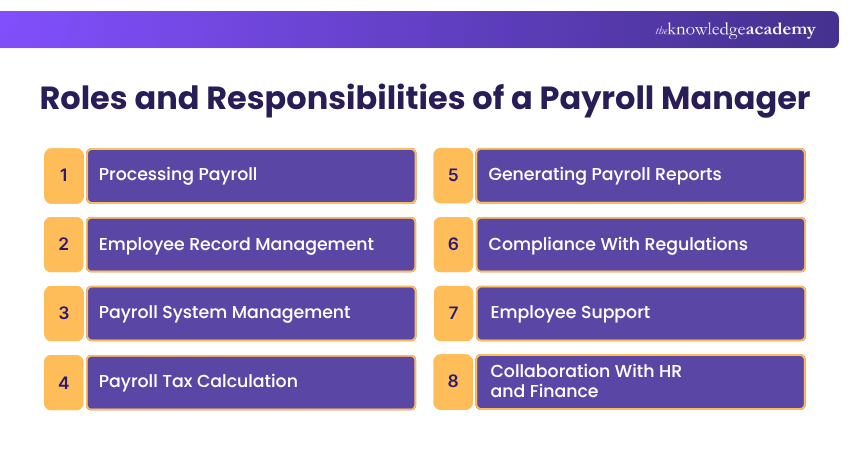
a) Processing Payroll: A Payroll Manager's primary responsibility is overseeing accurate payroll processing for employees. This involves supervising or reviewing the calculation of salaries, bonuses, and deductions and ensuring timely employee payment.
b) Employee Record Management: Payroll Managers are responsible for maintaining and updating employee records. This includes managing tax information, personal details, and any changes in employment status.
c) Payroll System Management: A Payroll Manager must oversee and manage the payroll software and systems used by the organisation. They should be proficient in troubleshooting system issues, ensuring data integrity, and maintaining the security of payroll information.
d) Payroll Tax Calculation: A Payroll Manager is responsible for overseeing the accurate calculation, processing and reporting of applicable payroll taxes and statutory contributions. This can include applicable income taxes, employee and employer contributions, and other statutory or authorised deductions, depending on the country and jurisdiction.
e) Generating Payroll Reports: Payroll Managers should generate and evaluate payroll reports to ensure accuracy and compliance. They must reconcile any discrepancies and provide clear and comprehensive reports to management.
f) Compliance With Regulations: A Payroll Manager must stay current with relevant payroll laws and regulations. They should ensure that the organisation complies with statutory requirements and handle any payroll-related audits or inquiries.
g) Employee Support: Payroll Managers address employee inquiries and resolve payroll-related issues in a timely and professional manner. They should have effective communication skills to assist and guide employees regarding their payroll.
h) Collaboration With HR and Finance: Payroll Managers work closely with the HR and finance departments to ensure the seamless integration of payroll data with other systems. This collaboration helps maintain accurate financial records and employee data.
Pro Tip
Before finalising payroll, review employee information, calculations, deductions, and any recent changes carefully. Identifying discrepancies early can help prevent payment errors and reduce the need for corrections after payroll has been processed.
Qualifications and Skills Required
To excel as a Payroll Manager, you must possess certain qualifications and skills. Some of them are listed below:
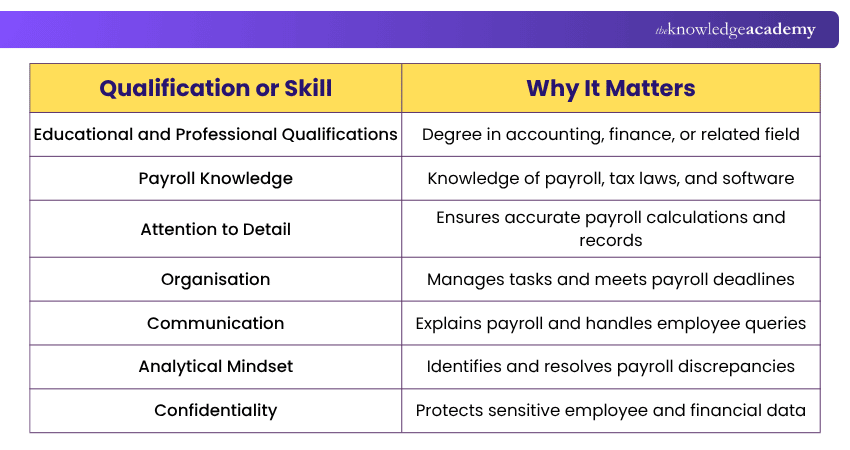
a) Educational and Professional Qualifications: Employers may prefer candidates with a degree in accounting, finance, or a related field. However, a degree is not mandatory for every Payroll Manager role. Professional payroll qualifications, combined with relevant work experience, can also help individuals develop the knowledge and expertise required for this position.
b) Payroll Knowledge: A Payroll Manager should possess a strong knowledge of payroll processing, tax regulations, and employment laws. They should be well-versed in payroll software and systems and stay updated on industry trends and best practices.
c) Attention to Detail: Excellent attention to detail and accuracy are crucial for a Payroll Manager. They must be meticulous when working with large amounts of numerical data and ensure precision in calculating salaries, deductions, and taxes.
d) Organisational and Time Management Skills: In payroll jobs, managers often must meet strict payroll deadlines. Strong organisational and time management skills enable them to efficiently handle multiple tasks, prioritise work, and ensure timely payroll processing.
e) Communication Skills: Effective communication is crucial for these professionals to interact with employees, management, and external stakeholders. They should be able to explain payroll processes and resolve inquiries or issues related to payroll clearly and professionally.
f) Analytical Mindset: An analytical mindset is valuable for a Payroll Manager. They should be able to analyse payroll data, identify discrepancies, and proactively resolve any issues that may arise.
g) Confidentiality: Payroll Managers handle sensitive employee information, including personal and financial data. They must maintain confidentiality and handle such information with the utmost integrity and discretion.
By possessing these qualifications and skills, a Payroll Manager can effectively perform their role and contribute to the success of the organisation's payroll operations.
Trainer’s Insight
A successful Payroll Manager needs more than technical payroll knowledge. Accuracy, confidentiality, communication, and time management are equally important, as payroll professionals work with sensitive employee information while meeting strict processing deadlines and compliance requirements.
Learn the secrets to effective financial management and take control of your organisation's success with the Financial Management Course today!
Average Salary of a Payroll Manager
The average salary of a Payroll Manager can vary based on many criteria, such as location, industry, company size, and level of experience. Let's look at the salary table below:
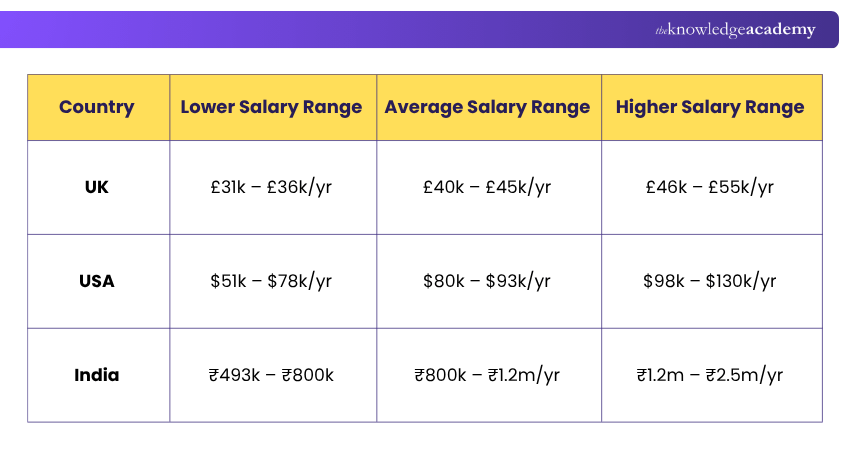
Source: Glassdoor
How to Become a Payroll Manager?
Becoming a Payroll Manager requires relevant knowledge, practical experience, and specialised skills. Here are the key steps to help you build a career in payroll management:
a) Build a relevant knowledge foundation through education, professional payroll training, apprenticeships or practical learning in accounting, finance, business, or a related field.
b) Gain practical experience in payroll administration or related roles.
c) Develop supervisory experience by progressing into senior payroll, specialist or team leadership roles before applying for Payroll Manager positions.
d) Continuously build your payroll knowledge and stay updated on payroll laws, tax regulations, compliance requirements, and industry trends.
e) Consider obtaining relevant payroll certifications.
f) Broaden your expertise in HR, finance, or compliance to complement payroll management.
g) Demonstrate your ability to manage workloads, improve payroll processes, resolve complex problems and support team performance.
h) Network with professionals in the field and seek mentorship from experienced Payroll Managers.
i) Adapt to new technologies and software systems for efficient payroll processing.
j) Monitor job boards and tailor your resume to highlight relevant experience and certifications.
Payroll management demands accuracy, confidentiality, and adaptability. Staying current with payroll regulations, systems, and best practices is essential for managing responsibilities effectively and supporting career growth.
Learn to manage investments and maximise returns effectively with our Finance Courses – Register now!

Olivia Taylor makes complex financial subjects easier for professionals to understand and apply. Her content connects accounting principles with the practical requirements of financial control, organisational planning and responsible decision-making.
View Detail

 If you wish to make any changes to your course, please


