




We may not have the course you’re looking for. If you enquire or give us a call on 01344203999 and speak to our training experts, we may still be able to help with your training requirements.
Management Accountant: Its Role, Importance, and Career
ByThe Knowledge AcademyLast updated on: 22 September 2026
A Management Accountant analyses financial data and advises management to support planning, boost efficiency, and improve business performance. They identify cost-saving opportunities, assess financial risks, and align resource allocation with business goals. They help improve efficiency and lead strategic growth in an organisation.

Imagine you're a business owner, and an ocean of numbers, finance reports, and data surrounds you. It's overwhelming, isn't it? This is where the Management Accountant enters the picture. But what exactly does a Management Accountant do, and what makes them crucial in today's corporate landscape? They are like the ship's captains, navigating your business through the tumultuous sea of financial data.
From budgeting and forecasting to analysing performance and reducing costs, Management Accountants play a vital role in business success across all industries. Continue reading this blog to learn about What is a Management Accountant and explore how they can provide insights into the success of a business.
What is a Management Accountant?
A Management Accountant plays a vital role in an organisation, working within the finance or accounting department. They are responsible for preparing management accounts and various internal reports. They also analyse financial data, track performance, and ensure that resources are used wisely.
Moreover, the Management Accountants support budgeting, cost control, and strategic planning. They also oversee general accounting practices, helping to improve efficiency and promote the long-term financial success of the business.
What Does a Management Accountant do?
Management Accountants are the basis of an organisation's financial stability and strategic success. Let’s explore what they actually do and what their responsibilities are:
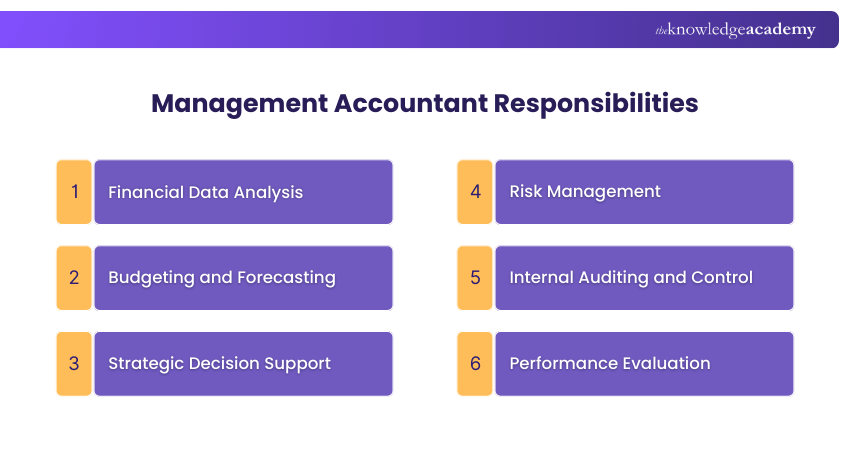
Financial Data Analysis
The role of a Management Accountant in financial data analysis is similar to that of an investigator. They sift through financial statements, inspecting every item and every number to understand the company's financial status. This involves analysing balance sheets, income statements, cash flow statements, and other financial documents.
They also look at things like business costs, income, and investments to see how they affect profits. Then, they turn all this detailed information into simple, clear reports that help others understand the company’s financial position.
Budgeting and Forecasting
Management Accountants use past data, market trends, and business plans to plan future income and spending. Once the budget is approved, they regularly check if the actual income and expenses match the plan. If there are big differences, they explain why and suggest ways to fix them.
Apart from budgeting, they also predict the financial trends of the future. This helps businesses get ready for possible changes, like new opportunities or problems. They estimate future income, costs, and market changes and give a clear idea for managing the money wisely.
Strategic Decision Support
When it comes to making big business decisions, Management Accountants act as advisors to senior leaders. They use their financial knowledge to look at how these decisions might affect the company’s financial status. They help ensure that the company chooses options that support long-term growth and stability.
For example, if the company wants to launch a new product, they will check the expected costs, possible earnings, and profit. Based on this, they might suggest going ahead, changing the product to save money, or even stopping the idea if it doesn’t seem worth it.
Risk Management
The role of a Management Accountant is very significant when it comes to Risk Management. They keep an eye on different types of risks like changes in the market, problems in daily operations, new laws, or cyber threats. They study how these risks could affect the company’s finances and come up with ways to reduce them.
For example, if a company works in an industry where raw material prices often change, the Management Accountants might suggest signing long-term contracts at fixed prices or using more than one supplier to reduce the risk.
Internal Auditing and Control
Internal audits are essential responsibilities that every accountant should consider. They check the company’s financial records to make sure everything is correct and also review how well the internal systems are working. They make sure the company follows financial rules and standards.
This helps prevent fraud, reduce mistakes, and safely keep the company’s money and assets. If any problems are found during the audit, they suggest possible ways to fix and make the system work better.
Analyse financial data and optimise cost control with our Managing Costs and Finance (MA2) Course – Register today!
Performance Evaluation
Management Accountants help check how well a company is doing. They compare actual results with the company’s goals or budget to see what’s going right and what needs to improve. They also make simple reports and charts to show how different teams or projects are performing.
For example, if costs are too high or profits are lower than planned, they try to find the reason and suggest ways to fix it. This helps managers make better choices and improve how the business works.
How to Become a Management Accountant?
Becoming a Management Accountant involves a mix of education, training, and the right skills. Here’s how you can become one:
Education
At a minimum, aspiring Management Accountants need to have a bachelor’s degree in finance, accounting, or a related field. This forms the foundation of knowledge in areas such as cost accounting, financial management, and auditing.
However, the world of finance is intricate and constantly evolving, so many professionals opt to further their knowledge base. They often pursue advanced degrees such as a Master of Business Administration (MBA), a Master's in Accounting, or professional qualifications like CIMA vs ACCA to enhance their expertise.
Skills Needed
Alongside formal education and certification, Management Accountants need to possess a set of skills that enable them to excel in their role. Here's a detailed list of skills that these professionals need to possess:
1) Problem-solving Skills: Management Accountants commonly fulfil difficult financial situations that demand innovative approaches. As a result, they must be excellent problem solvers, capable of thinking analytically and making educated choices under pressure.
2) Attention to Detail: Precision is essential in accounting. Management Accountants must have an excellent sense for detail to ensure the accuracy of financial records and reporting. This ability is necessary to identifying inequalities, understanding financial patterns, and creating accurate forecasts.
3) Communication Skills: Despite working mainly with numbers, Management Accountants require strong verbal and written communication skills. They must be able communicate complex financial facts to stakeholders. Also, to present their results and ideas to company stakeholders, they must communicate effectively and clearly.
4) Analytical Skills: Management Accountants need to be able to analyse large amounts of financial data and discern patterns, trends, and insights. This involves not just understanding numbers but also understanding the story they tell about the company's financial health and performance.
Understand the techniques of budgeting and forecasting with our Management Information (MA1) Course – Sign up immediately!
Average Salary of a Management Accountant
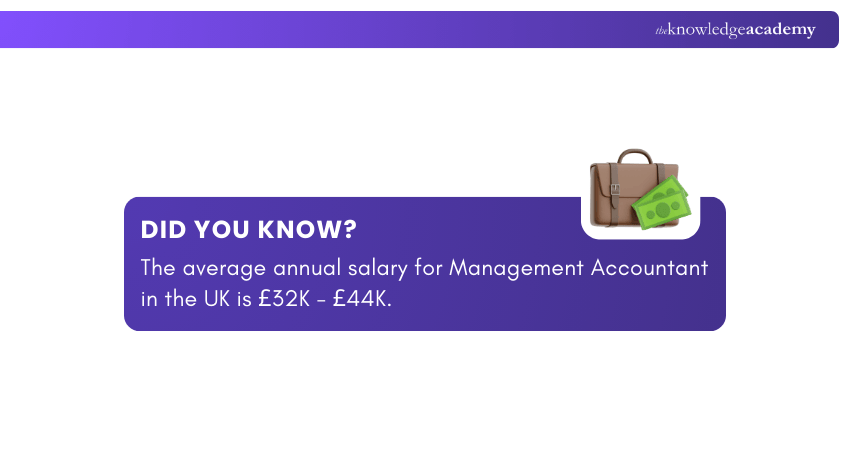
The average salary of a Management Accountant can vary based on location, experience, and qualifications. However, it generally reflects the high value they bring to financial planning and decision-making within a company.
According to Glassdoor, a beginner can expect to earn an average of around £30,000 per year. On the other hand, experienced candidates can earn an average of around £51,000 per year, reflecting their advanced skills, qualifications, or years of experience.
Factors Affecting Management Accountant Salary
A Management Accountant’s salary is impacted by several factors, from experience to industry and location. Understanding these elements helps professionals set realistic salary expectations. Here are the key factors that influence your salary:
a) Experience and Qualifications: The more experience and relevant qualifications you hold as a Management Accountant, the higher your earning potential will be. Senior professionals with years of expertise typically earn more than entry-level accountants.
b) Industry Sector: The industry in which you work can impact salary levels. Sectors like finance, technology, and energy tend to offer higher salaries compared to non-profit or public sector roles.
c) Geographic Location: Salaries can vary significantly based on location. If you work in a high-cost-of-living area or financial hub, such as London or New York, you can earn higher wages than those in smaller towns or rural areas.
d) Company Size and Revenue: Larger companies or multinational corporations typically offer higher salaries due to bigger budgets and more complex financial needs, while smaller businesses may offer more modest compensation.
e) Level of Responsibility: The level of responsibility and the number of employees managed can directly influence salary. Those in managerial or leadership positions generally earn more than those in junior or operational roles.
Chartered Management Accountant
A Chartered Management Accountant (CMA) specialises in analysing financial data to make business decisions, budgeting, cost control, and Risk Management. As a CMA professional, you will play a key role in strategic planning and performance evaluation.
To become a CMA, you need to complete the different levels of exams offered by the Chartered Institute of Management Accountants (CIMA). After that, you need to gain three years of relevant work experience. Once they are completed, you'll earn the CGMA designation, enabling you to work globally in financial planning, analysis, and strategic decision-making roles.
Acquire the necessary skills to examine financial statements with our Foundations in Audit (FAU) Course – Join soon!
Work Experience
To complete CMA, you need three years of relevant work experience in Management Accounting or Financial Management. It involves tasks like budgeting, forecasting, financial analysis, or cost control. It ensures you can apply what you've learned in real business settings, making you fully qualified as a Certified Management Accountant.
Is Management Accounting Better Than Financial Accounting?
Management Accounting helps managers make decisions by providing detailed reports on costs and operations. Financial accounting focuses on creating financial statements for external use, like investors and regulators. Both are important, but they serve different purposes. Together, they ensure a comprehensive understanding of a company's financial health and support informed business actions.
Is Management Accountant the Same as Accountant?
No, a Management Accountant is not the same as a general Accountant. A Management Accountant focuses on internal financial analysis to support business decisions, planning, and performance improvement. An Accountant, on the other hand, typically handles financial reporting, tax filing, and external audits for regulatory purposes.
Learn to empower team members with our Management Training for New Managers Course – Join today!

The Knowledge Academy develops accessible learning content across Project Management, IT, Cybersecurity, Data Science, Business Analysis, HR, Accounting and Finance, Leadership and Health and Safety. Its resources combine subject research with clear explanations to help professionals build practical knowledge across a wide range of disciplines.
View Detail

 If you wish to make any changes to your course, please


