


 Top Rated Course

We may not have the course you’re looking for. If you enquire or give us a call on 01344203999 and speak to our training experts, we may still be able to help with your training requirements.
Macro Photography: Capturing Life’s Miniature Wonders
The Knowledge Academy 02 March 2026Macro photography captures extreme close-ups at 1:1 magnification, revealing fine details in insects, flowers, and small subjects using focus and lighting. It allows photographers to showcase textures often unseen by the naked eye. With patience and control, it turns ordinary subjects into striking visual stories.

Training Outcomes Within Your Budget!
We ensure quality, budget-alignment, and timely delivery by our expert instructors.
Table of Contents
The most beautiful aspects often lie concealed in the smallest details. Macro Photography presents you with a chance to investigate a realm that is generally invisible. Let's look into the methods and equipment that highlight these little beings a lot more.
Table of Contents
1) Macro Photography: Diving into the small world
2) What is Macro Photography?
3) Venturing into Macro: A Beginner’s Guide
4) Unleashing Creativity: Creative Macro Photography Ideas
5) What is the Difference Between Macro and Micro Photography?
6) What Makes Good Macro Photography?
7) Conclusion
Macro Photography: Diving Into the Small World
Photography offers a window into the worlds we live in– both vast landscapes and minute details. Among the many genres of Photography, Macro stands out as a unique domain where even the tiniest subjects become the protagonists of epic narratives. Let's dive deeper into this captivating domain.
The Allure of the minuscule
Macro Photography is similar to the art of a detective; it's about seeking the unseen and revealing hidden wonders. We pass by a myriad of minute details in our daily lives, often without notice.
The morning dew on grass, patterns on a butterfly's wing, and the symmetry of snowflakes often go unnoticed in our vast world. However, in Macro Photography, these details don't just become visible; they become the stars of the show. Exploring the types of photography, especially macro, reminds us of the beauty and complexity in even the smallest of life's creations.

What is Macro Photography?
The art of macro photography consists in taking very close-up pictures of tiny things like little bugs and flowers in such a way that the details not visible to the human eye come out clearly. Usually, it requires shooting minuscule things at life-size crazy or even greater magnification so that they completely occupy the frame.
Beyond the Naked Eye: The Science of Magnification
Magnification helps you investigate a deeper world. Let’s understand various features that can help us do that:
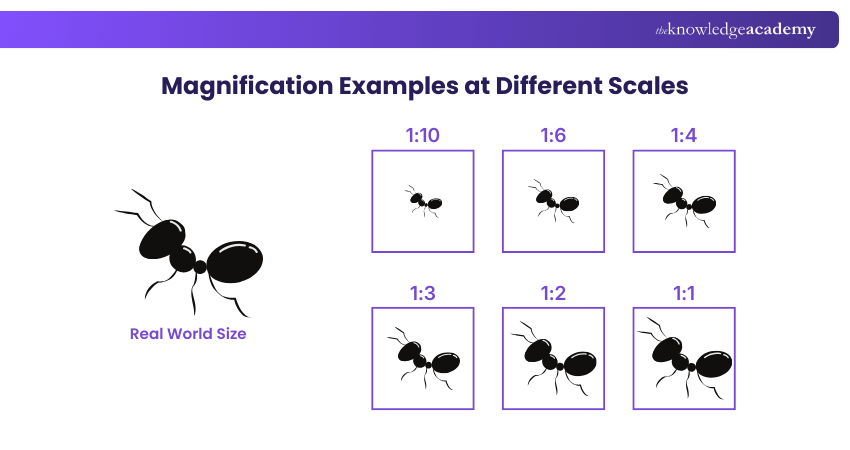
a) Magnification ratio: Typically, Macro Photography boasts a 1:1 magnification. However, specialised lenses allow for even greater magnification, showcasing minute details with precision.
b) Focus distance: In Macro, subjects are usually captured from extremely close distances. Sometimes, these are mere centimetres away, revealing details often invisible to the naked eye.
c) Depth of field: With such close proximity, the sharply focused area is incredibly narrow, meaning minute adjustments can shift the subject out of focus.
d) Lens choices: Dedicated Macro lenses are preferred for this genre. However, Photographers also utilise extension tubes, reverse lens techniques, and close-up filters to achieve desired Macro effects.
e) Camera settings: Using a smaller aperture (like f/16) provides a deeper depth of field, but demands adequate lighting due to reduced light intake.
f) Post-processing: The shallow depth of field often necessitates focus stacking. This is a technique where images from varying focus distances merge to form a uniformly sharp composite
Common Subjects and Their Unique Characteristics
Here are a few common subjects that can help you gain better insights on Macro Photography.
a) Nature's minutiae: Nature offers a plethora of Macro opportunities, from intricate bark patterns to the mesmerising interplay of light on morning dew atop spider webs.
b) Everyday objects: Common objects, when viewed under Macro magnification, unveil intricate details, transforming mundane items into captivating subjects of art.
c) Artificial miniatures: Utilising miniature figurines to craft stories becomes an art form in Macro Photography, breathing life into static scenes.
d) Texture and patterns: Macro Photography highlights the beauty of patterns in everyday items, whether it's the delicate veins in leaves, wood grain, or even brush bristles.
e) Water interactions: Water droplets, with their refractive properties, can act as minuscule magnifying glasses. They distort and enhance underlying details, resulting in striking imagery.
f) Life in motion: Venturing beyond static subjects, Macro Photography can capture dynamic scenes. This includes hovering insects and the mesmerising dance of water droplets in motion.
Discover new passions, explore hobbies, and ignite interests with our diverse Hobbies & Interests Courses!
Venturing into Macro: A Beginner’s Guide
As budding Photographers start gaining experience in Macro Photography, they often find themselves in a world. In this domain, the smallest detail makes the biggest difference. Understanding equipment nuances and mastering techniques are crucial in Macro Photography. For beginners, this journey proves both challenging and rewarding.
The Right Equipment: Lenses, Tubes, and More
Understanding your equipment is like understanding the essence. Let us have a look at some of the equipment right for you.
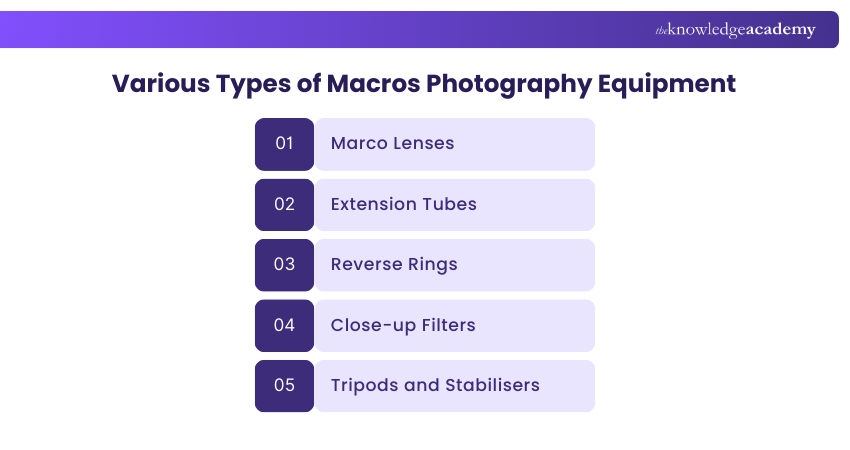
a) Macro lenses: These lenses are optimised for close-up Photography. Unlike regular lenses, they can focus much closer, providing sharp, detailed images of tiny subjects. They're a significant investment but crucial for serious Macro enthusiasts.
b) Extension tubes: If positioned between your camera body and lens, these tubes increase the distance between the lens and the sensor, enhancing magnification. They don't contain optics but can reduce the amount of light, so adjustments may be needed.
c) Reverse rings: By attaching a lens in reverse, you alter its properties. This is a cost-effective technique, especially suitable for prime lenses. However, it's essential to ensure compatibility and protect the exposed rear element.
d) Close-up filters: Acting as magnifying glasses, they attach to a lens's front. While they're a more affordable option, they might slightly reduce image quality, especially cheaper variants.
e) Tripods and stabilisers: The closer the subject, the more noticeable any camera movement becomes. Tripods provide stability, and specialised Macro tripods offer adjustable arms to position the camera closer to subjects, facilitating precise shots.
Techniques for Sharper Images: Stability and Focus
Here something to enhance your stability and focus while you do Macro Photography.
a) Manual focus: Given the fine details in Macro, autofocus might not always be accurate. Manually adjusting focus provides greater control, allowing Photographers to pinpoint and highlight their subject's most compelling details.
b) Focus stacking: Due to the limited depth of field in Macro, parts of the subject might be out of focus. By taking multiple shots at different focus points and combining them in software, you can achieve an image that's sharp throughout.
c) Use of flash: Natural lighting might not always suffice, especially at higher magnifications. A flash can add required illumination, but diffusing it ensures the light isn't harsh and doesn't wash out the subject.
d) Remote shutter release: The shutter button introduces camera shake. Using a remote shutter or the camera's built-in timer minimises this risk, ensuring crisper images.
e) Shooting angles: A straight-on shot can look vastly different from a side or angled view. By experimenting, Photographers can discover unexpected and intriguing facets of their subjects.
Lighting the Tiny World: Natural vs. Artificial
Understanding the difference between natural and artificial is a key aspect to understand photography. Let us have a look at these pointers to understand it better:
a) Natural light: Soft, even lighting, like that during the golden hours, can accentuate details without overpowering shadows. However, it's variable and might need modifiers to get it just right.
b) Reflectors: These tools are perfect for directing sunlight onto shaded subjects or softening strong sunlight. A simple reflector can significantly enhance image quality by providing balanced light.
c) LED ring lights: Circular lights that surround the lens, these ensure the subject is uniformly lit. They're especially helpful in shaded areas or indoors, but it's essential to adjust their intensity to avoid overexposure.
d) Flash diffusers: Direct flash can be too harsh for delicate subjects. Diffusers scatter the flash's light, making it softer and more evenly distributed, preserving the subject's natural colours and textures.
Unleashing Creativity: Creative Macro Photography Ideas
Exploring the world through a Macro lens not only magnifies the physical aspects. It also amplifies the inherent beauty, intricacies, and narratives often missed by the naked eye. Here's how you can infuse creativity into your Macro shots:
Play With Textures and Patterns
Here’s something on textures and patterns you need to know about.
a) Nature's intricacies: Diving deep into natural objects like the peeling bark of trees or the veiny structures of petals is enlightening. Observing the delicate lattice of insect wings can also open up abstract worlds. These intricacies, amplified in Macro, offer viewers an intricate tapestry of nature's art.
b) Man-made textures: Everyday items, from the intricate weave of fabric to the corroding beauty of rusted metal, offer unique perspectives. Even the spiralling grooves on a vinyl record can transform into captivating landscapes. They become a testimony to time, use, and craftsmanship.
c) Layers and overlaps: By capturing translucent objects like overlapping leaves and flower petals with backlighting, you create an ethereal blend of colours and forms. Using thinly sliced fruits in this manner also offers a multi-layered visual experience.
Drops and Reflections
Power of a drop and reflection is exponential in macro world. Let’s understand it better
a) Water droplet lenses: Each droplet can magnify the world behind it. By placing droplets on varied surfaces and positioning a vibrant subject like a flower behind, you see a mosaic of encapsulated reflections. Each droplet then helps in creating a surreal world.
b) Reflective surfaces: Materials like glass beads or bubbles offer a mirror to the world. They distort, reflect, and sometimes even invert the scenes or subjects behind them, providing an Alice-in-Wonderland kind of perspective.
c) Rainy days: The aftermath of rain is a playground for Macro Photographers. Droplets on spider webs become suspended jewels, while leaves adorned with water pearls provide reflective surfaces. Additionally, wet car roofs can appear as galactic fields dotted with droplet stars.
Colours and Lights
Colours and lights bring a new perspective to a photo. Let us understand the essence of this fundamental.
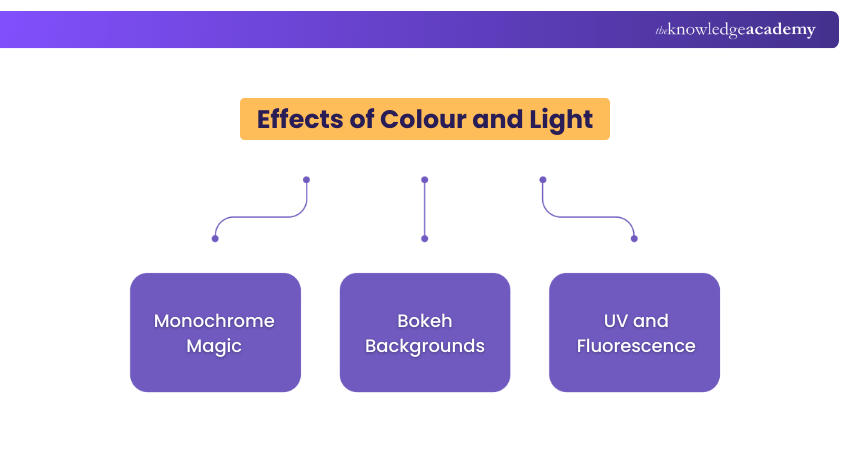
a) Monochrome magic: By stripping away the colours, you get to focus on the essence. A monochrome Macro Shot can bring forward the raw emotion, the play of shadows, and the stark contrasts, adding a moody and classic tone to your subjects.
b) Bokeh backgrounds: With the right aperture settings, backgrounds turn dreamy, and when infused with coloured lights, glitters, or shimmering materials, they add a magical aura, making subjects pop against a starry or festive backdrop.
c) UV and fluorescence: Nature has secrets, and some are only visible under Ultra-Violet (UV) light. Flowers may reveal hidden patterns, and minerals can glow in otherworldly hues, allowing Photographers to capture an alternate, luminescent reality.
Life in Motion
Life day-to-day is something worth capturing. Here we’ll find why.
a) Breezy day subjects: The choreography of nature on a breezy day showcases swaying flowers, undulating grass, and floating dandelion seeds. Captured in, this displays the beautiful interplay between the environment and its inhabitants.
b) Water in action: The dynamism of dripping water or splashing droplets offers an avenue to experiment. By playing with shutter speeds, you can freeze the action to showcase every mid-air droplet. Alternatively, using a slower shutter can result in silky motion blur, illustrating water's fluidity.
c) The world of bugs: The bustling world of insects is a Macro goldmine. Documenting a bee's delicate interaction with a flower or ants collaborating in their tasks provides a glimpse into nature's intricacies. Similarly, capturing a butterfly's poised elegance can offer a cinematic experience of the tiny world.
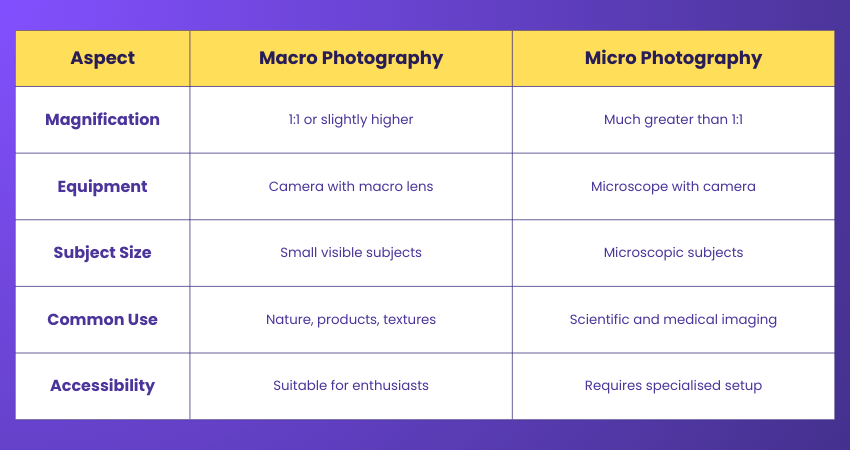
What is the Difference Between Macro and Micro Photography?
Macro photography specialises in taking very close-up pictures at life-size magnification, generally 1:1 or more. It is often applied to insects, flowers, and textured pictures using conventional cameras and macro lenses.
Micro photography surpasses macro by taking pictures of objects smaller than what can be seen with the human eye. It depends on microscopes and very special equipment to take extremely detailed pictures at much higher magnifications.
What Makes Good Macro Photography?
Good macro photography depends on the combination of sharp focus, controlled lighting, and strong composition. Through careful use of depth of field and framing, one can bring out very small details very clearly.
Conclusion
Macro Photography is one of the methods that can be used to discover a world that is full of hidden details and creativity. Small subjects can have a huge impact with practice, patience, and mastering the right techniques. In other words, macro photography can change one's perception of daily scenes through exploring and experimenting.
Build cinematic storytelling skills with our Filmmaking Course and bring creative film ideas to life.
Frequently Asked Questions
What is a Macro Lens Used for?

A macro lens is a special type of lens created for photographing very close to the subject. It allows the photographer to get big, detailed shots of tiny creatures like bugs and of flowers that show the textures that the regular lenses usually do not pick up.
Which Camera is Best for Macro Photography?
An excellent macro photography camera should possess traits such as focus stacking, high resolution, and exceptional close-up performance, which all come together to make mirrorless cameras the most sought after.
What are the Other Resources and Offers Provided by The Knowledge Academy?
The Knowledge Academy takes global learning to new heights, offering over 3,000+ online courses across 490+ locations in 190+ countries. This expansive reach ensures accessibility and convenience for learners worldwide.
Alongside our diverse Online Course Catalogue, encompassing 17 major categories, we go the extra mile by providing a plethora of free educational Online Resources like Blogs, eBooks, Interview Questions and Videos. Tailoring learning experiences further, professionals can unlock greater value through a wide range of special discounts, seasonal deals, and Exclusive Offers.
What is The Knowledge Pass, and How Does it Work?
The Knowledge Academy’s Knowledge Pass, a prepaid voucher, adds another layer of flexibility, allowing course bookings over a 12-month period. Join us on a journey where education knows no bounds.
What are the Related Courses and Blogs Provided by The Knowledge Academy?
The Knowledge Academy offers various Hobbies & Interests Courses, including the Fashion Designing Training, Fashion Designing Training, and Music Production Course. These courses cater to different skill levels, providing comprehensive insights into Photographer Job Description.
Our Business Skills Blogs cover a range of topics related to Macro Photography, offering valuable resources, best practices, and industry insights. Whether you are a beginner or looking to advance your Business skills, The Knowledge Academy's diverse courses and informative blogs have got you covered.

The Knowledge Academy


Global Training Provider
The Knowledge Academy is a world-leading provider of professional training courses, offering globally recognised qualifications across a wide range of subjects. With expert trainers, up-to-date course material, and flexible learning options, we aim to empower professionals and organisations to achieve their goals through continuous learning.

Upcoming Business Skills Resources Batches & Dates
Date
 Photography Course
Photography Course
Fri 19th Jun 2026
Photography Course
Fri 4th Sep 2026
Photography Course
Fri 27th Nov 2026

 If you wish to make any changes to your course, please


