


 Top Rated Course

We may not have the course you’re looking for. If you enquire or give us a call on 01344203999 and speak to our training experts, we may still be able to help with your training requirements.
Lean Kanban: Everything You Should Know
The Knowledge Academy 16 July 2026Lean Kanban combines Lean principles and Kanban to improve workflow efficiency using visual boards, task cards, and pull-based work systems in teams. It enables organisations to identify bottlenecks, reduce waste, optimise processes, and deliver value faster while improving collaboration, transparency, and continuous improvement.

Training Outcomes Within Your Budget!
We ensure quality, budget-alignment, and timely delivery by our expert instructors.
Table of Contents

Have you ever felt like your team is busy but not really making progress? If so, you’re not alone. Many teams struggle with tracking work, managing flow, and staying on top of priorities. That’s where Lean Kanban comes in. It’s a simple yet powerful way to visualise tasks, reduce waste, and improve how your team works day by day.
Whether you’re dealing with constant changes or looking to boost productivity, this blog will walk you through everything you need to know about Lean Kanban. You will learn about its methodology, benefits, differences, and more. Let’s get started!
Table of Contents
1) What is Lean Kanban Methodology?
2) Key Differences and Similarities Between Lean and Kanban
3) Benefits of Lean Kanban
4) Lean Kanban: Driving Improvements and Respect for People
5) How to Implement Lean Kanban in Three Easy Steps?
6) What is the Lean Kanban Principle?
7) What are the Five Rules of Kanban?
8) Conclusion
What is Lean Kanban Methodology?
Lean Kanban is a workflow management approach that combines Lean Principles with Kanban practices to improve efficiency and value delivery. It helps teams manage work, improve workflows, and support continuous improvement. The approach is widely used across industries to enhance productivity and operational performance. Its goal is to deliver value while reducing waste and delays.
Lean Principles form the foundation of Lean Kanban by focusing on waste reduction, efficiency, and customer value. Originally developed in manufacturing, they are now applied across many business functions. These principles encourage organisations to continually improve processes and performance. This helps teams work more effectively and make better use of resources.
Kanban provides the practical framework for applying these principles in Project Management and daily operations. Teams use Kanban boards to visualise tasks, track progress, and manage workflow. This improves transparency, collaboration, and workflow control. Together, Kanban and Lean Principles create more efficient and adaptable ways of working.

Key Differences and Similarities Between Lean and Kanban
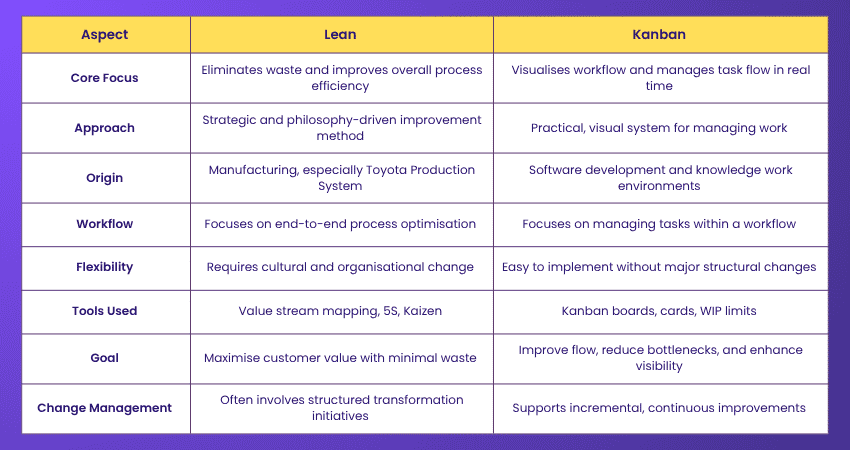
Lean focuses on eliminating waste and maximising value across processes. It aims to create efficient systems that deliver consistent quality with minimal resources.
Kanban focuses on visualising work and managing workflows in real time. It helps teams control work in progress and improve delivery through continuous flow. Let's discuss below:
Benefits of Lean Kanban
With a Kanban system, teams don’t just complete tasks; they improve how they work. Lean Kanban helps teams find what’s slowing them down and fix it. It focuses on clear communication, better planning, and Continuous Development. Below are the key benefits of using Lean Kanban
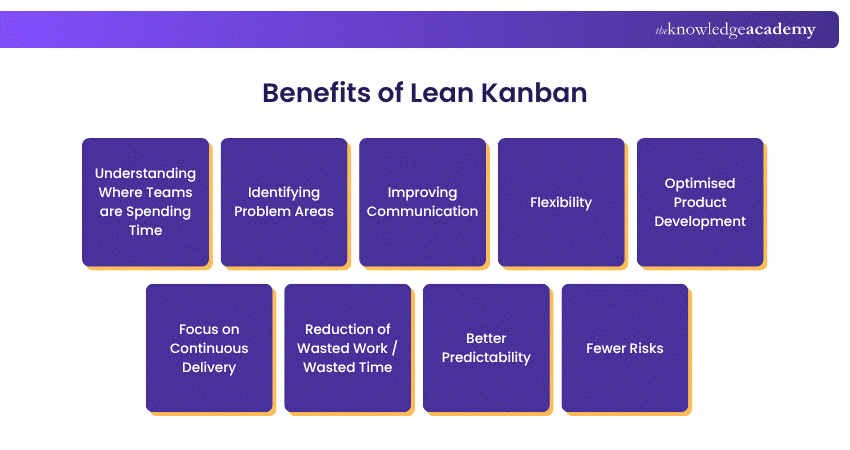
1) Understanding Where Teams are Spending Time
Lean Kanban shows what work is being done and how long each task takes. This helps teams see where most of their time is going. With this knowledge, they can plan better and avoid wasting time. It also helps balance workloads across the team.
a) Track time spent on each task
b) Spot delays or long-running work
c) Use data to plan more efficiently
2) Identifying Problem Areas
It helps teams see where things get stuck. If some tasks take too long or keep moving back, that shows a problem. This could be due to overloaded workflows, unclear processes, or capacity issues. By spotting these issues early, teams can fix them before they grow.
a) Find tasks that keep getting delayed
b) Balance work across team members
c) Improve weak areas in the process
3) Lean Kanban Improves Communication
Kanban boards make work clear and visible for everyone. Each team member can see what is being worked on and what needs attention. This makes it easier to stay in sync and reduce confusion. Even remote or cross-functional teams benefit from this shared view.
a) Use boards to show task progress
b) Make updates visible to all teams
c) Reduce back-and-forth communication
Build improvement expertise with Certified Lean Foundation & Practitioner Course – Join now!
4) Flexibility
Kanban doesn’t follow strict timelines or fixed steps. Teams can start work based on real-time demand instead of waiting for a phase to end. It allows changes and new priorities to be added as needed. This makes Kanban great for projects that often shift.
a) Add or update tasks anytime
b) Adjust goals based on feedback
c) Respond quickly to client needs
5) Optimised Product Development
Breaking work into small parts helps teams focus better. It also reduces the time spent on big, detailed planning. Teams can make progress faster and show results sooner. This leads to better teamwork and more value delivered.
a) Shorter planning cycles
b) Focus on current tasks
c) Deliver results more quickly
6) Focus on Continuous Delivery
Kanban supports regular and steady work output. Tasks are finished one by one instead of waiting for a full project to be done. This helps catch mistakes early and keeps the team moving. It’s a smoother way to meet deadlines without pressure.
a) Deliver tasks in small chunks
b) Spot issues early during work
c) Keep projects flowing without pause
7) Reduction of Wasted Work / Wasted Time
It helps teams focus only on what matters. Unnecessary or repeated work is easy to spot and avoid. By seeing the full picture, teams can stop doing tasks that add no value. This saves time and effort for more important things.
a) Avoid duplicated or unclear tasks
b) Focus on priority work
c) Remove steps that add no value
8) Better Forecasting
When teams track their progress, they learn how long tasks usually take. This makes it easier to plan future work. Managers can give clients better estimates and meet deadlines more often. Predictable work leads to less stress and better results.
a) Use historical data to improve planning
b) Provide more accurate timeline estimates
c) Build trust through consistent delivery
9) Fewer Risks
Kanban splits work into smaller parts so problems can be caught early. If something goes wrong, it won’t slow down the whole project. Teams can respond faster and fix issues before they grow. This leads to a safer and smoother workflow.
a) Break work into smaller steps
b) Catch issues early
c) Avoid large project delays
Turn Lean processes into performance and deliver effective business results with Lean Processes and Tools Training – Join now!
Lean Kanban: Driving Improvement and Respect for People
Lean Kanban fosters continuous improvement and respects people by integrating core principles from Lean methodology and Kanban systems.
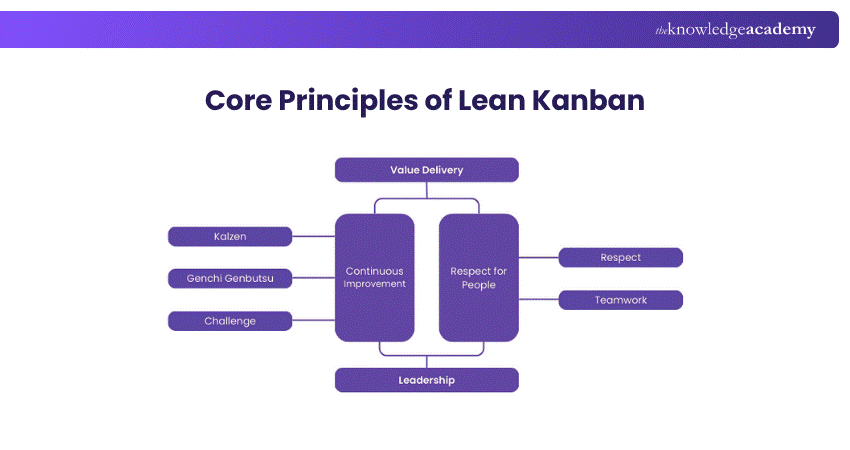
Lean Kanban is not just about improving processes. It is equally focused on creating a work environment where people are valued, empowered, and supported to perform at their best. By combining efficiency with human-centric practices, organisations can achieve sustainable performance improvements.
At its core, Lean Kanban promotes continuous improvement by encouraging teams to regularly evaluate workflows, identify inefficiencies, and implement small, incremental changes. This approach helps organisations adapt quickly while maintaining stability in operations.
Equally important is the principle of respect for people. Lean Kanban recognises that employees are key to success, so it encourages open communication, collaboration, and shared ownership of work. Teams are trusted to manage their tasks, solve problems, and contribute ideas for improvement.
By balancing operational excellence with a people-first mindset, Lean Kanban helps organisations build stronger teams, improve engagement, and deliver consistent value to customers.
Visualise workflow efficiency with our Value Stream Mapping Training – Join now!
How to Implement Lean Kanban in Three Easy Steps?
Implementing Lean Kanban can streamline your Project Management and drive continuous improvement. By following these three simple steps, you can effectively integrate Lean Kanban into your workflow and enhance efficiency.
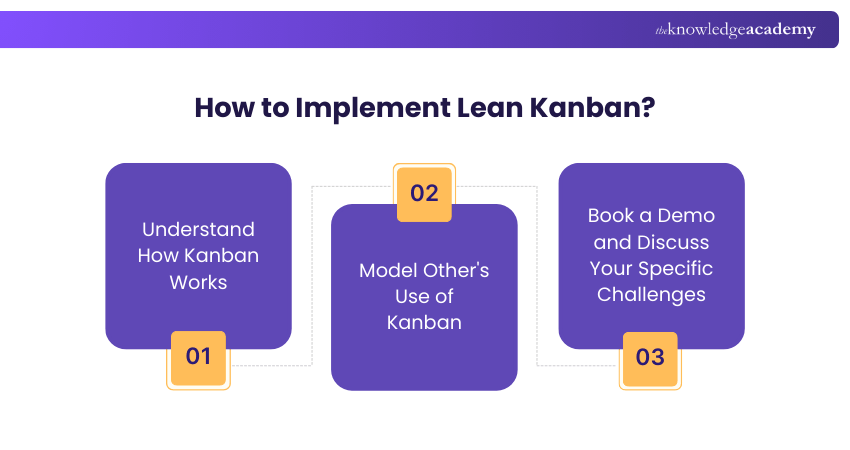
Step 1: Understand How Kanban Works
Start by familiarising yourself with the Principles of Kanban. Learn how it visualises workflows, manages task flow, and identifies bottlenecks. Understanding these fundamentals will provide a solid foundation for effectively applying Lean Kanban in your projects.
Step 2: Model Other’s Use of Kanban
Observe and analyse how other teams or organisations successfully implement Kanban. Studying their practices and adaptations can offer valuable insights and help you adapt the methodology to fit your own team's needs.
Step 3: Book a Demo and Discuss Your Specific Challenges
Schedule a demonstration with a Kanban expert to see the system in action. Use this opportunity to discuss your unique challenges and get tailored advice on how to implement Lean Kanban effectively within your organisation.
Learn the principles behind operational excellence with our Lean Foundation Course – Start now!
What is the Lean Kanban Principle?
The Lean Kanban principle is about improving how work flows through a process. It helps teams see what needs to be done, what is in progress, and what is finished. The goal is to avoid delays, reduce waste, and deliver results faster.
What are the Five Rules of Kanban?
The basic rules are to visualise the work, limit how much work is in progress, manage flow, make process rules clear, and improve step by step. These rules help teams stay organised and focused. They also make it easier to find and fix problems quickly.
Conclusion
Lean Kanban enhances Project Management by visualising workflows, fostering continuous improvement, and valuing team contributions. Its approach helps teams streamline processes, identify inefficiencies, and adapt swiftly to changes. By implementing Lean Kanban, you can boost productivity and achieve higher-quality outcomes, making it a valuable tool for modern Project Management.
Prove your Lean expertise today and lead improvement practices confidently with the Certified Lean Practitioner Course – Join today!
Frequently Asked Questions
How Does Lean Kanban Software Improve Project Delivery Times?

Lean Kanban software improves project delivery by visualising workflows, limiting work-in-progress, and highlighting bottlenecks early. This helps teams to stay focused, collaborate better, maintain continuous flow, and use fast feedback loops to reduce delays and deliver work efficiently.
How do Lean and Kanban Work Together?
Lean and Kanban work together by integrating Lean’s focus on eliminating waste and improving processes with Kanban’s visual workflow management. This combination enhances efficiency, fosters continuous improvement, and ensures work is managed effectively, driving overall productivity.

The Knowledge Academy


Global Training Provider
The Knowledge Academy is a world-leading provider of professional training courses, offering globally recognised qualifications across a wide range of subjects. With expert trainers, up-to-date course material, and flexible learning options, we aim to empower professionals and organisations to achieve their goals through continuous learning.


 If you wish to make any changes to your course, please


