


We may not have the course you’re looking for. If you enquire or give us a call on + 1-866 272 8822 and speak to our training experts, we may still be able to help with your training requirements.
Importance of Waste Management: Why it Matters
ByVishnu SankarLast updated on: 08 October 2026
The importance of waste management lies in protecting the environment, improving public health, reducing pollution, and ensuring long-term sustainability. It encourages responsible habits in communities and supports a cleaner, safer world for the future. Managing waste preserves our planet and promotes a sustainable way of living.
In a Nutshell
1. Waste management helps protect public health, natural resources, and the environment.2. The 5 Rs provide a practical approach to reducing waste before disposal becomes necessary.3. Responsible waste handling can lower costs, improve compliance, and support cleaner communities.4. Recycling, reuse, recovery, and technology can make waste systems more efficient and sustainable.
We throw things away every day without giving them much thought. A food wrapper, an empty bottle, an old gadget, or yesterday’s leftovers can disappear from our sight in seconds. But there is no real “away”. Everything we discard has to end up somewhere, and the way it is collected, treated, recycled, or disposed of can have a lasting impact on public health, natural resources, and the environment.
As waste generation continues to grow alongside urbanisation and modern lifestyles, managing it responsibly has become increasingly important. A well-planned waste management system not only deals with what we discard today but also helps protect resources and create a healthier, more sustainable environment for the future.
What is Waste Management?
Waste management refers to handling waste from when it is created until it is safely disposed of. It involves several essential steps, such as collecting waste, transporting it to facilities, recycling, and disposing of it. This series of activities helps manage the waste produced by homes, businesses, and everyday human activities.
Waste management covers various types of waste, such as solid, liquid and gaseous waste. Each type requires its own method of treatment. The main aim is to reduce the amount of waste ending up in landfills. To do this, it treats waste as a useful resource that can be recycled or turned into energy. This keeps our environment cleaner and promotes a sustainable way of living.

Importance of Waste Management
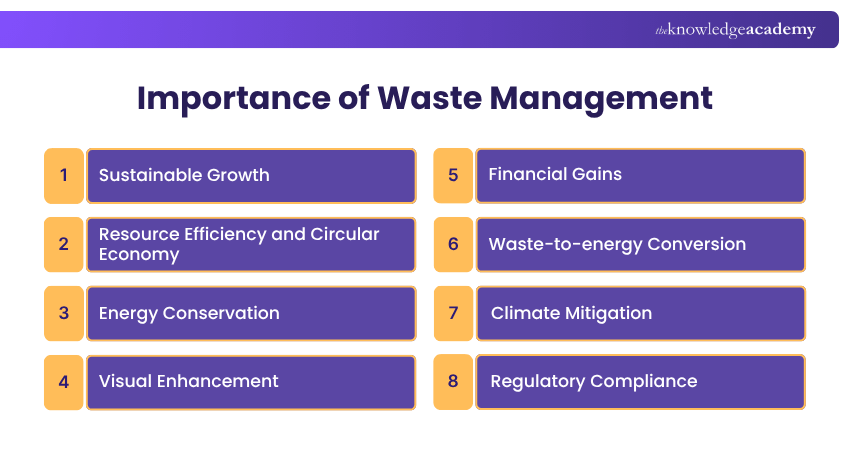
Waste management has an impact well beyond the bin, shaping public health, the environment and how efficiently resources are used. Done well, it benefits households, businesses and communities alike. Here are the key reasons why waste management is important:
1) Sustainable Growth
As populations and cities grow, so does waste, and growth that ignores it becomes harder to sustain. Reliable waste management lets communities and businesses expand without overwhelming landfills or polluting local areas. It also creates jobs in collection, recycling and processing, linking environmental progress to economic and social benefits.
2) Resource Efficiency and Circular Economy
Resource efficiency means getting the most value from materials already in use. A circular economy goes further by keeping materials in circulation through reuse, repair, recycling and recovery. Waste management supports this by sorting and processing discarded items such as scrap metal, paper and glass so they return to the supply chain, reducing demand for virgin resources.
3) Energy Conservation
Effective waste management can help conserve energy by reducing the need to extract, process, and manufacture products from new raw materials. Reusing and recycling suitable materials can often reduce energy demand across their life cycles, supporting more efficient use of resources and lowering associated environmental impacts.
4) Visual Enhancement
Proper waste management improves the appearance of our surroundings by reducing litter, overflowing bins, and unsightly waste piles. Clean streets, parks, and workplaces create a more pleasant and healthy environment for everyone. A visually clean space not only boosts community pride but also encourages people to follow good waste disposal habits.
5) Financial Gains
Effective waste management can reduce disposal costs, save on raw materials and even has the potential to create new revenue streams. Responsible waste management can also help businesses comply with regulations and avoid potential fines.
6) Waste-to-energy Conversion
Waste-to-energy (WTE) conversion is an innovative solution that transforms non-recyclable waste into usable energy, like electricity or heat. This process reduces the volume of waste while providing a renewable energy source. WTE technology supports cleaner cities and decreases landfill dependency.
7) Climate Mitigation
Proper waste management decreases the amount of waste sent to landfills, which helps reduce methane emissions, a potent greenhouse gas. By diverting waste through recycling, we can actively mitigate climate change. Every small action in reducing landfill waste contributes to slowing the worsening climate crisis.
Turn hazards into safe wins with our NEBOSH Award in Health and Safety at Work - Join today!
8) Regulatory Compliance
Compliance involves proper segregation, storage and disposal, maintaining records and using licensed waste carriers. Adhering to these and including proper regulations ensures that waste is managed in ways that protect the environment.
9) Customer Trust and Brand Reputation
Companies demonstrate their dedication to environmental protection through their implementation of robust waste management systems. This business approach enables companies to attract environmentally aware customers while building trust with their target audience.
10) Public Health Protection
Uncollected or poorly handled waste attracts pests, spreads disease and can leak harmful substances into water supplies. Safe collection, storage and disposal keep waste away from living areas, and proper handling of hazardous items such as medical waste and chemicals protects workers and nearby communities. This makes waste management a basic public health measure as well as an environmental one.
Trainer’s Tip: When reviewing waste practices, look beyond the bin itself. Consider procurement, storage, packaging, and day-to-day processes, as waste is often created much earlier in the operational cycle.
What are the 5 Rs of Waste Management?
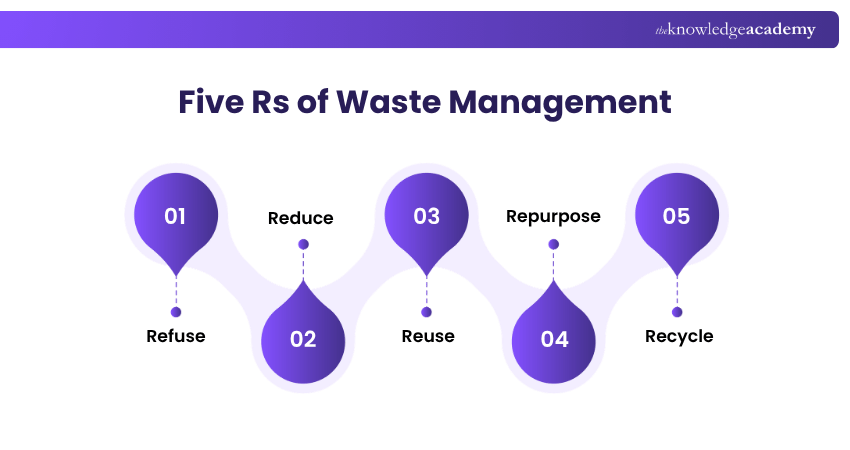
For the protection of the environment, businesses must adopt smarter and sustainable practices. The five points below help organisations cut waste, manage money, and support a cleaner environment.
1) Refuse
The first step of effective waste management is to avoid waste from the start. Businesses must refuse items they do not require, such as single-use plastics or disposable products. By avoiding unnecessary or unwanted materials, less waste is created in the first place.
2) Reduce
It is essential to lower the amount of waste produced. Companies can reduce waste by adopting minimal packaging and switching to energy-efficient tools, such as paperless bills. By reducing waste, it cuts costs and supports sustainability.
3) Reuse
Before throwing waste away, some of it can be used again. Items such as cardboard boxes, packaging or scrap paper can be reused for daily work needs. By reusing material, it cuts down waste and reduces the need for new supplies.
4) Repurpose
When an item can no longer serve its original purpose, it can often be given a new one instead of being thrown away. For example, wooden pallets can become shelving, old uniforms can be cut into cleaning cloths, and glass jars can be used for storage. Repurposing differs from reuse because the item does a different job, and from recycling because it needs little or no reprocessing. This extends the life of a product and keeps it out of landfill.
5) Recycle
The final step is to recycle materials, such as paper, glass, or metal. This can be done through providing recycling bins around workplaces and educating employees on the importance of responsible recycling. This keeps valuable resources in use and minimises environmental degradation.
Trainer’s Tip: Use waste data to track patterns over time rather than relying on one-off observations. Regular monitoring can help organisations identify unusual increases, compare locations, and make more informed decisions.
Improve safety management skills with NEBOSH HSE Certificate in Process Safety Management - Join today.

Vishnu Sankar is a Senior Content Writer with 5+ years of experience across content development, software development, web development and system administration. His technical background and professional training support his expertise in IT and Tech, while his extensive research and writing experience covers Project Management and Health and Safety.
View Detail

 If you wish to make any changes to your course, please


