


 Top Rated Course

We may not have the course you’re looking for. If you enquire or give us a call on 01344203999 and speak to our training experts, we may still be able to help with your training requirements.
What is Human Capital Management (HCM)?
Amelia Williams 07 February 2026Human Capital Management focuses on hiring, developing, and supporting employees while optimising HR processes to improve overall workforce performance. It helps organisations build capable, motivated teams that align with business goals. Strong HCM practices also enhance retention, productivity, and long-term organisational growth.

Training Outcomes Within Your Budget!
We ensure quality, budget-alignment, and timely delivery by our expert instructors.
Table of Contents

Comprehension of Human Capital Management is a must for companies that want to develop a talented and enthusiastic labor force. It harmonises the methods and means that enhance both employee and company development. In this blog, we discuss the mechanism of HCM, its significance, and its contributions to the organisation.
Table of Contents
1) What is HCM (Human Capital Management)?
2) Key Components of Human Capital Management
3) Benefits of Human Capital Management
4) How to Select a Human Capital Management System?
5) Challenges of Human Capital Management
6) What is HCM (Human Capital Management) Software?
7) Conclusion
What is HCM (Human Capital Management)?
Human Capital Management (HCM) focuses on turning essential HR activities such as recruitment, training, payroll and performance management into strategic drivers of engagement, productivity and business value. It positions employees as key organisational assets and supports smarter workforce planning through integrated systems and data-driven decision making.
Key Components of Human Capital Management
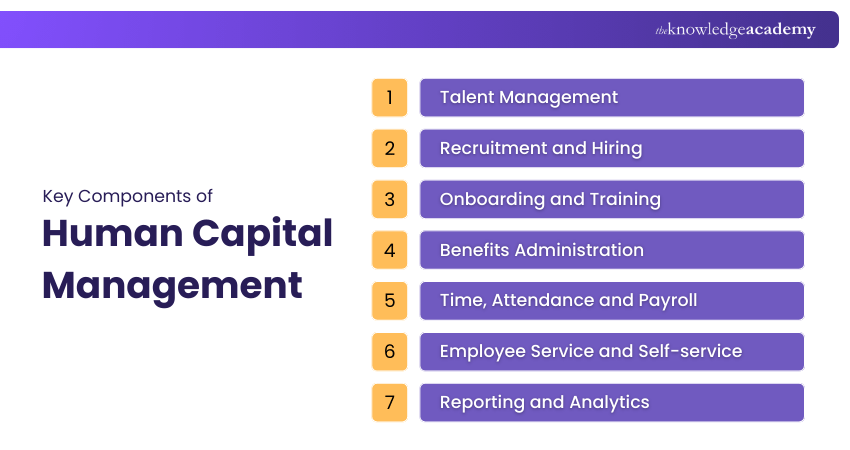
Here are the several essential elements that work together to boost workforce efficiency:
1) Human Resources (HR)
HR is the core of HCM because it deals with the Recruitment Process, administration of new employees, internal communication and managing employees’ compliance with the law. It is because the HR departments ensure that those working for an organisation are treated right, and they recieve the deserved compensation in order to help the organisation maintain productivity.
2) Recruitment and Hiring
Getting and selecting the right talent is the heart of contemporary HCM practice. Using automation and intelligent tools is the way to go for shortening the candidate journey and raising the quality of hires.
3) Onboarding and Training
It is essential for newly hired workers to go through a smooth integration process within the company via proper orientation and effective training programmes. Onboarding is considered as the main step in making the employees interact fast and be in line with the company's objectives.
4) Benefits Administration
The management of salaries, rewards, and benefits in an efficient manner is one of the main factors that guarantee the happiness and keeping of the employees. The Human Capital Management component allows for handling the distribution of benefits that ensure fairness and disclosure.
5) Time, Attendance and Payroll
The proper tracking of work hours, management of attendance, and accurate payroll processing are among the most important operational functions. HCM systems combine these operations and thus enhance uniformity, lower mistakes, and aid in compliance.
6) Employee Service and Self-service
Self-service portals that are designed for use by employees allow them to take care of their regular work without the help of HR, which can then devote its entire attention to strategic matters. This is seen as a change in favor of more employee-centric HR activities.
7) Reporting and Analytics
Data-driven insights into HR trends and performance lead to more intelligent decisions in organisations. Excellent analytics empower HR departments to move from the reactive approach of dealing with issues to proactive workforce planning.
Harness the power of people-centred leadership. Sign up for our range of People Management Courses now!
Benefits of Human Capital Management
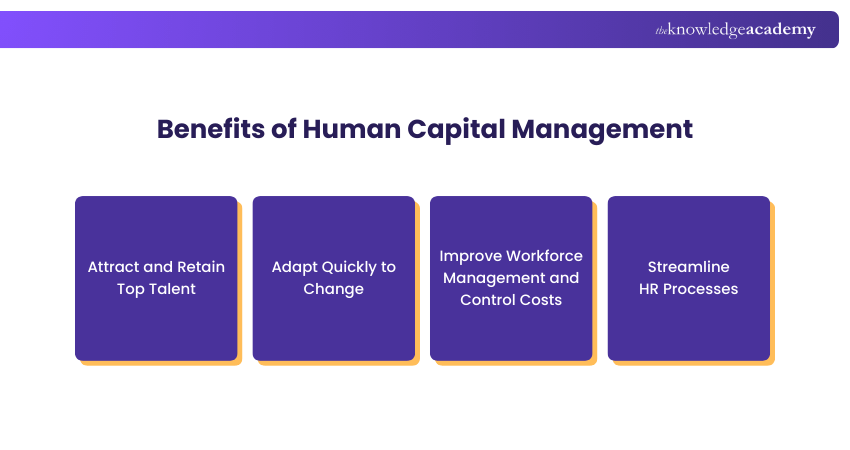
Here are the advantages of it:
1) Attract and Retain Top Talent
HCM helps companies recruiting and keeping the best employees by offering competitive benefits and growth opportunities. When employees feel valued and supported, they are likely to stay with the company for a long time.
2) Adapt Quickly to Change
HCM allows businesses to quickly adjust to changes in the market. Whether it’s increasing or decreasing the workforce, starting new training programs, or changing compensation strategies, HCM provides the flexibility needed.
3) Improve Workforce Management and Control Costs
Effective Workforce Management ensures employees are scheduled efficiently, reducing overtime costs and preventing burnout. It also helps control labour costs by identifying areas where resources are not being used effectively.
4) Streamline HR Processes
Automating HR tasks like payroll, Benefits Management, and Performance Reviews reduces administrative work and ensures these important tasks are done accurately and on time. This allows HR professionals to focus on other activities.
Discover the secret to building winning teams with our Talent Acquisition Training - Register now!
How to Select a Human Capital Management System?
Choosing the right HCM partner may seem challenging, but a strategic approach makes it achievable. Here's how you do it:
1) Build a Requirements Checklist: Outline the business goals tied to HCM as well as the risks of not meeting them. This ensures that your focus is only on those solutions that align with your organisation’s priorities.
2) Create a Plan of Action: Define project scope, resources, budget, and leadership roles clearly. A well-prepared plan keeps the process on track and avoids delays or unexpected costs.
3) Identify Key Stakeholders: Recognise those most affected by the project and keep them engaged throughout. Regular updates build trust and encourage active participation in decision-making.
4) Understand the Approval Process: Learn how your organisation approves large projects and outsourced services. This knowledge helps you navigate likely roadblocks and speed up the decision-making process.
5) Secure Stakeholder Approval: Present the solution by highlighting business, financial, and user benefits. Using an HCM business case template can strengthen your proposal and make the value easy to demonstrate.
Discover the secret to building winning teams with our Talent Acquisition Training - Register now!
Challenges of Human Capital Management
Implementing HCM can be challenging due to the following:
a) Change Management: Shifting to a new HCM system or strategy may require cultural and process changes.
b) Data Privacy Concerns: Ensuring compliance and Data Security with privacy regulations is crucial.
c) Keeping Up with Technology: Staying updated on the latest HCM tools and trends is necessary for effectiveness.
What is HCM (Human Capital Management) Software?
Human Capital Management software is an integrated system that handles the whole employee lifecycle, from recruitment and onboarding through development and retirement. It eliminates disparate HR systems with consolidated tools to automate tasks, enhance accuracy, and lower administrative costs.
The HCM solutions combine payroll, benefits, administration, talent management, time-tracking, self-service, and reporting into one platform. The unified data model and intelligent insights that these systems provide allow for better decision-making, increased engagement, and organisational growth support.
Conclusion
Human Capital Management is the most important factor in creating a workforce that is skilled, engaged, and ready for the future. Good HCM practices assist companies in making their operations more efficient and in better managing their decision-making. The right tools and processes can be the business’s investment for creating a powerful performance and backing up the growth that lasts for a long time.
Learn how to turn raw talent into unstoppable brilliance. Sign up for our Talent Management Training now!
Frequently Asked Questions
How do HRM and HCM Work Together?

Human Resource Management (HRM) focuses on the day-to-day HR management of employees through Human resources management system (HRMS) and Human resources information systems (HRIS).On the other hand, HCM takes a broader view, including strategic planning and development.
What are the Four Stages of HCM?
The four stages of HCM are recruitment, development, management, and optimisation. These stages help in attracting, recruiting, training, managing, and maximising the potential of employees.
What are the Other Resources and Offers Provided by The Knowledge Academy?
The Knowledge Academy takes global learning to new heights, offering over 3,000+ online courses across 490+ locations in 190+ countries. This expansive reach ensures accessibility and convenience for learners worldwide.
Alongside our diverse Online Course Catalogue, encompassing 19 major categories, we go the extra mile by providing a plethora of free educational Online Resources like Blogs, eBooks, Interview Questions and Videos. Tailoring learning experiences further, professionals can unlock greater value through a wide range of special discounts, seasonal deals, and Exclusive Offers.
What is The Knowledge Pass, and How Does it Work?
The Knowledge Academy’s Knowledge Pass, a prepaid voucher, adds another layer of flexibility, allowing course bookings over a 12-month period. Join us on a journey where education knows no bounds.
What are the Related Courses and Blogs Provided by The Knowledge Academy?
The Knowledge Academy offers various People Management Courses, including the Successful People Management And Team Leadership Course, Workforce Resource Planning Training, and Talent Acquisition Training. These courses cater to different skill levels, providing comprehensive insights into People Management.
Our HR Blogs cover a range of topics related to Capital Management, offering valuable resources, best practices, and industry insights. Whether you are a beginner or looking to advance your HR skills, The Knowledge Academy's diverse courses and informative blogs have got you covered.

Amelia Williams


Senior Human Resources Consultant and Learning Specialist
Amelia Williams is a highly respected HR professional with over 12 years of experience in human capital management, talent development and workplace policy. She has worked across sectors including education, healthcare and corporate services, focusing on aligning people strategies with organisational goals. Amelia’s writing blends current HR trends with practical solutions for modern workplace challenges.

Upcoming HR Resources – Learn about Human Resources Batches & Dates
Date
 Talent Management Training
Talent Management Training
Fri 5th Jun 2026
Talent Management Training
Fri 25th Sep 2026
Talent Management Training
Fri 11th Dec 2026

 If you wish to make any changes to your course, please


