




We may not have the course you’re looking for. If you enquire or give us a call on 01344203999 and speak to our training experts, we may still be able to help with your training requirements.
How to Become an Online Teacher: A Step-by-Step Guide
ByCharlotte WilsonLast updated on: 20 August 2026
Learn how to become an Online Teacher, from choosing what to teach and developing essential skills to setting up your virtual classroom, finding learners, and improving your online teaching experience.
KEY TAKEAWAYS
1. Online Teaching combines subject knowledge with digital teaching skills2. Choosing a clear subject and target audience gives your online teaching a clear direction3. Good online lessons require planning, interaction, and clear communication4. The right technology can make virtual teaching smoother and more accessible5. Regular feedback and continuous learning help Online Teachers improve over time
You know something well enough to teach it. Now comes the bigger question: Can you turn that knowledge into an engaging online lesson?
Becoming an Online Teacher involves more than subject expertise. You need to know how to plan lessons, communicate through a screen, engage learners, use digital tools, and adapt your teaching to a virtual environment.
The good news? These capabilities can be developed. This blog takes you through the steps to becoming an Online Teacher, helping you turn what you know into a meaningful and rewarding teaching career. Let’s get started!
Who is an Online Teacher?
An Online Teacher is an educator who delivers lessons and supports learners through digital platforms. They use virtual classrooms, live sessions, recorded lessons, and online learning tools to teach learners remotely.
Online Teachers teach academic subjects, languages, professional skills, technical topics, and specialist areas. They work across educational institutions, training organisations, online learning platforms, and independent teaching environments.
Online Teaching in One Line
Subject Knowledge + Teaching Skills + Digital Tools + Learner Engagement = Effective Online Teaching
What Does an Online Teacher Do?
An Online Teacher plans, delivers, and manages learning in a virtual environment. Their role extends beyond presenting information; they guide learners through lessons, encourage participation, assess understanding and provide feedback that supports progress.
The Online Teacher's Role:
1) Before the Lesson
Plan lessons → Prepare resources → Set learning objectives
2) During the Lesson
Explain concepts → Engage learners → Answer questions → Check understanding
3) After the Lesson
Assess progress → Provide feedback → Review and improve
In Short: An Online Teacher turns subject knowledge into a structured, engaging and measurable learning experience.
How to Become an Online Teacher?
Becoming an Online Teacher starts with choosing what you want to teach and building the skills to teach it effectively online. From understanding your learners to developing teaching skills and preparing your virtual classroom, each step builds your readiness to teach online.
Here is the step-by-step path to becoming an Online Teacher:
Step 1: Decide What You Want to Teach
Start with a subject or skill you understand well enough to explain to others. This could be Mathematics, English, coding, business, a professional skill, or another specialist area.
Then narrow it further by asking:
What will I teach?
↓
Who will I teach?
↓
What should they be able to do afterwards?
For example: “teach English” is broad. “Teach conversational English to adult beginners” provides much clearer direction.
Build confident delivery and learner engagement with our Presentation Skills Training – Join now!
Step 2: Understand Your Learners
Effective teaching starts with understanding who you are teaching and what they need to learn. Identify their existing knowledge, learning goals, common challenges, and the level of support they require.
Use these insights to decide what to teach, how deeply to explain it, which examples to use, and how to structure activities. This keeps lessons relevant and appropriate for the learner.
Pro Tip: Start with the learning outcome, then plan the lesson around what learners need to reach it.
Step 3: Check the Qualifications You Need
Qualification requirements vary depending on the type of Online Teaching role. Formal education settings may have specific teaching, subject, or regulatory requirements, while some tutoring, training, and independent teaching opportunities may follow different criteria.
Before applying for a role, check the requirements of the country, institution, platform, and subject area in which you intend to teach.
Let’s Clear This Up!
Avoid assuming that one qualification automatically makes you eligible for every Online Teaching role.
Step 4: Develop Your Teaching Skills
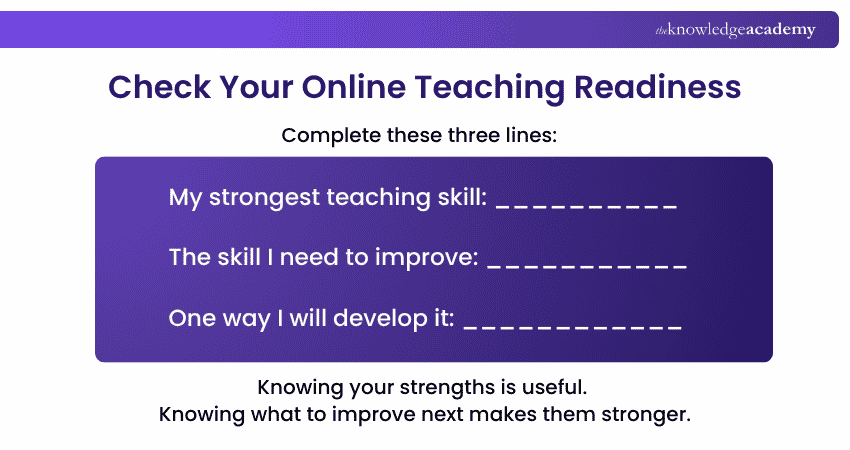
Knowing a subject is different from knowing how to teach it effectively. Strengthen the skills that help you explain ideas clearly, structure lessons, encourage participation, check understanding, and provide useful feedback.
Focus particularly on lesson planning, communication, learner engagement, assessment, and adaptability. In an online environment, these skills help you recognise when learners need clarification, a different explanation, or greater involvement.
Teaching Insight: Don't just know your subject. Learn how to make it understandable to someone else.
Step 5: Learn to Teach Online, Not Just on Camera
Moving an existing classroom lesson onto a video call does not automatically make it effective Online Teaching.
Online lessons often need shorter explanations, clearer transitions, purposeful activities, opportunities for interaction, and well-organised digital resources.
Instead of:
Explain → Explain → Explain → End
Aim for:
Explain → Ask → Demonstrate → Practise → Check → Feedback
This keeps learners involved rather than turning the session into a long presentation.
Step 6: Set up Your Virtual Classroom
Your virtual classroom should be simple, reliable, and easy to learn from. Focus on the essentials that keep the lesson clear and uninterrupted.
Your Online Teaching Setup:
1) Connect → Reliable internet
2) Communicate → Clear audio and camera
3) Teach → Suitable device and teaching platform
4) Focus → Quiet, distraction-free space
5) Share → Organised digital resources
Test your setup before teaching so you can focus on the learner, not the technology.
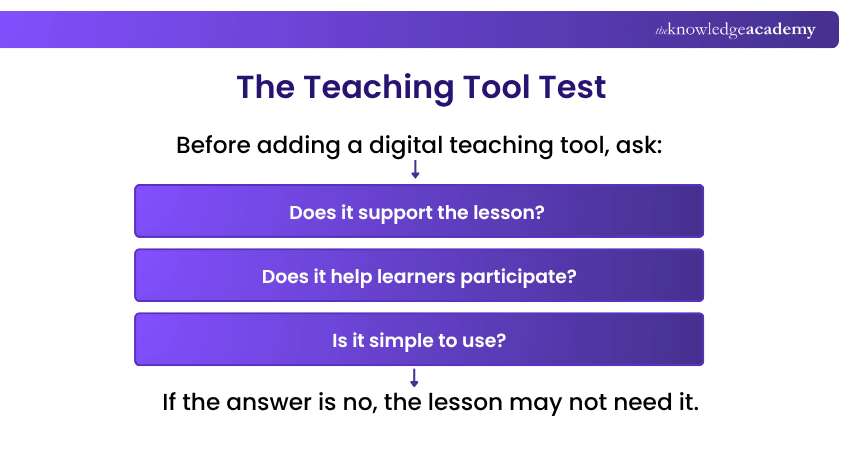
Step 7: Choose Your Teaching Tools
Different tools support different parts of the learning experience. You may need platforms for live teaching, sharing materials, communicating, assessing learners, or managing courses.
Choose tools based on the learning need rather than simply using technology because it is available.
Step 8: Plan Your First Online Lesson
Give your first lesson a clear beginning, purpose, and outcome. Decide what learners should understand or be able to do by the end, then structure the lesson around that goal.
A Simple Lesson Flow
Opening → Learning Goal → Main Activity → Practice → Check Understanding → Give Feedback → Wrap-up
Do not try to fit everything you know about the topic into one session. Focus on what learners should understand or be able to do by the end.
Step 9: Gain Teaching Experience
Put your teaching skills into practice through tutoring, sample lessons, volunteering, training support, or small-group teaching. These experiences help you become more confident in delivering lessons online.
Practical teaching also helps you improve your timing, explanations, learner engagement, and ability to respond when a lesson does not go as planned.
Trainer Pro Tip: The more you teach, reflect, and adjust, the stronger your teaching becomes.
Step 10: Find Online Teaching Opportunities
Once you have the right skills, experience, and qualifications, start looking for Online Teaching opportunities that match your subject and interests.
You can explore roles with schools, training organisations, online learning platforms, tutoring services, and corporate learning teams, or teach independently.
Essential Skills for Online Teachers
Online Teachers need a combination of teaching, communication, organisational, and digital skills to deliver effective lessons. Key skills include:
1) Communication: Clear explanations and instructions make lessons easier for learners to understand and follow.
2) Lesson Planning: Well-structured lessons keep learning focused on clear objectives and outcomes.
3) Learner Engagement: Active participation keeps learners involved throughout the lesson.
4) Digital Literacy: Confidence with virtual classrooms and digital tools supports smooth lesson delivery.
5) Adaptability: Flexible teaching allows lessons and explanations to be adjusted to different learner needs.
6) Time Management: Good pacing keeps activities organised and lessons on track.
7) Assessment and Feedback: Regular checks and constructive feedback show learner progress and areas for improvement.
How to Improve as an Online Teacher?
Good Online Teaching develops through practice, feedback, and reflection. Regularly reviewing your approach can show what works well and where changes could improve the learning experience.
1) Review Your Lessons: Look back at each lesson and identify what worked, where learners struggled, and which parts could be improved.
2) Ask for Feedback: Gather feedback on areas such as lesson clarity, pace, activities, and resources. Specific feedback gives you clearer areas to work on.
3) Keep Developing Your Skills: Continue strengthening your teaching and digital skills as your experience grows. Focus on areas that directly improve how you plan, deliver, and manage online lessons.
4) Try New Approaches: Apply what you learn in future lessons. Test different explanations, activities, or teaching techniques and observe how learners respond.
5) Reflect and Refine: Use your experience and learner feedback to adjust future lessons and build on what works.
Your Post-lesson Check
Before moving on to your next lesson, ask:1. What worked well?2. Was there enough interaction and participation?3. Where did learners struggle?4. What will I change next time?Four questions. One better lesson next time.
Conclusion
Becoming an Online Teacher involves more than choosing a subject and opening a video platform. Effective Online Teaching brings together subject knowledge, teaching ability, communication, technology, planning, and learner engagement.
Start by deciding what and who you want to teach, understanding the requirements for your chosen path, developing your teaching skills, and gaining practical experience. With every lesson, use feedback and reflection to refine how you teach and create better learning experiences.
Strengthen your teaching and training capabilities with the Train the Trainer Course – Register now!

Charlotte Wilson is an expert in soft skills development, with over 14 years of experience helping individuals and teams improve communication, productivity and emotional intelligence in the workplace. Her training content is focused on enhancing interpersonal effectiveness and fostering positive, collaborative environments across all levels of an organisation.
View Detail

 If you wish to make any changes to your course, please


