




We may not have the course you’re looking for. If you enquire or give us a call on 01344203999 and speak to our training experts, we may still be able to help with your training requirements.
How to Become a Financial Advisor: Essential Steps
ByOlivia TaylorLast updated on: 03 October 2026
Becoming a Financial Advisor involves meeting the qualification and regulatory requirements that apply in your country, gaining relevant experience and developing strong financial and client-facing skills. Ongoing professional development helps you keep pace with changing regulations, products and market developments throughout your career.

Before We Dive In
1. Financial Advisors guide clients in making well-informed choices about managing their finances.2. Career requirements vary depending on the country and type of advice provided.3. Relevant qualifications and practical experience support entry into the profession.4. Strong financial, analytical, communication, and client management skills are important.5. Ongoing professional development helps Advisors stay current with regulations and market changes.
Have you ever wondered what it would be like to help people make smarter financial decisions and achieve their life goals? A career as a Financial Advisor lets you make a difference in people's financial lives while building a career in the financial sector. If you are interested in working with numbers, solving financial problems and helping others reach their goals, this could be an ideal career path for you.
In this blog, you'll learn how to become a Financial Advisor and discover the steps needed to build a successful career in the field. From the qualifications and skills you need to the career pathway and salary insights, this guide covers everything you need to start your journey with confidence.
Who is a Financial Advisor?
A Financial Advisor is a professional who gives financial guidance to clients, subject to the qualifications, authorisations, and regulations that apply in their jurisdiction. They provide personalised guidance on investments, savings, retirement planning, taxation, insurance and other financial matters, depending on their qualifications and local regulations. Their primary objective is to help clients make confident financial decisions and achieve their goals.
Financial Advisors understand their clients' financial situation, goals and risk tolerance. As they learn how to become a Financial Advisor, they develop the skills to create personalised financial strategies and help clients make informed decisions for long-term financial security.

How to Become a Financial Advisor?
Becoming a Financial Advisor involves educational qualifications, experience in the field and continuous growth. Here are eight practical steps that can help you build a career as a Financial Advisor:
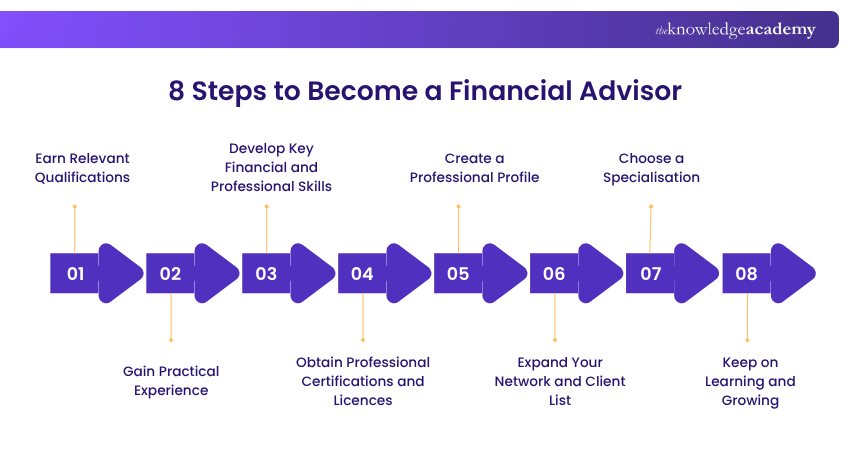
1) Earn Relevant Qualifications
F Start by identifying the qualifications required in the country and area of financial advice you plan to work in. Relevant study may include finance, accounting, economics, business, or recognised professional financial planning qualifications.
Professional certifications such as CERTIFIED FINANCIAL PLANNER certification can demonstrate financial planning competence, although certification and regulatory requirements vary by territory and type of advice.
Pro Tip
Check the regulator and recognised professional bodies in your target country before choosing a qualification, as adviser requirements differ by jurisdiction and type of financial advice.
2) Gain Practical Experience
Practical experience can help aspiring Financial Advisors develop client, planning, and regulatory knowledge before taking on advisory responsibilities. You could gain exposure to financial planning, investment management, client relationships and regulatory requirements through internships, graduate programmes, or entry-level positions with banks, investment companies, or Financial Advisory firms. These opportunities help you learn from experienced professionals and develop practical skills relevant to future advisory responsibilities.
3) Develop Key Financial and Professional Skills
The key to a successful Financial Advisor is to have a combination of technical knowledge and good interpersonal skills. Develop knowledge and understanding of investment planning, taxation, retirement planning and financial markets. Strengthen your communication, analytical, problem-solving and relationship management skills. Keeping your knowledge up to date with industry developments and regulatory changes enables you to offer better financial advice.
4) Obtain Professional Certifications and Licences
Depending on your country or region, you may need professional licences, regulatory registration or authorisation before providing financial advice. Professional qualifications, licences, and regulatory approvals can demonstrate that an adviser has met specified competency and compliance requirements.
Which requirement can vary most depending on where a Financial Advisor works?
A. Communication skillsB. Regulatory licences and qualificationsC. Basic numeracyD. Client relationship skillsCorrect Answer: B. Regulatory licences and qualifications
5) Create a Professional Profile
For job applications for Financial Advisor positions, make a CV that showcases your education, qualifications, technical skills, internships and relevant work experience. Highlight analytical skills, familiarity with relevant financial software, communication skills, client-facing experience, and other achievements relevant to financial advisory work.
6) Build Your Professional Network
Building a professional network can support career development and help you learn from others in the financial services industry. Attend industry events, seminars and professional association activities, and connect with colleagues and other industry professionals. As your role develops, strong client relationships can also support trust and referrals, subject to your organisation's policies and applicable regulations.
Learn to prepare and analyse financial statements with our Financial Accounting Course – Join now!
7) Choose a Specialisation
As you gain experience, choosing a niche or specialisation can help you stand out in the financial services industry. Areas such as investment planning, retirement planning and tax planning allow you to develop specialised expertise, deliver personalised financial solutions and better meet the unique requirements of your clients while enhancing your career prospects.
8) Keep on Learning and Growing
As the financial industry continues to evolve, it is important to stay updated on changing regulations, investment products and market conditions. Continue developing your knowledge through professional training, advanced qualifications and ongoing learning. Staying informed about new financial trends helps you remain competitive while providing high-quality advice to your clients.
Financial Advisor Salary Insights
Let’s have a quick look at this table, where we have shown the difference in salary ranges from one country to the other:
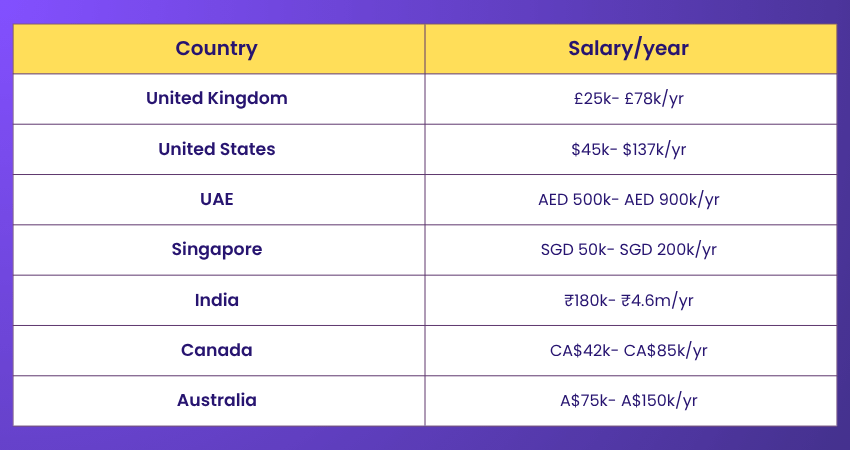
Source: Glassdoor
Before taking the next step towards becoming a Financial Advisor, use this checklist to see how prepared you are for the career path.
Career Readiness Checklist
☐ Have I checked the qualification requirements for my target country?☐ Have I identified the licences or regulatory approvals I may need?☐ Have I gained relevant finance or client-facing experience?☐ Have I developed strong analytical and communication skills?☐ Have I chosen a financial area I may want to specialise in?☐ Have I planned how to continue my professional development?
Explore Financial Courses to develop practical finance skills, strengthen financial decision-making and advance your career across the financial services industry!

Olivia Taylor makes complex financial subjects easier for professionals to understand and apply. Her content connects accounting principles with the practical requirements of financial control, organisational planning and responsible decision-making.
View Detail

 If you wish to make any changes to your course, please


