




We may not have the course you’re looking for. If you enquire or give us a call on 01344203999 and speak to our training experts, we may still be able to help with your training requirements.
How Much CRP Level is Dangerous: Understanding the CRP Level
ByNilotpal SarmahLast updated on: 03 October 2026
This blog explains CRP Levels, what different CRP ranges may indicate, how CRP is measured, common causes of elevated levels, and when an abnormal result may require medical attention.

At a Glance
1. CRP is a blood marker that can indicate inflammation but cannot identify its exact cause on its own.2. CRP reference ranges can vary between laboratories, so results should be checked against the range provided with the test.3. Very high CRP Levels can occur with serious infections or significant inflammation, but there is no single CRP value that is universally considered dangerous.4. Standard CRP and high-sensitivity CRP (hs-CRP) serve different purposes and should not be interpreted using the same thresholds.5. CRP results are most useful when considered alongside symptoms, medical history and other test findings.
C-reactive protein (CRP) is a blood marker that rises in response to inflammation. A high result can occur for many reasons, including infection, inflammatory conditions and tissue injury, but the CRP value alone cannot identify the cause or determine how serious a condition is.
So, what CRP level should prompt concern? There is no single value that is universally considered dangerous. This blog explains how CRP results are interpreted, what higher levels may indicate and when medical assessment may be appropriate.
How Much CRP Level in the Blood is Considered Dangerous?
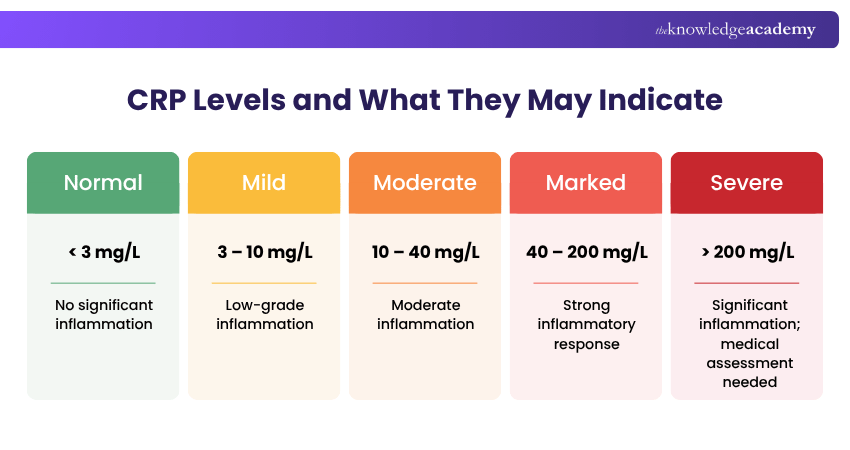
There is no single CRP level that is universally considered dangerous. Standard CRP reference ranges vary between laboratories. The following ranges can provide a general indication of how CRP values may be interpreted, but they should not replace medical assessment. Let's learn about them below:
1) Normal Range
The Normal CRP Range can vary between laboratories. Some laboratories consider values below 5–10 mg/L to be within the reference range. A result within the normal range generally suggests that there is no significant systemic inflammation, although CRP should always be interpreted alongside symptoms and other clinical findings.
2) Mild Elevation
A Mild Elevation may fall slightly above the laboratory’s normal reference range, suggesting low-grade inflammation that may be linked to minor infections or temporary health changes. This level may return towards normal once the underlying issue resolves.

3) Moderate Elevation
Moderate CRP Elevation, typically 10-40 mg/L, often indicates a more pronounced inflammatory response, possibly from infections or autoimmune activity. Further medical evaluation is recommended at this stage to determine the root cause.
4) Marked Elevation
Marked Elevation ranges from 40 to 200 mg/L, signalling a strong inflammatory reaction often associated with acute infections, active autoimmune flare-ups, or significant tissue injury. Such levels almost always require medical attention to address the underlying condition promptly.
5) Severe Elevation
A Severe Elevation occurs when CRP Levels exceed 200 mg/L. Such markedly elevated levels can occur with serious infections, major trauma or intense systemic inflammation. However, CRP alone cannot determine whether a person is critically ill. Results at this level require prompt medical assessment alongside symptoms, medical history and other investigations.
Important Note
A higher CRP Level can indicate a stronger inflammatory response, but the number alone does not determine how serious a condition is. Doctors consider CRP alongside symptoms, medical history, examination findings and other test results.
Upgrade your HIPAA knowledge and guard patient trust like a pro - Sign up for the HIPAA Training now!
Medical Tests for Measuring CRP Levels
Here are the common medical tests used for measuring CRP Levels:
1) Standard CRP Test: This is the usual blood test where a blood sample is drawn (typically from a vein in the arm) and sent to a laboratory to determine the concentration of CRP in your bloodstream. It is commonly used to detect or monitor inflammation associated with infections, inflammatory conditions and tissue injury.
2) hs CRP Test (High-sensitivity CRP Test): This is a more sensitive type of CRP test. hs-CRP measures much smaller concentrations of CRP and may be used as part of cardiovascular risk assessment. For example, values of only a few mg/L may be relevant in an hs-CRP cardiovascular assessment, while standard CRP testing focuses on larger elevations related to systemic inflammation.
3) Semi-quantitative CRP Tests: Some tests use antibody-based point-of-care methods to detect CRP and provide an approximate result relatively quickly. These tests may be useful in certain clinical settings where rapid information is needed.
Pro Tip
Before interpreting your result, check which CRP test you had and the reference range shown on your laboratory report. Standard CRP and hs-CRP serve different purposes, so their values should not be interpreted in the same way.
Effective Ways to Lower CRP Levels
To reduce CRP Levels, it’s essential to address the underlying cause of the inflammation. CRP itself is a marker, so the main objective is not simply to make the number lower. Treatment depends on why CRP is elevated. Some practical approaches may include:
a) Getting Appropriate Treatment for Infections: If an infection is responsible for the inflammation, treatment should be guided by a healthcare professional.
b) Managing Chronic Inflammatory Conditions: Conditions such as rheumatoid arthritis, inflammatory bowel disease and other inflammatory disorders may require ongoing medical treatment.
c) Following a Balanced Diet: A diet containing fruits, vegetables, whole grains and other nutrient-rich foods can support general health and may help reduce factors associated with chronic inflammation.
d) Exercising Regularly: Appropriate physical activity can support cardiovascular and metabolic health.
e) Avoiding Smoking: Smoking is associated with chronic inflammation and can contribute to elevated CRP.
f) Taking Prescribed Medicines as Directed: Medicines should be used according to the condition being treated rather than taken solely to reduce a CRP number.
Trainer’s Insight
Don’t focus only on lowering the CRP number. CRP is a marker of inflammation, so the priority is understanding and managing the underlying cause. As the inflammation improves, CRP may also decrease.
Gain confidence to act quickly and safely in medical emergencies with our First Aid at Work Course – Join now!
Should You Be Concerned About an Abnormal CRP Level?
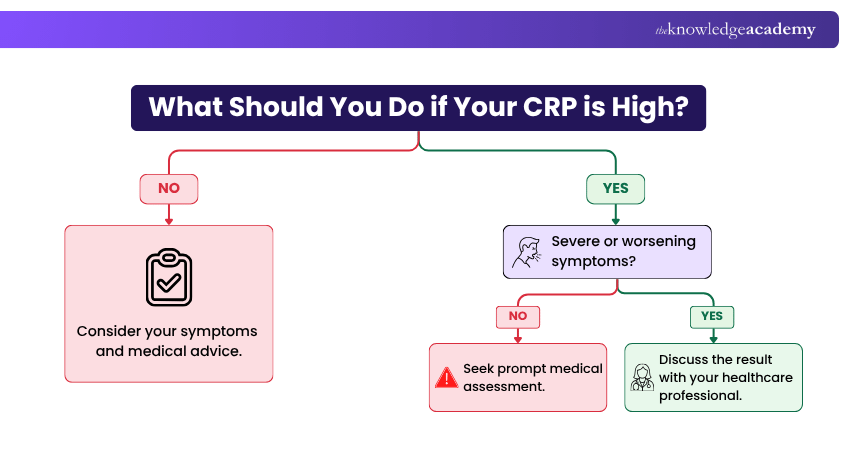
An abnormal CRP Level can be a cause for concern but not always on its own. Since CRP is a general marker of inflammation, a high reading often signals that something in the body may need further assessment. This could include infection, tissue damage or a chronic inflammatory condition.
Since CRP doesn’t point to what is wrong or where, it must be interpreted along with symptoms, other tests, and medical history. So elevated CRP warrants attention, discussion with a healthcare provider and further investigation to understand the cause.
A mildly abnormal result in someone who feels well may have a very different significance from the same result in someone with fever or rapidly worsening symptoms. Similarly, a normal CRP does not completely rule out illness. The laboratory number is only one part of the assessment.
Common Causes of Elevated CRP Levels
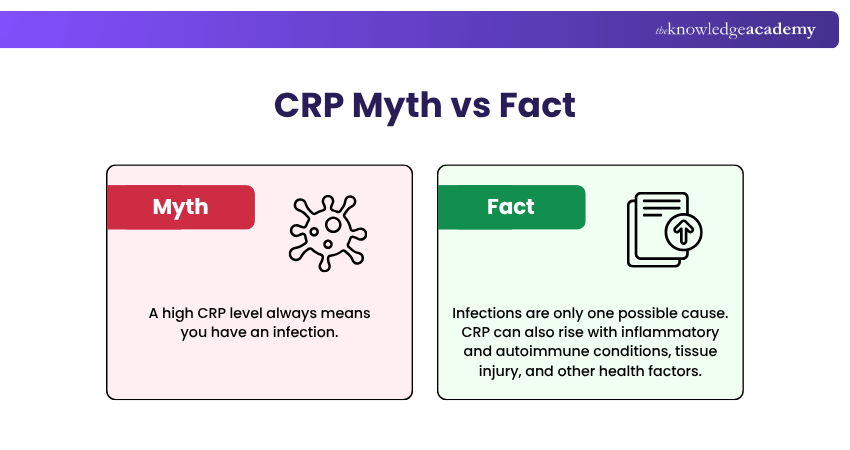
CRP can rise for many reasons. Some of the most common causes include:
1) Infections: Bacterial, viral or fungal infections, including pneumonia, bone infections or systemic infections.
2) Chronic Inflammatory Diseases/Autoimmune Conditions: Disorders such as Rheumatoid arthritis, Inflammatory Bowel Disease (IBD), or other autoimmune diseases.
3) Tissue Injury, Trauma or Surgery: Physical injury, major trauma, surgery or tissue damage can trigger an inflammatory response and raise CRP.
4) Cardiovascular Conditions: Inflammation plays a role in cardiovascular disease, and hs-CRP may be used alongside other risk factors when assessing cardiovascular risk.
5) Metabolic and Lifestyle-related Factors: Factors such as obesity and smoking can be associated with higher CRP levels. Other metabolic and lifestyle factors may also influence chronic inflammation.
Create a culture of healthy teams and safe spaces. Sign up for the Health & Safety in the Workplace Training now!

Nilotpal Sarmah is a Senior Content Writer with 11+ years of overall experience spanning engineering, operations and content development. His technical knowledge and extensive writing experience enable him to simplify specialised topics across IT and Tech, Business Skills, Project Management, Health and Safety, and ISO and Compliance.
View Detail

 If you wish to make any changes to your course, please


