


 Top Rated Course

We may not have the course you’re looking for. If you enquire or give us a call on 01344203999 and speak to our training experts, we may still be able to help with your training requirements.
Fiction vs Nonfiction: Key Differences
The Knowledge Academy 16 July 2026Fiction is imaginative storytelling for entertainment, while nonfiction is factual writing based on real events designed to inform or educate. Understanding the difference between these two forms helps readers choose the right type of content based on their needs, whether for learning, research, or enjoyment.

Training Outcomes Within Your Budget!
We ensure quality, budget-alignment, and timely delivery by our expert instructors.
Table of Contents
Related Courses
The world of literature is vast and diverse, filled with countless stories and narratives that entertain, inspire, and inform. At its core, all these works can be divided into two broad categories: fiction and nonfiction. Whether you’re lost in the pages of an imaginative tale or absorbed in a factual account of history, understanding the difference between Fiction Vs Nonfiction can greatly enhance your appreciation of both genres.
Fiction opens the door to creativity. From fantasy adventures to heartfelt love stories, fiction takes readers on journeys to places that may not exist outside the writer’s imagination. Nonfiction, on the other hand, sticks to reality. It deals with facts, real people, and true events. Continue reading below to explore the key differences in Fiction vs Nonfiction writing, from their objectives and literary styles to their tone and structure. Let’s begin!
Table of Contents
1) What is Fiction?
2) What is Nonfiction?
3) Key Differences Between Fiction and Nonfiction
4) Why Should You Read Both Fiction and Nonfiction?
5) Conclusion
What is Fiction?
Fiction is the art of storytelling, born from creativity and imagination. Whether it's a fantasy world or larger-than-life characters or something deep within humanity itself, fiction takes readers to places which may or may not exist in this world. The significance of fiction lies in its ability to allow readers to escape, feel emotions beyond their everyday lives, and connect with characters who are often shaped by the writer's vision.

Key Characteristics of Fiction
Fiction is a vast and imaginative genre that captivates readers by exploring themes, characters, and worlds that are often products of creativity. It follows certain key characteristics that shape the way stories are told, offering unique experiences to those who engage with them. Here are some defining traits of fiction that make it stand out.
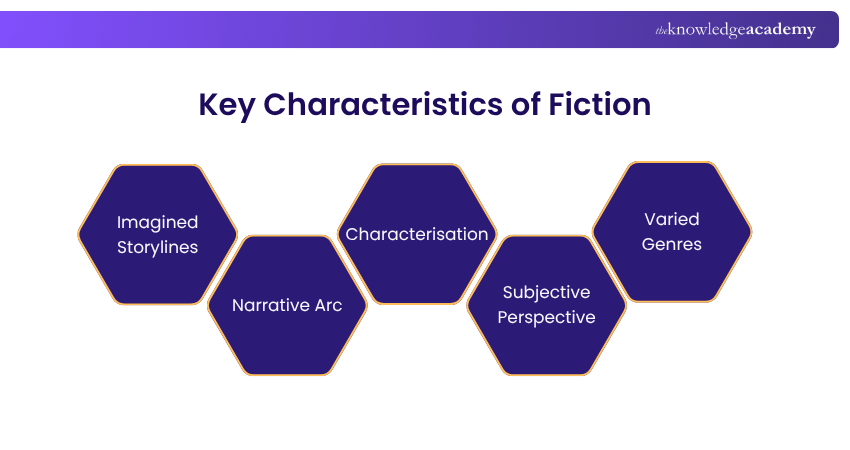
1) Imagined Storylines: Fiction is created from a person's imagination. Characters, plots, and settings are usually purposed and created. They may often carry meaning associated with real events but are not limited to reality.
2) Narrative Arc: Fiction typically follows a structured plot with a clear beginning, middle, and end. It often includes conflict, character development, and resolution. For instance, Harry Potter’s journey from an ordinary boy to a wizard is a prime example of a well-developed narrative arc
3) Characterisation: Fiction places great emphasis on creating fully developed characters with distinct personalities, motives, and desires. Characters can range from ordinary humans to fantastical beings, and the line between good and evil is often blurred, providing complex portrayals.
4) Subjective Perspective: Fiction often uses literary devices like metaphors, symbolisms, and allegories to give expression to some kind of meaning. Being subjective in nature, literary devices allow for multivocality across every experience between readers.
5) Varied Genres: Fiction spans a wide range of genres, including romance, fantasy, science fiction, mystery, and historical fiction. Each genre offers different themes, styles, and tones, catering to diverse reader preferences and providing varied storytelling experiences.
Examples of Fiction
There are so many examples of fiction, each with its own tapestry of narration and imagination. Among them are the following:
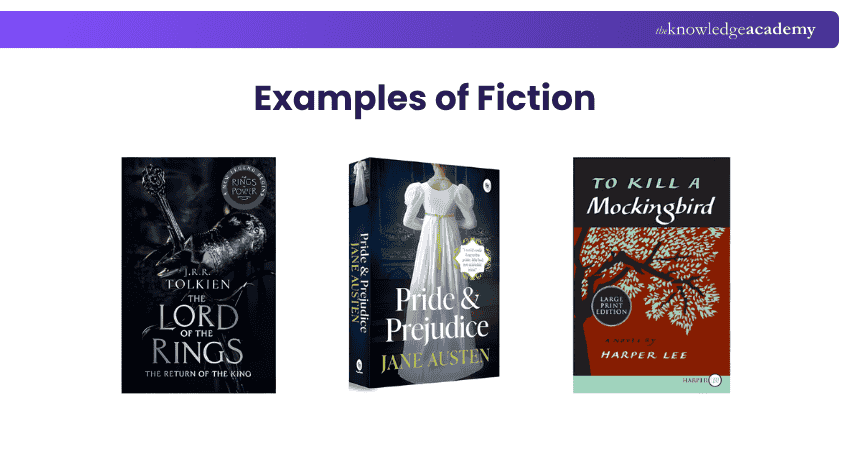
1) Pride and Prejudice by Jane Austen: It is a brilliant work of fiction that addresses love, society, and human nature in incredibly complex relations in Regency England. Romantic love between Elizabeth Bennet and Mr. Darcy is tightly interwoven into the texture of wit, irony, and social commentary.
2) The Lord of the Rings by J.R.R. Tolkien: This is a high fantasy masterpiece that has transported readers into the world of Middle-Earth, where good and evil clash in an epic battle as it follows Frodo Baggins' quest to destroy a rich ring full of lore, language, and culture all crafted by Tolkien.
3) To Kill a Mockingbird by Harper Lee: Though it is set on the very real issues of racism and injustice, this is still fiction. Here the moral fabric of society is probed from Scout Finch's point of view, questioning concepts of fairness and equality.
Turn your ideas into powerful, engaging stories with the Creative Writing Course – Join now!
What is Nonfiction?
Nonfiction, as the name itself suggests, is truth-bound to reality. It is the genre of writing that revolves around facticity, truths, and true events. It may be biography, historical book, or investigation in the form of a documentary, but mainly nonfiction aims to inform, educate, or provide real-world perspective. It is not imagination-based but based upon research, observation, or factual accounts.
Key Characteristics of Nonfiction
Nonfiction is a genre that focuses on delivering truth and accuracy, grounded in real events, people, and concepts. Its primary aim is to inform, educate, or persuade, using a structured approach and an objective tone. Here are some key characteristics that define nonfiction.
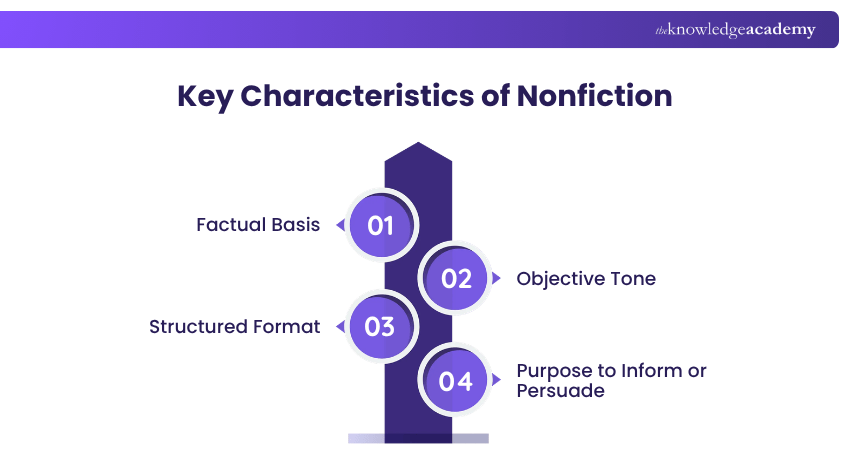
1) Factual Basis: Nonfiction is rooted, with everything presented being real, verified, and based on actual events, people, or concepts. Writers convey truths rather than invent scenarios or characters.
2) Objective Tone: Nonfiction aims to present facts without bias, providing a balanced view of the subject. While personal perspectives may appear in memoirs or essays, the emphasis remains on accuracy and truthfulness.
3) Structured Format: Nonfiction often follows a clear, organised structure, especially in academic or informational texts. It includes headings, subheadings, data, references, and sections that guide readers through the material in a logical manner.
4) Purpose to Inform or Persuade: Nonfiction is usually written with the goal of informing or persuading the reader. Whether it’s a guidebook, a historical account, or an investigative piece, the genre focuses on engaging with real-world topics to educate or influence.
Examples of Nonfiction
Nonfiction can encompass virtually any possible subject matter, from history to science to memoirs. A few examples include:
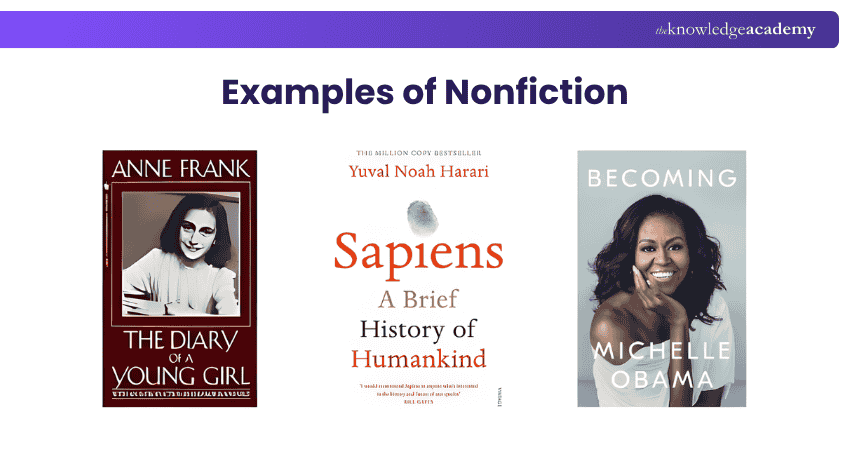
1) The Diary of a Young Girl by Anne Frank: A firsthand account of life during World War II, this diary provides a deeply personal perspective on the atrocities faced by Jews during the Holocaust.
2) Sapiens: A Brief History of Humankind by Yuval Noah Harari: This book traces the history of the human species, offering insights into how Homo sapiens came to dominate the world. Harari blends history, biology, and philosophy to explore the evolution of human societies.
3) Becoming by Michelle Obama: A bestselling memoir, this book chronicles the former First Lady’s journey from her childhood in Chicago to her role in the White House, offering readers an intimate look into her personal and public life.
Polish every word to perfection with confidence by joining the Proofreading Course today!
Key Differences Between Fiction and Nonfiction
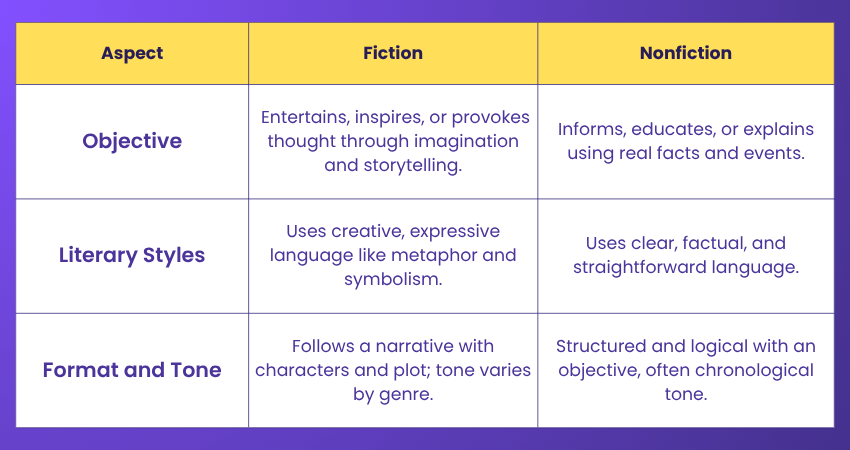
While both fiction and nonfiction offer valuable reading experiences, they serve different functions and appeal to readers in unique ways. Understanding these differences helps clarify their distinct roles in literature.
1) Objective
The objective of fiction is to entertain, inspire, or provoke thought through storytelling. Fiction allows writers freedom in the exploration of the human condition and for the imaginative creation of new worlds and consideration of abstract concepts. It is often written to evoke an emotion, generate creativity, or view the world through a different lens.
Nonfiction strives to inform, educate, or explain. Its primary goal is to communicate truth and reality in a clear, factual approach. If it be an informative guide, an historical analysis, or a personal memoir, nonfiction is supposed to acquaint the reader with knowledge or information that has happened in the real world.
2) Literary Styles
It is an enormous genre of literature and often uses fancy words, metaphors, and symbolism for its expression. Some examples are 1984 by George Orwell, who used the dystopian and allegoric forms to raise various questions related to power and control. Fiction can be lyrical, dramatic, and even playful; there are relatively fewer restrictions on the ability of the author to state what he says.
Typically, nonfiction is written in a much more factual and direct style. It can still be exciting but is more precise, heavily emphasising clarity with accurate communication. For instance, The Immortal Life of Henrietta Lacks is written by Rebecca Skloot, and a scientific and investigative tone is maintained while talking about ethics and the effects of research for medical purposes.
3) Format and Tone
Normally, fiction is written in the narrative mode, plot, characters, and setting, though tone would vary from genre to genre. For example, romance, horror, fantasy, or a more serious novel creates a particular atmosphere—be it light-hearted, suspenseful, or reflective. In the context of Writing a Novel, these elements play a crucial role in shaping the overall storytelling experience.
Nonfiction, by contrast, usually follows a structured framework that is coherent and logical. It may proceed according to chronological events, state arguments chronologically, or provide data and analysis in an organised form. The tone of most nonfiction tends to be serious, objective, or neutral in scholarly and informative writing.
Elevate your professional writing! Join our Report Writing Course and learn to create impactful reports with ease.
Why Should You Read Both Fiction and Nonfiction?
Reading both fiction and nonfiction together creates a more balanced and impactful learning experience. Nonfiction provides facts, context, and real-world knowledge, while fiction adds emotion, perspective, and human understanding.
Together, they reinforce each other. Nonfiction helps you understand events and ideas, while fiction helps you connect with them on a deeper level. This combination improves knowledge, builds empathy, strengthens critical thinking, and makes information easier to remember.
Conclusion
Choosing between fiction and nonfiction does not have to be a limitation. Understanding the differences between fiction and nonfiction helps you appreciate the value each type brings. While fiction fuels imagination and creativity, nonfiction builds knowledge and real-world understanding. Exploring both allows you to think deeply, learn effectively, and enjoy reading in a meaningful way.
Grow your skills and unlock your full potential with Personal Development Courses now!
Frequently Asked Questions
What are the Types of Nonfiction?

Nonfiction includes four main types:
1) Expository: Explains facts and information clearly
2) Narrative: Tells stories about real events
3) Persuasive: Presents arguments to influence opinions
4) Descriptive: Uses sensory details to create a clear picture
Which is Easier to Write: Fiction or Nonfiction?
Neither fiction nor nonfiction is universally easier to write. Nonfiction may seem simpler as it relies on real facts and research, while fiction requires creating plots and characters from scratch. However, both demand different skills, effort, and creativity.

The Knowledge Academy


Global Training Provider
The Knowledge Academy is a world-leading provider of professional training courses, offering globally recognised qualifications across a wide range of subjects. With expert trainers, up-to-date course material, and flexible learning options, we aim to empower professionals and organisations to achieve their goals through continuous learning.


 If you wish to make any changes to your course, please


