




We may not have the course you’re looking for. If you enquire or give us a call on 01344203999 and speak to our training experts, we may still be able to help with your training requirements.
Facilities Management Best Practices: From Good to Great
ByShristi RoyLast updated on: 03 October 2026
Facilities management is key to maintaining efficient and safe operations in any organisation. This blog explores essential facilities management best practices, including skill development and preventive measures, ensuring a productive environment. Read on to learn more and improve your facility management strategy.
The Rundown
1. Facilities management coordinates people, assets, processes and spaces to support safe and efficient operations.2. Build a skilled team with clearly defined responsibilities.3. Maintain accurate asset information and planned maintenance schedules.4. Use technology to improve visibility, response times and decision-making.5. Manage vendors, operating costs and facility risks systematically.6. Measure performance regularly and improve processes using reliable facility data.
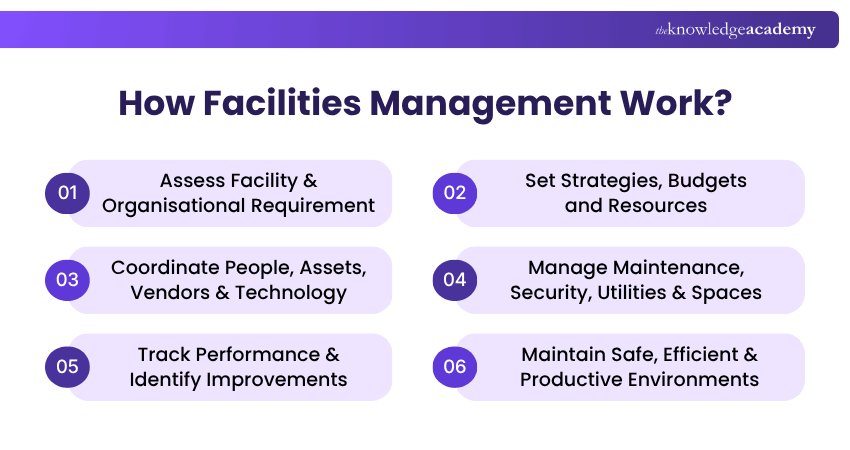
Imagine walking into a building where everything works seamlessly: the lights are perfectly timed, the air is just right, and every corner is spotless. This is the result of top-notch facilities management. But achieving such level of efficiency requires more than just routine maintenance; it demands a deep understanding of facilities management best practices.
In this blog, we’ll delve into the essential facilities management best practices that can transform your workspace. From energy-saving techniques to proactive maintenance schedules, these practices will help you cultivate a more productive and sustainable environment. Ready to elevate your facility management strategy? Let’s get started.
Best Practices for Facilities Management
Proper facilities management plays a vital role in maintaining smooth operations and fostering a safe, productive environment. Understanding the benefits of facility management can help you implement best practices that optimise resources, lower costs, and enhance overall efficiency in your facility. Here are some of the best practices for facilities management:
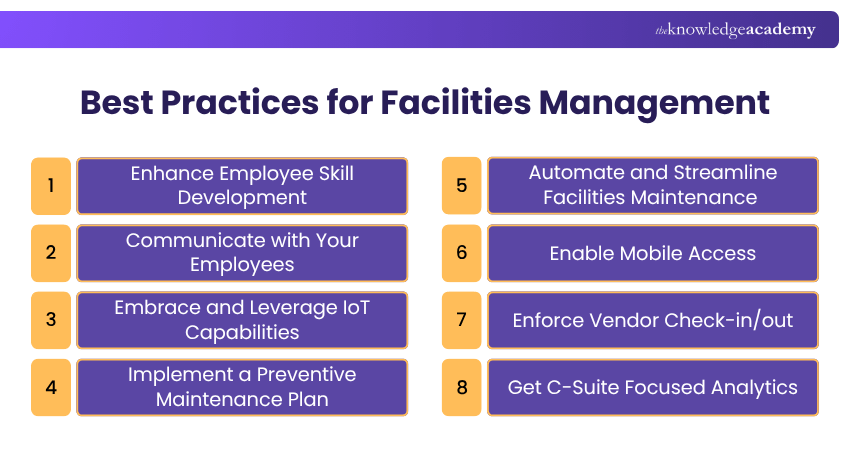
1) Enhance Employee Skill Development
Investing in employee skill development is key for the long-term success of facilities management. By providing ongoing training and further development opportunities, you ensure that your team is well-equipped for handling various challenges. Skilled employees can perform tasks more efficiently, reducing the risk of errors and improving overall productivity. Moreover, a well-trained team can quickly adapt to new technologies, such as facility management software, and evolving processes, keeping your operations up-to-date.

2) Communicate with Your Employees
Effective communication is the backbone of successful facilities management. Regular check-ins and open dialogues help ensure that every team member is in sync with organisational goals and procedures. Clear communication also fosters a collaborative work environment where employees feel valued and informed. When everyone is on the same page, it leads to smoother operations and quicker problem resolution.
3) Embrace and Leverage IoT Capabilities
The Internet of Things (IoT) brings powerful tools for modern facilities management. IoT devices can monitor diverse aspects of your facility in real-time, providing valuable data for optimising operations. For example, IoT sensors can track energy usage, allowing you to make adjustments that lower costs and reduce waste. Embracing IoT technology helps you stay ahead of potential issues and make more informed decisions.
Pro Tip
Establish a baseline for energy and resource use before making improvements. This gives you a reference point for measuring whether changes actually reduce consumption.
4) Implement a Preventive Maintenance Plan
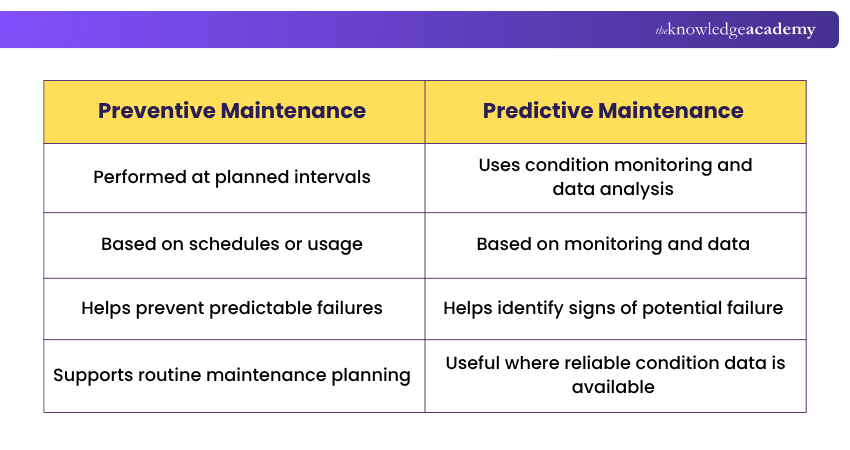
A preventive maintenance plan is key for keeping facilities running smoothly. By scheduling regular maintenance tasks, you can address small issues before they escalate into bigger problems. This proactive approach can reduce unplanned downtime and support longer equipment life. In addition, preventive maintenance enhances safety and reliability, ensuring that your facility operates efficiently. Preventive measures are also key to reducing operational costs in facilities management.
Here are some key distinctions between preventive and predictive maintenance:
5) Automate and Streamline Facilities Maintenance
Automation is increasingly used in facilities management to streamline maintenance tasks and operations. By automating repetitive processes, you free up time for your team to focus on more critical tasks. Automation can reduce some repetitive manual errors and improve consistency. These streamlined processes contribute to faster response times and improved overall facility management.
Utilising maintenance management software is a powerful way to streamline operations and improve efficiency. This software allows you to organise and oversee all maintenance activities, from scheduling tasks to tracking performance.
Pro Tip
Start by automating repetitive, high-volume activities such as work-order routing, maintenance reminders and status updates before moving to more complex workflows.
Learn to manage the product development lifecycle with Product Management Training – Join today!
6) Enable Mobile Access
Providing mobile access to your team is crucial in today’s fast-paced work environment. Mobile tools allow employees to access important information and manage tasks from anywhere, thus improving flexibility and responsiveness. With mobile access, your team can quickly address issues as they arise, reducing downtime and keeping operations running smoothly. It also enhances communication, enabling real-time updates and collaboration.
7) Enforce Vendor Check-in/out
Tracking vendor check-ins and check-outs is vital for maintaining security and accountability in your facility. By enforcing a vendor management system as part of your vendor risk management programme, you can monitor who's entering and leaving your premises. This practice helps prevent unauthorised access and ensures that all vendor activities are properly documented. It also provides valuable data for evaluating vendor performance and managing relationships.
Vendor Management Checklist
☐ Confirm vendor authorisation before access☐ Record check-in and check-out☐ Define permitted access areas☐ Communicate relevant site and safety requirements☐ Maintain appropriate vendor documentation☐ Review vendor activities and performance
8) Get C-Suite Focused Analytics
Providing the C-suite with focused analytics is essential for informed decision-making in facilities management. Detailed reports on operational performance, costs, and trends help executives understand the impact of facilities management on the organisation. These insights allow the C-suite to make strategic decisions that align with organisational goals and improve overall efficiency. Regularly updating executives with relevant data ensures that facilities management remains a priority at the highest level.
9) Move into Predictive Analytics
Predictive analytics can help facilities teams identify patterns and anticipate potential issues before they occur. By analysing historical data, predictive tools can identify patterns and predict future outcomes. This proactive approach enables you to address problems early on, reducing downtime and maintenance costs. Predictive analytics also helps in supporting more efficient resource allocation and maintenance planning.
10) Negotiate Provider Rates
Regularly negotiating provider rates is a smart strategy for controlling costs in facilities management. By reviewing contracts and comparing rates, you can ensure that you’re getting the best value for your services. Building strong relationships with providers can also lead to better terms and discounts. Consistently managing provider rates helps you stay within budget and allocate resources more effectively.
Learn how to keep goods, resources and operations moving efficiently in the Logistics Management Training – Sign up now!
11) Define and Organise Team Structure
A well-defined and organised team structure is essential for efficient facilities management. Clearly outlining roles and responsibilities helps prevent overlap and ensures that tasks are completed effectively. An organised team structure also promotes accountability, as each member understands their duties and expectations. This clarity improves communication and collaboration, leading to smoother operations and better results.
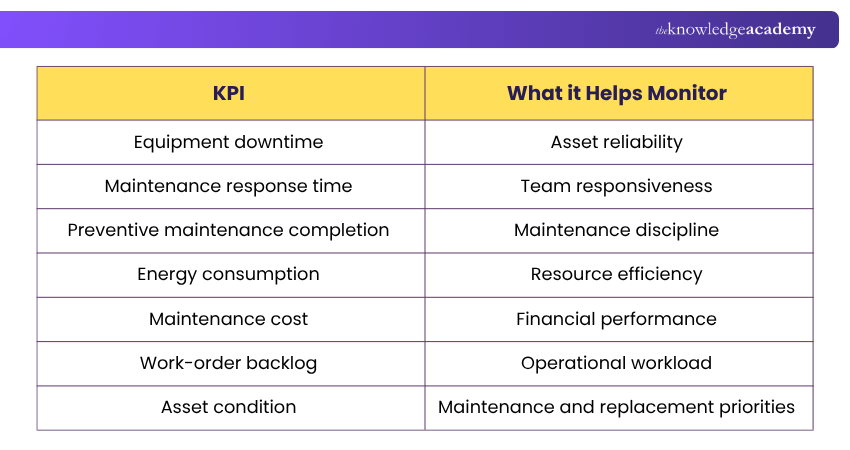
Here are the Key Performance Indicators (KPIs) for facilities management to keep in mind:
12) Create an Asset Inventory
Maintaining a comprehensive asset inventory is a key component of effective facilities management. An accurate inventory helps you track the condition, location, and value of all assets within your facility. This information is crucial for planning maintenance, budgeting, and making informed decisions pertaining to repairs or replacements. A well-maintained asset inventory also aids in compliance and risk management, ensuring that your facility meets regulatory standards.
Facilities Management Best Practices Checklist
Use this checklist for a quick review of your current facilities management approach:
☐ Are team roles and responsibilities clearly defined?☐ Does the team receive relevant ongoing training?☐ Is the asset inventory accurate and current?☐ Are critical assets covered by preventive maintenance?☐ Are maintenance activities tracked consistently?☐ Is technology solving a defined operational problem?☐ Are facility teams able to access essential information when needed?☐ Are vendors and site access properly managed?☐ Are energy and resource use regularly monitored?☐ Are facility costs reviewed against operational performance?☐ Are useful KPIs reported to relevant decision-makers?☐ Is facility data being used to identify improvement opportunities?

Shristi Roy is a Content Writer with experience in journalism, article writing and web content development. Her experience researching and writing about Business Skills and Accounting and Finance enables her to communicate specialised information through clear, engaging narratives.
View Detail

 If you wish to make any changes to your course, please


