




We may not have the course you’re looking for. If you enquire or give us a call on 01344203999 and speak to our training experts, we may still be able to help with your training requirements.
What is Discrimination in the Workplace: A Complete Guide
ByThe Knowledge AcademyLast updated on: 22 September 2026
Workplace Discrimination is unfair treatment of employees or applicants based on traits like gender, age, religion, disability, or sexuality, instead of merit. It can affect hiring, pay, promotions, and everyday workplace decisions. Most employment laws prohibit this behaviour and aim to protect equal and fair opportunities for everyone.
Have you ever left work feeling frustrated, ignored, or treated differently without knowing exactly why? For many people, Workplace Discrimination doesn’t come as a clear event, it appears in everyday comments, decisions, or rules that slowly affect confidence and well-being. When people feel judged instead of respected, work stops feeling fair or motivating.
In this blog, we explain What is Discrimination in the Workplace. You will explore examples, prevention steps, employee rights, and its impact on business performance and culture. Let's get started!
What is Discrimination in the Workplace?
Workplace Discrimination happens when an employee or job applicant is treated unfairly because of personal characteristics like race, gender, age, religion, disability, or sexual orientation. It affects key employment decisions, including hiring, pay, promotion, and dismissal, and is generally unlawful under employment laws.
It arises when decisions are made based on protected traits rather than merit, which reflects What is Discrimination in the Workplace. It may also appear as harassment or a failure to provide reasonable accommodations for individual needs.
What Discrimination at Work Looks Like:
1) Unequal Pay: Paying someone less for the same role due to gender, race, or another protected trait
2) Biased Hiring or Promotion: Rejecting or overlooking candidates because of age, disability, or background
3) Harassment: Unwelcome verbal or physical behaviour linked to a protected characteristic
4) Unequal Training Access: Denying learning or development opportunities to certain groups
5) Retaliation: Penalising someone for raising a discrimination concern or supporting an investigation
6) Failure to Accommodate: Not making reasonable adjustments for disabilities or religious needs

Examples of Discrimination in the Workplace
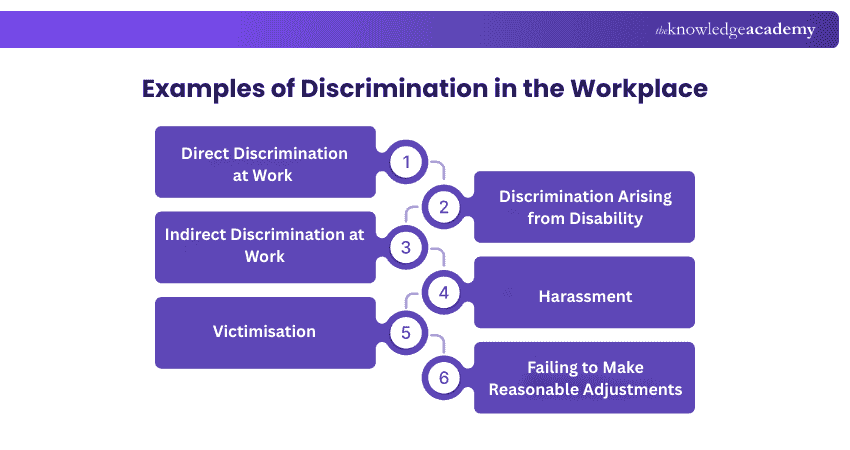
Discrimination at work can appear in many ways, from direct unfair treatment to workplace rules or behaviours that disadvantage certain employees. Understanding these examples helps identify issues early and promotes a fair, inclusive work environment, as outlined below.
1) Direct Discrimination at Work
Direct discrimination occurs when someone is considered less favourable due to a protected characteristic such as age, gender, religion, disability, or mental health. It can also include unfair treatment based on assumptions or association with a disabled person.
Example: Refusing to promote an employee because they have a mental health condition or because they care for a disabled family member.
2) Discrimination Arising from Disability
This occurs when an employee is treated unfairly due to something linked to their disability, such as sickness absence or reduced performance. If the employer is aware of the disability and still penalises the employee without objective justification, it may be unlawful.
Example: Disciplining an employee for regular absences caused by a long-term health condition.
3) Indirect Discrimination at Work
Indirect discrimination arises when a rule or policy applies to everyone but puts certain people at a disadvantage. Even if the rule seems fair, it may be discriminatory if it negatively affects a specific group and cannot be reasonably justified.
Example: Requiring all employees to work night shifts, which disadvantages someone whose medication causes drowsiness.
4) Harassment
Harassment includes unwanted behaviour, comments, or actions related to a protected characteristic that make someone feel humiliated, offended or uncomfortable. This can involve jokes, remarks, or negative behaviour in the workplace.
Example: Making jokes or negative comments about a colleague’s disability or mental health in front of others.
5) Victimisation
Victimisation occurs when somebody is treated badly for raising a discrimination complaint or supporting another person who has done so. This may include being denied promotion, training or fair treatment as a result.
Example: Passing over an employee for promotion because they supported a colleague’s discrimination complaint.
6) Failing to Make Reasonable Adjustments
Employers are required to make reasonable changes to support employees with disabilities or health conditions. Failing to make these adjustments, such as flexible hours or task changes, can itself be a form of discrimination.
Example: Refusing flexible working hours for an employee with a known medical condition.
Build confidence in managing contracts, disputes, and employee relations. Join our Employment Law Training now!
Steps Employers Can Take to Prevent Workplace Discrimination
If employers want their workplace to be fair and safe, they should actively prevent discrimination. Below are some simple and effective steps that can help build equality in any company.
1) Inclusive Recruitment Practices
Fairness starts during the hiring process. Avoid words in job ads that target a specific group, such as "office girl". Ask all candidates the same questions and avoid questions about personal or protected characteristics.
2) Clear Anti-discrimination Policies
The company should have a strong equal opportunity policy. The policy should clearly state what behaviour is allowed and what is not. It should also explain the protected characteristics and types of discrimination (direct, indirect).
3) Promoting Respect in the Workplace
The workplace culture should be respectful, with employees valuing each other’s differences. When mutual respect exists, discrimination naturally reduces. Leaders should model inclusive behaviour to reinforce this culture.
4) Handling Complaints Promptly and Fairly
If an employee complains of discrimination, the complaint should be taken seriously. The complaint should be handled quickly and confidentially. Good complaint handling makes the staff feel that their voices are being heard.
5) Ongoing Staff Training on Discrimination
Include discrimination awareness training during the onboarding of new employees. Train managers on how to identify discrimination and take appropriate action. Regular refresher sessions help reinforce inclusive behaviours and ensure policies are consistently followed across the organisation.
6) Strong Policy Enforcement Measures
Just writing a policy is not enough. It must be implemented properly and consistently across the organisation. Employees should feel confident that the policy is actively followed and that there is a fair, transparent system for everyone.
7) Regular Policy Review and Improvement
Review your policy at regular intervals to check if it remains effective and relevant. Updating it based on feedback and changes in law helps ensure the workplace stays fair, safe, and inclusive.
Legal Framework and Employee Rights
The legal framework for employee rights sets out the laws that protect employees from unfair treatment and ensure fair, safe, and equal workplaces. It defines employee entitlements and employer responsibilities, covering pay, working conditions, equality, and protection from discrimination, while also providing clear ways to raise concerns and seek justice.
Key Points:
1) Fair wages and timely payment
2) Safe and healthy working conditions
3) Protection against discrimination and harassment
4) Equal opportunities and workplace rights
5) Access to grievance and legal redress mechanisms
The Impact of Discrimination on Business Performance
Discrimination harms business performance by reducing trust, engagement, and productivity while increasing costs and risks. Here are the key impacts on organisations:
Key Points:
1) Reduced Employee Morale: Unfair treatment lowers motivation, confidence, and job satisfaction.
2) Lower Productivity: Disengaged employees are less focused, reducing overall output and quality of work.
3) Higher Absenteeism: Stress and dissatisfaction can lead to more sick days and time off.
4) Increased Staff Turnover: Employees are more likely to leave, raising recruitment and training costs.
5) Legal and Compliance Risks: Discrimination can result in complaints, fines, or legal action.
6) Reputational Damage: A poor workplace image can harm employer branding and customer trust.
Build confidence in managing legal risks and business regulations with our Commercial Law Training – Register now!
How to File a Workplace Discrimination Complaint?
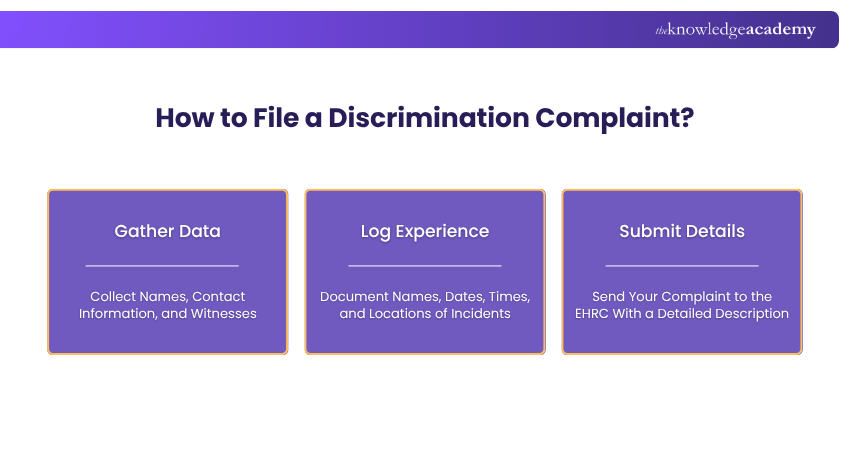
Here’s how you can file a discrimination complaint:
Step 1: Gather Evidence
Collect the important details like the name, phone number, and address of the person involved and the one who experienced discrimination. If possible, gather contact details of any witnesses who can support your claim.
Step 2: Log Your Experience
Create a brief report detailing the events, including information like the names, dates, times, and places. Record all relevant incidents to demonstrate a pattern of discrimination or harassment.
Step 3: Submit a Formal Complaint or Escalate
Send your recorded complaint to an established agency like the Equality and Human Rights Commission (EHRC). You do not need any specific recommendation to submit your complaint; provide a detailed description of the discrimination you have faced.
Is Workplace Discrimination Illegal?
Yes, Workplace Discrimination is illegal in many countries. Laws protect employees and job applicants from unfair treatment based on protected characteristics such as age, gender, race, religion, disability, and sexual orientation. Employers are legally required to provide equal opportunities, prevent discrimination, and take action if it occurs.
Learn essential legal principles affecting the workplace and employment rights with our Employment Law Courses – Join now!

The Knowledge Academy develops accessible learning content across Project Management, IT, Cybersecurity, Data Science, Business Analysis, HR, Accounting and Finance, Leadership and Health and Safety. Its resources combine subject research with clear explanations to help professionals build practical knowledge across a wide range of disciplines.
View Detail

 If you wish to make any changes to your course, please


