




We may not have the course you’re looking for. If you enquire or give us a call on 01344203999 and speak to our training experts, we may still be able to help with your training requirements.
Employee Rights and Responsibilities: All You Need to Know
ByAmelia WilliamsLast updated on: 05 October 2026
This blog provides an overview of employee rights and responsibilities in the workplace. From fundamental entitlements to crucial duties, you can gain comprehensive insights into employee rights and responsibilities. It also covers key legal and ethical considerations, along with relevant workplace best practices.
What's in this Blog
1. Understand the key rights employees have in the workplace.2. Explore the main responsibilities and duties of employees.3. Learn about legal protections against discrimination and unfair treatment.4. Discover the importance of workplace safety, fairness, and respectful behaviour.5. Understand how employee rights and responsibilities support a productive work environment.
At the heart of every organisation lies its employees, whose collaboration and well-being are pivotal for achieving success and maintaining a positive workplace. From ensuring timely compensation to a secure working environment, there are numerous employee rights. However, alongside these rights come significant responsibilities.
This blog will discuss the intricate dynamics of employee rights and responsibilities in the workplace. Throughout this blog, you can delve into the landscape of rights and responsibilities of an employee in detail. Read on to explore everything in detail.
What are Employee Rights and Responsibilities?
The relationship between employees and employers is guided by legal rights, workplace policies, and agreed responsibilities. Recognising and respecting these is important for creating a fair, safe, and productive work environment.
Employee rights can vary depending on employment status and other legal conditions, but commonly include protection from discrimination, fair pay, safe working conditions, privacy protections, and rights relating to trade union membership.
Employee responsibilities refer to the duties employees are expected to fulfil at work. These can include following workplace policies and lawful instructions, carrying out their role with reasonable care, protecting confidential information, following health and safety procedures, treating colleagues fairly and respectfully, and reporting concerns or hazards where appropriate. Together, employee rights and responsibilities help support accountability, trust, and effective working relationships.

Essential Rights of an Employee
Every employee has several basic rights while they are employed. An encouraging work environment is built on these rights, which guarantee that employees are treated with respect and decency. The fundamental rights that each employee in the workplace is entitled to are outlined here:
1) Terms of Employment
In order to promote an open and mutually productive working relationship, it is essential that both employers and employees comprehend the terms of employment. Key terms of employment commonly include the following:
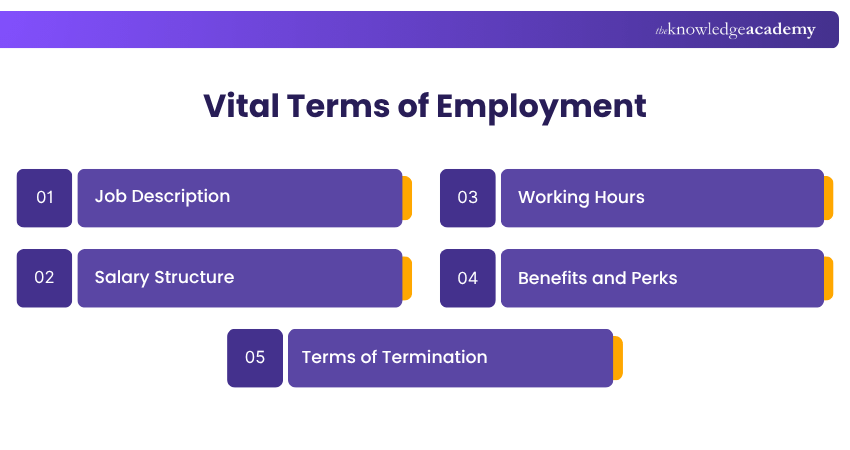
a) Job Description: Employees are generally entitled to a written statement setting out key employment particulars, including their job title or description, pay, working hours, holiday entitlement and other relevant terms. In addition, it includes any special responsibilities that are particular to their position.
b) Salary Structure: It is critical that the pay structure be understood. This mostly includes agreed-upon remuneration, the mode of payment, and so on. Employees should also be aware of the factors that determine their pay, including any bonuses or incentives.
c) Working Hours: Employees must know about the normal working hours and if there is schedule flexibility. Along with any necessary overtime information, this also covers any considerations for working outside of usual business hours.
d) Benefits and Perks: Employees should be informed about any contractual or workplace benefits that apply to them, such as pension arrangements, paid leave or other benefits offered by the employer.
e) Terms of Termination: There should be a clear definition of the employment termination conditions. Mostly, notice durations and any relevant termination provisions fall under this category. Both employers and employees benefit from understanding the processes and termination implications.
The above-discussed components can create a thorough understanding of the employment relationship. They also lay the groundwork for an easy and open connection between employers and employees.
2) You Must not be Discriminated Against
Discrimination occurs when employees face unjust treatment due to traits that are protected under the 2010 Equality Act. Mostly, those traits include race, religion or belief, sex and sexual orientation, age, disability, gender reassignment, marriage and civil partnership and pregnancy and maternity.
Employees are protected from unlawful discrimination at work. If discrimination is suspected, it is important to identify the protected characteristic involved and the type of discriminatory treatment that may have occurred.
3) Timely Salary and Bonus Payments
Employees are entitled to receive wages or salary that are contractually or legally due, subject to lawful deductions. Bonuses may also be payable where they form part of the employee's contractual entitlement or applicable bonus scheme.
4) Ensuring Health and Safety
Every employee has the right to work in a safe and conducive environment for their well-being. Hence, employers should provide a work environment that is safe and secure for their employees. They should also implement safety measures, providing necessary safety equipment. Additionally, proper training is essential to ensure employees' safe performance.
Pro Tip
If you identify a workplace hazard, report it promptly through the appropriate workplace procedure rather than assuming someone else will address it.
5) Minimum Wage Entitlement
Eligible workers are entitled to at least the applicable National Minimum Wage or National Living Wage rate, depending on factors such as age and employment circumstances. This varies based on the region and is designed to establish a baseline standard for fair compensation.
6) Leave and Vacation Benefits
Maintaining a healthy work-life balance requires being aware of and making use of leave and vacation benefits. Let's examine how to utilise these employee benefits to the fullest:
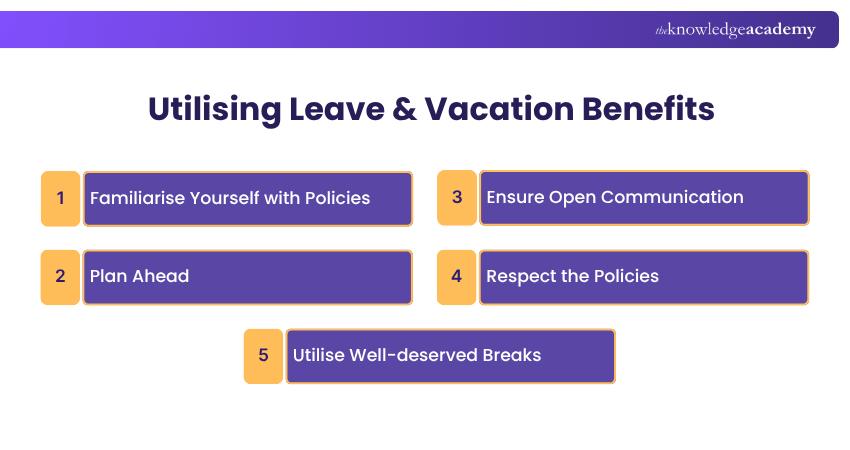
a) Familiarise Yourself with Policies: Take the time to understand the company's leave and vacation policies. Knowing the details ensures you can make informed decisions about your time off.
b) Plan Ahead: When possible, plan your leaves in advance. This can result in better team coordination and seamless continuation of work.
c) Ensure Open Communication: When seeking time off, you must discuss it with your supervisor or the HR department. This can also ensure a hassle-free experience and process comprehension.
d) Respect the Policies: Adhere to company policies regarding the maximum duration and frequency of leaves. Respecting these guidelines ensures fairness and consistency for all employees.
e) Utilise Well-deserved Breaks: Take advantage of your vacation benefits to recharge and rejuvenate. A well-rested employee is more likely to be productive and engaged upon return.
By embracing these principles of managing leave and vacation benefits, employees can foster a positive work environment. Moreover, it also helps improve work-life balance and employee well-being.
7) Obligations During the Notice Period
Throughout the notice period, employers and employees have multiple rights and responsibilities, often guided by the Advisory, Conciliation and Arbitration Service (ACAS). This is mostly the period from the date of resignation to the last employment day. You will be expected to perform your job during this period. In addition, employers must adhere to the correct protocols as specified in employment contracts.
8) Protection Against Sexual Harassment
One of the essential rights of every employee is a sexual harassment-free workplace. To ensure this, employers must take the following steps:
a) Policy Implementation: All employees must be made aware of and able to comprehend clearly specified policies. These policies define harassment, describe how complaints are made, and describe what happens when harassment occurs.
b) Prevention Measures: Arranging frequent training sessions and raising awareness are proactive steps. These steps can promote a culture that forbids harassment and fosters a courteous workplace.
c) Reporting Mechanisms: It is necessary to provide clear, and private channels for reporting incidents. This can also comfort people coming forward without worrying about facing consequences.
d) Investigation Procedures: In order to effectively combat sexual harassment, comprehensive, unbiased inquiries into cases must be reported. These must be conducted in accordance with your discretion.
e) Disciplinary Action: Where a complaint is substantiated, employers should take appropriate action in line with workplace policies, applicable law and the seriousness of the conduct.
f) Protection from Retaliation: To ensure job security and a positive work environment, employees who report occurrences should be protected from reprisal.
Employers can create a harassment-and-discrimination-free work environment through these elements. This dedication also helps an organisational culture focus on professionalism, equality, and respect. Promoting an equitable and encouraging work environment requires understanding of these rights. By valuing employees and fostering a positive work environment, employers and employees can ensure that these essential rights are upheld.
Myth vs Reality
Myth: Employee rights are the same in every country and workplace.Reality: Employment rights can vary according to applicable law, employment status, contractual terms and individual circumstances. Workplace policies may also provide additional procedures or benefits.
Unlock your HR potential in the digital age with the Digital Transformation in HR Training – Sign up now!
Responsibilities of Employees in the workplace
Employees are essential to the success and smooth operation of the workplace. They are mostly responsible for carrying out their allocated responsibilities. Sustaining a positive and effective work environment requires understanding and carrying out these obligations. The following points can adhere you to the principal duties that employees should fulfil at work:
1) Collaborative Team Member
In fostering a positive workplace, understanding and embracing collaborative team dynamics are essential. Let's explore how to be an effective collaborative team member:
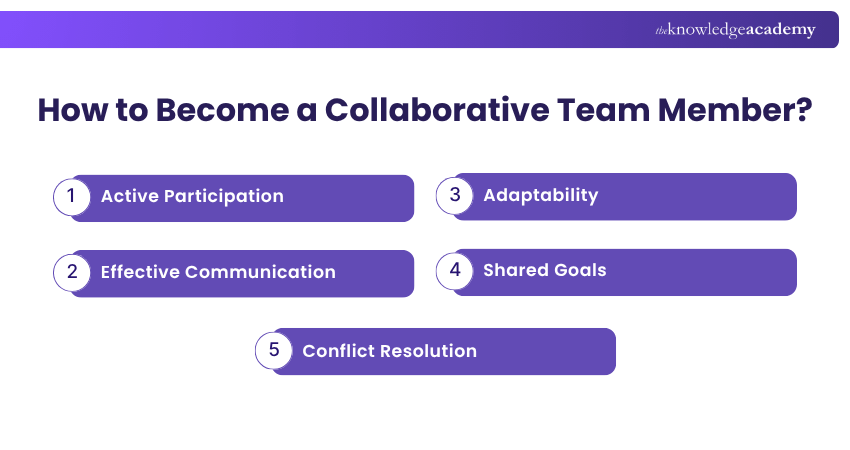
a) Active Participation: To promote a collaborative environment, you must actively participate in team meetings. Seek out chances to impart your knowledge and perspectives, enhancing the team's overall intelligence.
b) Effective Communication: You should make sure that your teammates can communicate clearly and openly. In addition, you must create an atmosphere where everyone feels heard and accepts constructive criticism.
c) Adaptability: Embrace flexibility and adapt to changing team dynamics, demonstrating a willingness to work harmoniously. Be open to new ideas and readily adjust your approach to align with the evolving needs of the team and the organisation.
d) Shared Goals: Align individual efforts with team objectives, emphasising collective success over personal achievements. Cultivate a mindset that values collaboration, ensuring that your actions contribute positively to the achievement of common goals.
e) Conflict Resolution: Approach conflicts constructively, seeking resolutions that benefit the team's overall well-being. Be adept at navigating disagreements, focusing on finding common ground and maintaining a harmonious working relationship.
By embodying these collaborative principles, you contribute to a team-oriented culture that elevates the entire workplace environment.
2) Pursuing Common Objectives
A collective commitment to common goals strengthens the company's position and promotes a sense of unity among team members. So, employees should align their efforts with the organisation's goals. Let's explore the common objectives:
a) Unified Vision: Develop a shared vision within the team, ensuring that every member understands and aligns their efforts with common objectives. A cohesive vision provides a roadmap for collective achievement.
b) Goal Clarity: You shouldn't leave any space for doubt when defining and communicating shared goals. Team members can put their efforts to use more effectively and produce meaningful results. To do this, they should have a clear understanding of common objectives.
c) Collaboration: Encourage team members to actively collaborate by fostering a collaborative culture. To encourage a group approach to problem-solving, encourage candid conversation and the sharing of ideas.
d) Individual Contribution: Recognise and value each team member's unique contributions to achieving common objectives. Acknowledging diverse skills and strengths enhances the overall capability of the team.
e) Continuous Alignment: Regularly revisit and realign team objectives as needed, considering evolving circumstances. A dynamic approach ensures that common objectives remain relevant and adaptable to the ever-changing landscape.
By pursuing these principles of common objectives, teams can foster a collaborative environment that maximises their collective potential, leading to shared success within the workplace.
3) Participation in Orientation and Meetings
Employees are responsible for participating in orientation sessions and meetings organised by the company. This ensures that they stay informed about the organisation's policies, procedures, and any updates relevant to their roles. Actively engaging in such sessions reflects a commitment to staying well-informed and aligned with company directives.
4) Managerial Duties and Expectations
Employees with supervisory or managerial responsibilities may have additional duties relating to team leadership, performance and workplace compliance. This involves overseeing and guiding team members, ensuring that they meet their targets and goals. Effective leadership and management contribute significantly to the overall success of the organisation.
5) Safe Work Practices
Adhering to safe work practices is a fundamental responsibility for every employee. This includes using safety equipment as required, following established safety guidelines, and proactively identifying and addressing potential hazards. Prioritising safety not only safeguards the individual but also contributes to a secure and healthy work environment.
6) Respectful and Non-discriminatory Conduct
Maintaining a respectful and inclusive workplace is a shared responsibility. Employees must adhere to the employee code of conduct by refraining from engaging in offensive conduct, including discriminatory behaviour or harassment. Treating colleagues with respect and dignity fosters a positive work culture and contributes to a supportive atmosphere for all.
Ignite change and foster inclusivity with our Direct and Indirect Discrimination Training – Sign up now!
7) Compliance with Company Regulations
Respecting the policies of an organisation can keep the workplace productive and peaceful. Let us examine the fundamental concepts related to guaranteeing adherence:
a) Familiarity with Policies: Employees ought to be knowledgeable about the rules and policies of the company. They should also comprehend how they apply to their behaviour on the job.
b) Timely Updates: Make sure that employees are aware of and follow the most recent policies. They should also keep themselves updated on any modifications or changes to company policies.
c) Training and Awareness: To improve employee understanding of corporate policies, particularly those related to corporate and commercial law, provide frequent training sessions. This can result in the reduction of inadvertent infractions and foster a culture of compliance.
d) Accountability: Hold employees accountable for compliance with company regulations. Establish clear consequences for violations, promoting a sense of responsibility among the workforce.
e) Reporting Mechanism: Implement an effective reporting mechanism for employees to raise concerns or seek clarification regarding company regulations. This encourages transparency and ensures swift resolution of any compliance-related issues.
f) Regulatory Alignment: Ensure that company regulations align with legal requirements and industry standards. Frequently review and update policies to reflect changes in the business landscape and legal framework.
g) Continuous Monitoring: Establish mechanisms for continuous monitoring of compliance. Regular audits and assessments help identify areas for improvement and ensure ongoing adherence to company regulations.
These guidelines can help organisations build a strong foundation. They can also encourage an attitude of accountability and responsibility among employees, improving the success of the workplace. These responsibilities also allow employees to play a decisive role in the organisation's overall success and positive culture.
Here's a quick look at the rights and responsibilities of employees:
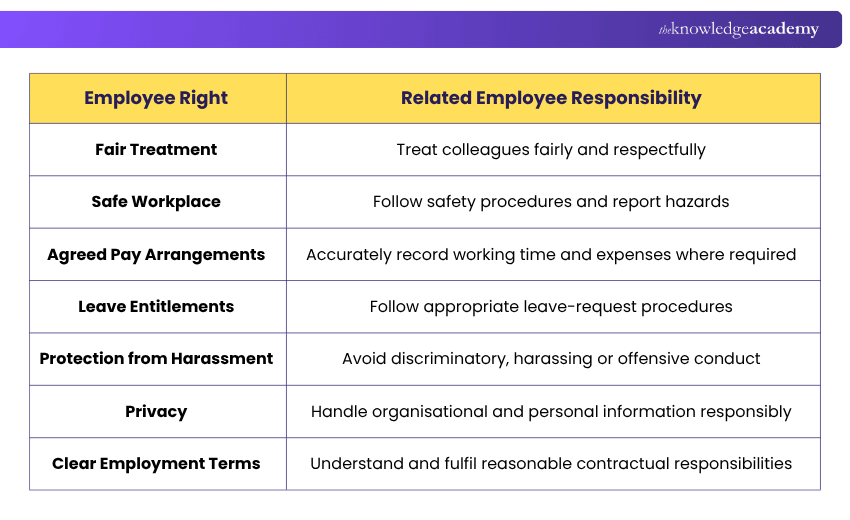
So, employee rights and responsibilities help shape fair, safe and productive workplaces. Rights provide important protections and entitlements, while responsibilities establish expectations around conduct, performance, safety and collaboration.

Amelia Williams develops practical resources that help organisations strengthen their people practices and respond to workplace challenges. Her writing supports professionals in creating productive, inclusive environments in which employees can develop and perform effectively.
View Detail

 If you wish to make any changes to your course, please


