




We may not have the course you’re looking for. If you enquire or give us a call on 01344203999 and speak to our training experts, we may still be able to help with your training requirements.
Different Types of Fire Safety Equipment: All You Need to Know
ByNilotpal SarmahLast updated on: 18 September 2026
Fire safety equipment refers to a variety of tools, devices, and gear designed to prevent, identify, control and mitigate the impact of fires. This blog explains different types of fire safety equipment and how they help during fire emergencies.
What's Inside this Blog
1. Fire safety equipment supports fire detection, control, suppression, evacuation and protection.2. Different fire risks require equipment suited to the specific hazards and environment.3. Smoke alarms and other detectors provide early warning, while sprinklers and suppression systems help control fires.4. Fire doors, emergency lighting and safety signs support safer evacuation.5. Fire safety equipment needs suitable placement, accessibility, inspection and maintenance to remain effective.
Imagine a fire starts unexpectedly in a busy building. Within seconds, a smoke alarm sounds, emergency lighting guides people towards an exit and a nearby sprinkler begins controlling the flames. Each piece of equipment has a different job, but together, they can make a critical difference.
That is why understanding fire safety equipment matters. From early detection and fire suppression to safe evacuation, the right equipment helps protect people and property when every second counts. In this blog, we’ll explore the different types of fire safety equipment, what they do and where they fit into an effective fire safety system.
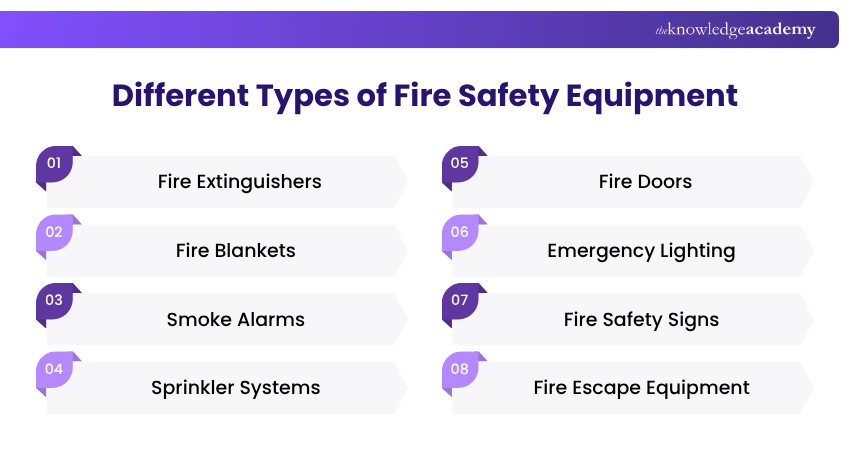
Types of Fire Safety Equipment
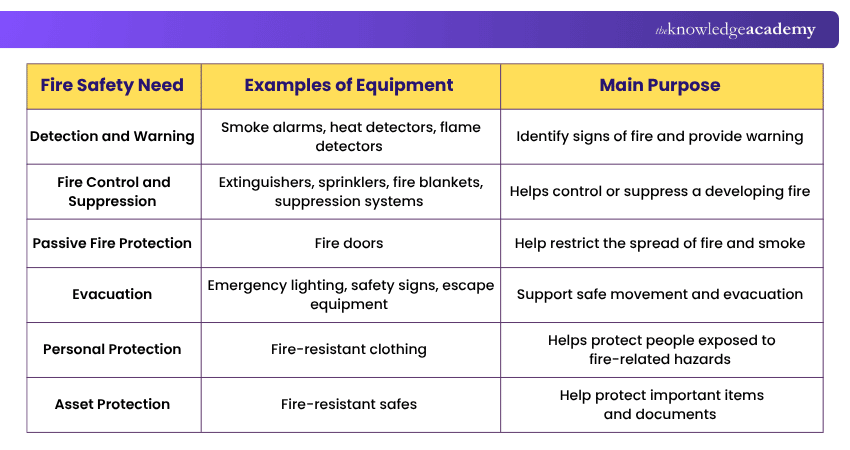
Fire safety equipment covers a broad range of devices, systems and protective equipment. Some provide early warning, while others help control fires, restrict their spread or support evacuation. Let’s explore them in detail:
1) Fire Extinguishers
Fire extinguishers are one of the most important pieces of fire safety equipment. They suppress small, controllable fires or reduce spread while waiting for the fire brigade. Evacuation should remain the priority where the fire cannot be controlled safely. As discussed earlier, there are a variety of fire extinguishers that are meant to put out specific classes of fire:
a) Water Fire Extinguishers: These are primarily suitable for Class A fires involving solid combustible materials like wood, paper and textiles. Water cools the burning material and helps prevent re-ignition.
b) Foam Fire Extinguishers: Foam extinguishers can be suitable for Class A and Class B fires. They cool burning materials and, on suitable flammable-liquid fires, form a layer over the fuel surface.
c) Dry Powder Fire Extinguishers: Dry powder extinguishers can be used on several types of fire, depending on the powder and extinguisher classification. They primarily work by interrupting the chemical reaction involved in combustion.
d) Carbon Dioxide (CO2) Fire Extinguishers: CO2 extinguishers are commonly used where electrical equipment is involved and can also be suitable for certain flammable-liquid fires. They suppress the fire mainly by displacing oxygen around the flames.
e) Wet Chemical Fire Extinguishers: These are designed primarily for Class F fires involving cooking oils and fats. They cool the burning oil and create a layer over the surface that helps prevent re-ignition.

2) Fire Blankets
Fire blankets are made of materials that are flame-resistant and can be used to smother a small fire by cutting off oxygen. For instance, they would be most useful in instances of kitchen fires or to wrap around an individual whose clothes are on fire.
3) Smoke Alarms
Smoke alarms are the backbone of any fire safety system and can detect a fire at a very early stage. Smoke alarms provide early warning, giving occupants time to evacuate, giving occupants time to evacuate and raise the alarm. Test smoke alarms often to ensure they work properly.
4) Sprinkler Systems
Sprinkler systems are an active means of fire protection that can control, suppress and extinguish fires. Each sprinkler head is individually heat-activated; the entire system does not engage at once, limiting water damage.
5) Fire Doors
These are specially designed doors that can resist the spread of smoke and fire between sections of a building. They provide a protected escape route for occupants. Fire doors should remain unobstructed and be maintained so that they can perform the intended function during a fire.
6) Emergency Lighting
Emergency lighting systems are used to supply much-needed lighting to a means of escape when the normal power supply is disconnected, thereby allowing safe and efficient evacuation. They ought to be tested regularly to ensure they function when the power is off.
7) Fire Safety Signs
Fire safety signs are widely used to indicate the location of fire safety equipment, escape routes, and assembly points. They provide vital information and instructions during a fire emergency.
Trainer's Insight
Emergency lighting, safety signs and escape routes should work together. Lighting makes routes visible, signs provide direction and properly maintained escape routes allow occupants to reach a safer location.
8) Fire Escape Equipment
Multi-storey buildings must have fire escape equipment, such as escape ladders and evacuation chairs. The equipment ensures safe and fast evacuation of the building for all users, including those with mobility issues, in the event of a fire.
9) Fire and Smoke Detectors
While smoke alarms are most common by a large margin, other types include heat and flame detectors. Heat detectors produce fewer false alarms and are therefore often used in applications such as kitchens, where smoke is part of normal operation. Flame detectors are used for the most demanding applications and can detect either the infrared or ultraviolet light produced by a fire.
10) Fire Suppression Systems
Fire suppression systems are typically located in environments such as data centres, or with high-value fire safety equipment, where a sprinkler system would cause extensive damage. Depending on the application, they may use water, foam, gas or other suppression agents.
Empower yourself with vital skills to protect lives and property from fire incidents by signing up for our Fire Risk Assessment Training today!
11) Fire Hoses
Often found in commercial and industrial settings, fire hoses provide a high volume of water to combat larger fires. However, they require training to use them effectively.
12) Fire-resistant Safes
For businesses and homes, fire-resistant safes can protect valuable or important items from fire damage. While not preventative, these can protect assets and important documents.
13) Fire-resistant Clothing
In certain environments, especially industrial and firefighting settings, fire-resistant clothing is essential. This can range from overalls and boots to full firefighting suits and helmets.
14) Fire Buckets
Sand-filled fire buckets may still be used in some specialist settings for small spill or fire-control purposes where identified by the site’s fire-risk assessment.
15) Fire Escape Chutes
Fire escape chutes are most often used in larger buildings, and especially industrial ones, offering quick and safe evacuation of people from the upper floors. They are crucial when stairwells are inaccessible or the situation is too dangerous to use them. These systems are part of the broader fire safety requirements for buildings, ensuring that occupants have safe evacuation routes in emergencies.
Fire Extinguisher Storage & Accessories
Beyond the availability of fire extinguishers, proper storage and accessibility to them in case of a fire emergency are crucial aspects of fire safety. Here we explore various storage solutions and accessories that help not only in maintaining fire extinguishers but also in ensuring they are accessible during an emergency:
1) Fire Extinguisher Brackets
The brackets are designed to securely hold an extinguisher on the wall or in a vehicle, providing easy accessibility and organisational convenience. These brackets come in various sizes and are made from metal and plastic to accommodate all types of extinguishers. Installation is done at an easily accessible height and in visible locations to enable quick action during a fire emergency.
2) Fire Extinguisher Cabinets
Fire extinguisher cabinets offer enhanced protection from dirt, tampering, and incidental damage. Constructed from materials like steel, aluminium, or plastic, they are typically fitted with a glass or breakable plastic front to maintain visibility while ensuring security. Cabinets are particularly valuable in aesthetically sensitive areas or where additional protection of the extinguisher is necessary.
3) Fire Extinguisher Stands & Trolleys
Where wall mounting is impractical, fire extinguisher stands, and trolleys offer flexible and mobile solutions. Stands are ideal for open areas where extinguishers need to be visible and accessible from multiple directions. Trolleys suit larger premises such as workshops or industrial sites where extinguishers might need to be moved quickly over a distance. These units are designed to be portable, often featuring wheels and the capacity to carry one or more extinguishers.
Proper storage of fire extinguishers encompasses more than just creating space for them. Key considerations include:
a) Ease of access
b) Protection from environmental conditions
c) Compliance with local fire safety codes
d) Regular inspections to ensure storage methods remain functional
Build life-saving skills with the Fire Extinguisher Training today – Sign up now!
How to Choose the Right Fire Safety Equipment?
Choosing fire safety equipment is not simply about having as many devices as possible. The appropriate combination depends on the hazards present, building layout, occupancy, evacuation needs and relevant fire safety requirements. A fire risk assessment can help you detect potential hazards, people who may be at risk and the measures required to manage those risks.
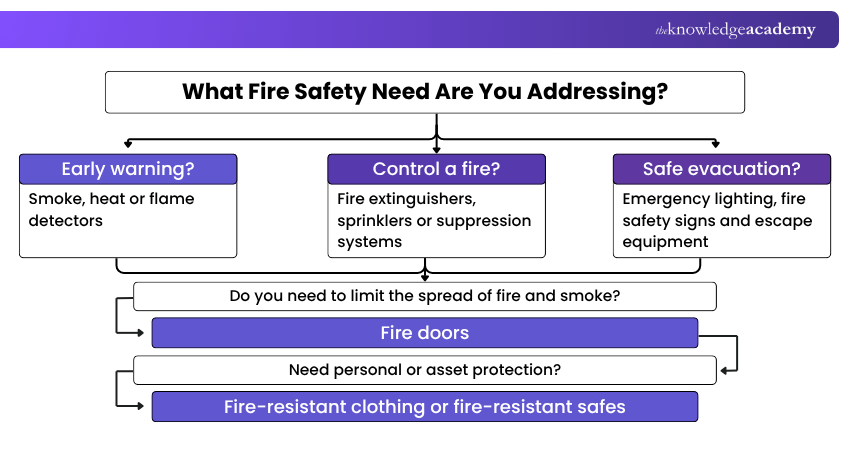
So, fire safety equipment plays different but interconnected roles in detecting fires, controlling their spread, protecting occupants and supporting evacuation. Selecting suitable equipment, keeping it accessible and maintaining it properly can help create a more effective overall fire safety system.
Step into the role of a Fire Marshal and make safety a daily priority. Sign up for our Fire Marshal Training today!

Nilotpal Sarmah is a Senior Content Writer with 11+ years of overall experience spanning engineering, operations and content development. His technical knowledge and extensive writing experience enable him to simplify specialised topics across IT and Tech, Business Skills, Project Management, Health and Safety, and ISO and Compliance.
View Detail

 If you wish to make any changes to your course, please


