


 Top Rated Course

We may not have the course you’re looking for. If you enquire or give us a call on 01344203999 and speak to our training experts, we may still be able to help with your training requirements.
Top 30+ Data Integration Tools to Consider in 2026
The Knowledge Academy 16 July 2026Data Integration Tools combine data from multiple sources into a unified view, enabling analysis, reporting, and consistent access across systems. They make Data Management faster, reduce errors, and give businesses a clear, unified view for better decision-making. They can work with cloud, on-premises, or hybrid systems.

Training Outcomes Within Your Budget!
We ensure quality, budget-alignment, and timely delivery by our expert instructors.
Table of Contents

Scattered data is like a puzzle without a picture; it is frustrating and incomplete. You have all the pieces, but without bringing them together, you can’t see the full story your business data is trying to tell. That's where you need to explore the Data Integration Tools to connect all your data sources into one clear, organised view.
Integrating scattered data shouldn’t mean wasting hours searching for missing details or fixing mismatched information. In this blog, you can explore 30+ best Data Integration Tools, what they offer, and how to choose the one that’s right for you. Let’s get started!
Table of Contents
1) What are Data Integration Tools?
2) Top Data Integration Tools
a) Adverity
b) Hevo
c) AWS Glue
d) Celigo
e) Ketch
f) Informatica PowerCenter
g) Dell Boomi
h) Oracle Data Integrator (ODI)
i) FME
j) Fivetran
3) Conclusion
What are Data Integration Tools?
Data Integration Tools are software programmes that help combine data from different sources, like databases, cloud apps, files, or APIs, and merge them into a single, unified view. This makes it easier to analyse the data, report, and make decisions.
They allow you to do tasks like:
1) Data Access: Getting data from different systems
2) Data Transformation: Cleaning, formatting, or changing data to fit your needs
3) Data Enrichment: Adding extra details to make your data more useful
4) Data Delivery: Sending the prepared data to the right system for analysis
In short, Data Integration Tools bring scattered data together, ensuring it is accurate and consistent.

Top Data Integration Tools
Let us check the top 30+ Data Integration Tools that can benefit you highly:
1) Adverity
Adverity is a Data Integration Tool made for marketing and analytics teams. It has one of the largest data connectors for marketing, e-commerce, and analytics sources. It helps teams bring data together, clean, manage, and create clear reports from it.
Key Features:
1) Connects to 600+ marketing and e-commerce platforms
2) Cleans and organises data automatically
3) Creates easy-to-read reports and charts
2) Hevo
Hevo is a no-code data pipeline platform that automates collecting data and loading it into your data warehouse. It processes data in real time with low latency, so your reports and dashboards always use the most up-to-date information.
Key Features:
1) Works with 150+ sources
2) Moves data instantly in real time
3) Fixes errors without manual work
3) AWS Glue
AWS Glue is a fully managed, serverless Extract, Transform, Load (ETL) service from Amazon Web Services (AWS). Glue integrates with AWS services like S3, Redshift, and data lakes, making it easy to prepare and load data in a flexible way to manage large-scale data processing.
Key Features:
1) Supports automation and removes complex server setup
2) Serverless and scalable
3) Built-in data catalog for Metadata Management
Experience with AWS tools in Big Data with our Big Data on AWS Training – Register immediately!
4) Celigo
Celigo is a cloud-based Data Integration Tool that connects and automates data flows between different business applications. It has a wide range of pre-built connectors and integration templates to sync data, streamline workflows, and automate processes without heavy coding.

Key Features:
1) Works for both technical and non-technical users
2) Ensures accurate and real-time data movement
3) Connects systems like ERP, CRM, e-commerce, and other SaaS tools
5) Ketch
Ketch is a Data Privacy Management tool that helps automate compliance with changing regulations. It offers tools for Consent Management, data mapping, and handling data subject requests. It manages personal data while supporting business growth.
Key Features:
1) Manages consent and data access
2) Automates compliance with GDPR, CCPA, and global regulations
3) Integrates privacy policies into data pipelines
6) Informatica PowerCenter
It is an AI-powered platform for managing data across multi-cloud and hybrid environments. Its mission is to help organisations fully utilise their data assets and drive digital transformation.
Key Features:
1) High-performance ETL engine
2) Data quality and governance tools
3) Cloud, on-premise, and hybrid systems
7) Dell Boomi
It is a cloud-based integration tool that connects apps, data, and processes across different systems. It provides a wide range of tools to build, deploy, and manage integrations quickly and efficiently.
Key Features:
1) Drag-and-drop interface
2) Works with both cloud and on-site data
3) Tracks processes in real time
8) Oracle Data Integrator (ODI)
It is a powerful tool for integrating and transforming data from various sources into Oracle databases. It is designed for organisations that need robust integration capabilities and seamless compatibility with the Oracle ecosystem.
Key Features:
1) High-volume batch loading
2) Integration with Oracle databases and apps
3) ELT architecture for better performance
9) FME
FME, developed by Safe Software, specialises in spatial and geospatial data, making it ideal for industries that work with maps, GIS, and location-based information. It offers a visual workflow builder, enabling users to connect, transform, and automate data without heavy coding.
Key Features:
1) Supports 450+ data formats
2) Visual workflow builder
3) Advanced Geographic Information System (GIS) capabilities
10) Fivetran
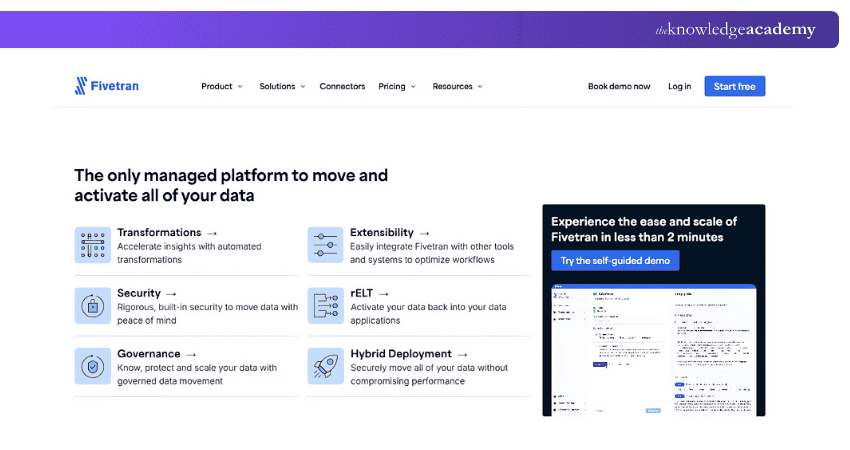
Fivetran is a cloud-based ELT platform that automates the setup and Data Pipelines Management. It offers over 300 pre-built connectors to various data sources and moves the data into a central destination, such as a data warehouse, table, or spreadsheet.
Key Features:
1) Automated schema updates
2) Low-maintenance pipelines with minimal setup
3) Real-time replication
11) IBM InfoSphere DataStage
IBM InfoSphere DataStage integrates, transforms, and loads data from diverse sources into target systems. It is built for large-scale projects, offering high performance through its parallel processing engine.
Key Features:
1) Fast integration for large data volumes
2) Supports big data and Hadoop
3) Pre-built databases and cloud platforms like Oracle, SQL Server, AWS, etc.
12) Ab Initio
Ab Initio is ideal for high-performance processing and complex Data Management. It supports both batch and real-time processing, making it suitable for large-scale, data-intensive operations.
Key Features:
1) Handles massive datasets
2) Complex transformation capabilities
3) Fault-tolerant architecture
13) Jitterbit
Jitterbit is a data and application integration tool that connects and synchronises data, applications, and systems across an organisation’s IT environment.
Key Features:
1) API creation and management
2) Drag-and-drop interface
3) Pre-built templates
14) SQL Server
SQL Server is an ETL tool for data integration and transformation. It enables businesses to extract, transform, and load data from multiple sources into SQL Server and other destinations.
Key Features:
1) Tight integration with the Microsoft ecosystem
2) Visual workflow design
3) Strong data transformation tools
Explore various database performance and data retrieval with our DB2 SQL Training – Join now!
15) Microsoft Azure Data Factory
It is used to collect, process, and move data from multiple sources to desired destinations. It supports hybrid data integration, allowing you to work with both cloud and on-premise systems.
Key Features:
1) Hybrid data integration
2) 90+ built-in connectors
3) Serverless architecture
16) Qlik Replicate
It is an enterprise-grade data integration and replication platform that enables organisations to move data in real-time across databases, data warehouses, and cloud systems. It simplifies complex data pipelines with automation and ensures minimal downtime during migrations.
Key Features:
1) Real-time data replication
2) Wide support for databases and cloud platforms
3) Zero-downtime migrations
17) Denodo Platform
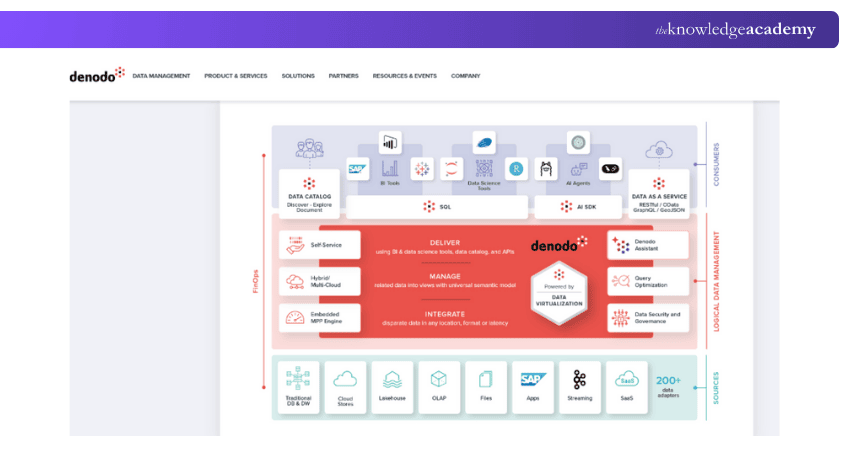
The Denodo Platform is a data virtualisation solution that enables real-time access to structured and unstructured data across multiple sources. It includes enterprise systems, big data, and cloud platforms.
Key Features:
1) Real-time data access
2) No need for data replication
3) Unified virtual data layer
18) Alteryx Designer
This is a self-service data analytics tool that allows users to prepare, blend, and analyse data using a visual drag-and-drop interface. You can create repeatable workflows, deploy analytics at scale, and turn raw data into actionable insights in hours instead of weeks.
Key Features:
1) No-code/low-code interface
2) Predictive analytics integration
3) Advanced data blending
19) Pentaho
Pentaho is a business analytics tool that combines data integration, reporting, and visualisation capabilities. It enables you to prepare, analyse, and present data from multiple sources in a single environment.

Key Features:
1) Business analytics
2) Dashboarding and reporting
3) Seamless integration with Pentaho Data Integration
20) SAP Data Services
SAP Data Services extracts, transforms, and loads data from various sources into SAP applications and other target systems. It includes features for data profiling, cleansing, and text data processing.
Key Features:
1) Text data processing
2) Data profiling and cleansing
3) Integration with SAP systems
21) SnapLogic
SnapLogic is an AI-powered Integration Platform as a Service (iPaaS). With this, you can design, automate, and manage data integration workflows through a visual interface.
Key Features:
1) Pre-built connectors called Snaps
2) AI-based pipeline recommendations
3) Cloud, on-premise, and hybrid support
22) Zigiwave
Zigiwave is an agentless data integration platform that enables seamless connectivity between enterprise applications, databases, and systems.
Key Features:
1) Zero-code configuration
2) Bidirectional sync between systems
3) Focused on ITSM and DevOps tools
Acquire advanced analytical theory and methods with our Big Data Analytics & Data Science Integration Course – Sign up soon!
23) Tray.io
It provides a visual, low-code interface for building integrations and automating business processes across a wide range of applications and systems. It is designed for workflow automation and data integration.
Key Features:
1) Visual workflow builder
2) API integration
3) Flexible automation for SMBs and enterprises
24) Apache Airflow
It is an open-source tool for designing, scheduling, and monitoring data workflows. Airflow offers visual workflow representation, precise task scheduling, and robust monitoring.
Key Features:
1) Python-based workflow definitions
2) Scheduling and monitoring
3) Strong community support
25) Precisely
Precisely specialises in improving data quality, adding location intelligence, and integrating data across modern and legacy systems. You can connect and manage data seamlessly across complex infrastructures.
Key Features:
1) Data quality assurance
2) Real-time data integration
3) Support for mainframes, cloud, and hybrid environments
26) Oracle GoldenGate
This enables secure, low-latency data movement between heterogeneous databases and across cloud, on-premise, and hybrid environments.
Key Features:
1) Low-latency data replication
2) Advanced data transformation and migration capabilities
3) High availability mission-critical operations
27) Talend
Talend provides tools for data integration, quality, and governance. It features a visual interface for designing workflows and supports a wide range of data sources.
Key Features:
1) Data quality and governance
2) Cloud-native
3) Hundreds of connectors
28) Striim
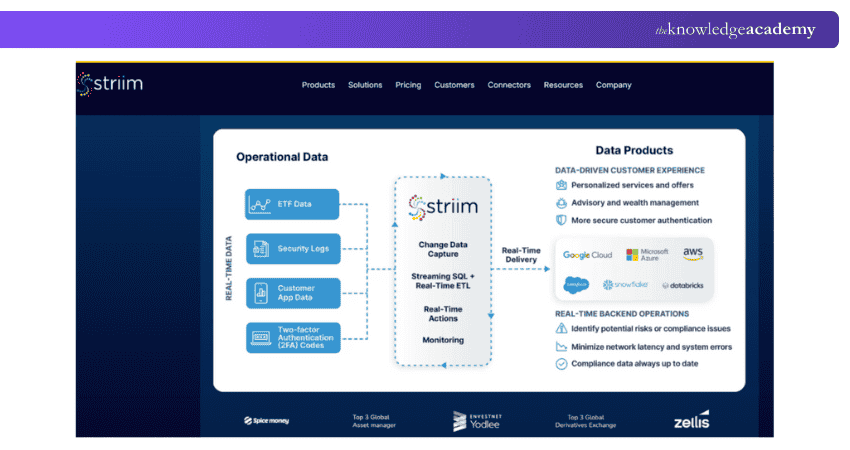
With built-in Change Data Capture (CDC), data transformation, and in-flight analytics, Striim helps organisations keep information up to date for timely insights. It is widely used for real-time integration across cloud, on-premise, and hybrid environments.
Key Features:
1) Low-latency pipelines
2) Built-in analytics
3) Supports cloud migrations
29) HVR Software
HVR software is built to handle large data volumes efficiently while ensuring minimal impact on source systems. It is widely used for keeping databases in sync, enabling live analytics, and supporting large-scale migrations without downtime.
Key Features:
1) High-volume data movement
2) Data compression and encryption
3) Change Data Capture (CDC)
30) TIBCO Platform
TIBCO enables organisations to connect applications, data, and devices in real time. It supports API-led integration, event-driven processing, and advanced data visualisation, with flexible deployment options.
Key Features:
1) Real-time connectivity for applications, data, and devices
2) Event-driven processing for instant responses
3) Advanced data visualisation and analytics
31) Matillion ETL
Matillion ETL allows businesses to extract, load, and transform data at scale using a low-code, visually driven interface, making it accessible to both technical and non-technical users.
Key Features:
1) Built for cloud data warehouses
2) Code-optional design
3) High scalability
Conclusion
Bringing data together from many different sources is no longer just a technical task. It is necessary for businesses that want to grow and make smart decisions. The Data Integration Tools are the right option with their different features, strengths, and ways to connect your systems. By picking the right tool, you can turn scattered information into a valuable insight.
Discover the power of data to drive business decisions with our Big Data and Analytics Training – Register today!
Frequently Asked Questions
Is SQL a Data Integration Tool?

In general, SQL itself is not a data integration tool. But it is often used within Data Integration Tools for querying, transforming, and managing data.
Is Tableau a Data Integration Tool?
Tableau is primarily a data visualisation and business intelligence tool. While it can connect to multiple data sources, it doesn’t perform complex data integration tasks like transformation or cleansing. It relies on integrated data for effective reporting and dashboard creation.

The Knowledge Academy


Global Training Provider
The Knowledge Academy is a world-leading provider of professional training courses, offering globally recognised qualifications across a wide range of subjects. With expert trainers, up-to-date course material, and flexible learning options, we aim to empower professionals and organisations to achieve their goals through continuous learning.


 If you wish to make any changes to your course, please


