


 Top Rated Course

We may not have the course you’re looking for. If you enquire or give us a call on 01344203999 and speak to our training experts, we may still be able to help with your training requirements.
Cyber Security Job : Roles & Career Guide
John Davies 13 July 2026Learning How to get Into Cyber Security involves a combination of basic education, advanced certifications and practical experience across industries. Navigating through Cyber Security is an exciting journey that blends curiosity, problem-solving and a passion for protecting digital spaces from identifying threats to securing networks.

Training Outcomes Within Your Budget!
We ensure quality, budget-alignment, and timely delivery by our expert instructors.
Table of Contents
Be it your birth certificate, medical records, bank details, Social Security number or your confidential business secrets; nothing is out of reach for evolving cyber threats that populates the digital. The best line of defence in this landscape is Cyber Security. So, with cybercrime on the rise, it’s no surprise that companies are hunting for skilled defenders now more than ever.
If you are wondering How to get Into Cyber Security and break into this fast-paced, high-stakes field, then this blog's got the hack for you. Whether you're a seasoned tech enthusiast or a complete beginner, this blog will shed light on every step you can take to land your dream job in this exciting industry. So read on!
Table of Contents
1) How to Get into Cyber Security?
2) What is Cyber Security?
3) Essential Skills for a Cyber Security Specialist
4) Tips for Success in Cyber Security
5) Conclusion
How to Get into Cyber Security?
Now that you know about Cyber Security and its various jobs, you must have made a choice as to get into one. So, here, is what you should be aware of to get a job in Cyber Security:
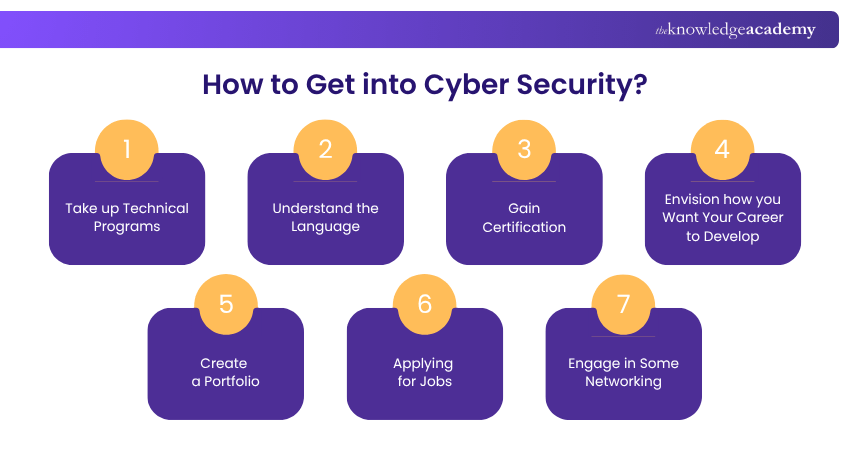
1) Take up Technical Programs
If you have not opted for a formal degree, then there are many technical programs available in the market to help you advance your career in Cyber Security. You can also take Cyber Security related boot camp training programs for better employment opportunities.
2) Understand the Language
To succeed in Cyber Security, it's essential to understand the technical language. Terms like Firewalls, encryption, threat vectors, and protocols are part of daily conversations. Familiarity with this vocabulary enables you to grasp concepts more quickly and communicate effectively with industry professionals.
3) Gain Certification
Cyber Security certifications can expand your employment prospects for the majority of entry-level job positions. Gaining industry certifications can help you gain full-time work experience.
4) Envision how you Want Your Career to Develop
Another key consideration is your career advancement strategy. This includes focusing on skill enhancement, obtaining relevant certifications, and aiming for aspirational job positions. While prospective employers may outline a career path for you, creating a Personal Development plan is essential for excelling in your profession.
5) Create a Portfolio
A Cyber Security portfolio strengthens your credibility as a skilled and experienced Cyber Security Specialist. Consider working on open-source Cyber Security Projects, participating in hackathons, and imparting your skills on public forums to expand your portfolio. You can host your work in a personal repository on GitHub and provide hiring Managers with access as needed.
6) Applying for Jobs
The best way to launch a career in Cyber Security is by gaining professional work experience. Entry-level Cyber Security Jobs can be found on company websites, job boards, and social networking sites like LinkedIn. Additionally, opportunities are available in government positions. Preparing for these roles can be enhanced by reviewing Cyber Security Interview Questions to better understand the skills and knowledge required.
7) Engage in Some Networking
Whether through formal education, certification courses, or good old-fashioned hacking, look for and grab opportunities to speak with professionals in the industry. Look for local and online Cyber Security groups and meetups.
What is Cyber Security?
Cyber Security is the practice of protecting systems, networks, and data from digital threats. It’s about spotting risks, stopping attacks, and keeping information safe. From stolen passwords to large-scale hacks, it covers a wide range of dangers. It is your digital shield as it helps businesses to stay secure, and people stay private.
1) Popular Cyber Security Jobs
Cyber Security isn’t just one job. It’s a whole world of roles, each with its own twist. Whether you enjoy solving puzzles, spotting threats, or building secure systems, there’s something that fits. Here's a quick look at some top roles in the field:
1) Security Analyst: Watches over systems, identifies threats, and stops attacks before they spread.
2) Penetration Tester: Thinks like a Hacker, finds weaknesses, and helps fix them before someone else does.
3) Incident Responder: Acts quickly when trouble hits, contains the damage, and traces the cause.
4) Security Architect: Build strong systems that keep networks safe from the ground up.
5) SOC Analyst: Keeps track of alerts, flags anything suspicious, and supports the security team.
6) Cyber Security Consultant: Advises businesses, finds gaps, and improves their overall security posture.
7) Malware Analyst: Dissects harmful code to figure out how it works and how to defeat it.
Cyber Security Job Requirements
Cyber Security Job Requirements can vary depending on the path you take. However, most roles ask for a mix of tech skills, curiosity, and hands-on practice. This is because if you're a problem-solver who enjoys learning, you're already off to a great start.
1) Solid IT Foundations: Know how computers, networks, and servers work together behind the scenes.
2) Recognised Certifications: Courses like CISM, CEH, or CISSP show you’ve built real knowledge.
3) Sharp Thinking: Ability to analyse situations, think clearly, and respond to threats quickly.
4) Practical Experience: Home labs, online challenges, or volunteer projects can make a big difference.
5) Familiarity with Tools: Knowing how to use Nmap, Wireshark, or Burp Suite gives you an edge.
6) Clear Communication: Explain the issues and solutions in simple terms to both tech and non-tech teams.
7) Willingness to Keep Learning: The threat landscape shifts often, so staying updated is key.
Start your journey to becoming a Certified Cyber Security Professional (CCS-PRO) today & secure your future in cybersecurity!
Essential Skills for a Cyber Security Specialist
To thrive in Cyber Security, you need more than just an interest in tech. It’s a mix of sharp thinking, solid know-how, and the ability to react fast when things go wrong. Whether you're protecting data, solving puzzles, or finding hidden flaws, the right skills make all the difference. Here's what matters most.
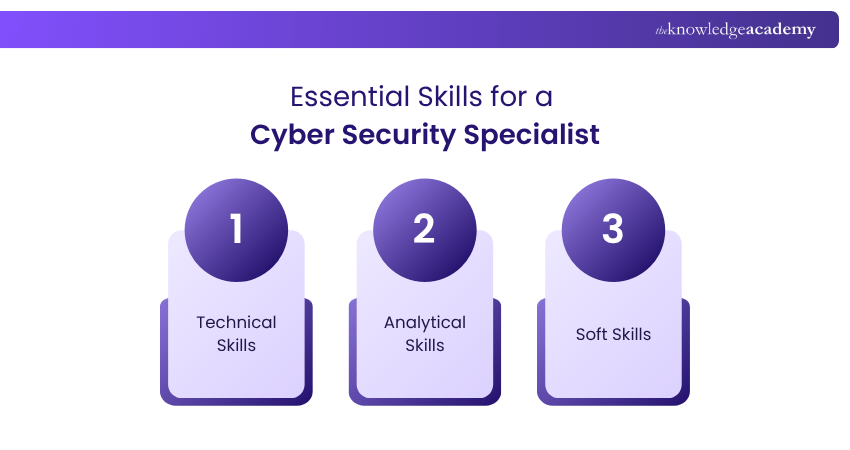
1) Technical Skills
These are the building blocks. Without strong technical knowledge, it's hard to spot risks or build solid defences. You don’t have to master everything at once. But these areas are great places to start. These are the technical skills you need:
Networking and System Administration
Everything runs on networks. Knowing how devices talk to each other helps you keep that communication secure.
Operating Systems
Understand how different systems tick. Learn how to secure Windows, Linux, and macOS from the inside out.
Programming
A few coding skills go a long way. They help you write scripts, spot bugs, and understand how attacks are built.
Cloud Security
With more data in the cloud, knowing how to keep it safe on platforms like AWS or Azure is essential.
Security Tools
Get hands-on with scanners, sniffers, and forensic tools. They help you detect issues before they become threats.
Cryptography and Secure Communication Protocols
Learn how to keep data private. Know how encryption works and how secure connections are made.
2) Analytical Skills
Cyber Security is part tech, part detective work. It’s not just about reacting. It’s about seeing what others miss. These skills help you stay sharp, solve problems fast, and think one step ahead. These are the analytical skills you need:
Risk Identification and Management
Be able to spot weak points before others do. Knowing where problems could start is half the battle.
Incident Response and Forensics
When something goes wrong, timing is everything. You need to act fast, trace the breach, and stop it spreading.
Logical Reasoning and Troubleshooting
Things break. Logs get messy. You need to piece together clues and figure out what really happened.
Ethical Hacking
Think like a Hacker. Learn how systems are broken so you can stop others from doing it first.
3) Soft Skills
It’s not all cables and code. Working in cyber means dealing with people, thinking clearly under pressure, and making the right calls when it counts. These soft skills can set you apart.
Communication
Say it simply. Whether you're talking to tech staff or leadership, clear messages help everyone stay informed.
Collaboration
You won’t work alone. Teams that share knowledge catch issues quicker and build stronger defences.
Adaptability
Threats change daily. You need to stay flexible, pick-up new tools, and adjust to shifting risks.
Critical Thinking
Never take things at face value. Ask questions, look deeper, and always test what you think you know.
Attention to Detail
In Cyber Security, the small stuff matters. A single mistake can open the door for Hackers and other Threat Actors. Spotting it can shut it quickly.Unlock the secrets of digital investigations! Join our Computer Forensics Foundation Training and become an expert in uncovering hidden evidence.
Starting Your Cyber Security: Tips for Success
Getting started in Cyber Security might feel overwhelming. However, you need not be nervous. This is because you don’t need to know everything from day one. What matters is taking small steps. Eventually, this will be helpful in building up your confidence. Here are a few practical tips to help you start strong and stay on track:
1) Start with the Basics: Learn how networks, systems, and security tools work before jumping into advanced topics.
2) Pick One Learning Path: Stick to a course or roadmap so you don’t get lost in too much information.
3) Get Hands-on Experience: Try home labs, online challenges, or virtual machines to build real skills.
4) Follow the Cyber Community: Stay connected through forums, blogs, or YouTube channels to keep up with trends.
5) Focus on One Skill at a Time: Master one area before moving to the next. This helps you learn faster and remember more.
6) Build a Small Project: Create something simple like a network scanner or password generator to apply what you’ve learned.
Stay Patient and Consistent: Progress takes time. Even ten minutes a day adds up.
Conclusion
Getting started in Cyber Security might seem overwhelming, but it’s absolutely within reach. Stay curious and keep learning; this field evolves quickly. Networking with professionals and joining Cyber Security communities can open unexpected doors. The journey of How to get into Cyber Security is as much about persistence as it is about skill. And here’s some food for thought: in a digital world full of risks, you can be the one who defends it?
Explore best practices for Data Security and privacy protection through our Incident Reporting Course – Sign up now and empower action through awareness!
Frequently Asked Questions
Is Cyber Security a Good Career?

Absolutely. Cyber Security is a promising career path. The field is experiencing exponential growth owing to increasing cyber threats and the demand for protecting sensitive data. This demand suggests competitive salaries and opportunities for continuous learning and skill development.
Can a Non-technical Person Learn Cyber Security?
Yes, a non-technical person can absolutely learn Cyber Security. Not every role in this field requires deep technical expertise. Many areas, such as Risk Assessment and policy development, focus on understanding threats and implementing security measures without requiring extensive coding or technical skills.

John Davies


Cyber Security Governance & Assurance Specialist
John Davies is a cybersecurity expert specialising in governance, risk management, and compliance. With over 15 years in the field, he has led enterprise-wide security programmes across finance, healthcare and public sector organisations. His content provides practical guidance on building secure environments, managing risk and aligning with regulatory frameworks.


 If you wish to make any changes to your course, please


