




We may not have the course you’re looking for. If you enquire or give us a call on 01344203999 and speak to our training experts, we may still be able to help with your training requirements.
What is Cyber Law? A Comprehensive Guide
ByVishnu SankarLast updated on: 03 October 2026
Are you curious to know about cyber law? It refers to the laws and legal principles that govern digital activities, including internet use, data protection, privacy and online crime. This blog explores the foundational principles of cyber law and how it impacts businesses and individuals alike. Ready to dive into the digital legal landscape?
What This Blog Covers
1. The legal responsibilities and protections that apply to online activity and digital data.2. How cyber law addresses privacy, e-commerce, intellectual property and cybercrime.3. Key types of cyber law, including privacy, cybercrime and e-commerce laws.4. Common cybercrimes such as phishing, identity theft and cyberstalking.5. Practical examples to help identify which area of cyber law may apply in common online situations.
Have you considered how the internet impacts our daily lives? With increased connectivity comes vulnerability. Cyber law helps establish rules and accountability when digital activities affect people, organisations and society.
This blog will explore the practical areas cyber law covers, from data privacy and e-commerce to cybercrime and online rights. Let's look at what these mean in everyday digital situations.
What is Cyber Law?
Cyber law refers to the legal framework governing the use of the internet, digital devices, and digital data. As our reliance on technology grows, so does the need for laws that protect individuals, businesses, and governments in the digital space.
Cyber law covers various legal matters such as privacy, cybercrime, intellectual property, and other issues. These regulations are created to tackle the specific difficulties that arise in the online realm, helping ensure that activities carried out on the internet are governed and that rights and duties are clearly outlined.
Trainer's Insight
Think of cyber law and cyber security as two connected layers. Cyber law establishes legal rights, responsibilities and requirements, while cyber security focuses on the technical and organisational measures used to protect systems and information. Organisations often need to consider both together.

Objectives of Cyber Law
Cyber law aims to protect the rights, security and legal interests of individuals and organisations in the digital environment. These objectives can be broadly categorised into the following areas:
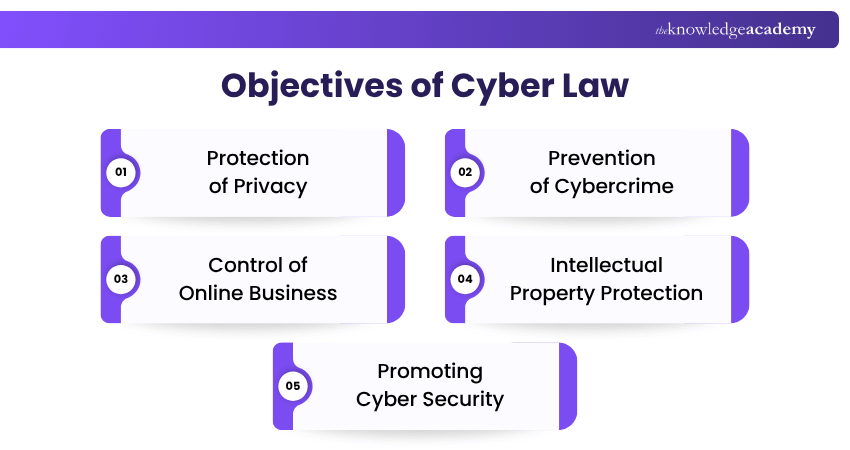
a) Protection of Privacy: Cyber laws focus on safeguarding individuals' privacy by controlling the collection, storage and utilisation of personal data. Data protection and privacy laws may also establish requirements for handling personal data breaches, while other laws can address identity theft and unauthorised access.
b) Prevention of Cybercrime: Cyber laws are essential for preventing and addressing cybercrimes such as hacking, cyberstalking, and phishing. These laws establish a legal structure for pursuing cybercriminals and provide safeguards for victims.
c) Control of Online Business: Cyber laws are essential in overseeing e-commerce operations due to the increase in online shopping and digital transactions. This includes establishing legal requirements that support secure online payments, protecting consumers from fraud, and defining the legal validity of electronic contracts.
d) Intellectual Property Protection: Cyber law helps protect the intellectual property rights of individuals and organisations in the digital space. This includes copyright, trademark and patent laws, which protect different forms of intellectual property and establish rights over their use.
e) Promoting Cyber Security: Cyber laws are also focused on promoting cyber security practices among individuals, businesses, and governments. This includes establishing standards for protecting digital infrastructure and responding to cyber threats.
Importance of Cyber Law
Cyber law is important in today's interconnected world because it helps protect personal data, helps make online transactions safer and establishes a legal framework for tackling cybercrime. It also helps creators and businesses protect intellectual property, including software, digital content and trademarks, from unauthorised use.
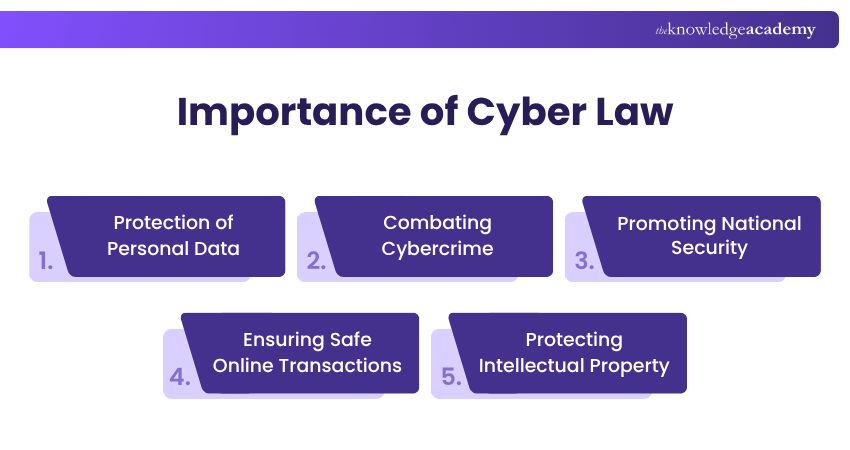
Beyond protecting individuals and businesses, cyber law contributes to national security by establishing legal requirements that help safeguard critical digital infrastructure. It also supports government and organisational responses to cyber threats that could affect essential services and national interests.
Understand key cyber threats such as phishing, malware, and social engineering with the Cyber Security Awareness Training – Register now!
Types of Cyber Law
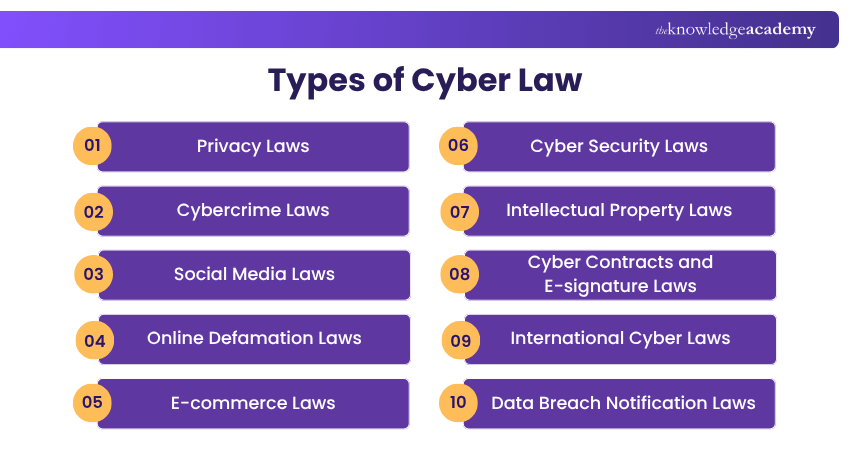
Cyber law covers a broad spectrum of legal issues, each addressing specific aspects of the digital world. Here are some of the key types of cyber law:
1) Privacy Laws
Privacy laws govern how personal data is gathered, stored, and utilised by individuals, companies, and governments. These regulations are created to safeguard individuals' privacy and stop unauthorised access to personal data.
Privacy laws in numerous countries may require organisations to notify regulators or affected individuals of certain personal data breaches, depending on applicable legal thresholds.
2) Cybercrime Laws
Cybercrime laws focus on preventing and addressing criminal activities conducted online. This includes hacking, identity theft, cyberstalking, and other forms of cybercrime. These laws provide law enforcement agencies with the legal tools needed to investigate and prosecute cybercriminals.
3) Social Media Laws
Social media laws govern various legal aspects of social media use and platform operation, depending on the jurisdiction. These can include online harassment, defamation, illegal content, privacy and platform responsibilities.
For example, in the UK, services covered by the Online Safety Act 2023 have specific duties concerning illegal content and, where applicable, protecting children from harmful content.
4) Online Defamation Laws
Defamation laws can apply to statements published online as well as offline. The legal requirements for establishing defamation vary by jurisdiction but generally concern statements that unlawfully harm a person's or organisation's reputation.
Applicable defamation laws may provide remedies for defamatory material published through social media, blogs and other online platforms.
5) E-commerce Laws
E-commerce laws regulate online business transactions, including areas such as electronic contracts, consumer protection, payment requirements and online business practices. The exact requirements vary by jurisdiction.
6) Cyber Security Laws
Cyber security laws focus on protecting digital infrastructure from cyber threats. These laws establish standards for cyber security practices, including the protection of networks, systems, and data from unauthorised access and cyberattacks.
7) Intellectual Property Laws
Legal regulations safeguard the rights of innovators and companies in the online realm. This includes copyright, trademark and patent laws, which protect different forms of intellectual property, including creative works, brands and qualifying inventions. Intellectual property laws are essential for protecting digital assets and promoting innovation in the digital economy.
8) Cyber Contracts and E-signature Laws
Cyber contracts and e-signature laws regulate the use of electronic contracts and digital signatures in online transactions. These laws establish when electronic contracts and electronic signatures can be legally recognised and enforceable, subject to applicable legal requirements and formalities.
Cyber contracts and e-signature laws are essential for facilitating secure and efficient e-commerce activities.
9) International Cyber Laws
Cyber activities that cross national borders can involve domestic laws, international agreements and cooperation between jurisdictions. Issues can include cross-border data transfers, cybercrime investigations and jurisdiction over online activities. The applicable rules depend on the countries and legal frameworks involved.
Pro Tip
Never assume that one country's cyber laws apply everywhere. When digital activities involve users, organisations or data in multiple countries, check which jurisdictions and legal requirements apply before deciding on compliance measures.
10) Data Breach Notification Laws
Data breach notification laws may require organisations to notify regulators and affected individuals when specified legal thresholds are met. Requirements vary by jurisdiction and the severity of the breach.
For example, under the UK GDPR, a notifiable personal data breach must generally be reported to the ICO within 72 hours of becoming aware of it, where feasible, while affected individuals must be informed without undue delay when the breach is likely to result in a high risk to their rights and freedoms.
Quick Check: Which Area of Cyber Law Applies?
|
Situation |
Area to Consider |
|---|---|
|
A company collects customer information |
Privacy and data protection laws |
|
Someone gains unauthorised access to a system |
Cybercrime and cyber security laws |
|
A business sells products online |
E-commerce and consumer protection laws |
|
Content is copied without permission |
Intellectual property laws |
|
A contract is signed electronically |
Electronic contract and e-signature laws |
|
An online activity crosses national borders |
International and cross-border legal rules |
|
Personal data is exposed in a breach |
Data breach notification requirements |
Learn to detect and prevent fraud using data-driven techniques and risk indicators with the Fraud Analytics Training – Join now!
Types of Cybercrime
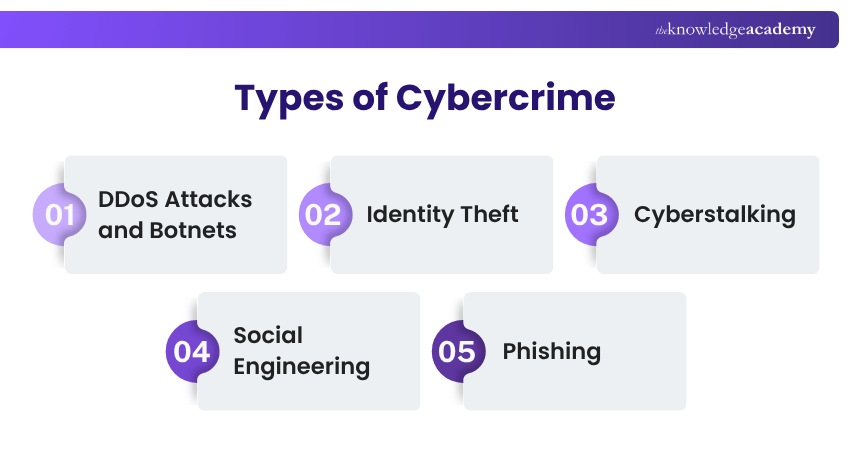
Cybercrime includes a variety of criminal activities involving computers, networks, digital devices or the internet. Some of the most frequently seen forms of cybercrime include:
1) DDoS Attacks and Botnets
DDoS attacks involve overwhelming a website, network or online service with traffic or requests from multiple sources, preventing legitimate users from accessing it. A botnet is a network of compromised devices controlled by an attacker and can be used for DDoS attacks and other malicious activities.
2) Identity Theft
Identity theft happens when someone unlawfully obtains or uses another person's identifying information, such as their name, financial details or identification information, typically to facilitate fraud or other offences.
3) Cyberstalking
Cyberstalking involves persistent and unwanted online behaviour used to harass, threaten or intimidate someone. This can include sending threatening emails, repeatedly monitoring or contacting a person online, or using social media to spread harmful false information about them. Cyberstalking is a severe offence that can cause significant harm to its victims.
4) Social Engineering
Malicious social engineering is a manipulation technique used in cyberattacks to persuade individuals to disclose confidential information or perform actions that compromise security. This can include phishing, where criminals impersonate legitimate organisations, or pretexting, where an attacker creates a fabricated scenario to obtain sensitive information.
5) Phishing
Phishing is a social engineering technique commonly used in cybercrime. It involves deceptive emails, messages or websites designed to appear legitimate and trick people into disclosing sensitive information, such as passwords or financial details, or taking other harmful actions.
Quick Cybercrime Response Checklist
If you suspect a cyber incident:
☐ Preserve relevant records and evidence☐ Identify affected systems, accounts and data☐ Follow your organisation's incident response process☐ Assess whether personal data has been compromised☐ Check whether regulatory or contractual notification requirements apply☐ Report suspected criminal activity through the appropriate channels☐ Review security controls after the incident
Benefits of Cyber Law
Cyber law offers numerous benefits for individuals, businesses, and governments:
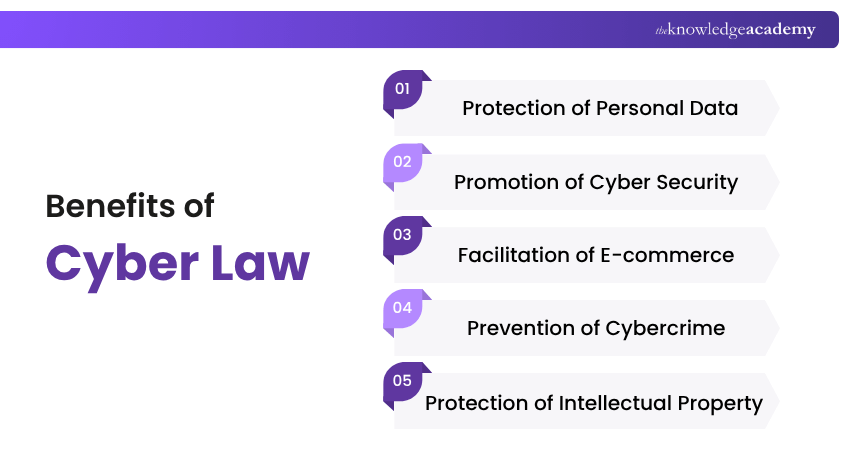
a) Protection of Personal Data: Cyber law helps protect individuals' personal data by establishing legal requirements concerning its use, security and protection from unauthorised access or misuse. This is particularly important in an era where personal information is frequently shared online.
b) Promotion of Cyber Security: Cyber law promotes the adoption of cyber security practices that protect digital infrastructure from cyber threats. This includes establishing standards for protecting networks, systems, and data from unauthorised access and cyberattacks.
c) Facilitation of E-commerce: Cyber law provides a legal framework that facilitates secure and efficient e-commerce activities. This includes establishing legal frameworks for electronic contracts, protecting consumers from fraud, and regulating online transactions.
d) Prevention of Cybercrime: Cyber law plays a crucial role in preventing and addressing cybercrime, including hacking, cyberstalking, and identity theft. These regulations provide law enforcement agencies with legal powers to investigate cyber offences, while prosecutors may bring charges where the evidence and applicable law support them.
e) Protection of Intellectual Property: Cyber law plays an important role in safeguarding intellectual property in online environments. This is essential for promoting innovation and ensuring that digital assets are not used without authorisation.
Secure the digital world by joining the Cyber Security Risk Management Course and learn to outsmart cyber threats. Start Today!
Cyber Law establishes legal rights and responsibilities for digital activities, helping protect personal data, Intellectual Property and online transactions while providing legal frameworks to address cybercrime and other digital risks.

Vishnu Sankar is a Senior Content Writer with 5+ years of experience across content development, software development, web development and system administration. His technical background and professional training support his expertise in IT and Tech, while his extensive research and writing experience covers Project Management and Health and Safety.
View Detail

 If you wish to make any changes to your course, please


