




We may not have the course you’re looking for. If you enquire or give us a call on 01344203999 and speak to our training experts, we may still be able to help with your training requirements.
Correlation vs Regression: Understanding the Difference
ByOlivia TaylorLast updated on: 18 September 2026
Correlation measures the strength and direction of an association between variables, while Regression models how an outcome relates to one or more predictor variables.
Imagine a business notices that advertising spend and sales often rise together. This creates two questions:
1) Are advertising spend and sales related?
2) Can advertising spend help predict future sales?
The first question points towards Correlation, while the second moves towards Regression. This distinction is at the heart of Correlation vs Regression. While both techniques examine relationships between variables, they answer different questions. This blog explains how they work, their key differences and when to use each one.
What is Correlation?
Correlation describes the strength and direction of an association between two variables. It helps determine whether changes in one variable tend to occur alongside changes in another. A commonly used measure is the Pearson Correlation coefficient, represented by r, which ranges from -1 to +1.
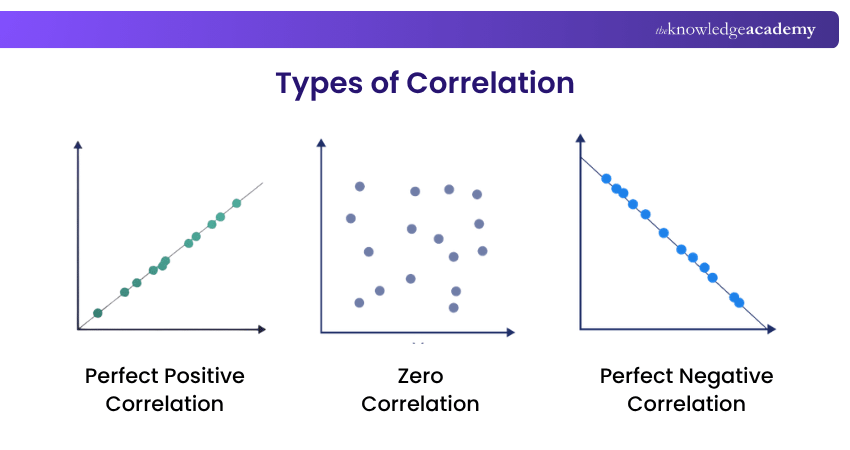
A positive Pearson coefficient indicates that the variables tend to move in the same direction, while a negative coefficient indicates that they tend to move in opposite directions. A value near zero indicates little or no linear relationship. However, Correlation does not establish that changes in one variable cause changes in another.
What is Regression?
Regression analysis is a statistical method used to model the relationship between an outcome variable and one or more predictor variables. It helps examine how changes in predictors are associated with changes in the outcome.
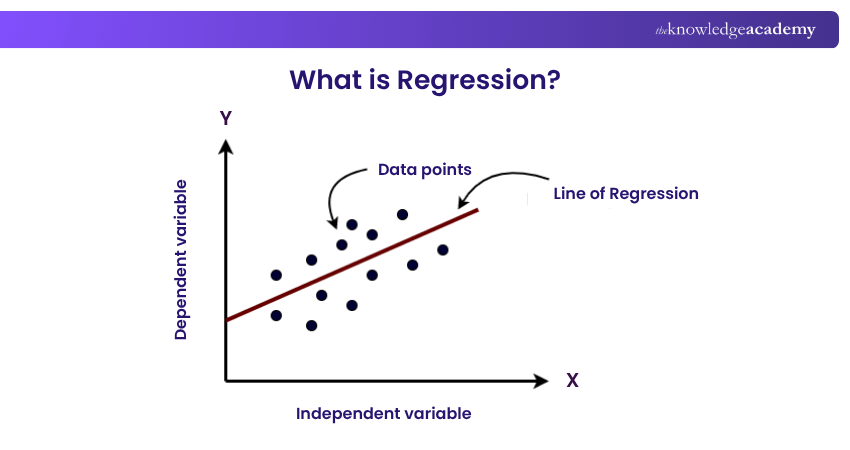
In simple linear Regression, a line is fitted to the observed data to describe the relationship between one predictor and one outcome. Regression models can also include multiple predictors and can be used for purposes such as estimation, prediction and understanding relationships between variables.
EXAMPLE:
Suppose a researcher wants to examine study time and exam performance. Correlation can show whether students who study longer tend to achieve higher scores. Regression can go further by creating a model that estimates a student's expected exam score based on the number of hours studied.
Key Differences Between Correlation vs Regression
Correlation and Regression, though related, serve different purposes in the field of statistics. Understanding their fundamental differences is vital for accurate data interpretation and decision-making. Here are the key distinctions:
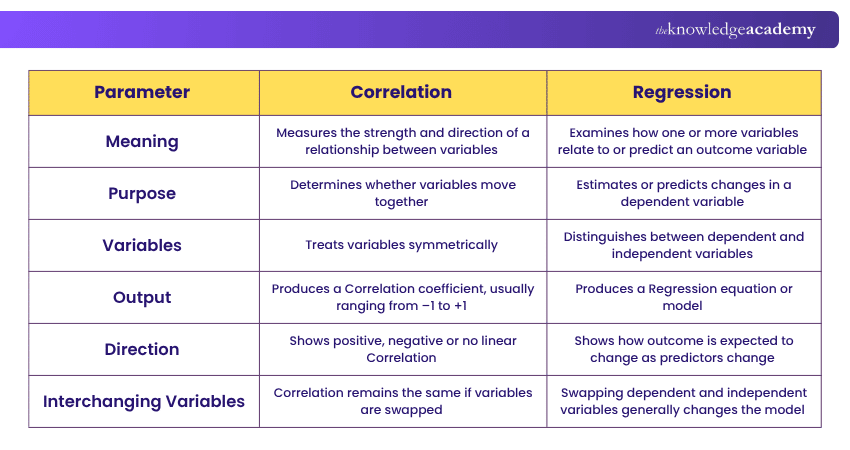
Let's explore the differences in detail:
1) Purpose
Correlation is mainly used to measure the strength and direction of the relationship between two variables. It helps determine whether the variables tend to increase or decrease together. Regression focuses on modelling the relationship and can estimate how changes in one or more variables are associated with changes in an outcome.
2) Treatment of Variables
In Correlation, both variables are treated equally, meaning there is no formal distinction between dependent and independent variables. Regression assigns specific roles to variables. It uses one or more independent or predictor variables to explain or predict changes in a dependent or outcome variable.
3) Output
Correlation produces a Correlation coefficient, commonly represented by r, which typically ranges from –1 to +1. This value indicates the strength and direction of a linear relationship. Regression produces an equation or model containing coefficients that describe the estimated relationship between the predictor variables and the outcome.
4) Prediction
Correlation can reveal whether two variables are associated, but it does not directly provide an equation for predicting future or unknown values. Regression is commonly used for prediction because a fitted model can estimate an outcome based on known values of the predictor variables.
Discover patterns and make smarter choices with the power of Statistics. Sign up for our Statistics Course today!
5) Direction of Relationship
Correlation indicates whether a linear relationship is positive, negative or absent. A positive Correlation means the variables tend to move in the same direction, while a negative Correlation means they tend to move in opposite directions. Regression estimates how the predicted outcome changes as predictor values change.
6) Interchanging Variables
In Correlation, swapping the two variables does not affect the Correlation coefficient because the relationship is measured symmetrically. In Regression, the roles of the variables matter. Changing which variable is treated as the dependent variable generally produces a different Regression model and different results.
7) Cause and Effect
Correlation does not establish that one variable causes changes in another. Regression can model relationships and account for several variables at once, but it also does not prove causation by itself. Establishing causality generally requires an appropriate research design, assumptions and supporting evidence.
Spot the Mistake
Statement:
"A company finds a strong Correlation between employee training hours and productivity. Therefore, increasing training hours will always cause productivity to rise."What's wrong?
The conclusion confuses Correlation with causation. The relationship shows that training hours and productivity are associated in the observed data, but it does not prove that additional training caused higher productivity. Other variables could influence the result.
When to Use Correlation vs Regression?
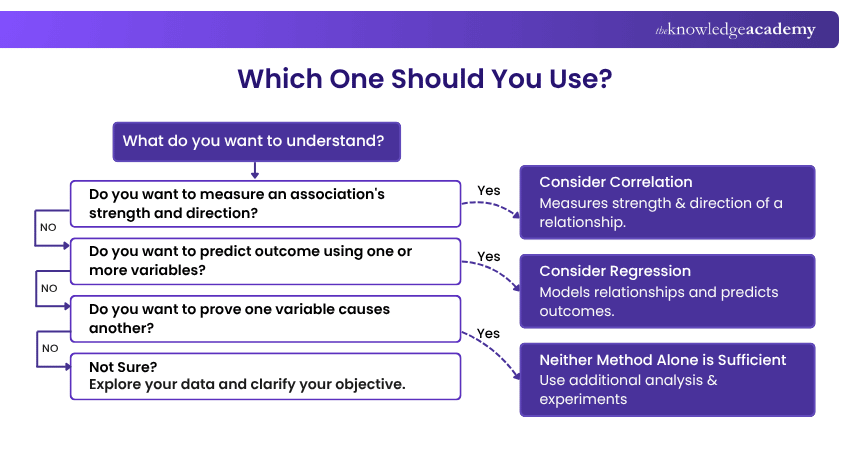
Choosing between Correlation and Regression depends on the question you want to answer. Correlation is useful when your primary goal is to understand the strength and direction of an association. Regression is more appropriate when you want to model an outcome using one or more predictors.
Pro Tip
Before interpreting results, check whether the assumptions of your chosen Correlation measure or Regression model are appropriate for the data. This helps you avoid misleading conclusions and unreliable predictions.
1) When to Use Correlation?
Consider Correlation when you want to:
a) Measure the strength of an association between two variables
b) Determine whether a linear relationship is positive or negative
c) Explore relationships before conducting further analysis
d) Compare how two measured variables tend to change together
For example, a business might examine the Correlation between customer satisfaction and customer retention to understand whether higher satisfaction tends to accompany higher retention.
2) When to Use Regression?
Consider Regression when you want to:
a) Estimate an outcome from one or more predictors
b) Examine how an outcome changes as predictor values change
c) Build predictive models
d) Account for several predictor variables within the same model
For example, a retailer could use Regression to estimate sales based on advertising spend, price and other relevant predictors. This flowchart will simplify your choice:

Olivia Taylor makes complex financial subjects easier for professionals to understand and apply. Her content connects accounting principles with the practical requirements of financial control, organisational planning and responsible decision-making.
View Detail

 If you wish to make any changes to your course, please


