




We may not have the course you’re looking for. If you enquire or give us a call on +1 7204454674 and speak to our training experts, we may still be able to help with your training requirements.
What are the Benefits of PRINCE2 Agile®?
ByDavid EvansLast updated on: 30 September 2026
PRINCE2 Agile® promotes collaboration, transparency, and iteration. Discover the power of this hybrid project management approach and the top benefits that PRINCE2 Agile® can offer and embark on a journey to a comprehensive understanding of its capabilities.

Adapting, collaborating, and delivering projects effectively and efficiently is vital in today's competitive business landscape. Traditional project management methodologies often struggle to keep up with the dynamic demands of modern projects. This is where PRINCE2 Agile® emerges as a robust solution, combining the best of both worlds: PRINCE2®, a proven project management framework, and Agile, a flexible and iterative approach.
For Project Managers working in changing project environments, maintaining appropriate governance while responding quickly to evolving requirements can be challenging. PRINCE2 Agile® brings these needs together, helping teams balance structured project control with Agile ways of working. Let's learn more about it!
PRINCE2 Agile® at a Glance
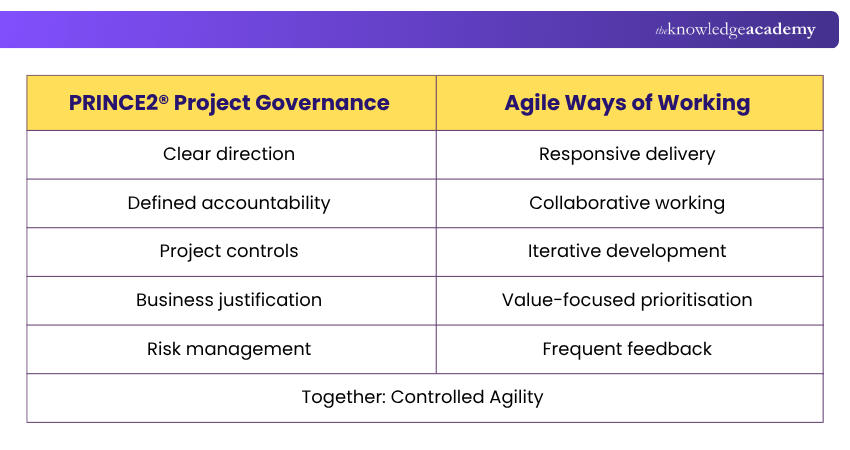
PRINCE2® refers to:Governance + Structure + ControlAgile refers to:Flexibility + Iteration + FeedbackTogether they become PRINCE2 Agile®, bringing:Structured governance with Agile ways of working
Top 15 Benefits of PRINCE2 Agile®
PRINCE2 Agile® combines PRINCE2® project management with Agile ways of working. PRINCE2® provides structured governance, control, and clarity for managing projects. On the other hand, Agile emphasises flexibility, iterative development, and collaboration. Agile promotes adaptive planning, continuous feedback, and delivering value incrementally.
Together, PRINCE2 Agile® combines the flexibility and responsiveness of Agile methods with the framework of PRINCE2®, making it a versatile approach to project management. Let's look at the benefits of PRINCE2 Agile® in the following points:
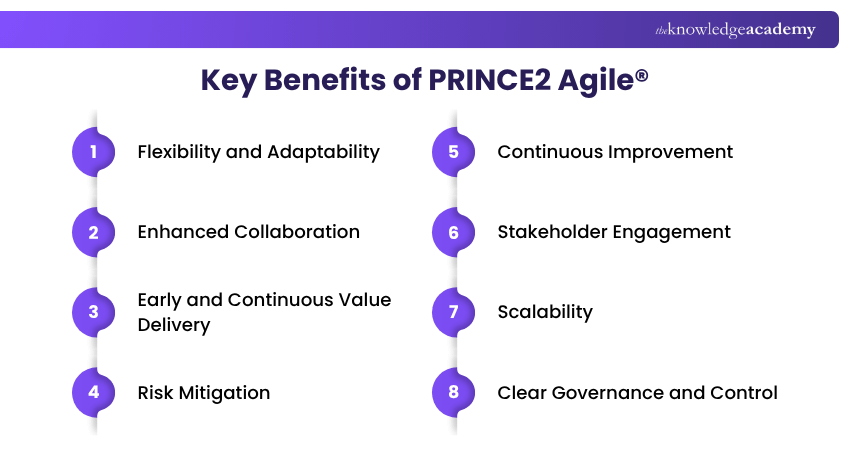
1) Flexibility and Adaptability
PRINCE2 Agile® allows project teams to embrace and quickly adapt to change, enabling them to respond to evolving customer requirements and market dynamics on time. Agile's iterative and incremental approach empowers teams to continuously improve and refine project deliverables based on feedback and lessons learned.
2) Enhanced Collaboration
PRINCE2 Agile® promotes collaboration and effective communication among project stakeholders. By incorporating Agile practices, such as regular team coordination, iterative planning, reviews, and retrospectives, where appropriate, teams can foster a culture of transparency, teamwork, and shared ownership. This collaborative environment enables better decision-making and can reduce the risk of misalignment or misunderstandings.
3) Early and Continuous Value Delivery
With this approach, projects can deliver value early in the project lifecycle. By breaking down work into manageable increments or iterations, teams can quickly prioritise and deliver high-priority features or functionalities. This incremental value delivery allows for faster feedback, reduces risk, and helps keep project outcomes aligned with customer and stakeholder expectations.
Pro Tip
Being busy does not necessarily mean a project is delivering value. When prioritising work, consider which outputs contribute most to the project's desired outcomes and stakeholder needs. This helps teams focus effort where it can create the greatest value.
4) Risk Mitigation
PRINCE2 Agile® emphasises proactive risk management by integrating risk assessment and mitigation into project planning and execution. Agile techniques such as frequent feedback, adaptability to change, and iterative feedback loops enable teams to spot and address potential risks early on, minimising their impact on project objectives.
5) Continuous Improvement
The Agile mindset of continuous improvement is embedded in PRINCE2 Agile®. Regular retrospectives provide opportunities for project teams to reflect on their performance, identify areas for improvement, and implement changes in subsequent iterations. This focus on learning from experience and making continuous adjustments contributes to enhanced project outcomes and team productivity.
6) Stakeholder Engagement
PRINCE2 Agile® emphasises the active involvement of stakeholders throughout the project lifecycle. By incorporating Agile practices like user stories, user feedback sessions, and reviews, project teams can better understand, incorporate, and validate stakeholder needs and expectations. This engagement fosters a sense of ownership and accountability among stakeholders, leading to better project outcomes and customer satisfaction.
Build your ability to manage projects using structured Agile practices with the PRINCE2 Agile® Practitioner (Version 2) Training!
7) Scalability
PRINCE2 Agile® provides scalability, making it suitable for projects of varying sizes and complexities. It allows organisations to tailor the method to fit their projects' needs and constraints, ensuring the right level of control and agility is applied. This flexibility enables this approach to accommodate projects ranging from small, single-team endeavours to large projects, ensuring effective coordination and governance across multiple teams.
8) Clear Governance and Control
PRINCE2 Agile® combines the governance and control aspects of PRINCE2® with Agile practices. This integration supports clear project governance structures, enabling effective decision-making, accountability, resource oversight, and risk management. The defined roles, responsibilities, and processes of PRINCE2® project management provide a solid foundation for project control, while Agile practices allow for flexibility and adaptability within the established governance framework.
9) Improved Time-to-market
PRINCE2 Agile® can support faster delivery by using Agile techniques such as timeboxing, prioritisation, and incremental delivery. These techniques help teams focus on delivering high-value outputs earlier and obtaining feedback sooner. This ensures that the project can begin delivering useful outcomes earlier while remaining within the project's governance framework.
10) Alignment with Business Strategy
PRINCE2 Agile® helps projects remain aligned with the organisation's strategic objectives. Through ongoing business justification, progress reviews, and value-focused decision-making, teams can assess whether the project continues to support organisational objectives. This alignment ensures that projects deliver value and contribute to the organisation's success.
Trainer’s Insight
Responding quickly to change is useful only when the project continues to support a worthwhile objective. Teams should therefore consider not only “Can we adapt?” but also “Does this change still contribute to the value the project is expected to deliver?”
11) Improved Quality
PRINCE2 Agile® places a strong emphasis on quality management throughout the project lifecycle. Agile practices such as iterative delivery, frequent reviews, testing, and feedback can help teams maintain and assess quality throughout delivery. Depending on the chosen Agile or development approach, teams may also use techniques such as continuous integration or test-driven development.
Fostering a culture of collaboration and feedback enables teams to detect and address quality issues early, which can help improve deliverable quality and customer satisfaction.
Gain the skills and knowledge you need to deliver successful Agile projects with the PRINCE2 Agile® Foundation (Version 2) Course - Sign up now!
12) Improved Progress Tracking and Transparency
PRINCE2 Agile® supports clear and regular progress tracking by combining PRINCE2® controls with Agile-appropriate measures and frequent feedback. Teams can monitor delivery progress, identify deviations earlier, and provide stakeholders with greater visibility into project performance. This transparency supports timely decision-making while helping the project remain aligned with agreed objectives.
13) Enhanced Business Value
PRINCE2 Agile® focuses on maximising business value throughout the project lifecycle. By embracing Agile practices such as value-driven prioritisation and frequent customer collaboration, project teams can ensure that the project's outputs align with the desired outcomes and deliver measurable value to the organisation. This customer-centric approach contributes to increased customer satisfaction and Return on Investment (ROI).
14) Increased Team Morale and Motivation
PRINCE2 Agile® benefits the organisation by emphasising the importance of team motivation and engagement. Empowering teams to self-organise, make decisions, and take ownership of their work fosters a sense of autonomy and accountability. This autonomy, combined with frequent feedback and the opportunity to showcase incremental progress, boosts team morale and motivation, leading to higher productivity levels and job satisfaction.
15) Improved Prioritisation
PRINCE2 Agile® helps teams prioritise work according to business value, stakeholder needs, project objectives, and available resources. Agile prioritisation techniques can help teams focus first on the most valuable or urgent requirements while allowing lower-priority work to be reconsidered as circumstances change.
Keep This in Mind
PRINCE2 Agile® is not about choosing between structured project governance and Agile ways of working. Its strength lies in bringing the two together. The key is to maintain appropriate control and direction while giving teams enough flexibility to respond to feedback, changing requirements, and evolving priorities.
Learn how to bring structure to your projects and turn them into progress with the PRINCE2® Training today!

David Evans creates accessible resources that help professionals understand different approaches to planning and delivering projects. His content addresses changing requirements, collaborative working and the practical demands of contemporary project environments.
View Detail

 If you wish to make any changes to your course, please


