


We may not have the course you’re looking for. If you enquire or give us a call on 01344203999 and speak to our training experts, we may still be able to help with your training requirements.
17 Key Areas of Improvement for Employees
ByVidhya NairLast updated on: 09 October 2026
Employee improvement is the ongoing process of elevating an employee's skills, knowledge, and performance to increase their effectiveness in their current role. In this blog, you will learn the 17 key areas of improvement for employees, including time management, teamwork, leadership abilities, and more. Read on.
Quick Preview
1. Recognise which workplace behaviours and capabilities can limit day-to-day effectiveness2. Understand where focused development can make professional growth more consistent3. Identify practical areas that support stronger performance across different roles4. Use improvement priorities to guide meaningful development conversations and goals
What transforms a workplace from ordinary to extraordinary? The answer lies in growth. Supporting personal and professional development can help employees strengthen their skills, improve performance and contribute more effectively to organisational goals.
Improvement isn’t just about addressing weaknesses, it’s about uncovering hidden strengths and opening doors to new possibilities.
What are the Key Areas of Improvement for Employees?
Here are 17 key areas employees can focus on to strengthen workplace effectiveness and professional development:
1) Improving Time Management
Effective time management can help employees organise workloads, prioritise tasks and reduce unnecessary pressure caused by poor planning or last-minute work. Effective Time Management helps the employees to break larger tasks into manageable activities and allocate focused time to each one. Ways to improve time management include:
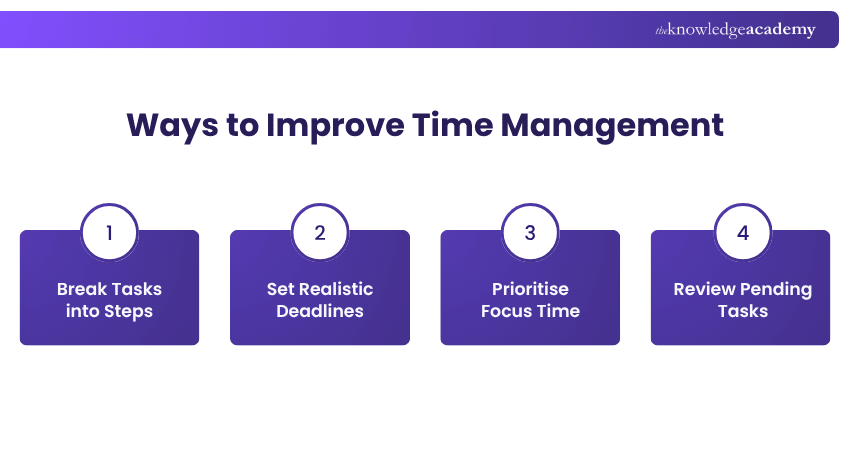
a) Break larger assignments into smaller, manageable tasks
b) Set realistic deadlines for individual activities
c) Allocate focused time for high-priority work
d) Review unfinished tasks before planning the next working day
2) Communication
Strong written, verbal and non-verbal communication skills can help employees share information clearly, collaborate effectively and reduce misunderstandings. This is also good for boosting morale and creating a positive work culture. Ways to improve verbal and nonverbal communication include:
a) Listen carefully to what others say
b) Speak directly with colleagues when a conversation is more suitable than written communication
c) Practice what you want to say
d) Monitor your body language and tone
3) Active Listening
Active listening is an essential skill for collaboration and communication. Listening carefully to colleagues, managers and clients helps employees understand information, expectations and concerns more accurately. Ways to improve listening skills include:
a) Maintain appropriate eye contact
b) Remove distractions when talking to someone (such as your phone)
c) Use open, positive body language
d) Ask questions to clarify complex ideas
4) Customer Service
Excellent customer service is key to a company's reputation and can significantly affect its ability to earn repeat business. Customer service skills are especially important in customer-facing roles, while related skills such as empathy, communication and problem-solving can also support internal workplace relationships. Ways to improve customer service include:
a) Ask a colleague to practise customer interaction with you
b) Complete suitable customer service training
c) Shadow a colleague known for giving excellent customer service
d) Ask others for advice on handling challenging customers
5) Organisation
Strong organisational skills can help employees manage priorities, locate information quickly and complete work more consistently. Good organisational skills help employees complete their work on time and with minimal stress. Steps to improve organisation may include:
a) Prioritise tasks you need to complete each day
b) Maintain a clean desk to avoid misplacing documents
c) Create electronic filing systems for projects
d) Use a digital organiser
6) Improving Teamwork
Teamwork helps employees combine their strengths, share responsibilities, and work towards common objectives. Improving this skill involves contributing actively to group tasks, respecting different perspectives, supporting colleagues, and understanding how individual responsibilities contribute to wider team outcomes. Ways to improve teamwork may include:
a) Contribute actively during team discussions and activities
b) Respect different perspectives and working styles
c) Complete assigned responsibilities within agreed timelines
d) Offer support to colleagues when appropriate
7) Managing Stress in the Workplace
Managing workplace stress involves recognising sources of pressure and responding to them in healthy and practical ways. Employees can improve in this area by prioritising workloads, taking appropriate breaks, setting realistic expectations, and identifying situations that regularly affect their concentration or performance. Ways to improve stress management may include:
a) Identify situations that regularly create unnecessary pressure
b) Prioritise workloads and set realistic expectations
c) Take appropriate breaks during demanding periods
d) Seek suitable support when workplace pressure becomes difficult to manage
8) Leadership Abilities
Leadership skills are valuable even for employees who do not currently hold managerial positions. Employees can strengthen these skills by taking ownership of responsibilities, making thoughtful decisions, supporting colleagues, and showing initiative when challenges arise. Ways to improve leadership abilities may include:
a) Take initiative when appropriate
b) Accept responsibility for decisions and outcomes
c) Support colleagues when completing shared objectives
d) Practise making thoughtful and informed decisions
9) Positive Attitude and Professional Mindset
A positive professional mindset helps employees respond constructively to challenges, setbacks, and changes at work. This does not mean ignoring problems; instead, it involves approaching them calmly, focusing on possible solutions, and maintaining respectful behaviour when difficulties arise. Ways to develop a positive professional mindset may include:
a) Focus on solutions when challenges arise
b) Remain open to different viewpoints
c) Separate personal frustration from professional decisions
d) Reflect on difficult situations before responding
Improve your workplace ethics with Ethics in Workplace Training – Sign up now!
10) Adaptability
Being adaptable helps employees respond effectively when workplace responsibilities, priorities, technologies, or processes change. Developing this skill can make it easier to learn new methods and continue performing effectively in changing circumstances. Ways to improve adaptability may include:
a) Remain open to new processes and ways of working
b) Learn how to use relevant new tools and technologies
c) Adjust priorities when workplace requirements change
d) Use feedback to improve your approach
11) Improving Discipline and Punctuality
Discipline and punctuality help employees develop consistent and reliable working habits. Being punctual can support effective time management, while professional discipline helps employees meet responsibilities and deadlines more consistently. Ways to improve discipline and punctuality may include:
a) Plan ahead for meetings, deadlines, and daily responsibilities
b) Set realistic timelines for completing tasks
c) Reduce avoidable distractions during working hours
d) Maintain consistent working routines
12) Interpersonal Skills
Interpersonal skills help employees communicate respectfully, understand different perspectives and build constructive working relationships. Empathy, thoughtful communication, honesty and respect can support stronger relationships between colleagues and managers. It also helps in improving relationships between team members and management. Ways to improve interpersonal skills may include:
a) Consider other people's perspectives during discussions
b) Communicate respectfully even when opinions differ
c) Show empathy when colleagues experience difficulties
d) Address misunderstandings calmly and professionally
13) Seeking Feedback
Another important area that employees need to be mindful of improving is asking for feedback. If you are an employee in any organisation, always remember to ask for feedback rather than shying away from it. You can ask for feedback from your team leaders, your managers and even from your colleagues. Remember, receiving feedback helps in your personal as well as professional development.
Asking for feedback will help the employers understand that you are genuinely interested in your project as well as in your organisation. It will also give you a chance to interact more closely on the projects or assignments which are assigned to you with your peers. Taking note of their professional advice and suggestions helps you to learn something new every day. You can take heed of their professional experience and try to imbibe the good qualities in your work ethic. This will also help the management notice your enthusiasm towards your work.
Trainer’s Insight
Employee development becomes more effective when improvement areas are linked to specific workplace situations rather than general self-assessment. Reviewing recent challenges, missed opportunities, or recurring feedback can reveal where development will have the most practical value.
14) Accountability and Ownership
Accountability and ownership mean taking responsibility for your work, decisions, and agreed commitments. Employees can develop this quality by following tasks through to completion, acknowledging mistakes when they occur, and taking appropriate action to resolve problems rather than shifting responsibility elsewhere. Ways to improve accountability and ownership may include:
a) Take responsibility for assigned tasks and their outcomes
b) Communicate early when difficulties or delays arise
c) Acknowledge mistakes and identify suitable corrective actions
d) Follow commitments through to completion
15) Acquiring New Skills
Developing new skills can help employees remain effective as job requirements, technologies and workplace processes evolve. It can also support career development and help organisations build capability in emerging areas. Ways to acquire new skills may include:
a) Identify skills that are relevant to your current role
b) Take part in suitable training and development opportunities
c) Practise newly learned skills through workplace tasks
d) Share useful knowledge with colleagues when appropriate
16) Patience
Patience and emotional regulation can help employees respond calmly during disagreements, delays and challenging situations. Taking time to understand the issue before reacting can support more considered decisions and professional working relationships. Ways to develop patience and emotional regulation may include:
a) Take time to understand a situation before responding
b) Recognise when frustration is affecting your judgement
c) Consider alternative viewpoints before reaching conclusions
d) Focus on calm and constructive responses during disagreements
17) Problem-solving Abilities
Problem-solving skills help employees identify issues, assess possible solutions and respond effectively to workplace challenges. Since many businesses are now becoming user-centric to cater to their needs, effective problem-solving can support better decisions, smoother operations and improved customer or team outcomes. Even if the employee might not have the solution to the problem immediately, they can offer suggestions for those problems. Ways to improve problem-solving abilities may include:
a) Clearly define the problem before trying to solve it
b) Gather relevant information before making decisions
c) Compare different possible solutions and their consequences
d) Review the outcome to understand what could be improved next time
Master People Management, leadership skills, Employee Engagement and more in our comprehensive Human Resources Courses – Sign up now!

Vidhya Nair is a Senior Copywriter with 7+ years of experience across copywriting, content writing and communication. Her extensive research and editorial experience supports her ability to present topics across Business Skills and Human Resources with clarity and purpose.
View Detail

 If you wish to make any changes to your course, please


