


We may not have the course you’re looking for. If you enquire or give us a call on 01344203999 and speak to our training experts, we may still be able to help with your training requirements.
Benefits of Total Quality Management
ByThe Knowledge AcademyLast updated on: 02 November 2026
Discover the key benefits of Total Quality Management (TQM) and how they help organisations improve quality, reduce waste, and boost efficiency. From stronger customer satisfaction to better productivity and supplier relationships, explore how TQM supports continuous improvement and long-term business success.
At a Glance
Total Quality Management (TQM) helps organisations achieve consistent quality and continuous improvement through:1. Better Quality: Fewer defects and more consistent products and services.2. Higher Efficiency: Streamlined processes, reduced waste and improved productivity.3. Stronger Teams: Greater employee involvement, accountability and collaboration.4. Satisfied Customers: Improved customer experiences and stronger long-term relationships.5. Long-term Business Value: Lower quality-related costs, stronger competitiveness and potential profitability gains.
When defects increase, customer complaints rise, and employees spend more time correcting mistakes, maintaining quality becomes a challenge. This is where Total Quality Management (TQM) can make a difference. By championing customer satisfaction and empowering teams, TQM supports continuous improvement and builds a culture of excellence.
From improved productivity and a stronger competitive edge to reduced costs and strengthened supplier relationships, this blog explores the key benefits of total quality management and how they can contribute to long-term organisational success. Let's begin!
Key Benefits of Total Quality Management
The benefits of TQM can be seen in numerous aspects. By encouraging continuous improvement and involving employees in quality-related decisions, it helps businesses strengthen their processes and achieve consistent results. Let's explore its various advantages below:
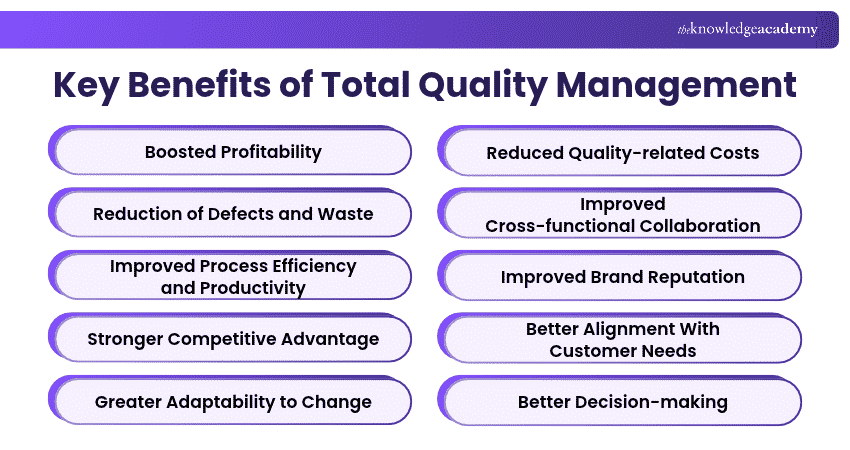
1) Boosted Profitability
By improving the quality of products and services, TQM help organisations reduce costs and strengthen customer loyalty. When consumers are consistently satisfied with the quality of products, it builds trust, leading them to stay loyal to the brand. This can contribute to increased profitability when the savings exceed the costs of improvement.

2) Reduction of Defects and Waste
A strategic approach and continuous improvement help organisations reduce inefficiencies, waste and defects that degrade products. This supports the efficient manufacturing of high-quality products and the consistent delivery of services. By reducing unnecessary material consumption and waste, these improvements also contribute to environmental sustainability.
3) Improved Process Efficiency and Productivity
Continuous process improvement, greater employee engagement and reduced inefficiencies can significantly enhance business productivity. By streamlining workflows, eliminating unnecessary tasks and making better use of available resources, organisations can produce goods and deliver services more efficiently.
Bonus Tip: Start Small, Improve Continuously
Instead of introducing major quality changes across the organisation at once, begin with one process that frequently experiences errors or delays. Set measurable improvement goals, involve relevant employees and track the results before applying successful practices to other areas.
4) Stronger Competitive Advantage
Increasing competition encourages organisations to meet changing customer expectations while maintaining consistent product and service quality. TQM practices help businesses improve reliability, address quality-related issues and strengthen customer relationships. These help organisations stand out and potentially expand their market share.
5) Greater Adaptability to Change
TQM promotes adaptability by encouraging organisations to regularly evaluate and improve their processes. Continuous learning and employee involvement can help organisations respond effectively to changes in market conditions, technology and customer demands.
6) Reduced Quality-related Costs
TQM helps organisations reduce the costs associated with poor quality, including product returns, warranty claims, rework and customer complaints. By preventing recurring quality issues and identifying problems early, businesses can lower corrective expenses and allocate resources more effectively.
Learn how to make every quality check count with the Quality Assurance Training – Sign up now!
7) Improved Cross-functional Collaboration
TQM encourages different departments to work together towards shared quality objectives. By improving communication and coordination between teams, organisations can reduce misunderstandings, address quality concerns more effectively, and ensure consistent standards throughout business operations.
8) Improved Brand Reputation
As TQM prioritises delivering good-quality products and services, customers can develop a favourable perception of the organisation. Consistently meeting quality expectations, handling complaints effectively and maintaining reliable service standards can strengthen customer trust, contributing to a stronger brand image.
9) Better Alignment With Customer Needs
Since customer satisfaction is the primary focus of TQM, it provides a pathway to understanding the needs and demands of the consumer market. Therefore, it enables the organisation to improve products and services based on customer feedback, changing expectations and identified quality requirements.
10) Better Decision-making
TQM underscores data-driven decision-making, ensuring that decisions are informed by reliable information and objective analysis. This helps reduce uncertainty and supports more informed decisions about quality improvements. Organisations implementing robust data collection and analysis systems can identify performance trends, monitor quality indicators and address emerging problems before they escalate.
11) Improved Regulatory Compliance Support
Adhering to regulatory requirements is vital for industries. TQM enables organisations to establish processes that support compliance with applicable regulations and quality standards. Through documented procedures, regular monitoring and corrective action, businesses can identify potential gaps and reduce the risk of quality-related noncompliance.
Trainer's Insight
An internal quality audit and a regulatory compliance audit serve different purposes. Organisations should define the scope of each assessment carefully, as a process that meets internal quality targets may still require additional checks against specific legal obligations.
12) Improved Supplier Partnerships
TQM supports collaboration with suppliers to ensure the quality of components and raw materials. Building solid relationships with suppliers through mutual trust and shared quality goals can enable better consistency and reliability in the supply chain. This helps reduce defects, delays, and costs associated with low-quality inputs.
13) Fewer Recurring Quality Problems
TQM promotes structured problem-solving techniques, such as root cause analysis and corrective action, to address recurring quality issues. By identifying the underlying causes of problems rather than treating their symptoms, organisations can implement lasting improvements and reduce the likelihood of similar issues occurring again.
14) Greater Employee Ownership of Quality
TQM encourages employees to take responsibility for maintaining quality standards in their daily activities. By involving them in improvement initiatives and providing opportunities to suggest solutions, organisations can strengthen accountability, encourage proactive problem-solving and build a stronger commitment to quality.
15) Improved Customer Satisfaction
TQM places customer satisfaction at the centre of organisational improvement by focusing on consistent quality and customer expectations. Through regular feedback, improved service delivery and timely resolution of quality concerns, businesses can create positive customer experiences and build stronger long-term relationships.
Transform everyday processes into powerful business advantages by joining the Business Process Improvement Training now!

The Knowledge Academy develops accessible learning content across Project Management, IT, Cybersecurity, Data Science, Business Analysis, HR, Accounting and Finance, Leadership and Health and Safety. Its resources combine subject research with clear explanations to help professionals build practical knowledge across a wide range of disciplines.
View Detail

 If you wish to make any changes to your course, please


