


We may not have the course you’re looking for. If you enquire or give us a call on +1 7204454674 and speak to our training experts, we may still be able to help with your training requirements.
Benefits of ISO 27001 Certification
ByThe Knowledge AcademyLast updated on: 05 November 2026
Explore the key benefits of ISO 27001 certification, from strengthening information security and managing risks to building customer trust and supporting regulatory compliance.
Quick Preview
1. ISO 27001 certification demonstrates that an organisation's ISMS meets internationally recognised requirements.2. Risk assessments and security controls help organisations identify vulnerabilities and manage information security risks.3. Defined responsibilities and employee awareness support stronger information security practices.4. Supplier security management and incident response measures help organisations prepare for potential disruptions.5. Certification can strengthen stakeholder confidence, support compliance efforts and improve business opportunities.
Imagine a potential client asking your organisation one simple question: "How can we trust you with our sensitive information?"
You could explain your security policies, access controls and risk management practices. But how do you demonstrate that these measures form part of a structured, independently assessed system? This is where ISO 27001 certification becomes relevant.
It demonstrates that your organisation's Information Security Management System (ISMS) has been independently assessed against internationally recognised requirements. So, what benefits can ISO 27001 certification bring to your business? Let's find out in this blog.
What are the Key Benefits of ISO 27001 Certification?
ISO 27001 certification offers organisations several advantages beyond demonstrating conformity with information security management requirements. From strengthening risk management and protecting sensitive information to building stakeholder confidence, it supports a more structured approach to information security.
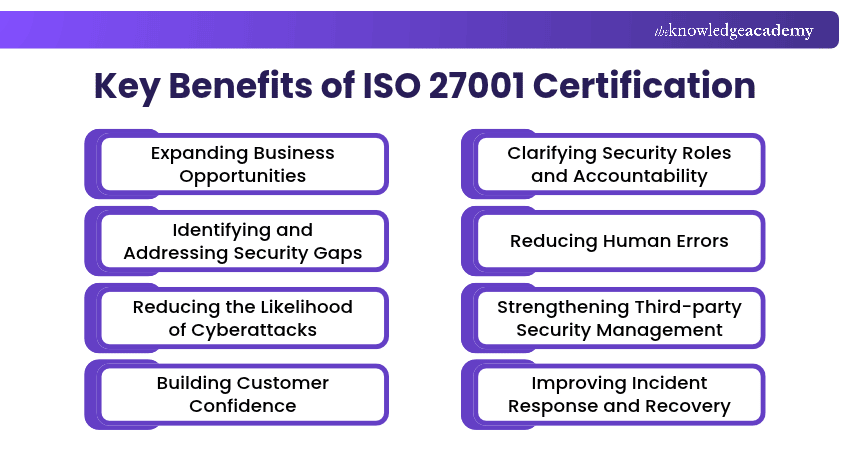
Here are the key benefits of ISO 27001 certification and how they can contribute to long-term business success:
1) Expanding Business Opportunities
Organisations certified to ISO 27001 may qualify for partnerships and contracts that require independently verified information security practices. Businesses in sectors such as finance, healthcare, as well as public sector organisations, may prefer working with certified suppliers because certification demonstrates a structured approach to protecting sensitive information.
By providing independent assurance of their ISMS, certified organisations can strengthen their position during supplier evaluations and competitive tenders. This can help them attract new clients, pursue additional contracts and expand into markets where information security assurance is an important consideration.

2) Identifying and Addressing Security Gaps
Information security risk assessments required by ISO 27001 help organisations identify weaknesses across their people, processes and technology. These assessments enable businesses to evaluate potential threats and vulnerabilities while prioritising appropriate measures to address identified risks.
By reviewing identified risks and assessing the effectiveness of existing controls, organisations can determine where additional security measures or corrective actions are needed. This structured approach supports the timely identification of weaknesses and helps businesses address information security gaps as risks evolve.
3) Reducing the Likelihood of Cyberattacks
Implementing ISO 27001 helps organisations establish a security-conscious culture and systematically manage information security risks. By selecting appropriate controls, such as encryption, access restrictions and security monitoring, organisations can reduce the likelihood of successful cyberattacks.
Regular reviews and continual improvement help organisations adapt preventive security measures to emerging threats and vulnerabilities. By maintaining appropriate safeguards, businesses can strengthen their defences and reduce exposure to potential cyberattacks.
4) Building Customer Confidence
ISO 27001 certification can help organisations build customer trust by providing independent assurance that their ISMS meets internationally recognised requirements. It demonstrates a structured commitment to managing information security risks and protecting sensitive information, including personal data.
This independent recognition can reassure customers that information security is being managed through established policies, processes and controls. By providing credible evidence of their security management practices, organisations can strengthen customer relationships and support a positive business reputation.
5) Clarifying Security Roles and Accountability
ISO 27001 helps organisations establish clearly defined responsibilities for managing information security. By assigning appropriate roles and authorities, businesses can improve accountability for security decisions, policy implementation and the management of information security activities.
Clear responsibilities also help employees understand who is accountable for specific security tasks and when issues require escalation. This supports more coordinated decision-making, reduces uncertainty about security ownership and strengthens overall information security governance.
Learn how to identify, manage, and reduce information security risks with the ISO 27001 Foundation Course – Sign up now!
6) Reducing Human Errors
Human error is a significant contributing factor in many data breaches. Procedures and checks established through ISO 27001 implementation can help businesses reduce common mistakes and lower the risk of resulting security incidents.
Regular training helps employees develop the awareness and skills needed to prevent common security mistakes. Documented procedures and practical guidance can also help staff recognise phishing attempts, handle sensitive information appropriately and avoid preventable errors in everyday activities.
7) Strengthening Third-party Security Management
ISO 27001 helps organisations manage information security risks associated with suppliers, contractors and external service providers. By establishing appropriate security requirements and evaluating third-party relationships, businesses can better understand the risks involved in sharing information or relying on external services.
A structured approach to supplier management supports clearer contractual expectations, appropriate monitoring and regular reviews of supplier security arrangements. These practices help organisations maintain greater oversight of third-party risks and protect information shared with external partners.
8) Improving Incident Response and Recovery
Implementing ISO 27001 helps organisations establish a structured approach to managing information security incidents. Through appropriate incident response procedures, defined responsibilities and recovery arrangements, businesses can improve their preparedness for potential security disruptions.
These measures can help teams respond more effectively when incidents occur, limit their impact and support the timely restoration of affected operations. Regular reviews and continual improvement also help organisations strengthen their ability to manage future incidents.
9) Supporting Regulatory Compliance
ISO 27001 helps organisations identify and manage relevant legal, regulatory and contractual requirements related to information security. By establishing documented policies, procedures and appropriate controls, businesses can adopt a more structured approach to meeting these obligations.
Regular internal audits, management reviews and corrective actions help organisations evaluate whether their information security practices remain effective and aligned with applicable requirements. Although certification does not guarantee regulatory compliance or prevent fines, these activities can help businesses identify compliance gaps and reduce exposure to certain regulatory risks.
10) Reducing the Financial Impact of Data Breaches
The financial consequences of data breaches can include regulatory fines, customer compensation, incident response expenses, operational downtime and lost revenue. By implementing ISO 27001 and maintaining appropriate security controls, organisations can strengthen their ability to manage information security risks and potentially reduce the likelihood and financial impact of security incidents.
Effective incident management and recovery measures can help organisations minimise operational disruption, recovery costs and revenue losses. Although ISO 27001 cannot eliminate financial risks, appropriate controls can help reduce the costs associated with security incidents.
11) Managing Security Risks During Organisational Changes
ISO 27001 helps organisations manage information security considerations when introducing new systems, modifying existing processes or implementing technological changes. A structured approach enables businesses to assess potential security implications and establish appropriate safeguards before changes are introduced.
By incorporating security requirements into change planning and implementation, organisations can reduce the risk of unintended vulnerabilities and operational disruption. This supports more controlled transitions while helping businesses maintain appropriate information security practices as their systems and processes evolve.
12) Improving Audit Readiness
ISO 27001 helps organisations maintain structured information security documentation and evidence of their management practices. By recording risk assessments, audit findings and corrective actions, businesses can demonstrate how their ISMS is implemented and maintained.
Maintaining accessible and up-to-date records helps organisations respond more efficiently to audit requests and demonstrate how their ISMS operates in practice. It can also reduce the administrative effort involved in gathering evidence and help teams prepare for certification, surveillance and relevant supplier assessments.
Take the lead in strengthening organisational security with the ISO 27001 Lead Implementer Course - Join today!

The Knowledge Academy develops accessible learning content across Project Management, IT, Cybersecurity, Data Science, Business Analysis, HR, Accounting and Finance, Leadership and Health and Safety. Its resources combine subject research with clear explanations to help professionals build practical knowledge across a wide range of disciplines.
View Detail

 If you wish to make any changes to your course, please


