


We may not have the course you’re looking for. If you enquire or give us a call on 01344203999 and speak to our training experts, we may still be able to help with your training requirements.
Top 10 Benefits of Import and Export
ByThe Knowledge AcademyLast updated on: 14 November 2026
Explore 10 key benefits of import and export, from wider product choices and cost-saving opportunities to international market expansion and brand recognition. Learn how importing and exporting can strengthen sourcing strategies, support innovation and create business opportunities.
The Gist
1. Businesses can expand their sourcing options by obtaining products, materials and technologies from international suppliers.2. The benefits of importing include potential cost savings, greater sourcing flexibility and reduced reliance on individual suppliers.3. Exporting helps businesses reach international customers, increase sales opportunities and strengthen brand recognition.4. Importing and exporting support international trade by connecting businesses, consumers and markets across countries.
From products on store shelves to goods shipped across borders, international trade shapes how businesses operate and grow. For organisations, the challenge lies in deciding when overseas sourcing or international sales can offer a competitive advantage.
Both approaches bring different opportunities and considerations. In this blog, we'll explore the key benefits of import and export and how understanding these advantages can help businesses make informed international trade decisions.
Benefits of Import
Importing offers several advantages for businesses seeking to expand their product offerings, improve sourcing options and remain competitive. Here are five key benefits of importing:
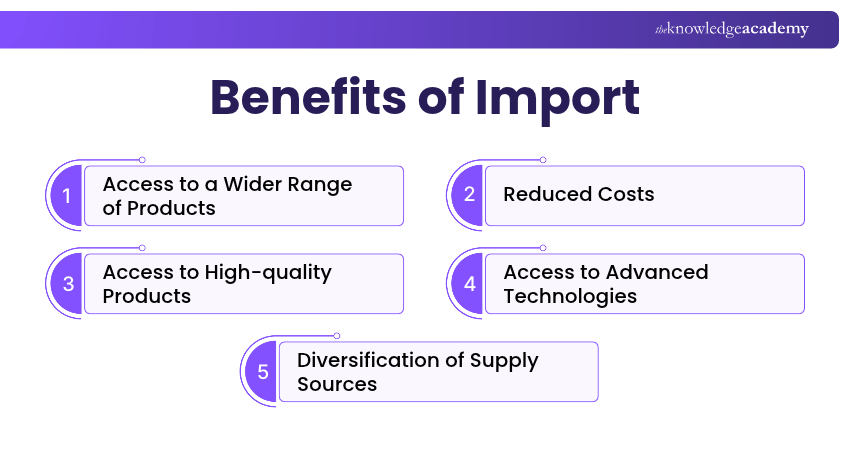
1) Access to a Wider Range of Products
Importing allows businesses and consumers to access products that may be unavailable or difficult to obtain in domestic markets. These can include specialised equipment, unique materials, seasonal goods and products manufactured in other countries.
For businesses, access to a wider product range creates opportunities to meet different customer preferences and expand their offerings. For example, a UK retailer may import specialised food products from different countries to offer customers a more diverse selection.

2) Reduced Costs
Importing can help businesses reduce costs when certain products, components or raw materials are available at more competitive prices in international markets. Differences in production capabilities, resource availability and manufacturing expenses can make overseas sourcing financially attractive.
By purchasing suitable materials or finished products from international suppliers, businesses may lower sourcing expenses and improve their competitiveness. These savings can also create opportunities to offer more competitive prices to customers.
Pro Tip
A lower purchase price does not always mean a cheaper product. Before importing, calculate the total landed cost, including transportation, customs duties, applicable taxes, insurance and handling charges. This helps determine whether importing offers genuine financial benefits.
3) Access to High-quality Products
Different countries specialise in manufacturing products that benefit from advanced production methods, skilled craftsmanship or established industry expertise. Importing allows businesses to access these products and meet specific quality requirements.
For example, a company may import precision machinery or specialised industrial components from overseas manufacturers that possess relevant technical expertise. Access to such products can help businesses improve their offerings, meet customer expectations and maintain consistent production standards.
4) Access to Advanced Technologies
Importing provides businesses with opportunities to acquire advanced machinery, equipment and technological products from international markets. These resources can support operational improvements and help organisations adopt modern production methods.
For example, a manufacturing company may import automated machinery to improve production efficiency and reduce certain manual processes. Access to advanced technologies can also encourage innovation by enabling businesses to improve existing processes, develop new products and respond to changing industry requirements.
5) Diversification of Supply Sources
Depending on a single supplier or domestic market can expose businesses to supply shortages, production delays and unexpected disruptions. Importing allows businesses to explore suppliers across different countries and diversify their sourcing options.
By working with multiple reliable suppliers, organisations may reduce dependence on a single source and improve their ability to respond to supply chain challenges. For example, a business that purchases raw materials from several countries may have alternative sourcing options if one supplier experiences production difficulties.
Benefits of Export
Exporting creates opportunities for businesses to expand beyond domestic markets, reach international customers and strengthen their competitive position. Here are five important benefits of exporting:
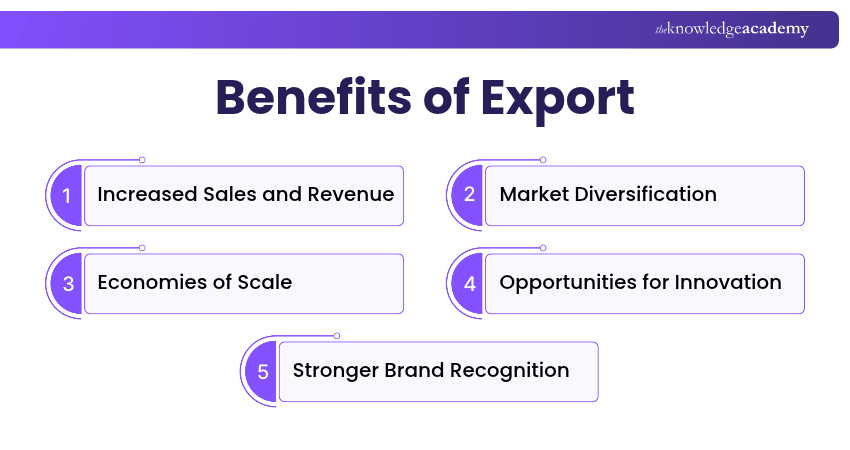
1) Increased Sales and Revenue
One of the major benefits of exporting is the opportunity to reach customers beyond the domestic market. By selling products or services internationally, businesses can expand their potential customer base and create additional sources of revenue. Exporting is particularly useful for companies operating in domestic markets with limited demand or strong competition.
International expansion allows them to explore markets where their products may attract new customers. For example, a UK manufacturer may begin exporting its products to European or Asian markets to expand its sales opportunities.
Did You Know?
In 2025, services accounted for approximately 57% of UK exports, according to the Department for Business and Trade. Major service exports include financial, technology and other business services.
2) Market Diversification
Exporting allows businesses to operate across multiple international markets rather than relying entirely on domestic customers. By reaching customers in different countries, businesses can reduce their dependence on any one market.
For example, a company selling products in several countries may be better positioned to manage a decline in demand within one market if sales remain strong elsewhere. Market diversification also allows businesses to identify new growth opportunities and adapt their offerings to different customer preferences.
3) Economies of Scale
Exports can help businesses achieve economies of scale when increased international demand allows them to expand production efficiently. Producing larger quantities may reduce the average cost per unit by spreading fixed costs across more products.
For example, a manufacturer receiving additional overseas orders may use its existing production facilities more efficiently, reducing average production costs. However, lower production costs do not always translate into higher profits, as businesses must also account for transportation, distribution and compliance expenses.
4) Opportunities for Innovation
Exporting exposes businesses to international customers, competitors and changing market expectations. These experiences can encourage companies to improve their products, adopt new practices and explore innovative solutions.
For example, a business entering a market with different customer preferences may need to modify its products, packaging or production processes to meet local expectations. Collaboration with international distributors, suppliers and business partners can also deliver valuable insights into emerging technologies and industry practices.
Learn how to navigate export regulations and keep international operations running smoothly in the Export and Trade Compliance Training – Sign up now!
5) Stronger Brand Recognition
Exporting creates opportunities for businesses to introduce their products and services to customers in new international markets. Successful international expansion can strengthen brand awareness and establish a wider business presence. As organisations build relationships with overseas customers and distributors, they may also improve their reputation and credibility.
For instance, a company that consistently delivers quality products to international customers may develop stronger recognition within its target markets. However, brand recognition depends on factors such as product quality, customer satisfaction, marketing and reliable service rather than exporting alone.
Import vs Export: Key Differences
Explore the key distinctions between importing and exporting in the following table.
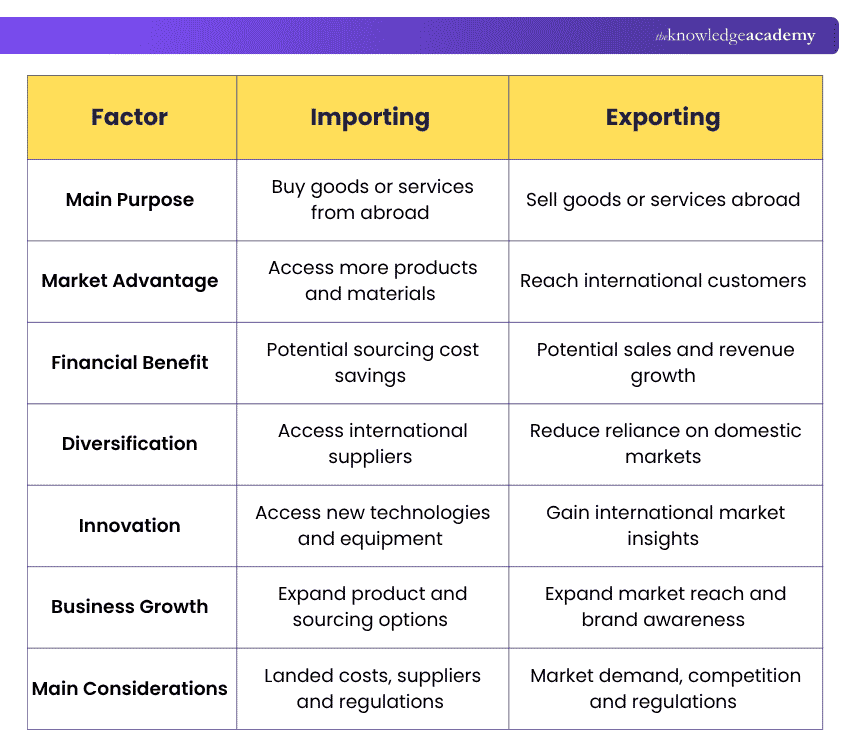
So, the benefits of import and export extend from improved product access and sourcing flexibility to increased sales and international market expansion. Both activities can support business growth and economic development. By understanding their advantages and planning carefully, businesses can identify suitable opportunities and participate more effectively in international trade.
Explore strategies for improving inventory control and supplier coordination with our Supply Chain Management Training – Join now!

The Knowledge Academy develops accessible learning content across Project Management, IT, Cybersecurity, Data Science, Business Analysis, HR, Accounting and Finance, Leadership and Health and Safety. Its resources combine subject research with clear explanations to help professionals build practical knowledge across a wide range of disciplines.
View Detail

 If you wish to make any changes to your course, please


