


 Top Rated Course

We may not have the course you’re looking for. If you enquire or give us a call on 01344203999 and speak to our training experts, we may still be able to help with your training requirements.
Benefits of Coaching: Fast-track Your Career Success
Charlotte Wilson 26 August 2026Discover the Benefits of Coaching for improving self-awareness, communication, leadership, workplace performance and long-term professional growth.

Training Outcomes Within Your Budget!
We ensure quality, budget-alignment, and timely delivery by our expert instructors.
Table of Contents

Key Takeaways:
a) Coaching helps individuals set clear goals, identify skill gaps and take focused action.b) The Benefits of Coaching include stronger self-awareness, communication and leadership skills.c) Coaching can improve workplace relationships, decision-making and employee productivity.d) It supports psychological safety and creates a more positive workplace culture.e) Regular feedback and reflection encourage personal growth and long-term professional development.
Imagine you’re talking to a colleague over coffee. They tell you they want to grow at work but feel unsure about their next step. Then they ask:
“Can coaching really help me improve?”
It sounds like a simple question, but the answer depends on your goals, challenges and willingness to act. The Benefits of Coaching can include clearer goals, stronger communication, better decisions and greater self-awareness.
So, could coaching make a meaningful difference to your career?
This blog explores the Benefits of Coaching for individuals, teams and organisations. It also explains how coaching supports professional growth, workplace relationships and long-term performance. Let’s get started!
What is Coaching?
Coaching is a professional development process that helps individuals clarify their goals, identify skill gaps and improve performance. A Coach uses questions, feedback and practical strategies to support career growth and focused action.
Organisations may provide individual, team or online coaching to develop employees and improve workplace performance. Rather than simply giving answers, a Coach facilitates learning and helps individuals find suitable solutions. Online coaching also makes this support accessible regardless of location.

Benefits of Coaching in the Workplace
Here are the key Benefits of Coaching for individuals in the workplace:
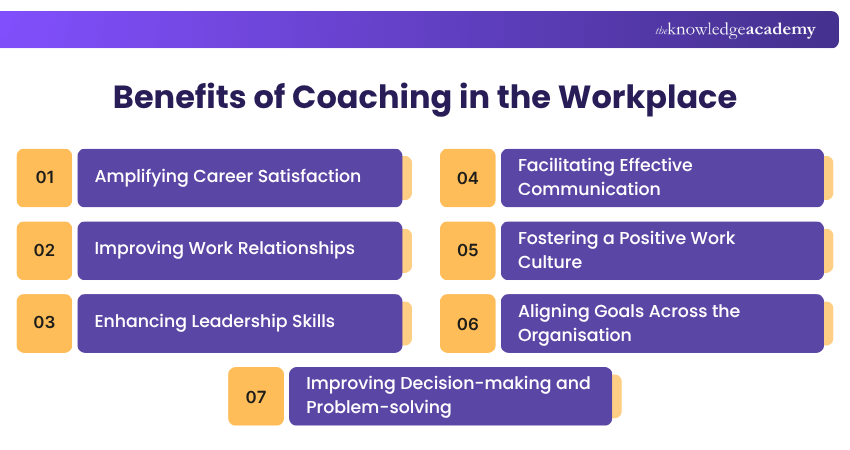
1) Amplifying Career Satisfaction
Career satisfaction is a multifaceted concept. It hinges on aligning an individual's job role with their values, skills, interests, and long-term goals. With its holistic, person-centric approach, Coaching in the Workplace plays a crucial role in amplifying career satisfaction among employees.
Coaching focuses on the individual, their aspirations, and their growth trajectory. Through a process of introspection, goal setting, and continuous feedback, Coaches guide individuals towards career satisfaction.
2) Improving Work Relationships
Work relationships are a critical component of a successful and harmonious work environment. They impact team collaboration, job satisfaction, and overall organisational productivity. Building strong, positive relationships at work can sometimes be challenging due to various factors such as differing personalities, communication styles, or conflicts.
Workplace Coaching can facilitate better work relationships by promoting improved communication, encouraging empathy, resolving conflicts, and promoting team collaboration. Here's how it achieves that:
a) Improved Communication: Coaches assist individuals in improving their communication abilities by teaching them how to actively listen to others and communicate their ideas clearly.
b) Encouraging Empathy: Coaches nurture empathy, encouraging individuals to view situations from their colleagues' perspectives.
c) Conflict Resolution: Conflicts, if not addressed promptly and appropriately, can harm work relationships. Coaches equip individuals with the skills to handle conflicts constructively.
d) Team Collaboration: Team collaboration is among the many Benefits of Coaching. Coaches promote a collaborative mindset, emphasising the significance of working together towards common goals.
3) Enhancing Leadership Skills
Coaching helps individuals develop the leadership skills required to guide, motivate and influence others effectively. Through reflection and constructive feedback, they can better understand their leadership style, identify areas for improvement and make more informed decisions.
These capabilities prepare employees for greater responsibilities and career progression. Effective leadership also helps build trust, improve team performance and support a positive workplace culture.
Pro Tip:
Coaching is most effective when leaders are guided to examine their decisions rather than simply being told what to do. This reflection helps them apply the learning independently in future situations.
4) Facilitating Effective Communication
Coaching helps individuals express their thoughts, expectations and feedback more clearly. It also strengthens active listening and encourages them to consider different perspectives before responding.
Effective communication reduces misunderstandings and supports more productive discussions. As a result, teams can collaborate effectively, resolve concerns and remain aligned with shared objectives.
5) Fostering a Positive Work Culture
Coaching encourages employees to adopt constructive behaviours, take responsibility and remain open to learning. It can also strengthen psychological safety by helping individuals share ideas, ask questions and discuss mistakes without fear of unfair criticism.
These behaviours can build trust and encourage stronger participation across teams. Over time, they can improve employee engagement, workplace morale and alignment with organisational values.
6) Aligning Goals Across the Organisation
Coaching helps employees understand how their responsibilities support team priorities and wider organisational objectives. This shared understanding allows them to focus their efforts on tasks that contribute to common goals.
Coaches also help employees set clear targets, plan practical actions and monitor their progress. This reduces conflicting priorities and keeps individual, team and organisational efforts aligned.
7) Improving Decision-making and Problem-solving
Coaching encourages employees to examine evidence, consider different perspectives and assess possible outcomes before acting. This structured approach helps them understand problems more clearly and avoid rushed decisions.
Rather than providing direct answers, Coaches ask thoughtful questions that develop independent thinking. As a result, employees become more confident in making informed decisions and solving workplace challenges effectively.
Coach with confidence and inspire real change with the Coaching Skills Training now!
Personal Benefits of Coaching
Coaching positively impacts individuals' career as well as their lives. Here are the top five personal Benefits of Coaching:
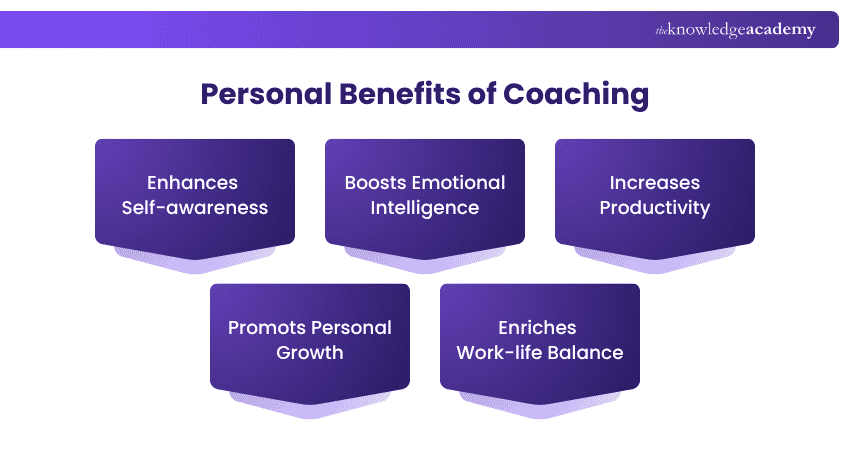
1) Enhances Self-awareness
Self-awareness is one of the primary Benefits of Coaching. It is a key principle of Emotional Intelligence, which refers to our capacity to recognise and understand our own character, emotions, desires, and motivations. It's about knowing who we are, what we want, and what we're good at. Most importantly, it involves understanding the areas where we need to improve.
Self-awareness helps identify where our skills and talents lie. It involves understanding how to optimise our performance and recognising where our passions align. With such insights, individuals can navigate their career paths more effectively and confidently, increasing satisfaction and success. For achieving self-awareness, the following steps must be followed:
2) Boosts Emotional Intelligence
Emotional Intelligence (EI) is often measured as an Emotional Intelligence Quotient (EQ). It comprises the capacity to comprehend, use, and positively manage emotions. This soft skill enhances communication, empathy, leadership, decision-making, and relationship management, all of which are critical in the workplace.
Through Coaching, individuals can significantly boost their Emotional Intelligence, leading to improved performance and better interpersonal relations at work. Coaching also provides a structured environment where individuals can explore and understand their emotions and how they impact their actions and decisions.
3) Increases Productivity
Productivity is a key indicator of individual success. It represents the efficiency with which tasks and goals are achieved. The common objective of every business is to boost productivity levels, and one proven method to accomplish this is through workplace Coaching.
Coaching, with its personalised and goal-oriented approach, can significantly increase an individual's productivity. It does this by enhancing self-awareness, promoting goal setting, honing skills and fostering resilience.
4) Promots Personal Growth
Coaching encourages individuals to move beyond their comfort zones and take on new challenges. It helps them recognise limiting beliefs, build confidence and develop skills through purposeful action.
This continuous development prepares individuals to manage change and explore new opportunities. Their fresh perspectives and improved capabilities can also support creativity and innovation across the organisation.
5) Enriches Work-life Balance
Coaching can help individuals identify priorities and manage their time more effectively. By focusing on essential tasks and setting clear boundaries between professional and personal responsibilities, employees can protect their personal time while maintaining consistent performance at work.
It can also introduce practical techniques for managing stress and workplace pressure. By aligning career ambitions with personal values and long-term goals, individuals can make more balanced decisions, reduce the risk of burnout and create a more fulfilling relationship between work and personal life.
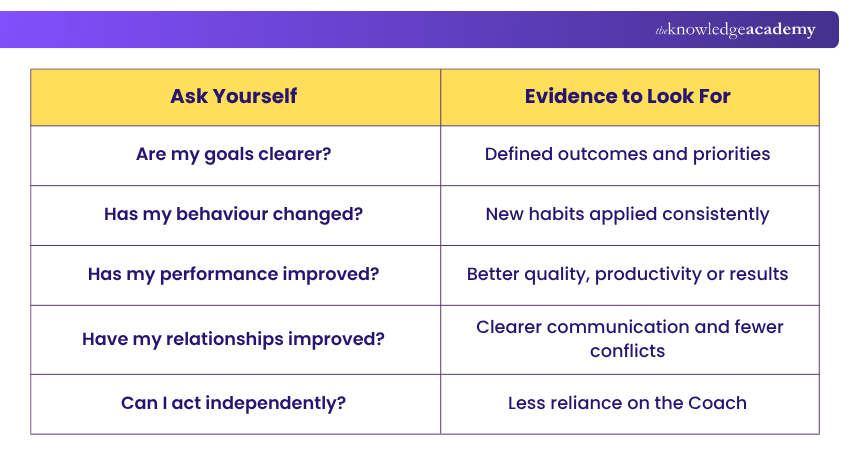
Coaching Outcome Tracker
Conclusion
The Benefits of Coaching extend beyond better performance. Coaching builds self-awareness, strengthens communication, and supports confident decision-making. It also helps individuals align their goals, improve relationships and grow as leaders. With consistent guidance and action, coaching can create lasting value for individuals, teams and organisations.
Learn to help potential find its purpose by registering for the Coaching And Mentoring Training today!
Frequently Asked Questions
Why is Coaching so Effective?

Coaching helps individuals to know their short- and long-term goals and apply appropriate strategies to achieve them. Also, it helps professionals to recognise gaps in their skills, find ways to fill them and increase their network.
What is the Best Coaching Strategy?
There is no single best coaching strategy, as the right approach depends on the goal, individual and situation. However, the GROW model, covering Goal, Reality, Options and Will, is widely used to structure conversations and help people develop their own solutions.
What is the Difference Between Coaching and Mentoring?
Coaching is goal-focused and uses structured questions to help individuals develop their own solutions. In contrast, mentoring often involves an experienced professional sharing knowledge, advice and career guidance based on personal experience.
How Can an Organisation Measure the Success of Coaching?
Organisations can measure coaching success by comparing agreed goals with changes in behaviour, performance, productivity and employee feedback. Progress reviews and relevant workplace metrics can show whether coaching is producing meaningful results.

Charlotte Wilson


Soft Skills and Business Training Manager
Charlotte Wilson is an expert in soft skills development, with over 14 years of experience helping individuals and teams improve communication, productivity and emotional intelligence in the workplace. Her training content is focused on enhancing interpersonal effectiveness and fostering positive, collaborative environments across all levels of an organisation.
View Detail

 If you wish to make any changes to your course, please


