


 Top Rated Course

We may not have the course you’re looking for. If you enquire or give us a call on +61 272026926 and speak to our training experts, we may still be able to help with your training requirements.
What is Outbound Sales? Meaning and Process
Charlotte Wilson 25 April 2026Outbound sales is a proactive approach where reps reach out to customers using targeted strategies and processes to generate leads and drive conversions. It allows businesses to connect with prospects, offer tailored solutions, and create new opportunities. When executed well, outbound sales can strengthen pipelines and increase revenue.

Training Outcomes Within Your Budget!
We ensure quality, budget-alignment, and timely delivery by our expert instructors.
Table of Contents

Outbound sales is an approach that allows companies to go after customers actively instead of depending on them to reach out first. It is about deliberately contacting the right prospects to create interest and maintain a relationship that is worth having. We will discuss What is Outbound Sales and how it contributes to growth in this blog, setting the scene for important strategies and best practices.
Table of Contents
1) Types of Outbound Sales Reps
2) What are the Benefits of Outbound Sales
3) What is the Outbound Sales Process?
4) What are Examples of Outbound Sales?
5) How to Build an Outbound Sales Strategy?
6) Conclusion
What is Outbound Sales?
Outbound Sales involve proactively contacting potential buyers through phone, email, social media, or other channels. The main purpose of Outbound Sales is to contact people and generate sales instead of waiting for them to act. This differs from inbound sales, where the potential buyer starts the conversation (e.g., filling out a demo request form).
Outbound Sales sometimes include cold-calling leads on a list. Reps often call leads that have previously demonstrated demand by engaging with a brand’s content, emailing a business, registering for an event, or making a previous call.
Types of Outbound Sales Reps
Outbound Sales reps fall into two categories: Sales development representatives and lead response representatives. They each serve distinct purposes to contribute to the overarching business goal as explained below:
Sales Development Representatives
The main task of Sales Development Representatives is outbound prospecting, which means they are in charge of contacting potential customers via phone, email, or social media to create opportunities for Account Executives. This way, the sales department can deal only with the most promising leads and thus be able to maximise the income from the sales they make each quarter.
Lead Response Representatives
Lead response reps are responsible for following up with incoming leads who have expressed their interest in one way or another, which could be filling out forms, attending webinars, or engaging with the content. They also make outbound calls to develop relationships with potential buyers and hand over the sales-qualified leads to Account Executives.
Boost your career with top-tier Sales Training! Learn powerful strategies to drive growth and maximise profits. Start now!
What are The Benefits of Outbound Sales
Outbound selling provides several advantages, particularly for businesses targeting specific markets, generating qualified leads, and getting regular customer feedback. Here are the key benefits:
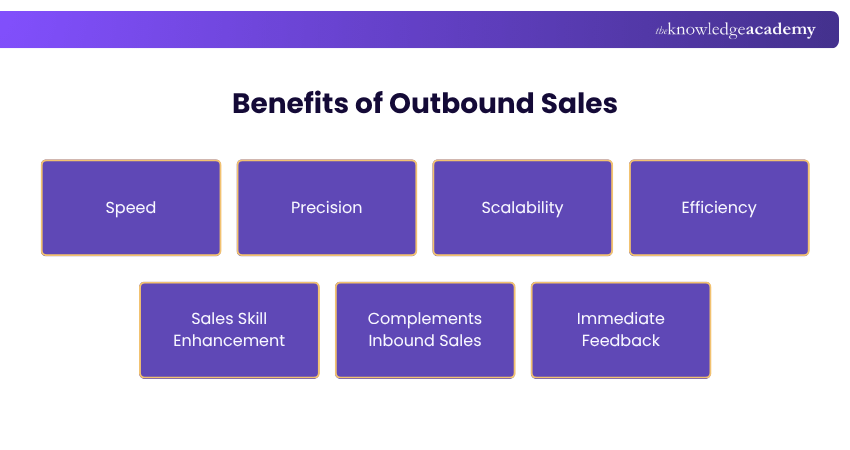
1) Speed
Unlike inbound sales, Outbound Sales can produce immediate leads and sales because sales teams can target prospects who match ideal customer profiles, leading to high-quality leads.
2) Precision
Outbound Sales allow businesses to precisely target specific industries, company sizes, or decision-makers. Sales reps can tailor their messaging based on each prospect’s needs and pain points.
3) Scalability
Outbound Sales efforts can be scaled quickly by hiring additional business development representatives and expanding outreach campaigns. Furthermore, by documenting and replicating successful Outbound Sales processes, it becomes easier to train new sales team members and ensure consistency across the board.
4) Efficiency
Outbound Sales focus on high-value warm leads, ensuring that sales resources are spent on only the most promising prospects. By maintaining consistent outbound activities, businesses can develop a more manageable (and predictable) sales pipeline.
5) Sales Skill Enhancement
Outbound Sales reps can enhance their skills and approach through repeated interactions with potential customers. Outbound Sales agents become proficient at overcoming resistance and handling objections. These are valuable in any business context.
6) Complements Inbound Sales
Outbound Sales can complement inbound strategies by reaching out to leads who may not have engaged with inbound content. This integrated approach ensures no potential leads are missed. Outbound Sales can re-engage dormant or inactive leads who may have shown interest in the past but have yet to convert.
7) Immediate Feedback
Direct interaction with B2B buyers offers immediate feedback on their objections, needs, and overall interest, enabling Outbound Sales reps to adjust their strategy quickly. Meaningful conversations with prospects can reveal valuable information about competitor activities, market trends, and customer preferences.
8) Complements Inbound Sales
By initiating meaningful conversations, outbound sales opens the door to strong, trust-based connections. Even cold outreach can develop into loyal relationships when followed by authentic, consistent engagement tailored to the prospect’s needs, challenges, and business goals.
Excell in the art of sealing the deal with Closing The Sale Training. Learn techniques that help you turn leads into loyal customers.
What is the Outbound Sales Process?
A structured outbound sales process helps sales teams connect with the right prospects, build strong pipelines, and drive conversions. Here’s a breakdown of each step based on best practices:
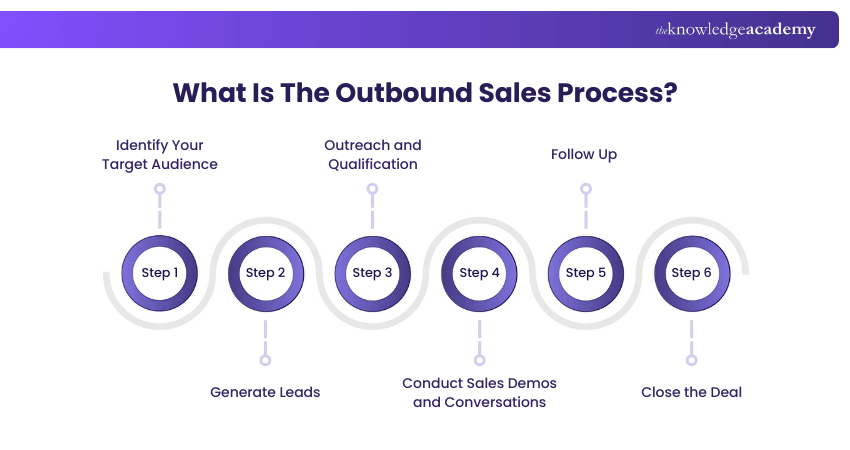
1) Identify Your Target Audience
Start by defining your ideal customer profile (ICP). Consider factors like industry, company size, job titles, pain points, and buying behaviour. This clarity ensures your sales efforts are focused on leads most likely to benefit from your product or service.
2) Generate Leads
Once your target audience is defined, build a lead list using data providers, social media platforms, and CRM insights. The goal is to gather accurate contact details of decision-makers who align with your ICP and are worth pursuing.
3) Outreach and Qualification
Engage leads through personalised emails, calls, or LinkedIn messages. Use this stage to qualify them based on budget, authority, need, and timeline (BANT). Ask relevant questions to determine whether the lead is a good fit for your offering.
4) Conduct Sales Demos and Conversations
Engage qualified leads through personalised demos and in-depth conversations. Focus on their challenges and demonstrate how your solution directly addresses them. This step builds trust, resolves concerns, and helps position your offering as the ideal choice.
5) Follow Up
After the demo, consistent follow-up is essential. Share resources, answer lingering questions, and reiterate how your solution aligns with their goals. Personalised follow-ups show commitment and help maintain momentum in the decision-making process.
6) Close the Deal
Once the lead is ready, present a clear offer and guide them through the closing steps. This includes negotiating terms, handling last-minute objections, and securing the agreement. A confident and transparent approach helps ensure a smooth closing.
Want to learn how build trust with your potential customer via telephone? Sign up for our Telephone Sales Training now!
What are examples of outbound sales?
Outbound sales involve proactive outreach methods to engage potential customers. Here are 11 effective outbound sales examples, each explained in detail:
1) Cold calling
Cold calling involves reaching out to prospects via phone who haven’t interacted with your brand before. It’s a direct way to pitch products, qualify leads, and spark interest through real-time conversation, though it requires skill and persistence.
2) Cold emails
Cold emailing sends targeted, personalised messages to potential clients who haven't engaged with your company. These emails aim to introduce your offering, highlight value, and encourage a meeting or reply. It’s scalable and can be automated using various types of sales tools that streamline outreach and follow-up.
3) Direct mail
Direct mail refers to sending physical materials such as brochures, postcards, or samples to prospects. While traditional, it can stand out in a digital-heavy landscape, especially when combined with digital follow-up strategies for high-impact outreach.
4) Social selling
Social selling uses platforms like LinkedIn to connect with prospects, share insights, and build relationships. By engaging with a prospect’s posts and sending thoughtful messages, reps create familiarity and trust before initiating a direct sales conversation.
5) Networking events
Attending or hosting industry events provides opportunities to meet potential clients face-to-face. These events allow for meaningful conversations, exchange of contact information, and building rapport that can lead to future sales opportunities.
6) Webinars and seminars
Hosting webinars or seminars helps position your brand as an expert. These sessions attract attendees interested in your field, offering a chance to educate, interact live, and follow up with attendees for sales conversations after the event.
7) Door-to-door Sales
In door-to-door sales, representatives visit homes or businesses to pitch products in person. Though less common in B2B, it remains effective for certain markets where personal interaction builds immediate trust and allows for hands-on demonstrations.
8) Referral Programs
Referral programmes encourage existing customers or partners to recommend your products to others. This form of outbound sales leverages trust and word-of-mouth while proactively expanding your network of warm, high-conversion leads.
9) Partnerships and Alliances
Collaborating with complementary businesses opens access to new audiences. Sales reps can co-sell or receive direct introductions to potential leads through strategic alliances, making it a powerful channel for outbound growth.
10) Sales Blitz
A sales blitz is an intense, short-term effort where a team targets a specific segment or location with coordinated outreach. This focused burst of activity aims to quickly generate leads and build momentum in a particular market.
11) Account-based Marketing (ABM)
ABM combines outbound sales with highly personalised marketing targeted at specific high-value accounts. Sales and marketing teams collaborate to engage decision-makers with tailored content and outreach, resulting in better engagement and higher conversion rates.
Reach more prospects with confidence through Outbound Sales Training. Learn outreach techniques that actually work.
How to Build an Outbound Sales Strategy?
An effective outbound sales strategy requires first defining the customer profile which is ideal and understanding their needs, problems, and ways of buying. After that, targeted outreach plans should be developed via phone, email, and social media as channels to connect with the prospects. Continuous follow-ups, criteria for qualification that are clear, and measuring performance with metrics are ways to help improve your approach and results gradually.
Conclusion
Outbound sales is an avenue that allows companies to actively get in touch with suitable customers and generate new opportunities. Now that What is Outbound Sales is clear, we hope it helps your teams to polish their technique and get better outcomes. By having the correct plan, the activities of outbound can contribute to the growth of the business and the enhancement of the customer relationship.
Want to learn about negotiation techniques to maximise your sales potential? Sign up for our Sales Negotiation Training – Sign up now!
Frequently Asked Questions
What are the best tools for outbound sales?

Top outbound sales tools include Salesforce, HubSpot, Cognism, Outreach, and LinkedIn Sales Navigator. These platforms help with lead generation, automation, email sequencing, CRM integration, and prospect targeting to improve outreach efficiency and close more deals.
What is Outbound Sales in BPO?
Outbound sales in a BPO refer to the case when call centre teams initiate contact with prospective customers via calls, emails, or messages to bring about leads, publicise products or services, and open up sales opportunities for the client companies.
What are the Other Resources and Offers Provided by The Knowledge Academy?
The Knowledge Academy takes global learning to new heights, offering over 3,000+ online courses across 490+ locations in 190+ countries. This expansive reach ensures accessibility and convenience for learners worldwide.
Alongside our diverse Online Course Catalogue, encompassing 19 major categories, we go the extra mile by providing a plethora of free educational Online Resources like Blogs, eBooks, Interview Questions and Videos. Tailoring learning experiences further, professionals can unlock greater value through a wide range of special discounts, seasonal deals, and Exclusive Offers.
What is The Knowledge Pass, and How Does it Work?
The Knowledge Academy’s Knowledge Pass, a prepaid voucher, adds another layer of flexibility, allowing course bookings over a 12-month period. Join us on a journey where education knows no bounds.
What are the Related Courses and Blogs Provided by The Knowledge Academy?
The Knowledge Academy offers various Sales Courses, including the Sales Analytics Training, Telephone Sales Training, and Value Based Selling Training. These courses cater to different skill levels, providing comprehensive insights into Sales Analytics.
Our Business Skills Blogs cover a range of topics related to Outbound Sales, offering valuable resources, best practices, and industry insights. Whether you are a beginner or looking to advance your Business skills, The Knowledge Academy's diverse courses and informative blogs have got you covered.

Charlotte Wilson


Soft Skills and Business Training Manager
Charlotte Wilson is an expert in soft skills development, with over 14 years of experience helping individuals and teams improve communication, productivity and emotional intelligence in the workplace. Her training content is focused on enhancing interpersonal effectiveness and fostering positive, collaborative environments across all levels of an organisation.
View Detail
Upcoming Business Skills Resources Batches & Dates
Date
 Online Sales Training
Online Sales Training
Fri 17th Jul 2026
Online Sales Training
Fri 25th Sep 2026

 If you wish to make any changes to your course, please


