


 Top Rated Course

We may not have the course you’re looking for. If you enquire or give us a call on +61 272026926 and speak to our training experts, we may still be able to help with your training requirements.
15+ Benefits of Email Marketing: A Comprehensive Guide
James Smith 23 February 2026Email Marketing delivers high ROI through cost-effective, targeted campaigns that build relationships, boost sales, grow loyalty, and nurture leads. It is one of the most effective ways for businesses to connect with their audience in a meaningful way, share tailored messages, promote products, and build strong customer relationships.

Training Outcomes Within Your Budget!
We ensure quality, budget-alignment, and timely delivery by our expert instructors.
Table of Contents

Businesses are rapidly adopting various Digital Marketing strategies to reach a broader audience. This brings us to Email Marketing that remains one of the most effective tools businesses can use in their operations. The Benefits of Email Marketing can be seen in how organisations engage with customers, reduce unnecessary costs, and deliver personalised messages.
Understanding the Benefits of Email Marketing helps businesses to utilise its power effectively for sustaining long-term growth. In this blog, you will learn about its key benefits, types, and its significance for your business. Keep reading to learn how to expand your business, strengthen customer relationships, and engage!
Table of Contents
1) What is Email Marketing?
2) Benefits of Email Marketing
3) Email Marketing Best Strategies
4) 5 Types of Email Marketing
5) What is Email Marketing Important for Your Business?
6) What is the 60/40 Rule in Email?
7) What are the 5Ts of Email Marketing?
8) Conclusion
What is Email Marketing?
Email Marketing is one of the best Digital Marketing strategies, including sending emails to a targeted group of consumers. It's used by businesses to communicate with their audience directly, promoting products, services, and offers. It also used to engage and build long-term, meaningful relationships with customers.
Unlike many other marketing channels, Email Marketing enables personalised, direct communication with a specific audience, making it highly effective. Understanding the Difference Between CC and BCC is crucial when sending emails to multiple recipients while maintaining privacy. Additionally, Email Marketing allows for audience segmentation based on various criteria such as demographics, purchase history, or engagement levels. privacy. Additionally, Email Marketing allows for audience segmentation based on various criteria such as demographics, purchase history, or engagement levels.
Benefits of Email Marketing
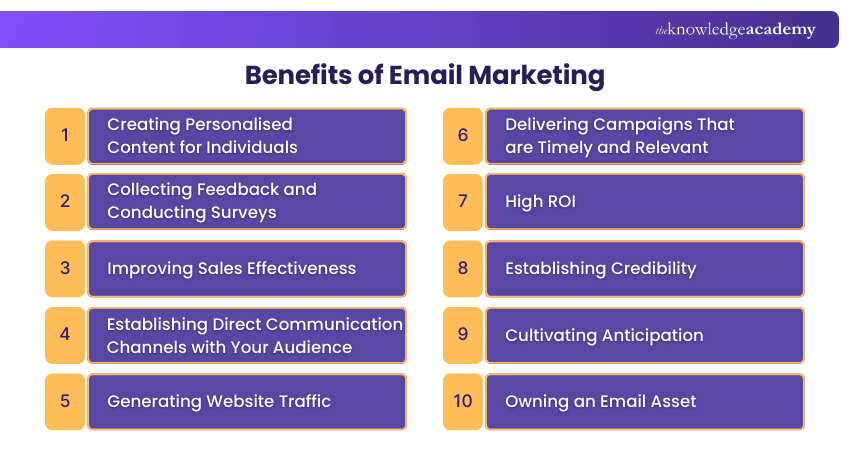
There are several Benefits of Email Marketing. Let’s discuss some of them in detail:
1) Creating Personalised Content for Individuals
Creating content that communicates directly to your audience helps your emails feel relevant and valuable. Email Marketing allows you to personalise messages using details, such as names, preferences, or past behaviour. With the help of Email Marketing platforms and audience data, businesses can tailor content to match customer interests,
2) Collecting Feedback and Conducting Surveys
Email Marketing helps businesses collect customer feedback and understand their experience with the brand. Businesses can share surveys through email campaigns to gather opinions, measure satisfaction, and track customer loyalty. These insights help to identify what is working well and highlight areas that need improvement.
3) Improving Sales Effectiveness
Email Marketing helps businesses cultivate leads and guide them through the sales funnel. Drip campaigns, product recommendations, and exclusive offers can be strategically deployed to move prospects closer to purchasing, ultimately boosting sales.
4) Establishing Direct Communication Channels with Your Audience
One of the important benefits of Email Marketing is that it creates a direct and reliable communication channel between businesses and their audience. It helps brands to stay connected, share updates, and maintain visibility. This leads to establishing familiarity, reinforcing trust, and retaining customers over the long term.
5) Generating Website Traffic
Well-written Email campaigns can drive traffic to your website by featuring blog posts, new products, or exclusive content. Including compelling calls-to-action (CTA) encourages subscribers to click through to your site, increasing overall web traffic.
6) Delivering Campaigns That are Timely and Relevant
Email Marketing enables businesses to send messages at the right moment. Whether it's a personalised birthday offer, a holiday promotion, or a timely newsletter, the ability to schedule Emails ensures that content is relevant to current events and customer needs.
7) High ROI
One of the key Benefits of Email Marketing is its high Return on Investment (ROI), as it requires minimal cost to run. Email campaigns target subscribers who are opted in, making them likely to engage and convert. By including a clear call-to-action and a direct link to purchase, businesses can look to increase revenue without heavy spending.
8) Establishing Credibility
Consistent, high-quality Email content helps build credibility and trust with your audience. When subscribers receive valuable information, insightful tips, or expert advice through email, they are more likely to see your brand as a reliable source of knowledge and expertise.
9) Cultivating Anticipation
Email campaigns can tease upcoming product launches, events, or exclusive offers. By sending teaser emails, you can build anticipation and excitement among your subscribers, encouraging them to stay engaged and eagerly await what's next from your brand.
10) Owning an Email Asset
Email lists are valuable assets that a business owns and controls. Unlike social media followers or advertising platforms, an email list gives a direct connection to your audience that cannot be removed or subject to platform changes. This ownership provides stability and autonomy in your marketing efforts, making Email Marketing a fundamental component of a comprehensive digital strategy.
Do you want to elevate your Digital Marketing skills? Register now for our Digital Marketing Courses!
11) Providing a Platform for Self-promotion
Email Marketing offers businesses a platform to directly promote themselves, their products, and their achievements to their audience. Whether highlighting recent accomplishments, showcasing new offerings, or sharing success stories, email campaigns provide a dedicated space for self-promotion, allowing brands to control their messaging and narrative.
12) Maintaining Control of Your Media and Contact Lists
Email Marketing controls your media assets and contact lists instead of relying solely on social media or third-party platforms. This ownership ensures that you can communicate with your audience independently without being subject to external algorithms or policy changes that can affect visibility.
13) Enhancing Brand Awareness
Regular email campaigns help to keep your brand visible and maintain consistent communication with your audience. By sharing updates, offers, and meaningful content, businesses can engage existing and potential customer. This supports lead generation through automated messages that nurture interest.
14) Time Efficiency
Email Marketing tools offer automation features, allowing businesses to schedule and send Emails in advance. This time efficiency frees up resources and ensures that messages are delivered at optimal times, even when the team is not actively engaged, enhancing productivity and consistency.
15) Cost-effective
One of the Benefits of Email Marketing is it is a cost-effective marketing strategy, ideal for businesses with limited budgets. Many Email Marketing tools are free or low-cost to start with, with expenses increasing only as campaigns become advanced. It delivers strong results at lower cost, enabling businesses to maximise impact.
16) Increase Engagement on Social Media
Email Marketing helps boost social media engagement by directing subscribers to your social platforms. Through email campaigns, businesses can promote social media pages, share links to posts, and highlight exclusive offers. This leads to greater visibility, higher traffic, and stronger digital interaction across channels.
Learn the fundamentals of marketing and build skills from the ground up with Introduction to Marketing Training – Join now!
Email Marketing Best Practices
For small business owners, freelancers, and solopreneurs, building an Email Marketing strategy from scratch can feel overwhelming. But email marketing doesn’t have to be complicated. By following Email Marketing Best Practices, it’s a powerful, scalable tool that’s cost-effective and straightforward to start, and one can use Email Marketing Software for the success of any email marketing campaign. The main idea is simple: send the right message at the right time to the right audience.
1) Create a Welcome Series
A welcome series introduces customers to your brand and helps them understand what you offer. For businesses just starting out, a single welcome message for new subscribers can make a great first impression. For more advanced setups, consider creating different messages for customers and non-customers.
Non-customers might receive a nurturing sequence to convert them into first-time buyers, while customers might get re-engagement messages to keep them involved. Including personalised abandonment campaigns, such as cart or browse abandonment emails, can capture attention and bring users back when their interest is still high.
2) Keep Your Plan Consistent
Consistency is essential for establishing trust and increasing brand awareness. If your website promises a discount in exchange for an email signup, follow through on that promise. Equally important is maintaining a consistent schedule.
For example, if you commit to a weekly newsletter, make sure it arrives on time. Customers come to expect regular updates, and consistently delivering them strengthens their trust in your brand.
3) Consider Email Cadence
The frequency of emails matters. Sending too many can drive customers away, while sending too few may cause them to lose interest. Most small businesses find a balance with around three emails per month. This might include a newsletter, a promotional offer, and an educational piece, all of which require strong Email Marketing Skills to maintain engagement and relevance.
The exact cadence will depend on business goals and customer preferences, so flexibility is important. If launching a new product, sending more frequent updates might be appropriate. For brands focusing on thought leadership, less frequent but higher-quality content may work better.
4) Diversify Your Emails
Sending a variety of emails helps keep the audience engaged. A healthy balance between promotional, educational, and general newsletters prevents fatigue and maintains interest. Over-relying on one type of email can lead to lower engagement and even spam complaints.
Mixing different formats not only keeps the content fresh but also provides valuable insights into what resonates most with different audience segments. This approach allows for better targeting and more effective campaigns over time.
Create content that drives results. Join our Content Marketing Course and start transforming your strategy!
5 Types of Email Marketing
As a business, you can send many types of Email Marketing to your audience, such as a promotional email that announces discounts or a re-engagement email that encourages inactive users to return. You could send an update about a new product launch or an upcoming retail store opening.
Another option is to provide educational emails that build brand awareness without directly selling a product. Below are some common types of emails you might consider sending:

1) Promotional Emails
Promotional emails are designed to directly promote your products or services. They often feature discounts, special offers, limited-time deals, or requests for donations. While promotional emails are an important part of digital marketing, it is best not to rely on them alone. Mixing promotional emails with other content types helps maintain customer interest and reduces the risk of unsubscribes.
2) Educational Emails
Educational emails focus on giving your customers helpful information. They’re not about pushing products but building trust and loyalty. For example, a sports store might explain how to choose the best electrolyte powder. A jewellery company might offer tips on caring for different pieces. This type of email helps you stay connected with your audience while adding value.
3) Newsletters
Newsletters help keep your business top-of-mind. They might include updates about your company, behind-the-scenes looks, or upcoming events. You can also feature team members, share gift ideas, or provide industry news. Regular newsletters can build loyalty and keep your audience engaged.
4) Drip Campaigns
Drip campaigns refer to sending a series of pre-scheduled emails after a certain action, like signing up for your mailing list. For example, a welcome series might run over a few days to introduce new subscribers to your brand. Drip campaigns are great for nurturing relationships, building anticipation, or guiding customers through a process.
5) Engagement Emails
Engagement emails are designed to encourage interaction and feedback. They may request testimonials, invite customers to complete surveys, or simply check in to see how they are doing. These emails help strengthen relationships and show customers that their opinions and experiences are valued.
Why is Email Marketing Important for Your Business?
Email Marketing is important because it helps you connect directly with your audience. It allows you to build trust, keep customers engaged, and share updates about your products or services. By sending relevant content straight to your subscribers’ inboxes, you can nurture relationships, encourage repeat business, and stay top-of-mind.
It’s also a cost-effective marketing tool. Compared to traditional advertising, email campaigns are relatively inexpensive and can be highly targeted. You can segment your audience based on their interests, send personalised offers, and measure results quickly. This makes email marketing one of the most efficient and reliable ways to grow your business.
Don’t just market—master it. Join our Business Marketing Strategies Training and grow your business!
What is it 60/40 Rule in Email?
The 60/40 rule in Email Marketing suggests keeping 60% text and no more than 40% images in your emails. Usually, this includes 60 to 100 words of visible text that are not part of images. This helps to follow a balanced structure for improving deliverability, avoiding spam filters, and supporting better engagement across email clients.
This is not a strict rule, but a suggested guideline for achieving effectiveness in each mail. If your email reputation is strong, you may have more flexibility. The best approach is to test different layouts, track performance, and adjust the text-to-image ratio based on how your audience is responding.
What are the 5Ts of Email Marketing?
The 5Ts of Email Marketing is a simple framework for running effective email campaigns. It includes:
1) Targeting: Ensuring emails reach the right audience based on interests and behaviour.
2) Timing: Focuses on sending emails at the right moment to improve open and response rates.
3) Testing: Involves experimenting with subject lines, content, and layouts to see what performs best.
4) Trust: Building trust by delivering relevant content, respecting subscriber preferences, and maintaining consistency.
5) Tracking: Measuring performance through metrics, such as open rates, clicks, and conversions, to enable continuous improvement.
Conclusion
Understanding the various Benefits of Email Marketing is highly beneficial for organic marketing in businesses. It enables personalised communication, drives sales, and promotes direct audience connections. Email campaigns enhance brand awareness, save time through automation, and provide valuable insights for data-driven decisions. In a digital landscape, Email Marketing remains a versatile and indispensable tool for achieving marketing goals.
Explore modern marketing strategies and deliver scalable business impact with Marketing Courses – Join today!
Frequently Asked Questions
Why is Email Marketing Good for Business?

Email Marketing benefits businesses by providing direct reach, cost-effectiveness, and the ability to build relationships. It drives sales, promotes products, and delivers personalised content. Through segmentation and analytics, email campaigns ensure relevance, track performance, and provide valuable insights for growth.
What is the Most Important Factor in Email Marketing?
Relevance is the key factor in Email Marketing. Creating content to the recipient's needs and preferences ensures that Emails resonate with the audience, driving engagement and conversions. Personalisation, segmentation, and delivering timely, valuable content are key to achieving success in Email Marketing.
What are the Other Resources and Offers Provided by The Knowledge Academy?
The Knowledge Academy takes global learning to new heights, offering over 3,000+ online courses across 490+ locations in 190+ countries. This expansive reach ensures accessibility and convenience for learners worldwide.
Alongside our diverse Online Course Catalogue, encompassing 17 major categories, we go the extra mile by providing a plethora of free educational Online Resources like Blogs, eBooks, Interview Questions and Videos. Tailoring learning experiences further, professionals can unlock greater value through a wide range of special discounts, seasonal deals, and Exclusive Offers.
What is The Knowledge Pass, and How Does it Work?
The Knowledge Academy’s Knowledge Pass, a prepaid voucher, adds another layer of flexibility, allowing course bookings over a 12-month period. Join us on a journey where education knows no bounds.
What are the Related Courses and Blogs Provided by The Knowledge Academy?
The Knowledge Academy offers various Marketing Courses, including Email Marketing Course, Marketing Budget Course and Business Marketing Strategies Training. These courses cater to different skill levels, providing comprehensive insights into Brand Management.
Our Digital Marketing Blogs cover a range of topics related to Email Marketing, offering valuable resources, best practices, and industry insights. Whether you are a beginner or looking to advance your Email Marketing skills, The Knowledge Academy's diverse courses and informative blogs have you covered.

James Smith


Digital Marketing Manager and Trainer
James Smith is a digital marketing professional with over a decade of experience in SEO, content strategy, paid media and analytics. He has supported both SMEs and global brands in transforming their digital presence. James’s writing and training are rooted in results-driven tactics and the latest marketing trends.
View Detail
Upcoming Digital Marketing Resources Batches & Dates
Date
 Digital Marketing Course
Digital Marketing Course
Fri 19th Jun 2026
Digital Marketing Course
Fri 11th Sep 2026
Digital Marketing Course
Fri 30th Oct 2026

 If you wish to make any changes to your course, please


