


 Top Rated Course

We may not have the course you’re looking for. If you enquire or give us a call on 01344203999 and speak to our training experts, we may still be able to help with your training requirements.
Essential Program Management Skills Every Program Manager Needs
David Evans 05 September 2026Program Management Skills help professionals coordinate related projects, align work with strategic goals, manage stakeholders, control risks, and deliver programme-wide outcomes. Explore the essential skills every effective Program Manager should develop.

Training Outcomes Within Your Budget!
We ensure quality, budget-alignment, and timely delivery by our expert instructors.
Table of Contents
Key Takeaways
1. Program Management Skills combine strategic thinking, leadership, financial awareness, and interpersonal capabilities.2. Programme planning and coordination help keep multiple related projects moving towards shared goals.3. Stakeholder, communication, risk, and change skills support alignment across complex programmes.4. Benefits management and governance help connect programme delivery with meaningful business value.5. Practical experience, feedback, mentorship, and professional development can strengthen these capabilities.
A Project Manager asks, “Is my project on track?” A Program Manager must look further and ask:
“Are all these projects moving together towards the outcome we want to achieve?”
Answering that requires more than managing schedules and tasks. It takes strong Program Management Skills to connect strategy, stakeholders, resources, risks, and benefits across multiple projects. Let's explore the skills that help Program Managers keep the bigger picture in focus.
What Are Program Management Skills?
Program Management Skills are the capabilities needed to coordinate multiple related projects and keep them aligned with broader organisational goals. They help Program Managers maintain a clear view of the programme while individual projects progress.
These skills cover areas such as strategic thinking, leadership, stakeholder management, risk management, financial management, and decision-making.
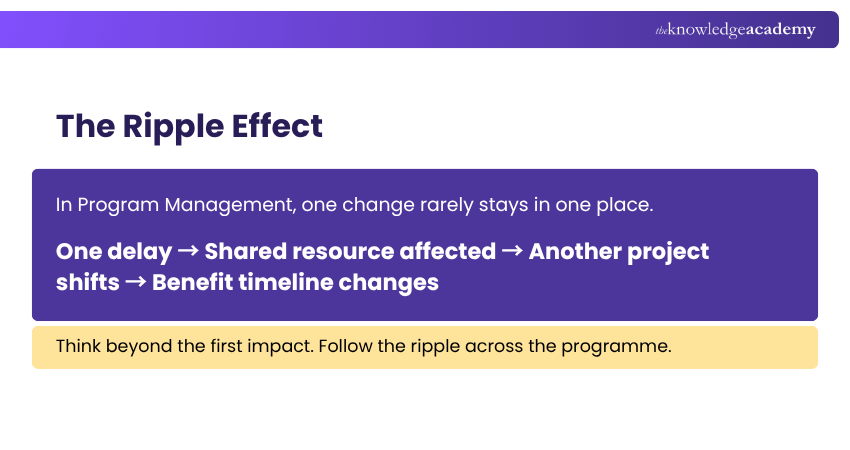
Their value becomes clear through the connections between projects. A change in one project's timeline, resources, or priorities can affect others. Program Managers use these skills to manage dependencies, balance competing needs, and keep the overall programme focused on its intended outcomes.
Essential Program Management Skills for Successful Programmes
Effective Program Management draws on strategic, operational, financial, and interpersonal capabilities. Program Managers use these skills together to coordinate related projects, manage competing priorities, and keep the wider programme aligned with its intended outcomes.
Here are the essential Program Management Skills worth developing:
1) Strategic Thinking and Alignment
Program Managers need to connect programme activities with broader organisational goals. Strategic thinking helps them evaluate priorities, anticipate long-term implications, and adjust direction when business needs change.
2) Programme Planning and Coordination
Managing several related projects requires visibility across schedules, milestones, dependencies, resources, and decision points. Strong coordination helps Program Managers identify how changes in one project could affect others and respond before disruption spreads.
3) Leadership and Team Direction
Program Managers work with Project Managers, specialists, senior leaders, and cross-functional teams. Strong leadership helps establish direction, create shared purpose, encourage accountability, and keep different teams focused on common programme objectives.
4) Stakeholder Management
Different stakeholders can have competing priorities, expectations, and levels of influence. Program Managers need to understand these interests, maintain appropriate engagement, build trust, and secure continued support as the programme evolves.
5) Communication
Program Managers communicate with audiences ranging from delivery teams to senior decision-makers. They need to present progress, risks, changes, priorities, and decisions clearly while adapting the level of detail to each audience.
6) Benefits Management
Programme success goes beyond completing individual projects. Benefits management helps Program Managers identify expected benefits, connect them with programme outcomes, track their realisation, and keep delivery focused on creating meaningful organisational value.
7) Risk and Issue Management
Risks and issues in one project can create consequences elsewhere in the programme. Program Managers need to identify interrelated risks, assess their wider impact, coordinate appropriate responses, and monitor changes that could affect programme objectives.
Strengthen your risk management expertise with our PMI-RMP® Certification Training - Join today!
8) Financial Management
Financial awareness helps Program Managers oversee budgets, costs, forecasts, funding priorities, and financial trade-offs. It supports informed decisions about where resources should be directed while keeping expenditure aligned with programme priorities.
9) Resource Management
Related projects can compete for the same people, expertise, technology, or funding. Resource management helps Program Managers balance these demands, address constraints, and allocate available resources according to wider programme priorities.
10) Change Management
Programmes often introduce changes to processes, systems, capabilities, or ways of working. Program Managers need to consider stakeholder readiness, communication, impact, adoption, and resistance so that delivered changes can be successfully embedded.
11) Governance and Decision-making
Program Managers need to understand how programme decisions are made, responsibilities are assigned, performance is reviewed, and issues are escalated. Good judgement helps them evaluate competing priorities and provide decision-makers with relevant information at the right time.
Quick Programme Check
Before making a major decision, ask:
Does it support the strategy?Does it work across projects?Will it protect the expected benefits?Strong Program Management keeps all three in view.
12) Negotiation and Influence
Program Managers frequently need support from people they do not directly manage. Negotiation and influence help them secure resources, resolve competing priorities, build stakeholder support, and reach agreements that serve wider programme objectives.
13) Problem-solving and Critical Thinking
Complex programmes bring interconnected challenges that rarely have simple solutions. Program Managers need to analyse evidence, identify underlying causes, compare possible responses, and consider how each decision could affect other projects and programme outcomes.
14) Adaptability
Priorities, risks, stakeholder expectations, and business conditions can change throughout a programme. Adaptability helps Program Managers reassess plans, respond constructively to new circumstances, and maintain focus on the outcomes that matter.
How to Develop Strong Program Management Skills
Strong Program Management Skills grow through practical experience, continuous learning, and regular feedback. The key is to apply these capabilities across real situations involving multiple projects, stakeholders, priorities, and decisions.
Here are practical ways to strengthen them:
1) Gain Experience Across Connected Projects
Take opportunities to work across related projects or workstreams. Exposure to shared resources, dependencies, competing priorities, and cross-project decisions helps build the wider perspective required in Program Management.
2) Build Strategic and Commercial Awareness
Understand how your organisation sets priorities, allocates investment, measures performance, and defines business value. This helps you connect programme decisions with strategic goals rather than focusing solely on delivery.
3) Strengthen Stakeholder Communication
Practise communicating with different audiences, from delivery teams to senior decision-makers. Learn to adapt your message while clearly explaining programme progress, risks, dependencies, changes, and decisions.
4) Learn From Feedback and Mentorship
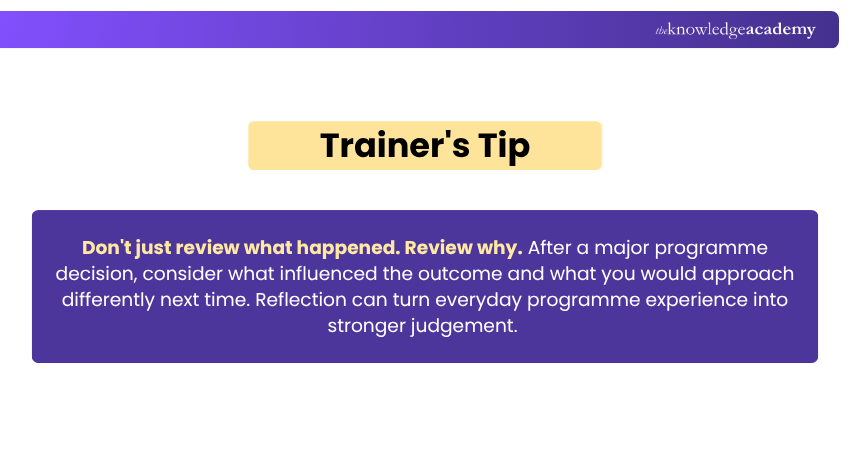
Seek guidance from experienced Program Managers and ask for feedback on your decisions, communication, and leadership. Their experience can provide valuable perspectives on situations that are difficult to understand through theory alone.
5) Invest in Professional Development
Training and relevant certifications can deepen your understanding of programme governance, benefits, risk, strategy, and leadership. Combine structured learning with practical application to turn knowledge into stronger programme-level capability.
Conclusion
Strong Program Management Skills help bring multiple projects, priorities, and people together towards a shared purpose. When applied effectively, they enable Program Managers to navigate complexity and keep programmes focused on meaningful outcomes.
Ultimately, successful Program Management turns coordinated efforts into lasting organisational value.
Build essential Project Management skills with our PMP® Training - Join today!
Frequently Asked Questions
How Do Program Management Skills Work Together?

Program Management Skills rarely operate independently. A change in programme priorities, for example, can require strategic thinking to assess its importance, communication to explain it, stakeholder management to gain support, and planning, risk, financial, and resource skills to manage its wider impact.
What Is the Difference Between Program Management and Project Management Skills?
Project Management skills focus primarily on delivering a defined project within agreed objectives and constraints. Program Management Skills take a broader view, helping professionals coordinate related projects, manage cross-project dependencies, align work with strategy, and maintain focus on programme-level benefits.
Can Program Management Skills Be Learned Without Management Experience?
Yes. Professionals can begin developing Program Management Skills through project work, cross-functional initiatives, mentoring, professional training, and opportunities to coordinate related activities. Practical exposure to stakeholders, dependencies, risks, and decision-making can gradually build programme-level capability.

David Evans


Certified Project Trainer and Agile Delivery Expert
David Evans brings over a decade of hands-on experience in project delivery, Agile transformation, and team leadership. With a background in technology and business consulting, David has led cross-functional teams through Agile and Waterfall projects in both public and private sectors. He combines technical knowledge with practical insights to help readers navigate the challenges of modern project environments.


 If you wish to make any changes to your course, please


