


We may not have the course you’re looking for. If you enquire or give us a call on 01344203999 and speak to our training experts, we may still be able to help with your training requirements.
Top Portfolio Manager Skills for Career Success
ByThe Knowledge AcademyLast updated on: 13 November 2026
Portfolio Manager skills are essential for making informed investment decisions, managing financial risks and aligning portfolios with client objectives. Explore the important skills, from financial analysis and portfolio construction to communication and ethical judgement, along with practical ways to develop them.
At a Glance
Here's a quick look at what this blog covers:1. Financial Analysis: Evaluate financial information and identify potential investment opportunities.2. Investment Decisions: Make research-based decisions aligned with client objectives and investment restrictions.3. Portfolio Construction: Allocate investments across suitable assets while managing concentration risk.4. Risk Management: Assess financial risks and monitor exposure as market conditions change.5. Career Development: Strengthen expertise through practical experience, professional learning and regular market analysis.
Imagine checking your investments one morning and finding that their value has fallen overnight. Would you sell, hold or look for a new opportunity?
For most investors, this can be a stressful situation. But for Portfolio Managers, making such decisions is part of their everyday responsibility. They must look beyond alarming headlines, weigh different possibilities and make well-reasoned investment decisions.
What helps them make informed decisions when there is no obvious answer? That's where professional skills make a difference. In this blog, we'll explore 10 essential Portfolio Manager skills and practical ways to develop them. Let's get started!
Essential Skills for a Portfolio Manager
Effective portfolio management combines investment expertise, risk awareness and professional judgement. The following competencies help Portfolio Managers apply these abilities in practice:
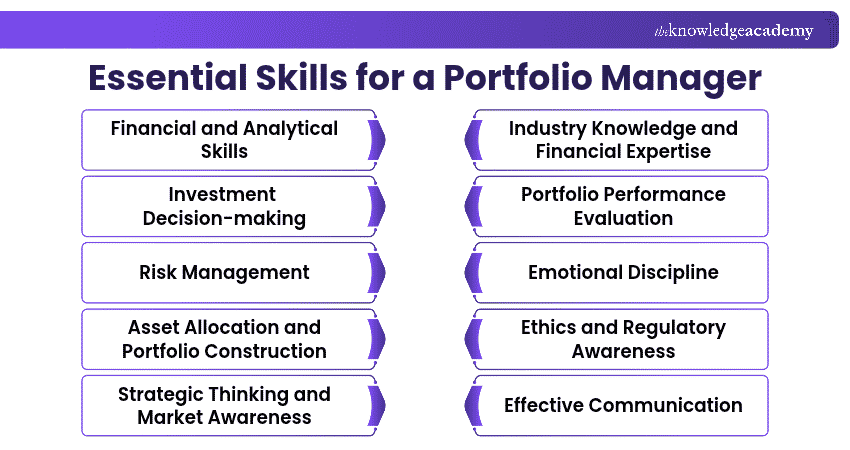
1) Financial and Analytical Skills
Portfolio Managers need strong analytical abilities to interpret financial data, assess investment opportunities and evaluate portfolio performance. They must analyse financial statements, asset valuations, market trends and economic indicators to make informed investment decisions.
These skills help them identify potential opportunities, understand investment risks and assess whether different assets align with portfolio objectives.

2) Investment Decision-making
Portfolio Managers must make timely, well-informed investment decisions in changing financial markets. This involves evaluating opportunities, reviewing market conditions and assessing when to buy, hold or sell assets.
They must base their decisions on research, investment strategies, applicable Investment Policy Statements (IPSs) or investment mandates, and agreed risk limits rather than reacting impulsively to short-term market movements.
3) Risk Management
Portfolio Managers must identify, assess and manage risks that could affect investment portfolios. These include market risk, liquidity risk and concentration risk arising from excessive exposure to individual investments or sectors.
By evaluating potential risks and monitoring portfolio exposure, they can make suitable adjustments to help keep portfolios within agreed risk limits.
4) Asset Allocation and Portfolio Construction
Portfolio Managers must understand how to distribute investments across asset classes such as equities, fixed income and cash. They consider financial goals, investment horizons and risk tolerance when constructing portfolios.
Effective asset allocation and diversification help manage concentration risk and maintain an appropriate balance between potential returns and investment risks.
Trainer's Insight
Owning several different investments does not necessarily mean a portfolio is well diversified. If those investments respond similarly to market changes, the portfolio may still carry significant concentration risk. Portfolio Managers must consider how assets behave together, not just how many investments they hold.
5) Strategic Thinking and Market Awareness
Portfolio Managers need to monitor economic developments, interest rates and industry trends that may influence investment performance. This requires a forward-thinking approach and an understanding of changing market conditions.
By assessing emerging opportunities and potential threats, they can review and adjust investment strategies when appropriate while maintaining a long-term perspective.
6) Industry Knowledge and Financial Expertise
A strong understanding of investment products, market structures and industry practices is essential for Portfolio Managers. They must be familiar with different asset classes, investment vehicles and the characteristics of the markets in which they invest.
Practical experience further strengthens their judgement, helping them assess investment opportunities and make decisions suited to client requirements.
7) Portfolio Performance Evaluation
Portfolio Managers must regularly evaluate investment performance against established objectives and suitable benchmarks. This involves reviewing portfolio returns, assessing risk-adjusted results and examining the effectiveness of investment strategies.
Performance evaluation helps them analyse the sources of returns through performance attribution, assess investment strategies and determine whether portfolio adjustments are necessary.
Pro Tip
When reviewing portfolio performance, look beyond the total return. Compare results against a suitable benchmark and consider the risk taken to achieve them. A portfolio delivering higher returns may not necessarily have performed better if it exposed investors to significantly greater risk.
Learn how to diversify smarter and build portfolios with confidence by joining the Active Portfolio Management and Asset Allocation Training today!
8) Emotional Discipline
Portfolio Managers must remain calm and objective during market volatility and unexpected financial developments. Emotional discipline helps prevent impulsive decisions driven by fear, greed or short-term pressure.
Maintaining this discipline allows them to follow established investment strategies while remaining open to adjustments when changing circumstances require them.
9) Ethics and Regulatory Awareness
Portfolio Managers must understand the ethical standards and regulatory requirements associated with investment management. This includes managing conflicts of interest, protecting confidential information and acting in clients' interests.
Strong ethical judgement supports transparent investment practices, professional accountability and lasting trust in client relationships.
10) Effective Communication
Portfolio Managers need strong communication skills to explain investment strategies, discuss portfolio performance and communicate potential risks. They must present complex financial information clearly to clients and stakeholders.
Active listening and transparent communication also help them understand client expectations, address concerns and maintain strong professional relationships.
How to Develop Portfolio Manager Skills
Developing Portfolio Manager skills requires a combination of financial knowledge, practical experience and continuous learning. Whether you are beginning your career or looking to strengthen your expertise, here are some effective ways to develop these skills:
a) Build a Strong Foundation in Finance: Develop your understanding of financial markets, investment principles, accounting and financial analysis. This knowledge helps you evaluate investments, interpret financial data and make informed decisions.
b) Gain Practical Investment Experience: Seek opportunities to work in investment research, financial analysis or related roles. Analysing financial data and assisting with portfolio reviews can help strengthen your analytical skills and investment judgement.
c) Pursue Relevant Professional Qualifications: Consider relevant qualifications that develop expertise in investment management, ethics and risk analysis. These qualifications can strengthen your professional knowledge and support your career development.
d) Stay Updated and Practise Investment Analysis: Follow market trends, economic developments and regulatory updates to stay informed. Practise evaluating investments and reviewing hypothetical portfolios to improve your analytical and decision-making skills.
Strong Portfolio Manager skills combine financial analysis, risk management, investment judgement and communication. Developing these abilities through experience and continuous learning helps you evaluate opportunities, manage portfolios responsibly and make informed investment decisions.
Learn to look beyond numbers and discover essential financial insights by joining the Financial Analyst Training now!

The Knowledge Academy develops accessible learning content across Project Management, IT, Cybersecurity, Data Science, Business Analysis, HR, Accounting and Finance, Leadership and Health and Safety. Its resources combine subject research with clear explanations to help professionals build practical knowledge across a wide range of disciplines.
View Detail

 If you wish to make any changes to your course, please


