




We may not have the course you’re looking for. If you enquire or give us a call on 01344203999 and speak to our training experts, we may still be able to help with your training requirements.
Six Sigma Salary by Certification and Location
ByThe Knowledge AcademyLast updated on: 26 November 2026
Explore Six Sigma salaries across green belt, black belt and master black belt certifications. Compare annual earnings in the UK, USA and India, and discover how experience, job responsibilities, industry demands and technical skills influence career growth.

At a Glance
1. Certification Levels: Green, black and master black belts have different earning potential.2. Location-based Salaries: Six Sigma salaries vary across the UK, USA and India.3. Career Progression: Advanced qualifications and leadership experience can support career growth.4. Career Opportunities: Six Sigma skills support roles in quality management and process improvement.5. Salary Influences: Experience, industry, technical skills, and job responsibilities affect earnings.
What does it take to turn process improvements into a rewarding career? For Six Sigma professionals, the ability to eliminate inefficiencies, improve quality, and deliver measurable results can open doors to exciting opportunities and competitive salaries.
But how much can you actually earn? In this blog, we'll explore Six Sigma salary based on certification levels and locations. We'll also explore the factors that influence earnings and how you can elevate your career potential. Let's begin!
Six Sigma Salary Based on Certification
Six Sigma certifications represent different levels of expertise in quality management and process improvement. From green belt to master black belt, professionals take on increasingly complex projects and leadership responsibilities.
The following table gives the average annual salary ranges for different Six Sigma certification levels:
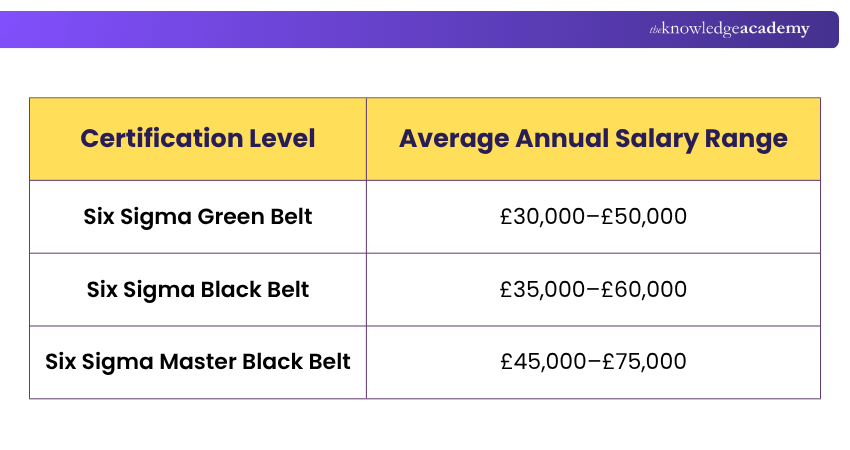
Source: Glassdoor
1) Six Sigma Green Belt
Green belt professionals apply DMAIC techniques, analyse process performance and support improvement projects. Their salaries depend on technical expertise, project involvement, and their ability to contribute to measurable improvements in quality and efficiency.

2) Six Sigma Black Belt
Black belt professionals lead complex improvement projects, use advanced statistical methods and guide cross-functional teams. Those managing high-impact initiatives, reducing operational costs, and delivering measurable business results may have stronger earning potential.
3) Six Sigma Master Black Belt
Master black belts oversee organisation-wide improvement strategies, mentor green and black belts and provide technical guidance on complex projects. Their strategic responsibilities, advanced expertise, and leadership experience may support higher salaries, particularly in senior management and operational excellence roles.
Pro Tip
When comparing Six Sigma salaries, look beyond certification levels. Consider the projects you have managed, your responsibilities and measurable achievements, as professionals with the same qualification may earn different salaries.
Six Sigma Salary Based on Location
Geographic location plays a significant role in influencing Six Sigma salaries. Earnings vary depending on regional demand, industry opportunities, and the responsibilities associated with each position.
The following table compares the average annual salary ranges across the UK, USA and India:
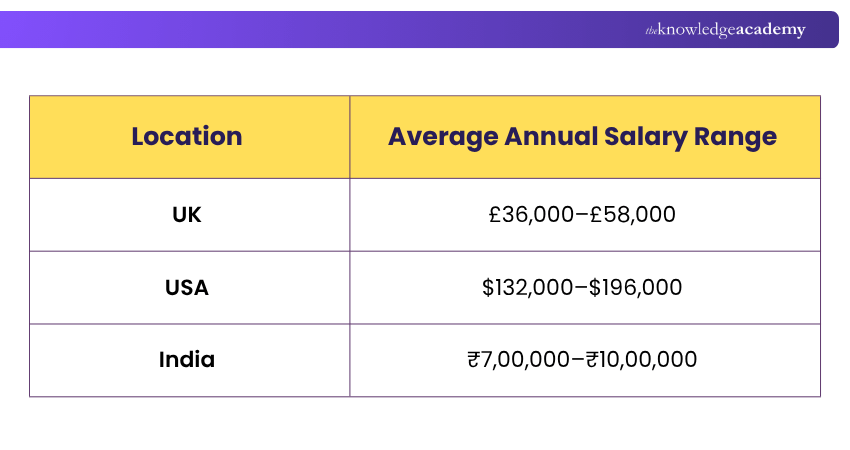
Source: Glassdoor
The salary differences across these countries reflect variations in industry demand, professional experience, and job responsibilities.
Factors Affecting Six Sigma Salary
Several factors influence Six Sigma salaries, from certification levels and professional experience to industry and location. Understanding these factors can help professionals identify opportunities for career development and salary progression. Let's look at them below:
1) Certification Level
Six Sigma certification levels reflect different technical and leadership capabilities. Advanced qualifications, such as black belt and master black belt, may support progression into complex improvement projects and leadership roles.
2) Professional Experience
Experienced professionals who have managed improvement projects and delivered measurable business results may command higher salaries. Their ability to solve complex problems and guide teams can make them valuable to organisations.
3) Geographic Location
Salaries vary across countries and regions due to differences in labour markets, employer demand, and economic conditions. Professionals working in locations with strong demand for process improvement expertise may find more competitive opportunities.
4) Industry and Employer Requirements
Six Sigma professionals work across manufacturing, healthcare, finance, technology, and other sectors. Salary opportunities depend on industry requirements, business complexity and the value organisations place on operational efficiency.
5) Job Roles and Responsibilities
The responsibilities associated with a position can significantly influence compensation. Professionals leading departments, managing complex projects or developing organisation-wide improvement strategies may have greater earning potential.
Turn process challenges into opportunities for meaningful improvement by joining the Six Sigma Green Belt Training now!
6) Technical and Leadership Skills
Expertise in statistical analysis, process mapping, root cause analysis, and tools such as Minitab can strengthen professional capabilities. Leadership, communication, and stakeholder management skills also support career progression.
Trainer's Insight
Six Sigma certifications demonstrate knowledge of process improvement, but practical results make that expertise valuable to employers. Professionals who can demonstrate reduced process variation, improved efficiency, and measurable cost savings may strengthen their earning potential.

The Knowledge Academy develops accessible learning content across Project Management, IT, Cybersecurity, Data Science, Business Analysis, HR, Accounting and Finance, Leadership and Health and Safety. Its resources combine subject research with clear explanations to help professionals build practical knowledge across a wide range of disciplines.
View Detail

 If you wish to make any changes to your course, please


